When I started mentally composing this Best of Africa post I envisioned a variety of images that captured the light and the beauty and the expressiveness of these wild and untamed animals of the African savanna.
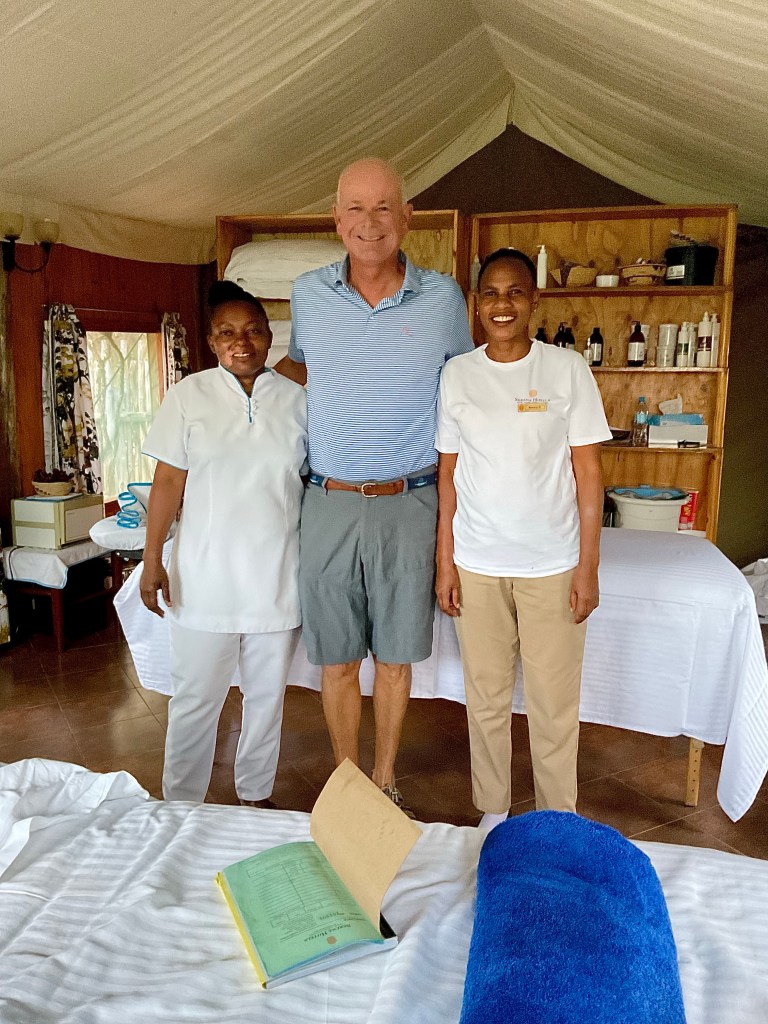
But as time went by it became clear that there was more than wildlife that comprised the Best of Africa – the beautiful and happy and warm and friendly and earnest and hard working people of Kenya and Tanzania.
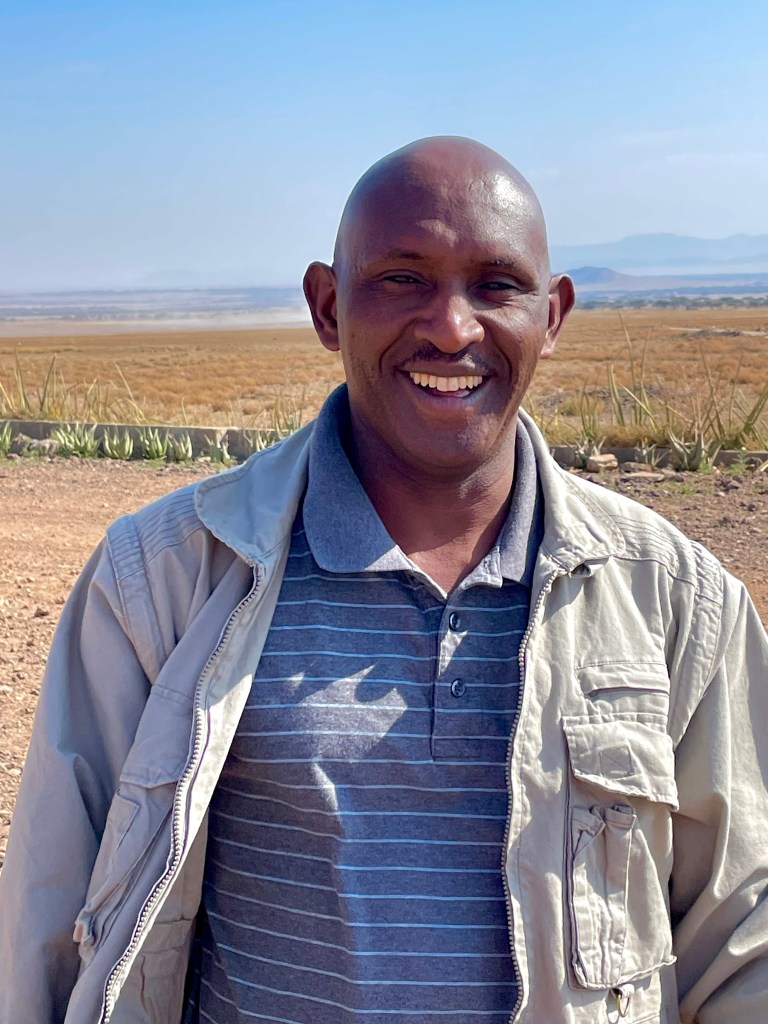
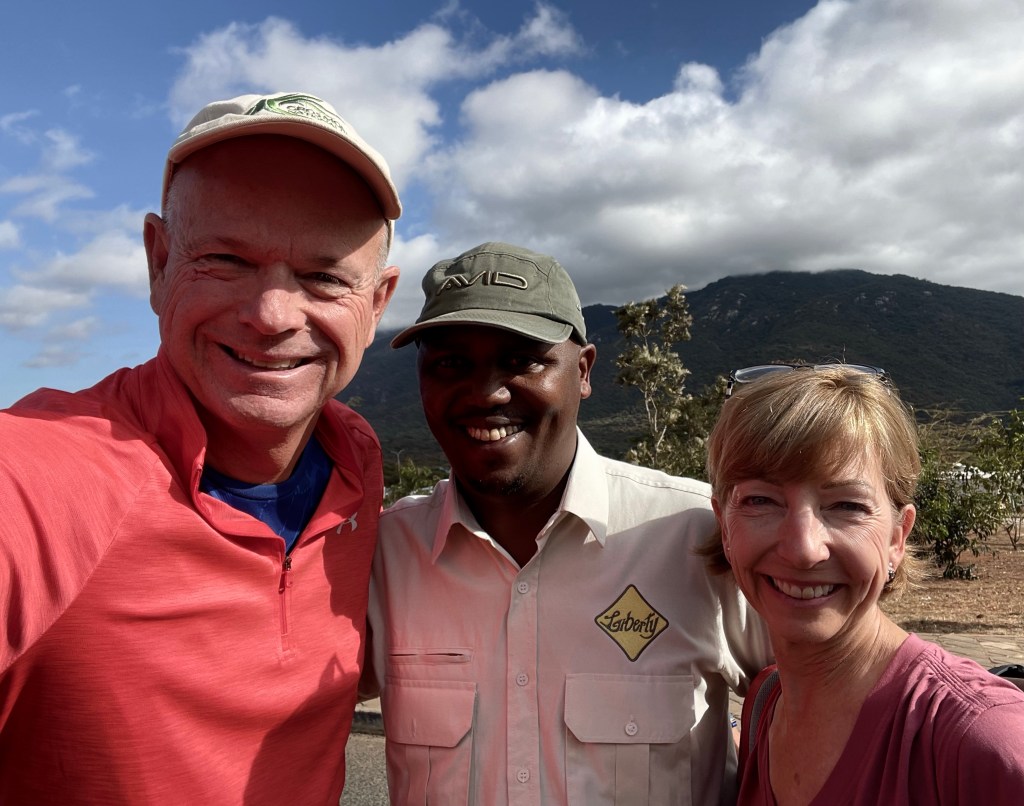
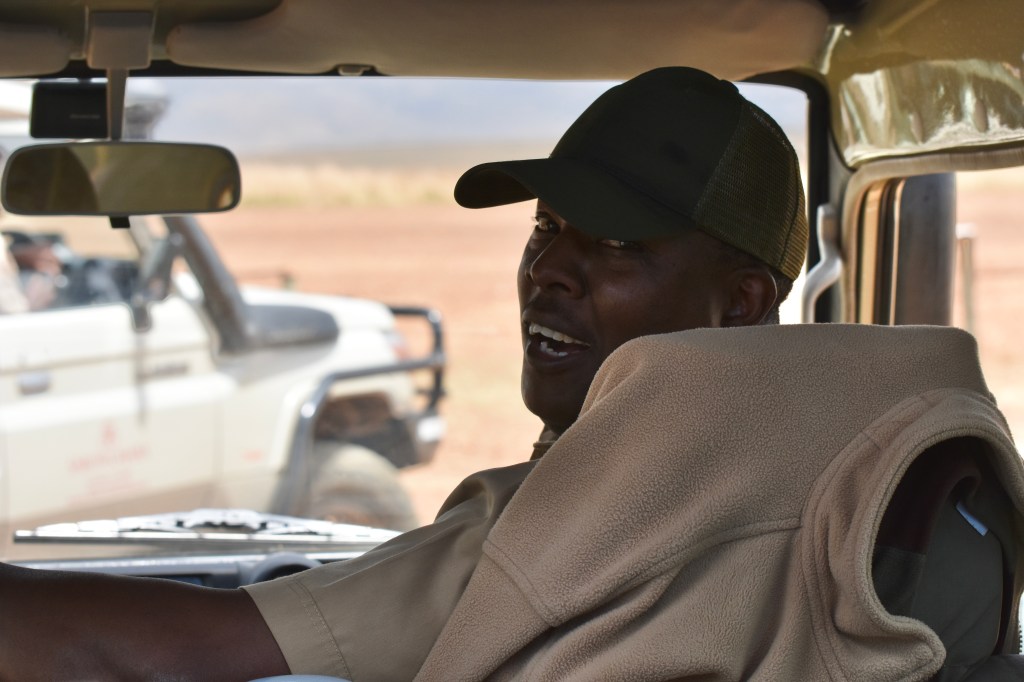
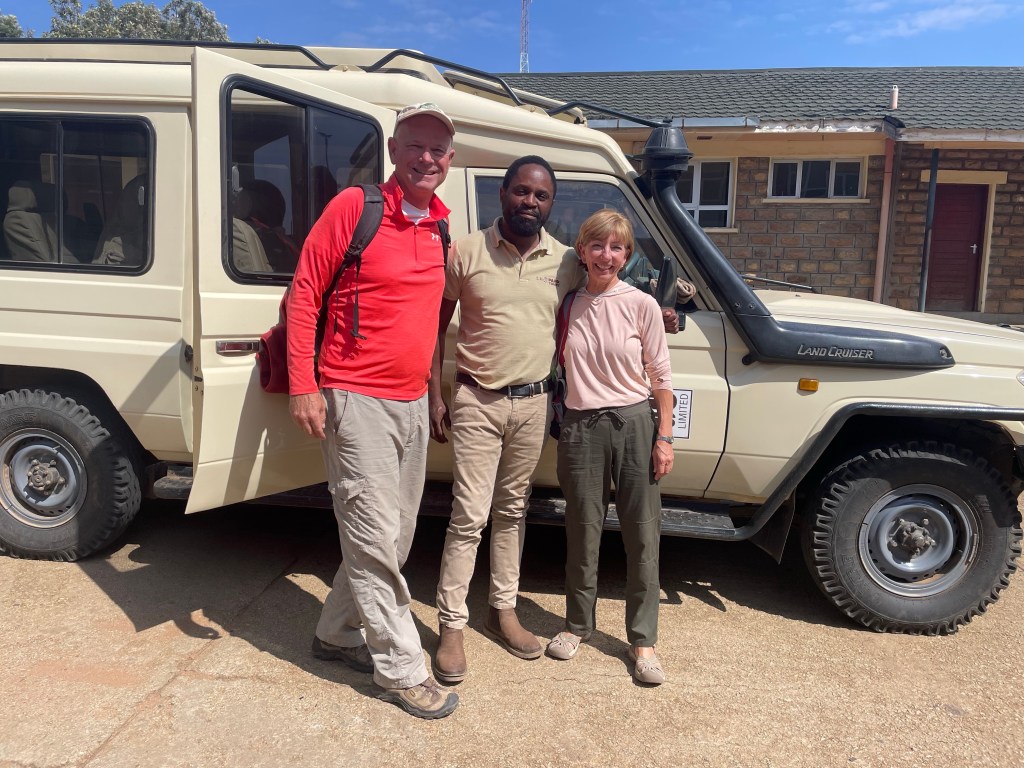
Edwin, husband, father, Maasai, entrepreneur, and world class safari guide!At the farewell dinnerTwin brothers of different mothers Nicholas, our driver in KenyaBig John, our driver in TanzaniaRobert, our driver in the Masai Mara
It is impossible to take photos of all the wonderful people with whom we interacted over two weeks, but there were so many common themes that repeated again and again: genuinely friendly, warm, lovely smiles, extremely hard working, great attitudes, curious and engaging.
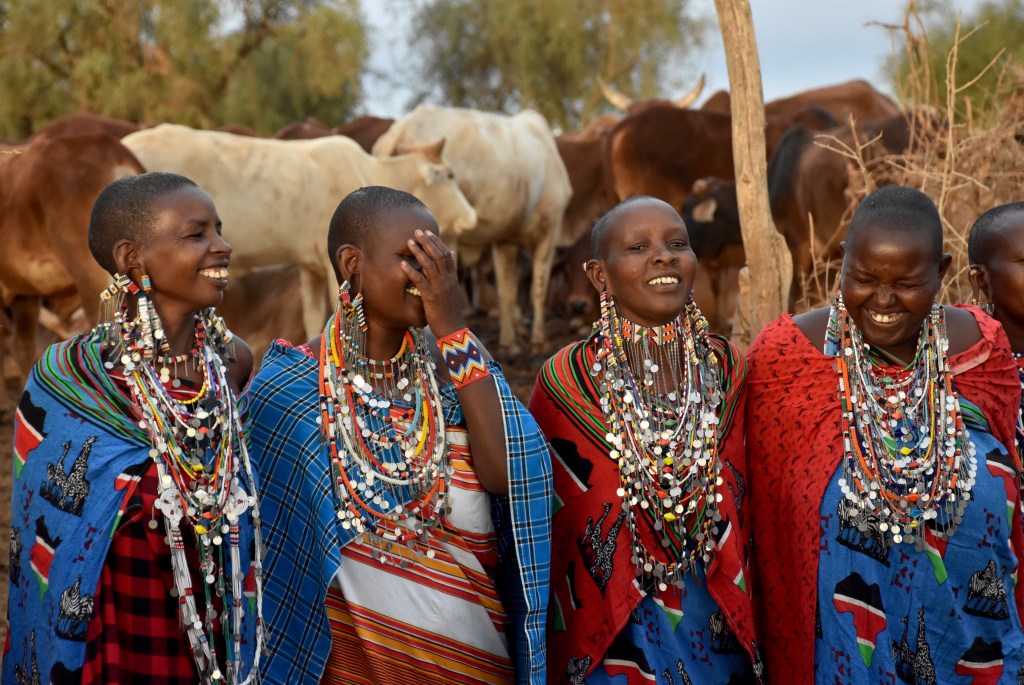
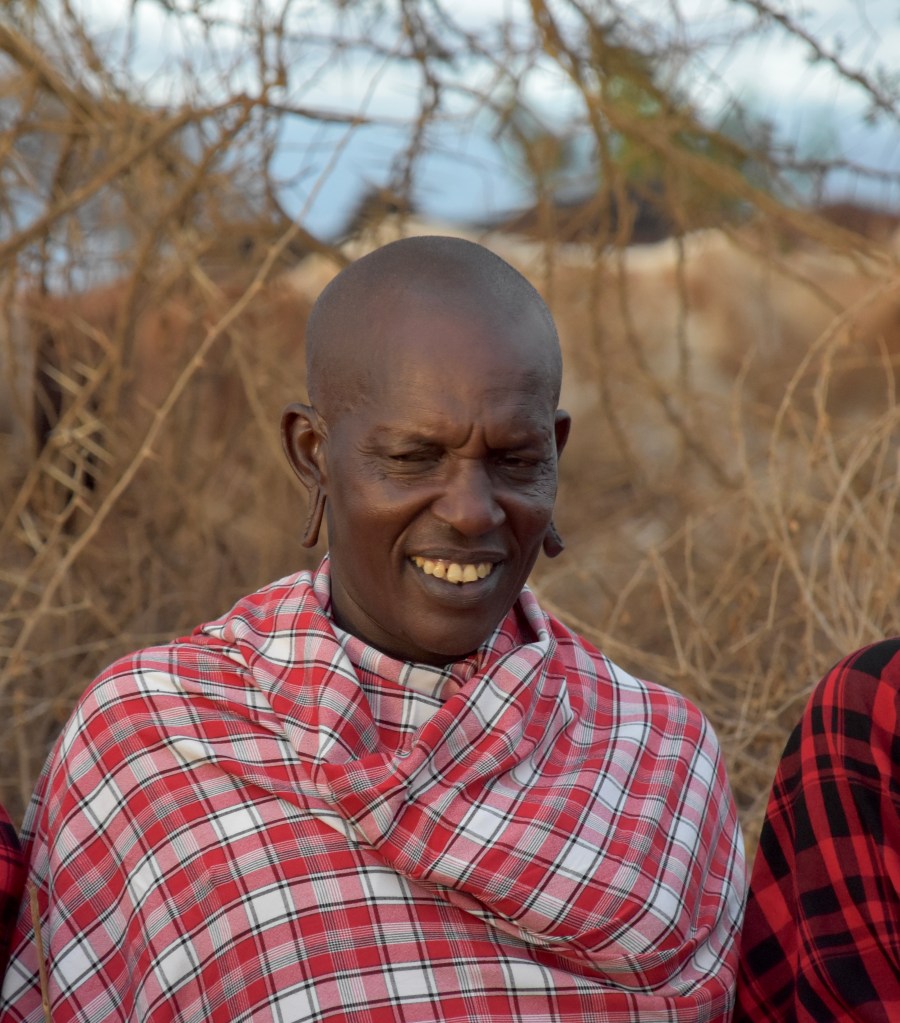
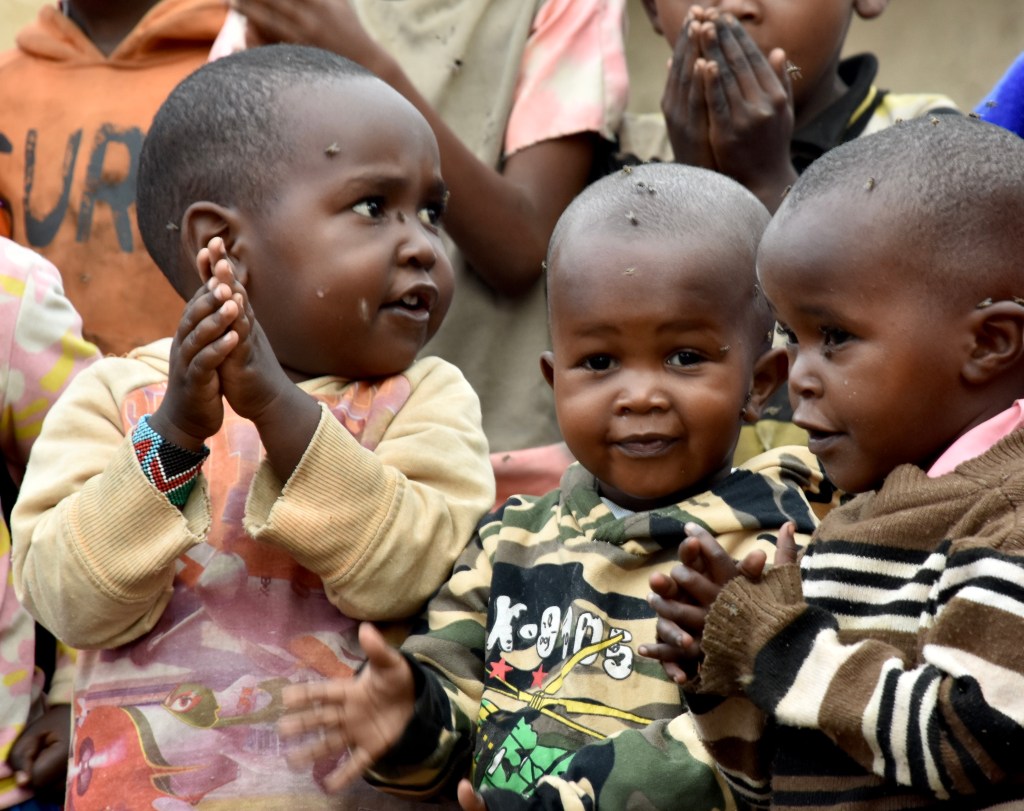
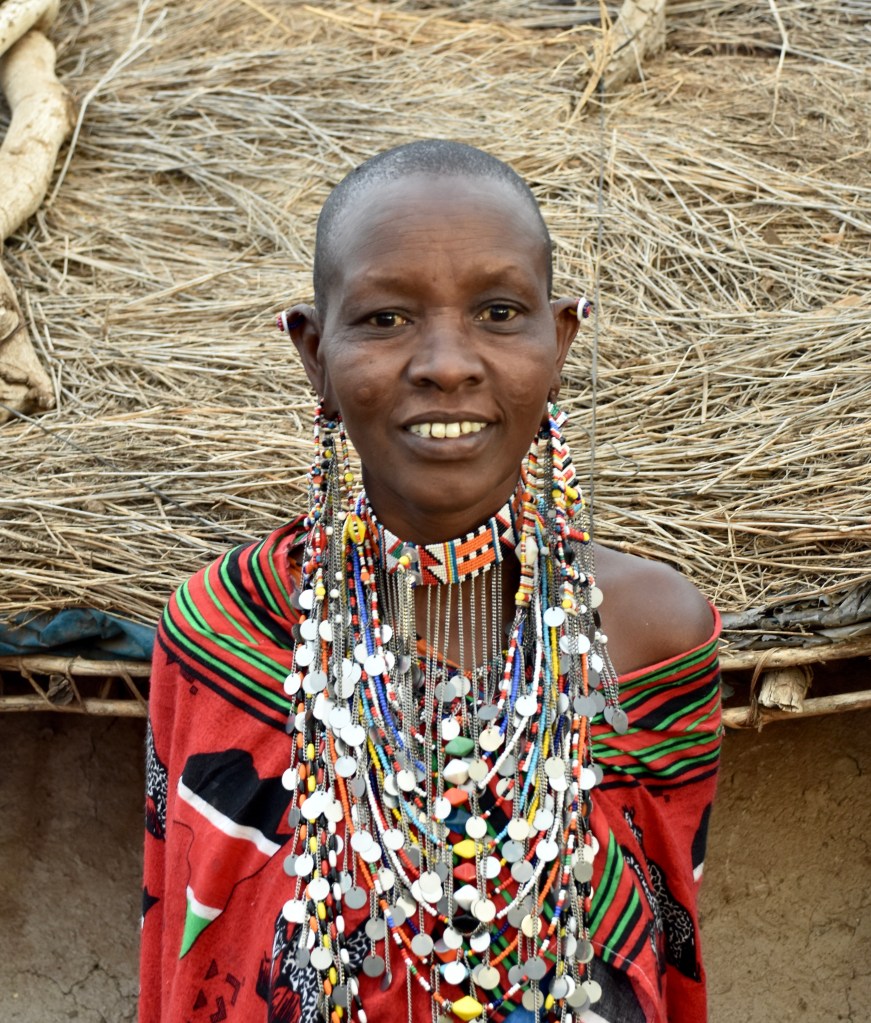
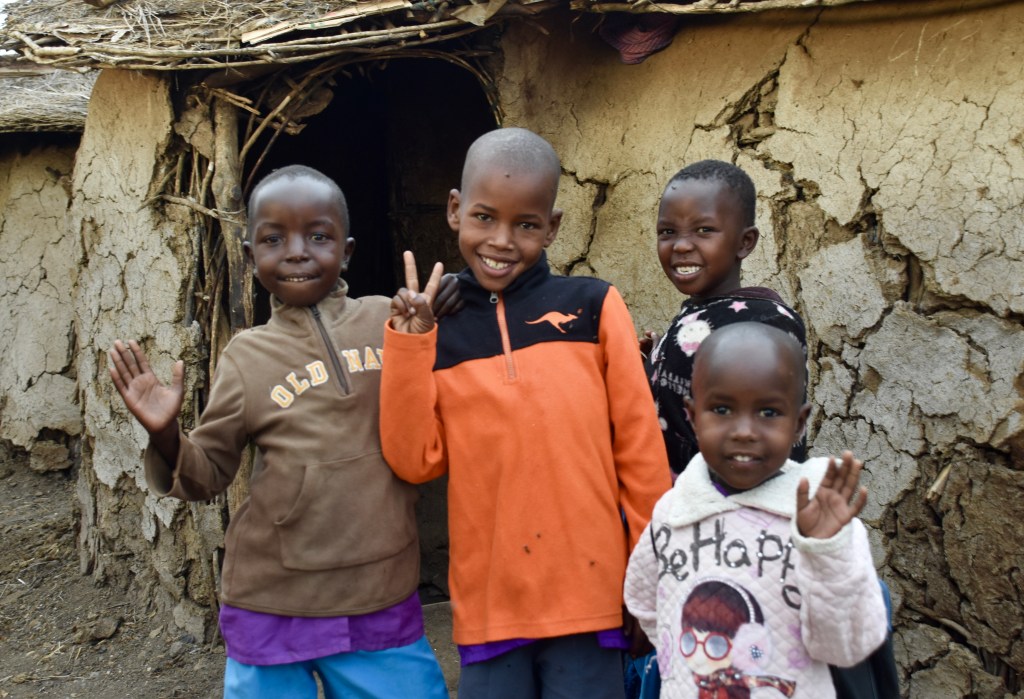
The morning we spent in Amboseli with the Maasai tribal village members will stay with us forever.
Big game hunters crowned the most challenging and difficult African animals as the Big Five, a shorthand designation for their goal: to track, hunt, kill and bring home for display. Killing for sport, and in the process, depleting the natural balance of nature by pressuring the population of a number of species.
Recognizing this was not sustainable, the Kenyans in 1977 outlawed All hunting. Period. Yes, 46 years ago they chose to move their entire wildlife tourism industry to safaris focused solely on watching and observing and learning and enjoying.
Poaching was a problem simply because there were still profits available in guiding big game hunters and in harvesting things such as elephant tusks. Our Kenyan guide Edwin explained this was quickly solved – the Kenyan rangers simply bought bigger guns. And they used them on the poachers. They didn’t arrest, try and convict the poachers. Government policy was poachers will be shot on site. Word quickly got out that poaching for profits now came at an unreasonably high cost. The Kenyan rangers continue to patrol for poachers, but the problem has largely been solved.
The Big Five:
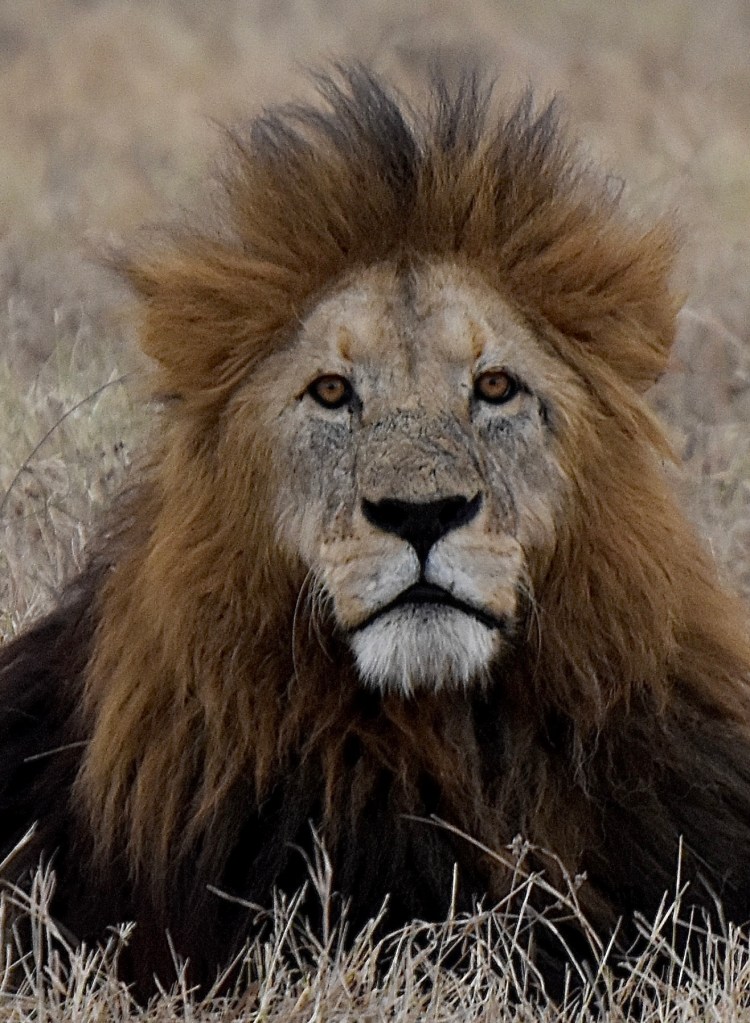
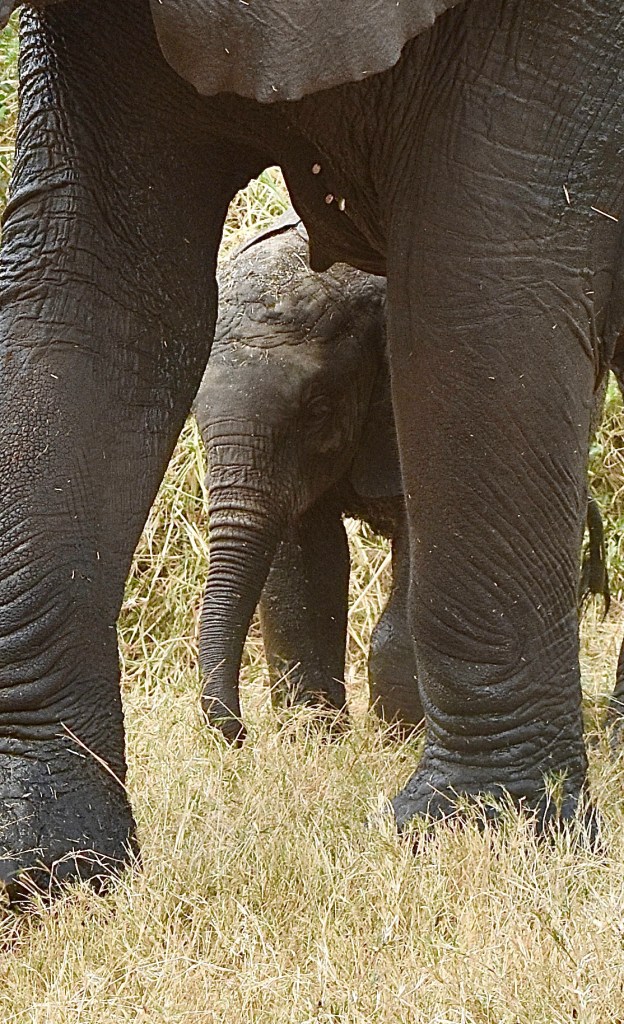
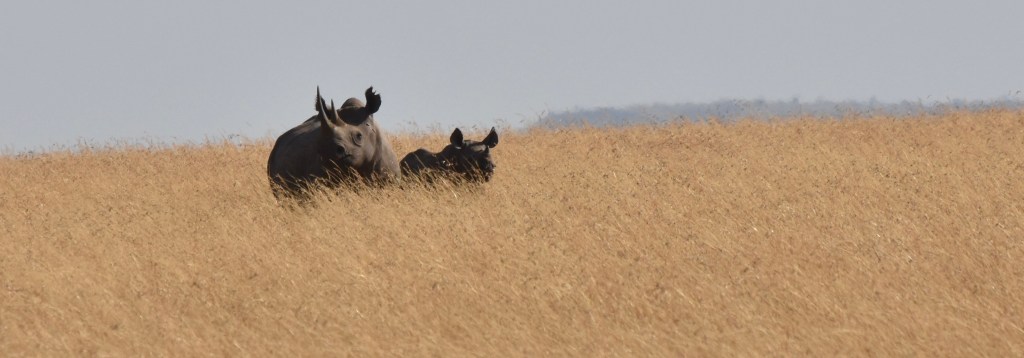
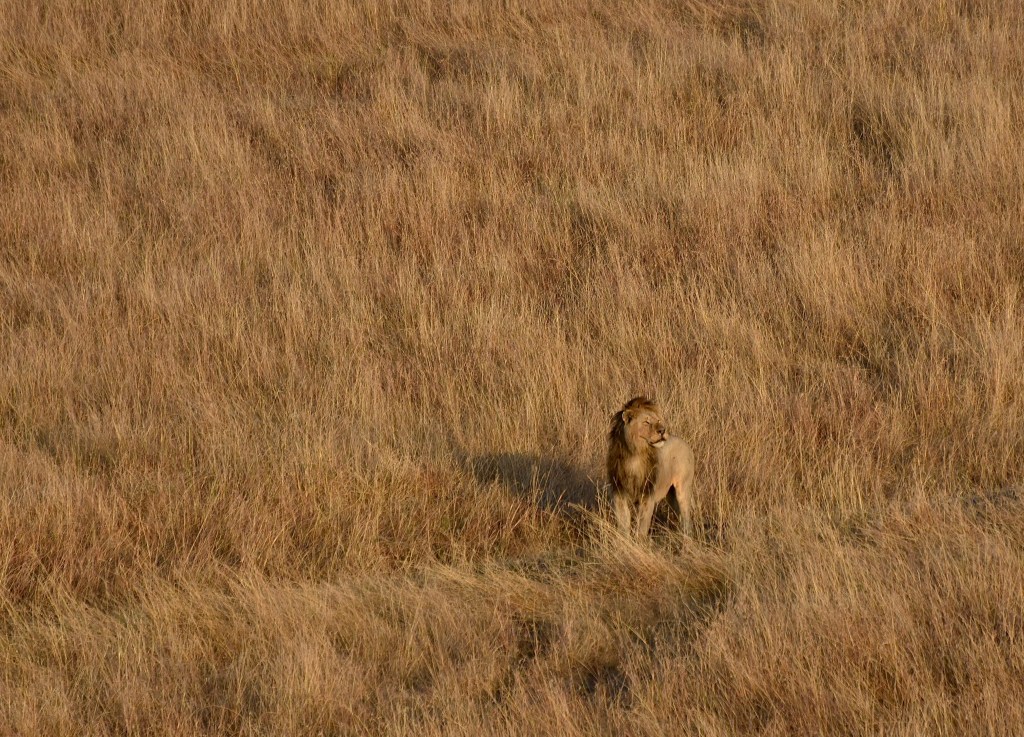
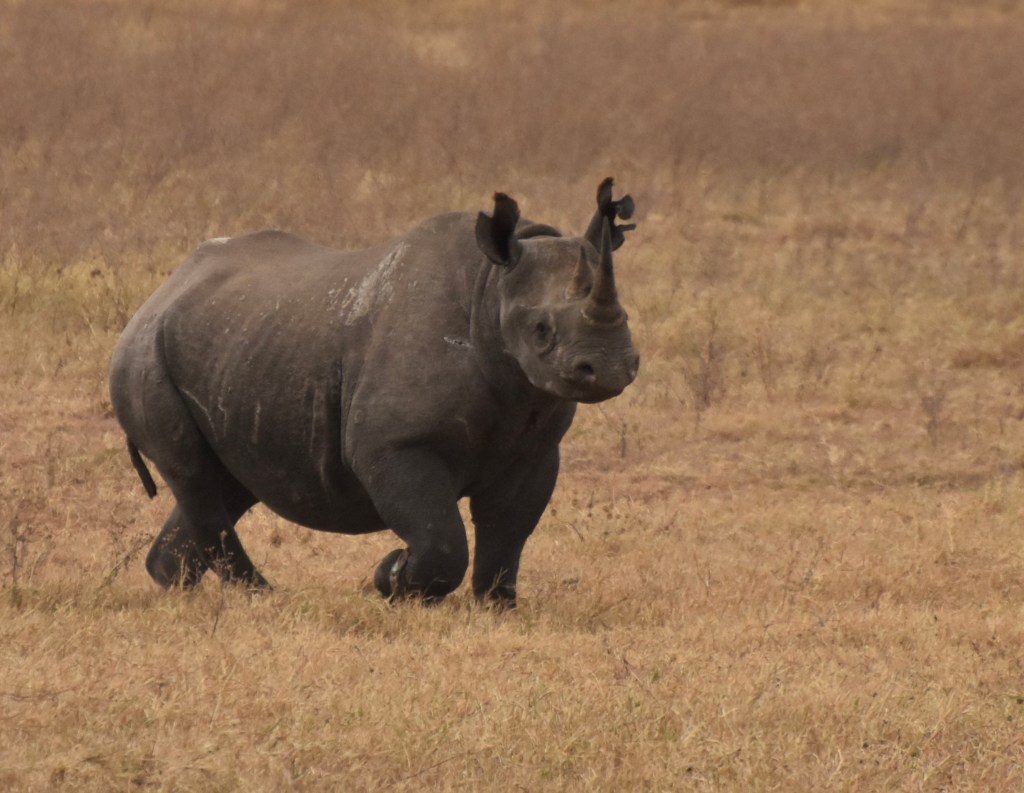
LionElephantRhinoceros LeopardCape Buffalo
The Ugly Five:
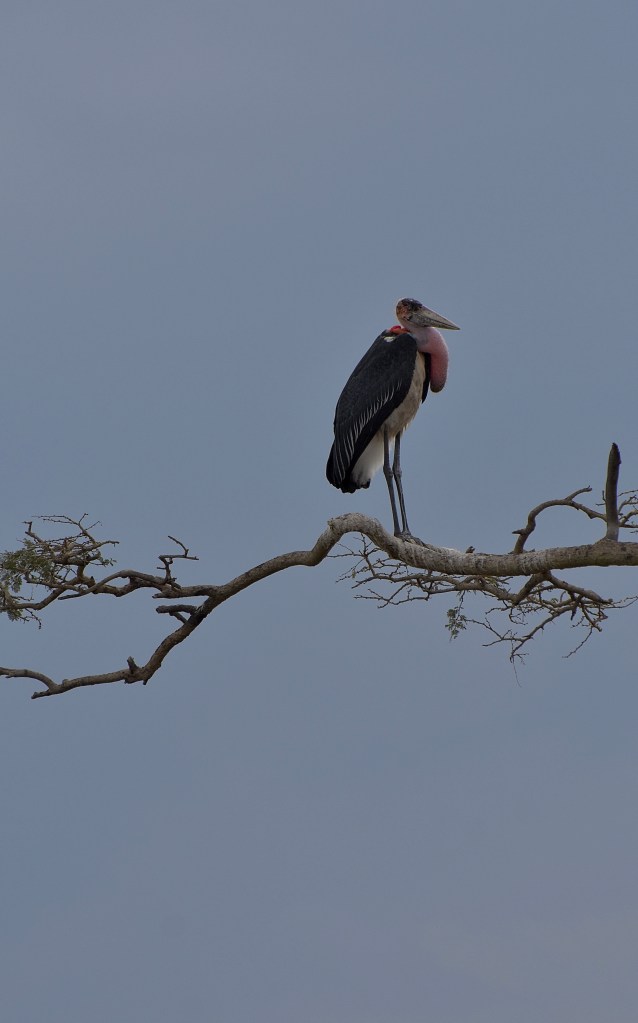
Seeing the beauty in these wild animals it became apparent that beauty really is a relative assessment, and as time went by a consensus formed that there also existed on the African savannah a handful of species that were just plain ugly. Yes, there can be beauty in ugly, a few dog breeds come to mind, and yes beauty and ugly are in the eye of the beholder, but here are the Ugly Five:
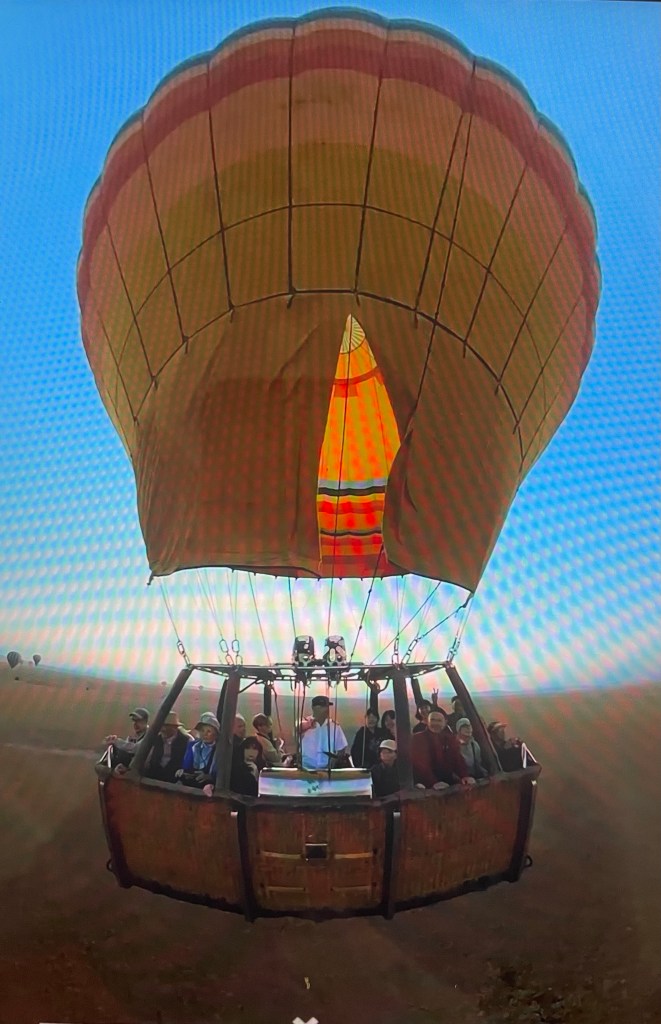
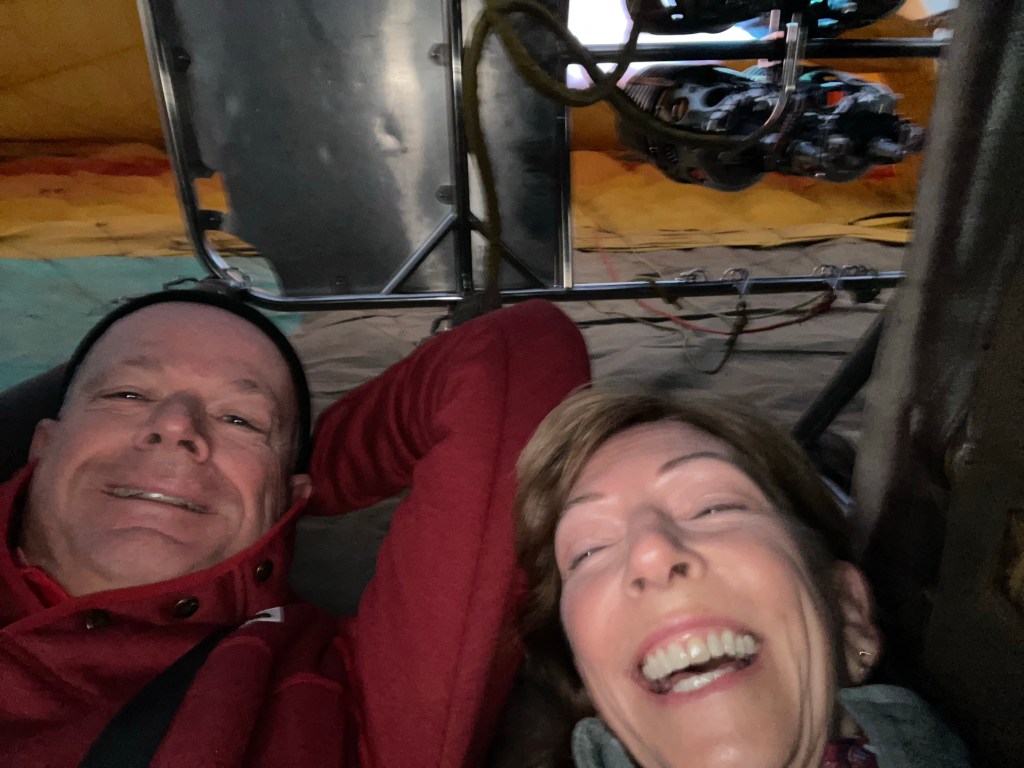
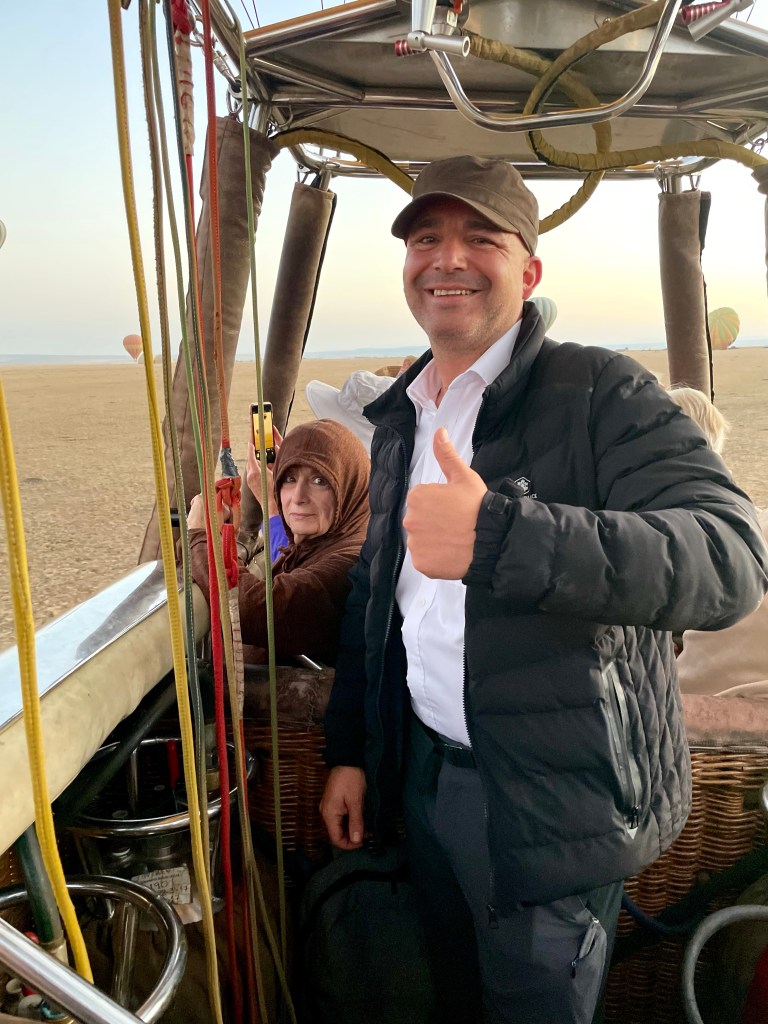
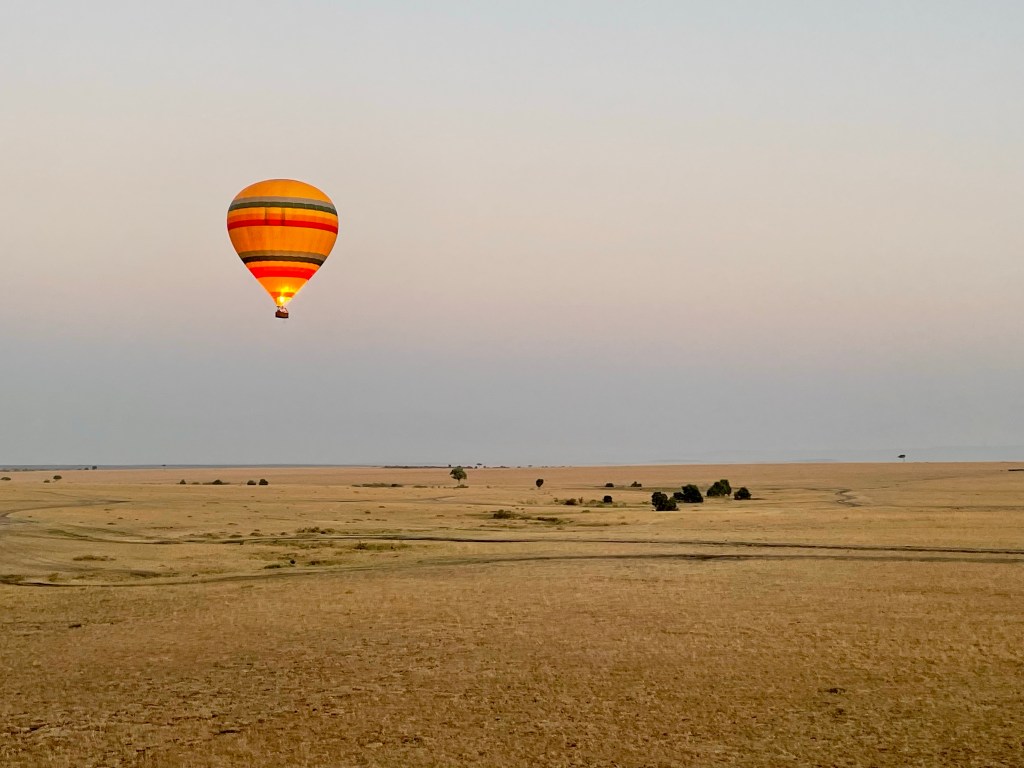
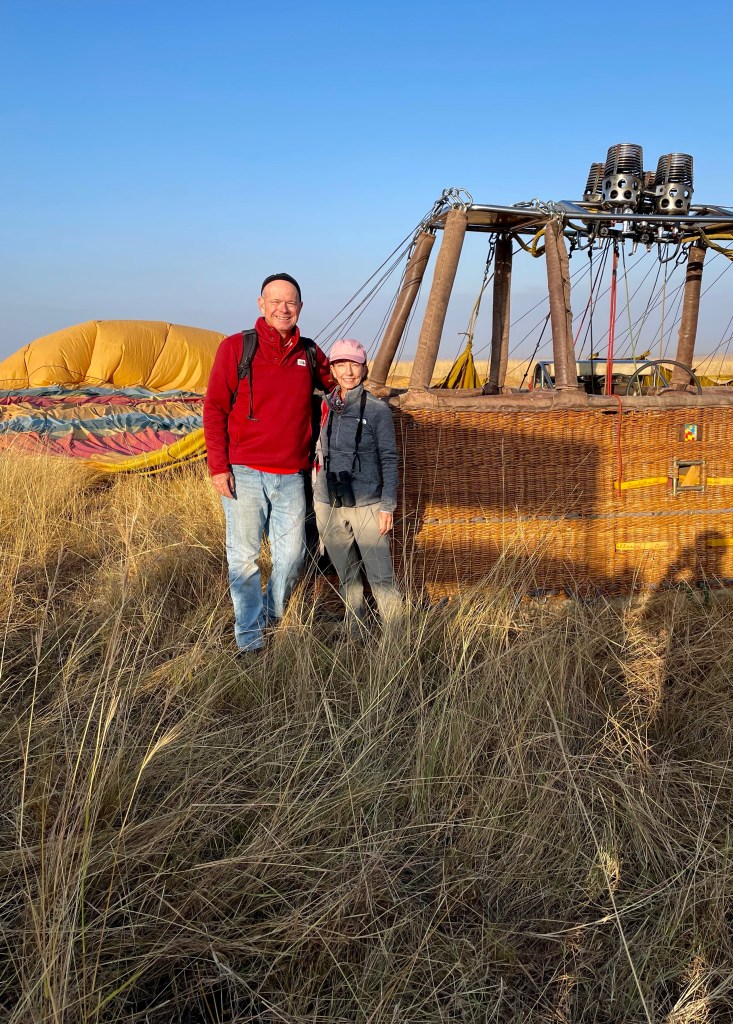
Susan and yours truly to the right of the Pilot, gently floating above the Masai Mara
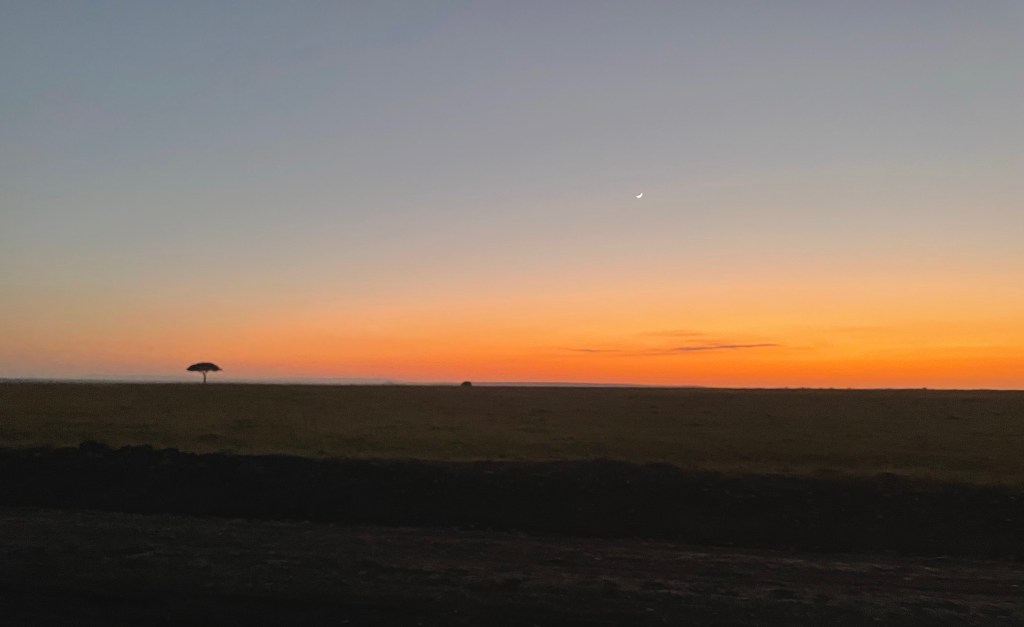
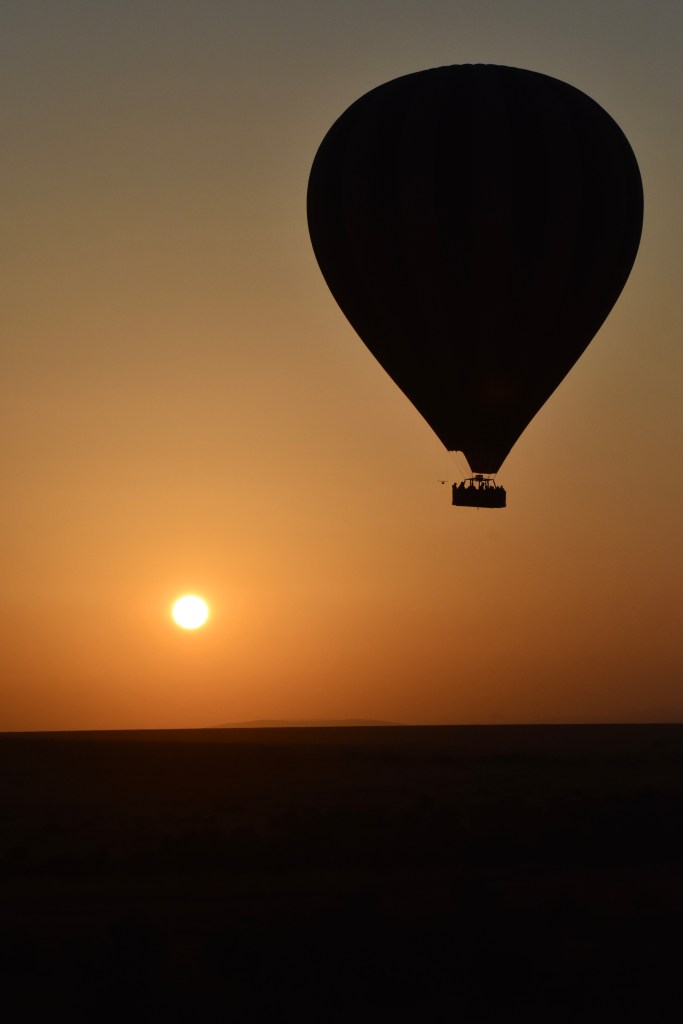
Sunrise and sunset come quickly at the low latitudes, as mariners dawn and dusk barely exist in the equatorial region.
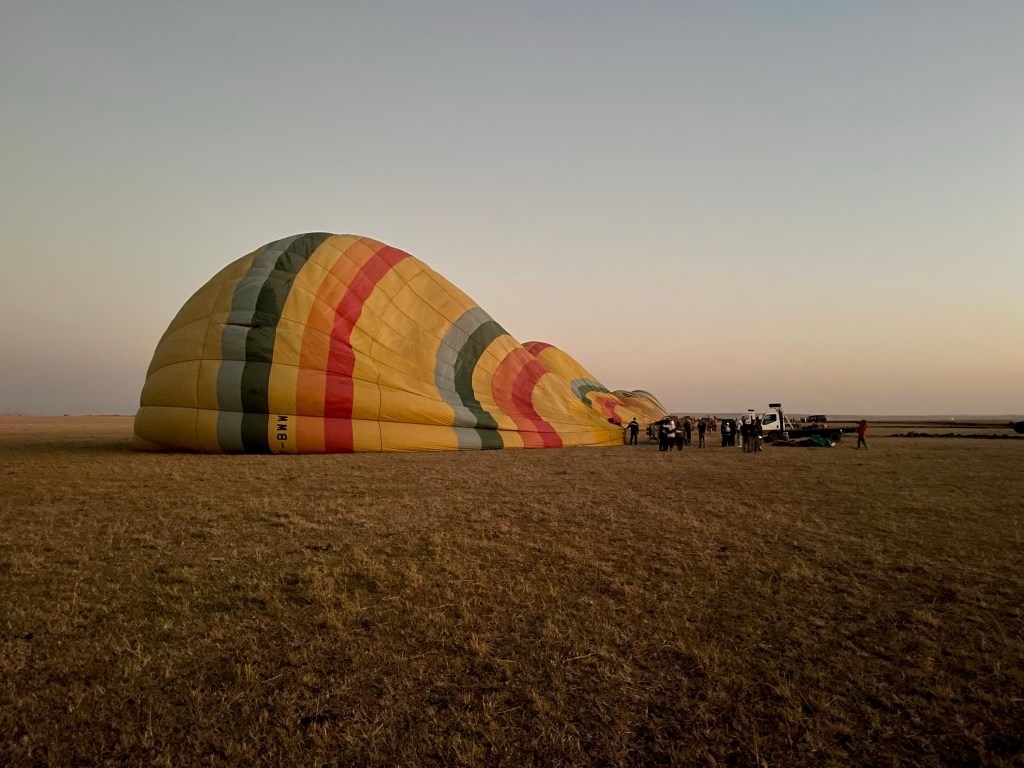
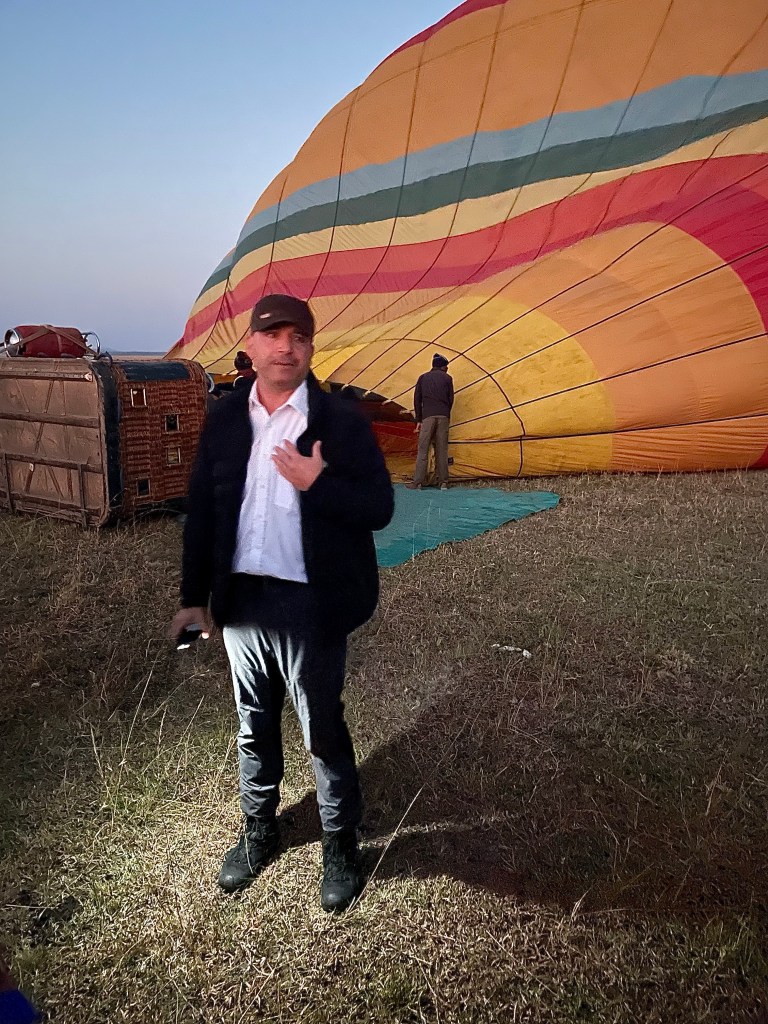
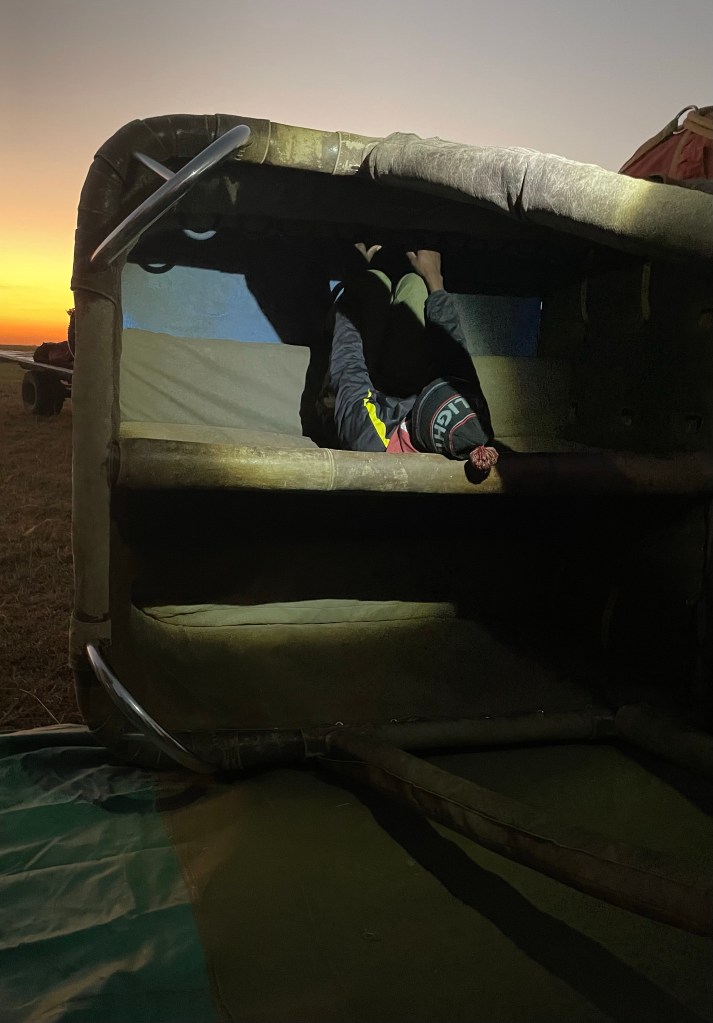
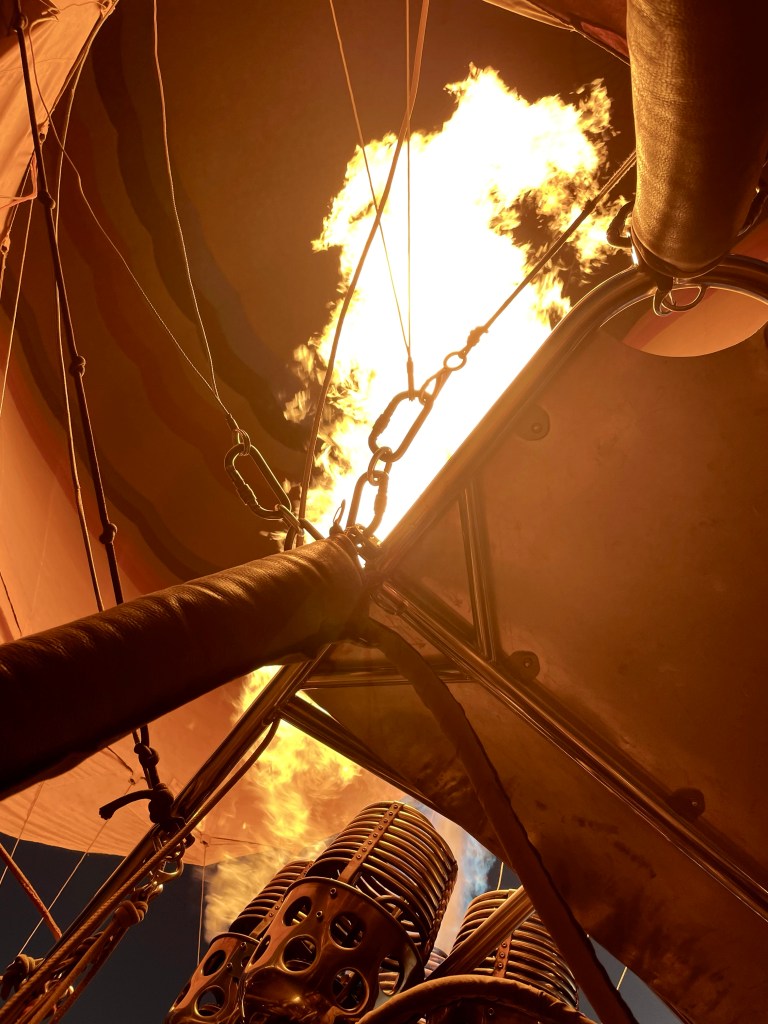
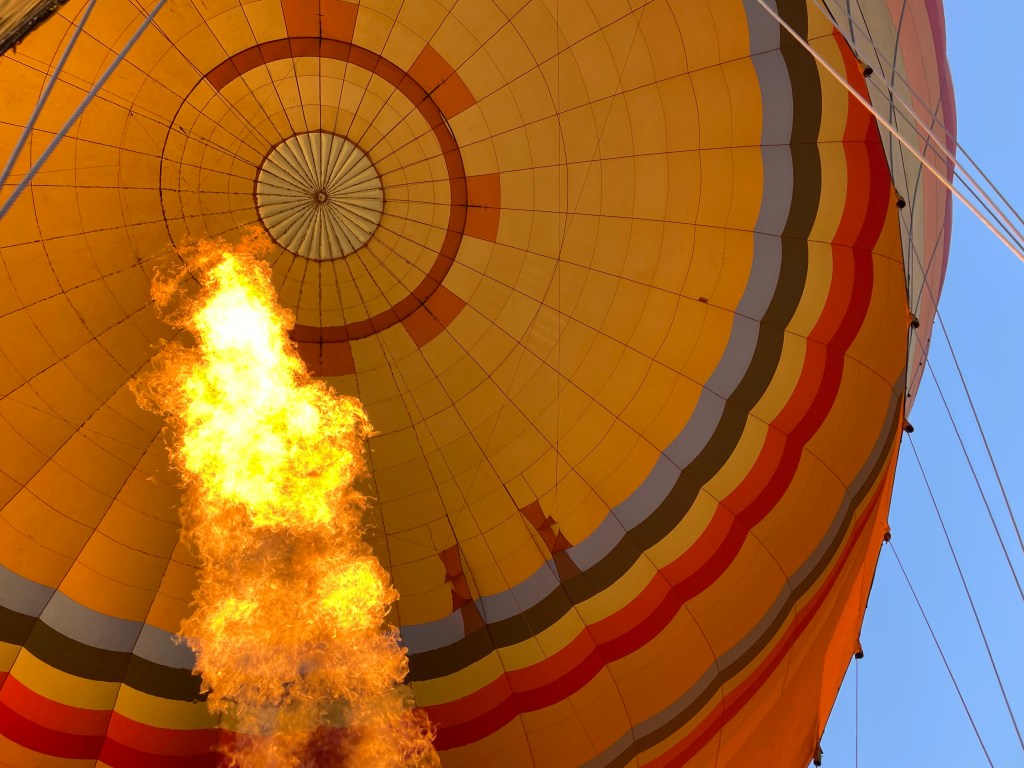
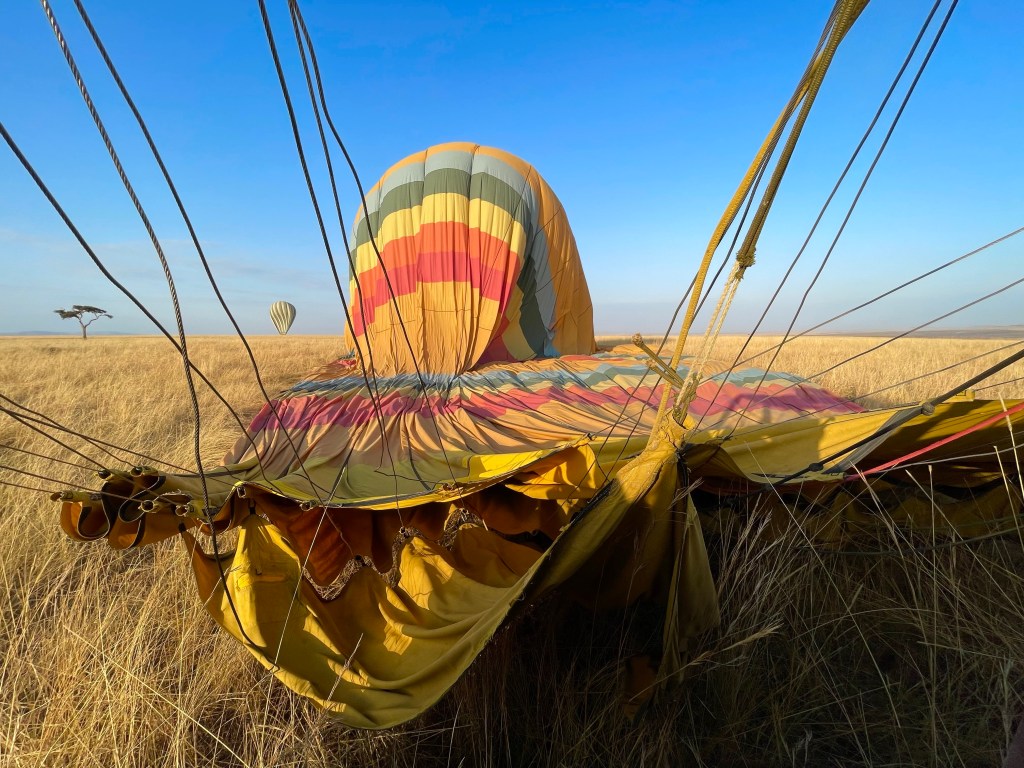
This is magic hour – that time between total dark and the first sign of the sun peaking above the distant horizon. The clarity of light is unmatched at any other time of day.Starting the cold inflateOur pilot Mehmet from Turkey leads the safety briefing while the cold inflate continues The balloon basket lies on its side to facilitate loading the 16 passengers in four compartments, and an employee demonstrates how we are to sit and hold on – crash positionLoaded and ready for the hot inflate to commence.And Whoooosh, the hot inflate fires right above our head. Loud powerful and hot. The balloon fills with hot air, the balloon rises to a position above the basket, the hot fill continues, the basket rotates from lying on its side to being upright, all the passengers slide down into the basket, Mehmet jumps in, gives the order to release the tie down line secured to the flatbed truck’s front bumper, the basket bumps gently three or four times, and then total silence, just a sensation of floating. We stand up and peer over, already 20 feet off the ground. Mehmet pleased with his flawless launch!Magic hour ends with the sun peaking above the African horizon.Glorious A nearby balloon firing hot air to ascend, creating a warm glow.18 balloons launched on this early morning
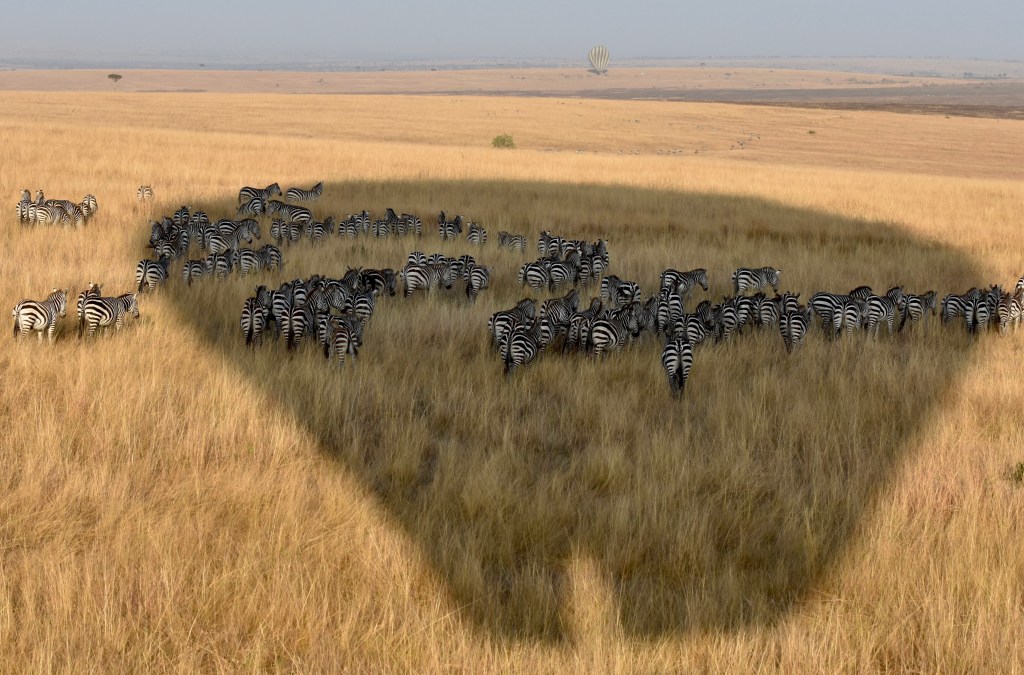
A number of wildlife images from the balloon:
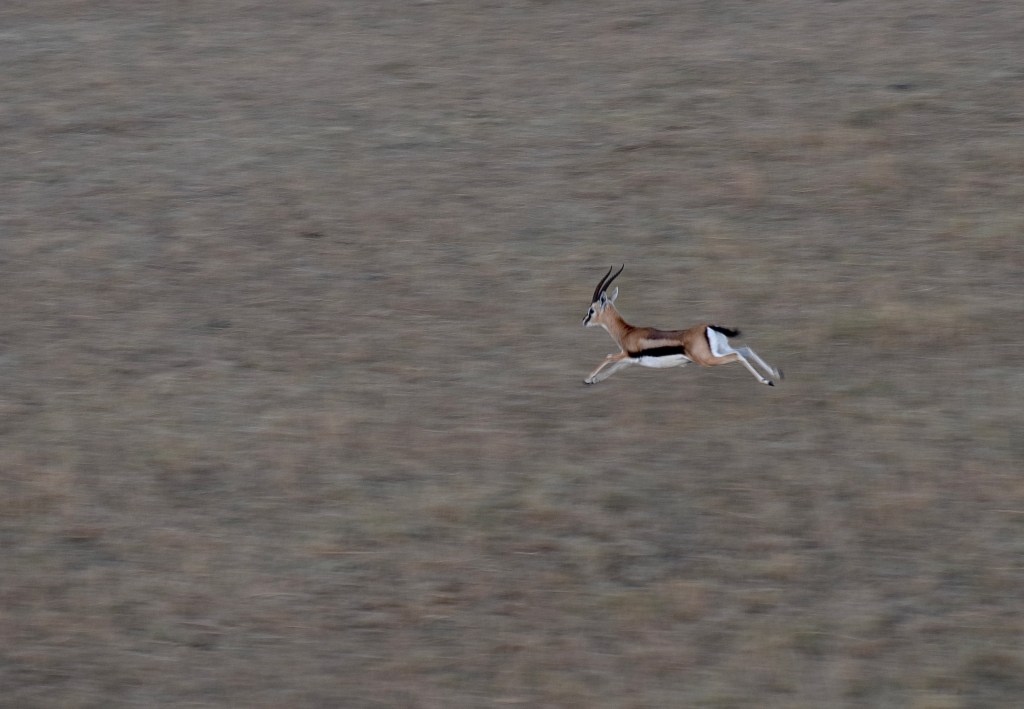
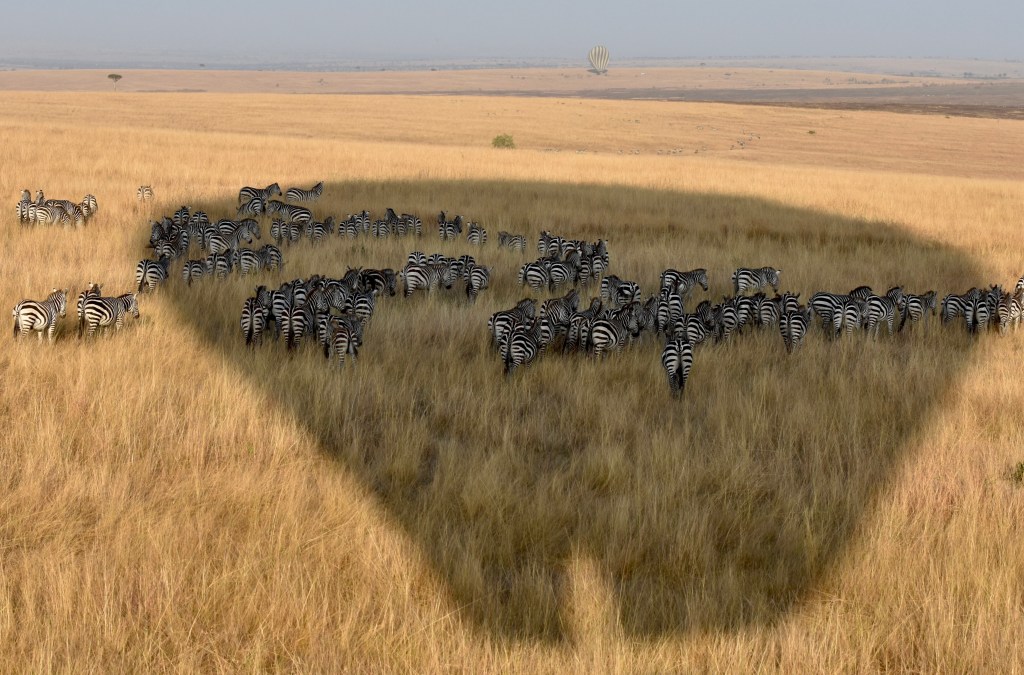
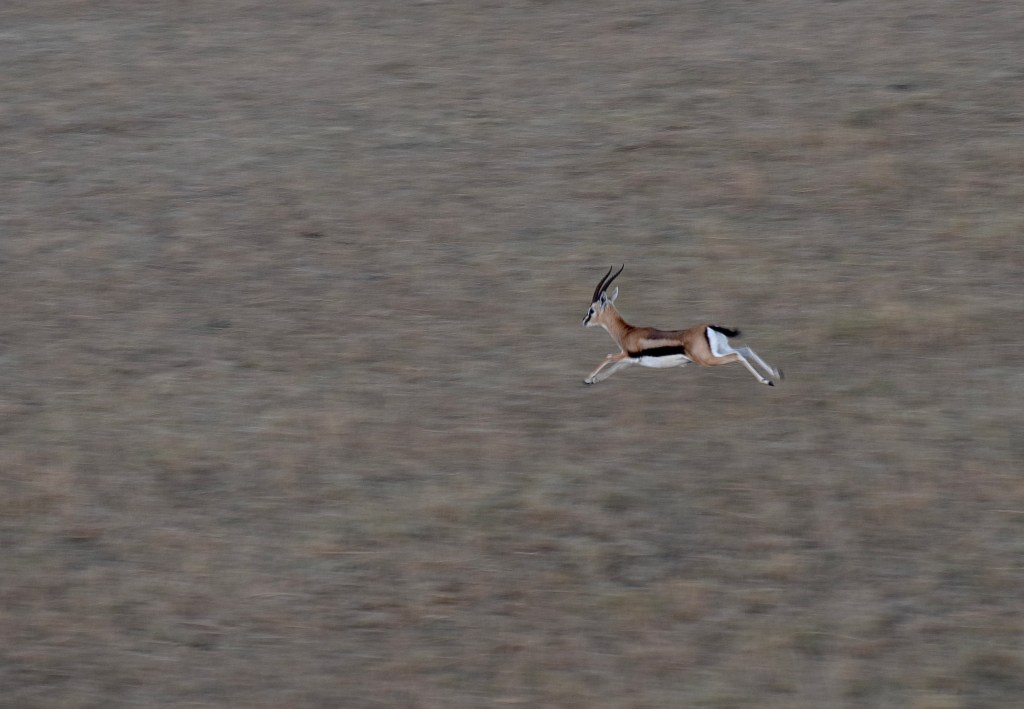
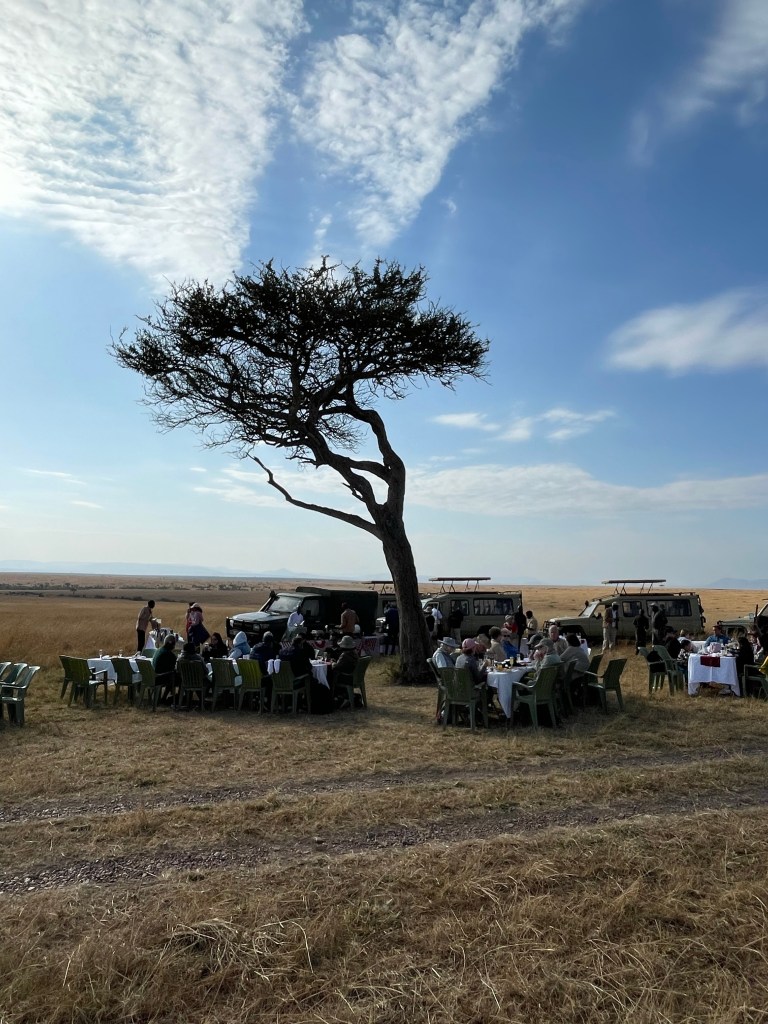
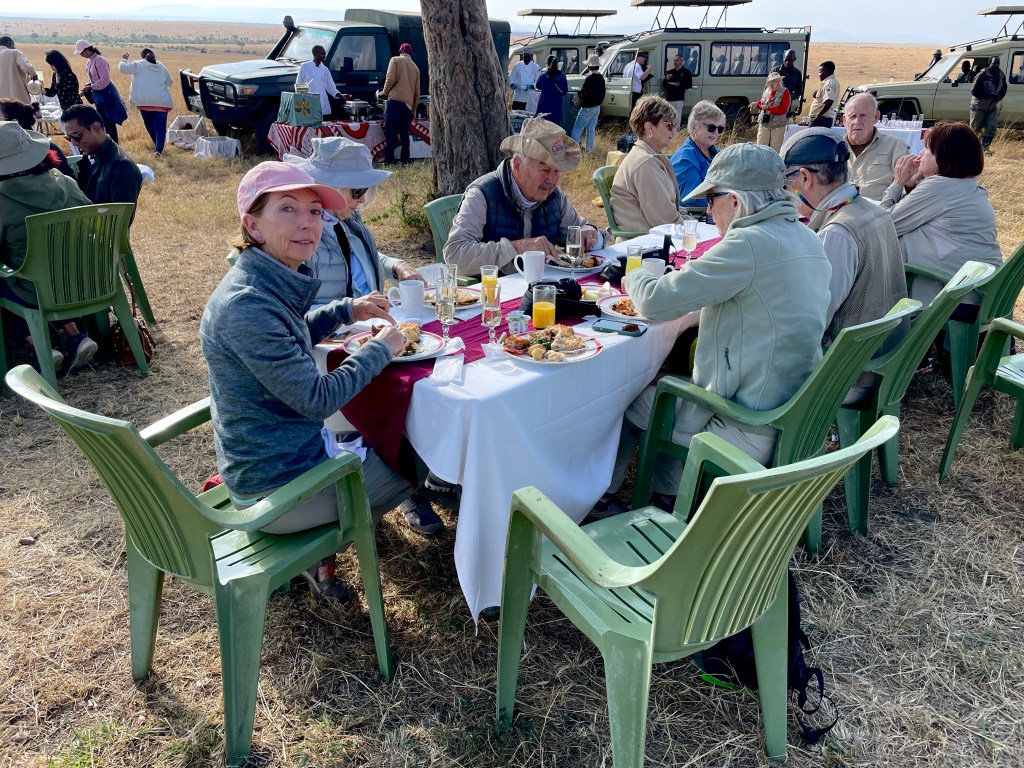
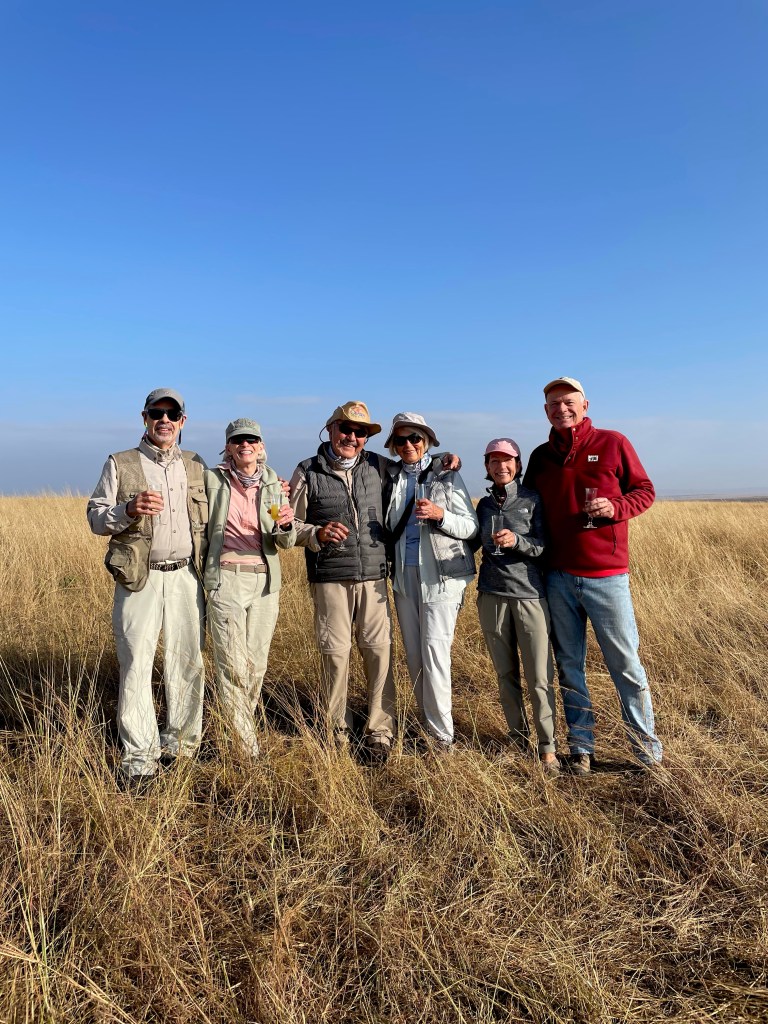
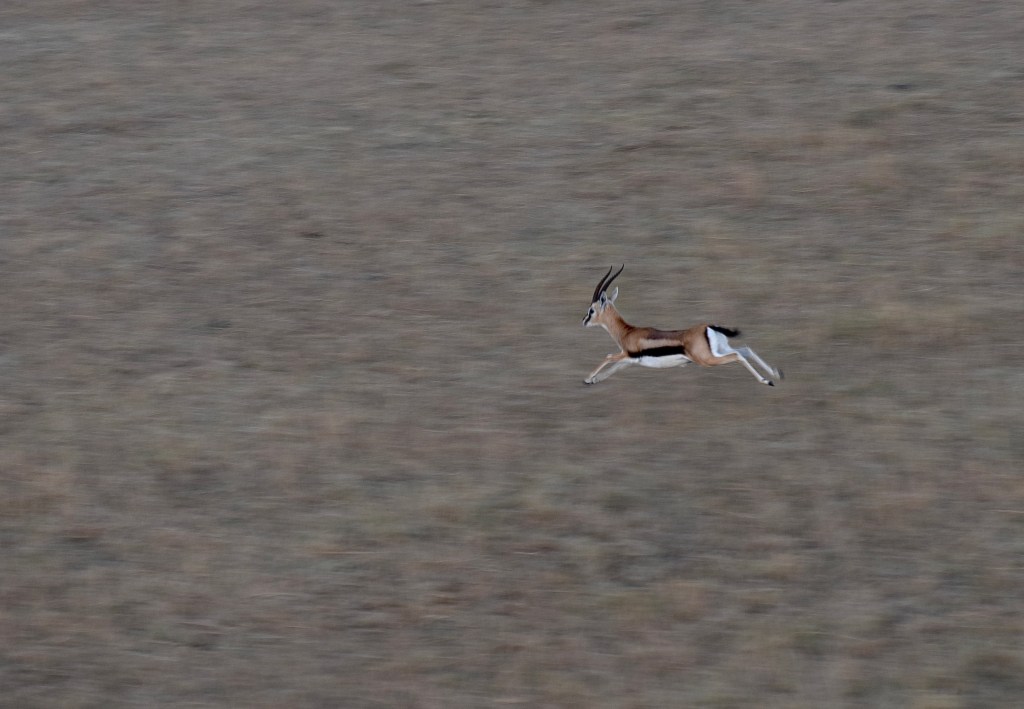
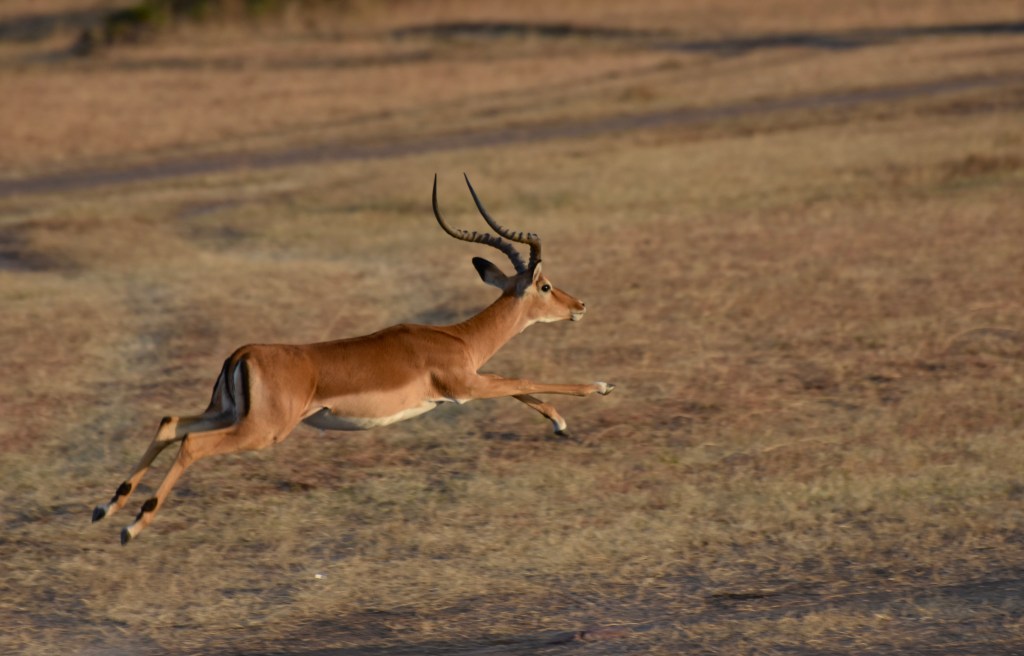
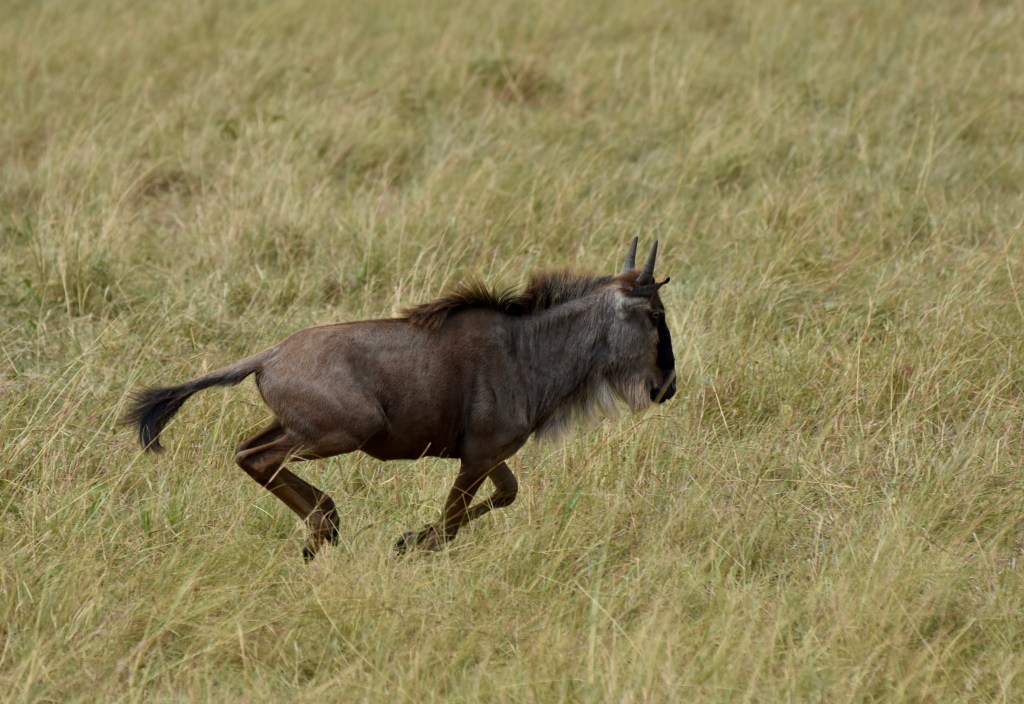
Large herd of Cape Buffalo continuing their long, slow, yearlong migration.Zebras lead the migration Thomson’s Gazelle caught mid air during full speed sprintAfter touch down, the anti climaxBreakfast under a lone Balanite tree on the savanna.Celebrating a successful float with a champagne breakfast among the tall savanna grasses with our friends Warren, Barbara, Jerry and Lou Ann.
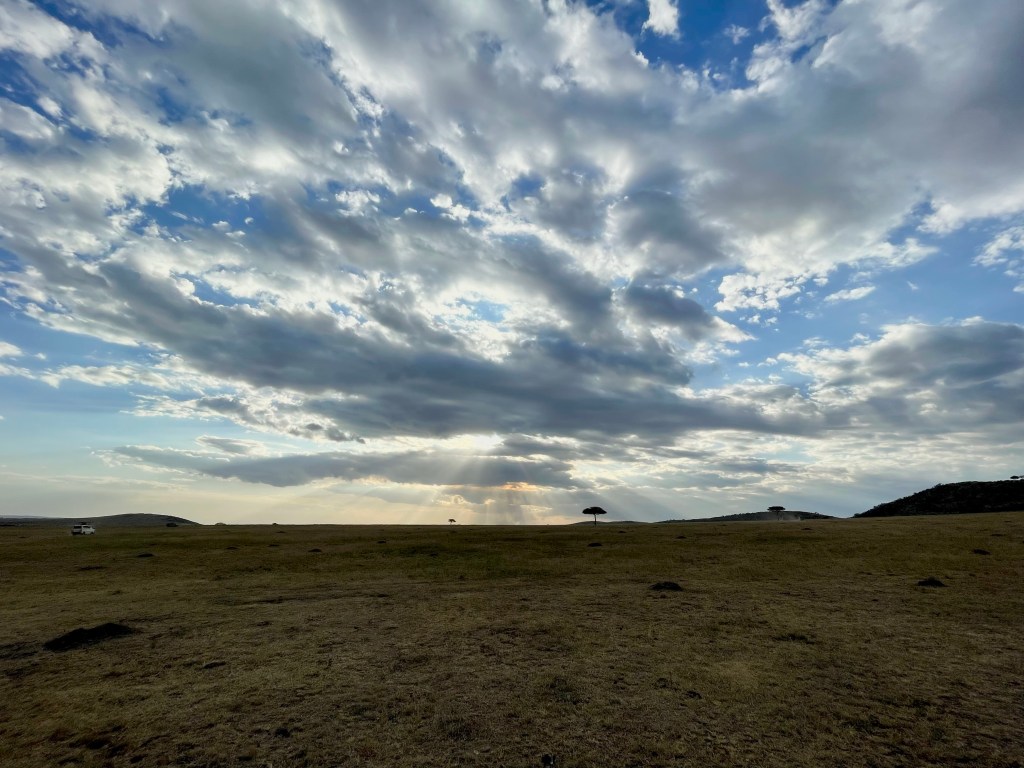
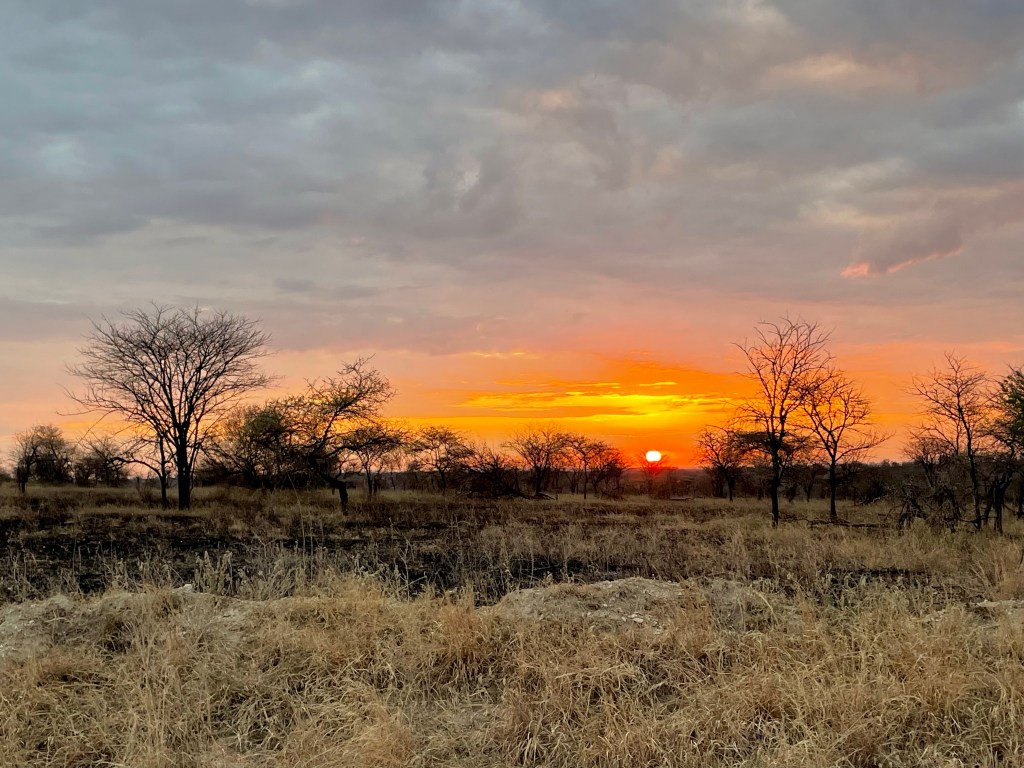
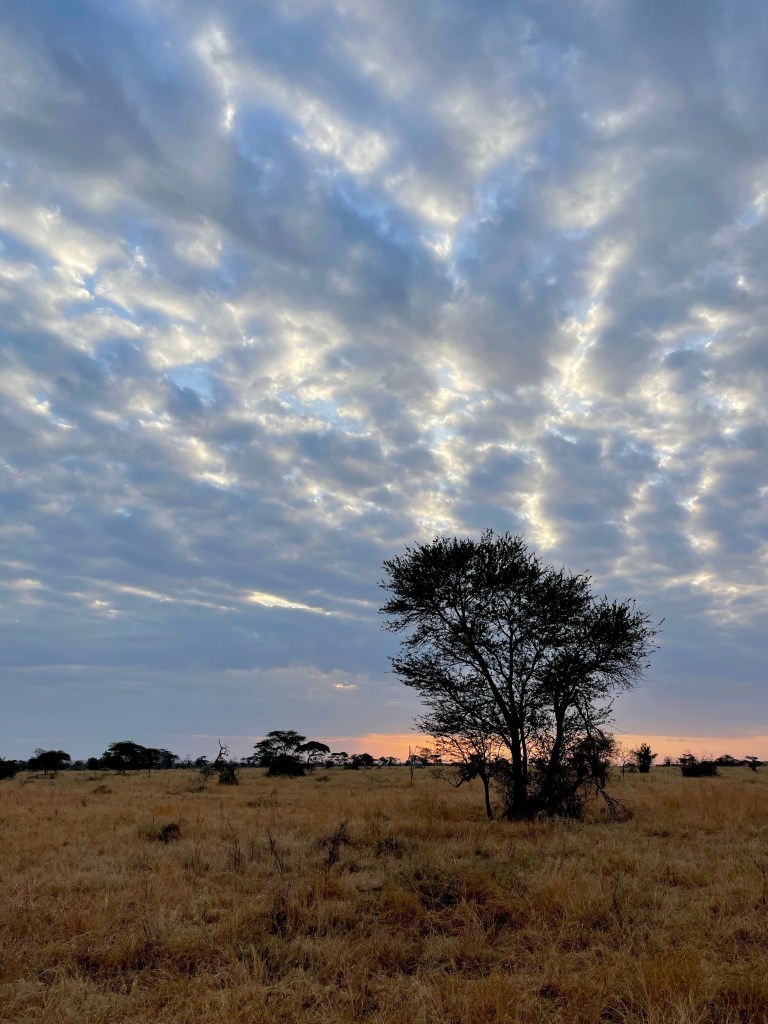
At first you notice the light. The clarity, the purity, the way it illuminates the surroundings.
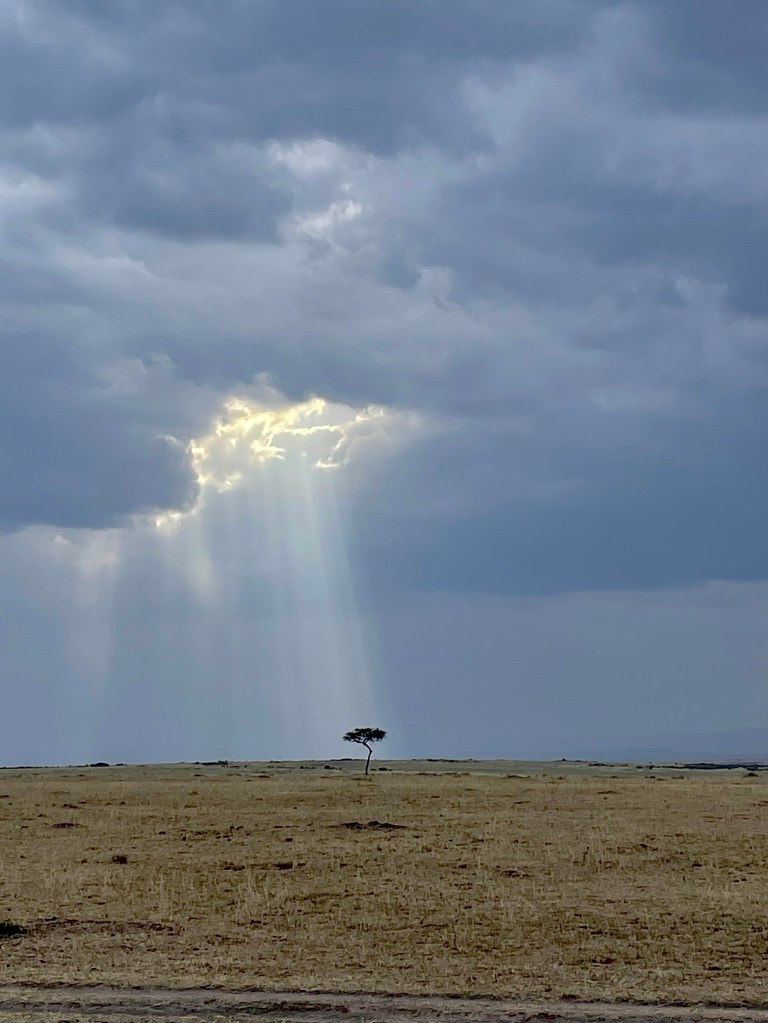
And then: Amber waves of grasses. Rolling hills extending beyond the horizon. An animal here. An animal there. Acacia trees. A long string of green surrounded by yellow, hinting at the existence of a fresh water stream. A narrow, winding trail running through a field, only set foot upon by an indigenous animal.
A Balantine tree, always solitary, always just one.
A herd of animals grazing.
Always grazing.
Always grazing, for there’s only three things all of these various species do: eat, reproduce, and seek protection to stay alive another day.
The herbivores are always eating. No hobbies, no activities, no outside interests, nothing. Just grazing.
The carnivores eat when they’re hungry. Maybe once every 3-4 days. But when they do eat, it’s more consequential than it is when the herbivores eat, for while the grasses are alive, there’s no heartbeat, no instinctive duty to raise an infant, no will to live.
Reproduction happens, it’s a certainty given the size of the herds and the many babies seen each day, but it’s seldom seen.
Often the time of fertility might last just a few weeks, so with the wildebeest 85% of all calves are born within a three week period, ensuring that predators such as lions, leopards and cheetah are overwhelmed by the food supply thus maximizing the herd survival rate. Female impala can delay birthing up to a month if grazing conditions are not satisfactory. A typical female elephant becomes fertile once every 3-9 years, but they live to about 60. And so it happens but it’s not often seen.
Seeking protection is innate.
It happens every minute of every hour of every day. And especially of every night, because some of the most fearsome hunters – think the big cat family – are nocturnal and hunt at night. So much for a good night’s sleep.
The efforts to survive are on display every day and every where. It’s in the body language. The twitch of a head. The slow and subtle relocation to safer ground. The rejoining the herd for safety in numbers. Stopping the grazing when a lion or a leopard or a cheetah or a hyena enters the Perimeter of Fear, and just watching it intently – Is it hungry? Is it aggressive? Is it focused on me? Should I go stand next to a slow poke?
In the language of the Maasai, Mara = spotted. As in spotted land.
Visualize a vast and beautiful and remote and undeveloped expanse of central Africa, the territorial home for centuries of the Maasai tribe, and the land upon which 1.5 million wildebeests and 400,000 zebras and who knows how many other species rely upon for their annual migration in an effort to, you guessed it, stay alive for another day. These herds of animals create spots on the vast landscape, as do the cluster of trees and the shadows of white, fluffy clouds above – a landscape spotted in every direction with beauty and so named by the Maasai – the world famous Masai Mara – the Spotted Land of the Maasai!
Introducing just a few of the wild majestic aggressive nervous hungry satiated young old residents passersby of the Masai Mara:
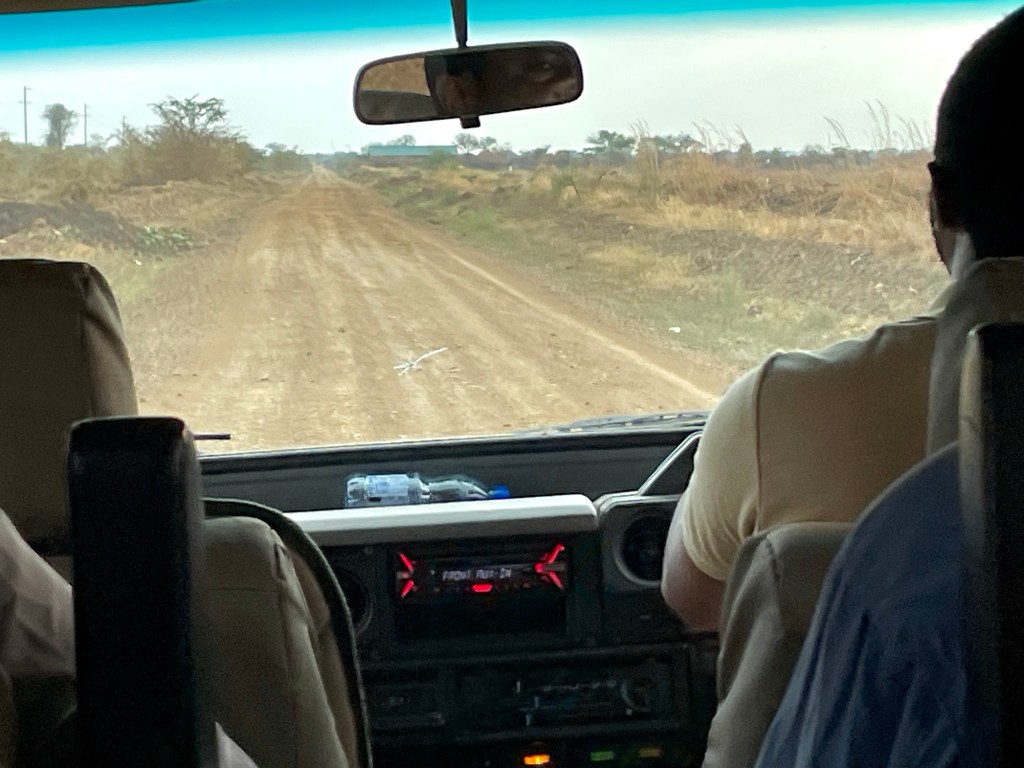
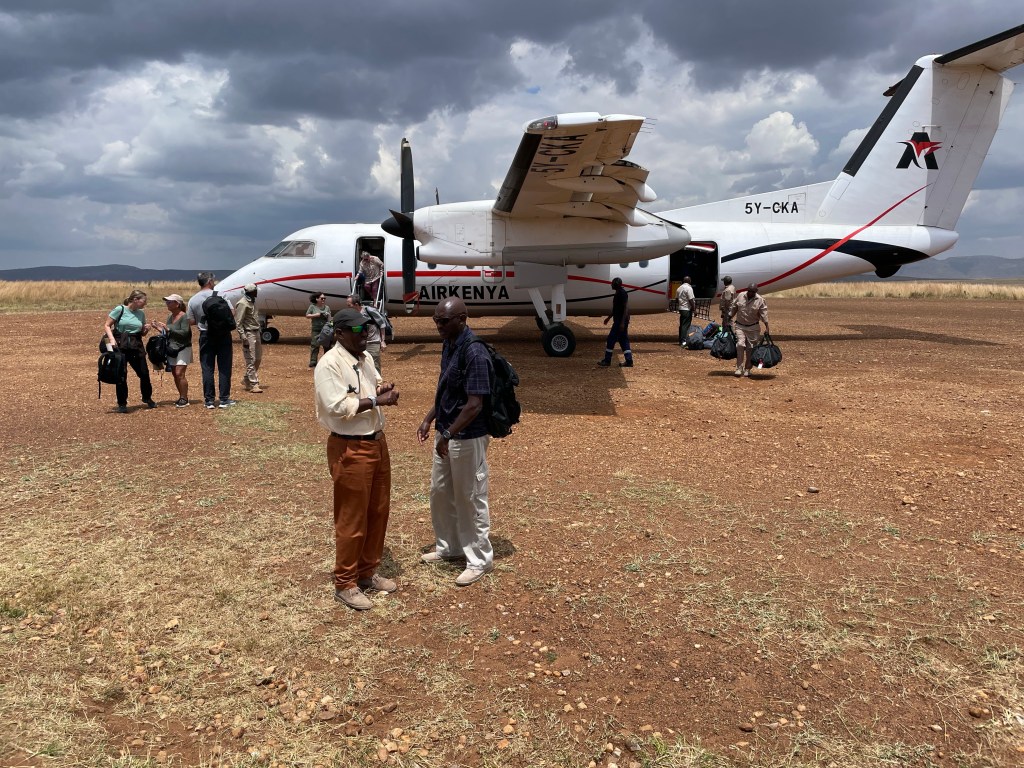
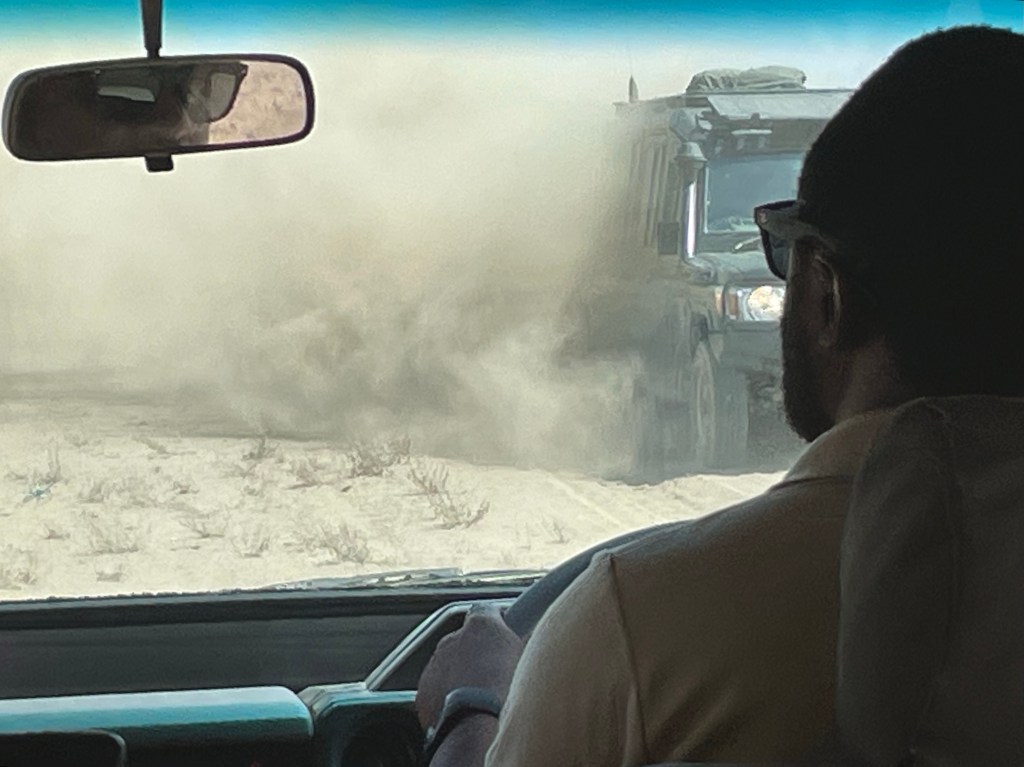
We left the Serengeti at zero dark thirty, upon the guidance of our safari guide Edwin, as we had four long hours on rough washboard dirt roads followed by a border crossing out of Tanzania and back into Kenya, a 30 minute bus ride to the airport, a bush flight to the Masai Mara airstrip where we’d be met by our new drivers in Land Cruisers, and then a late afternoon game drive on the way to the safari tent lodge.
A long day indeed but oh so interesting….
Rewarded with early morning light:
Our road conditions for the next four hours:
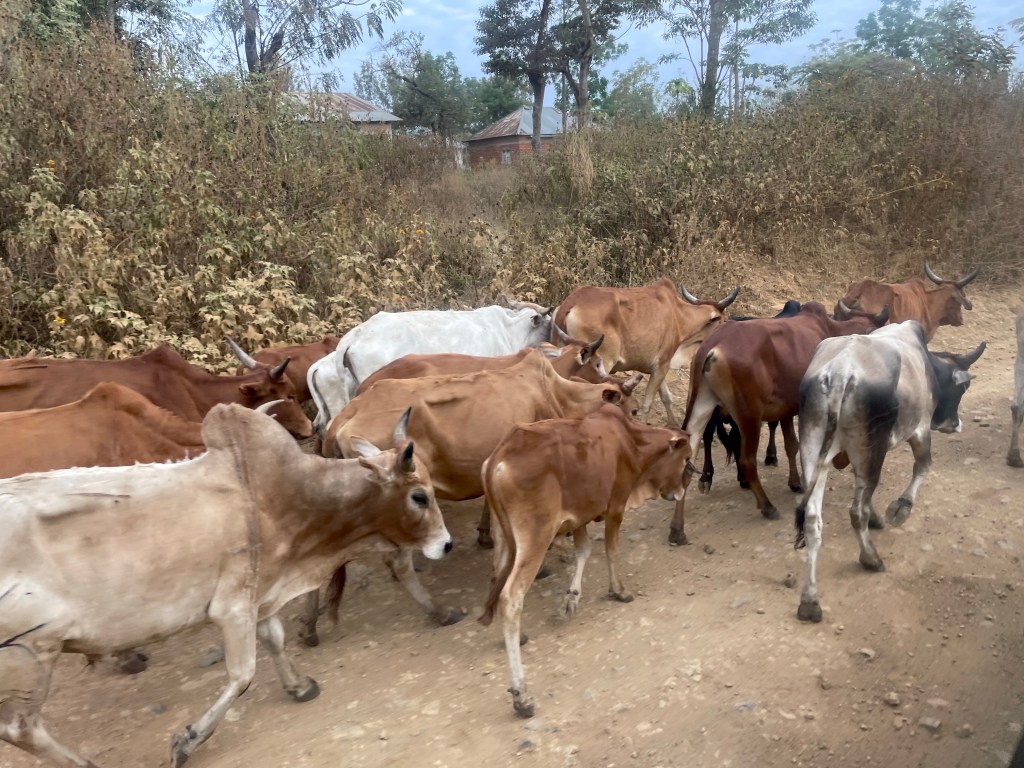
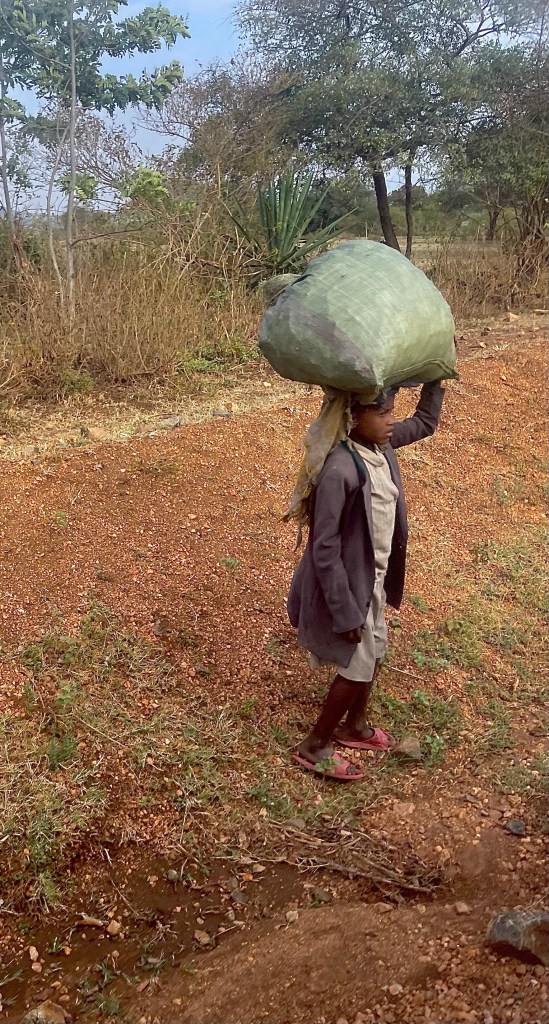
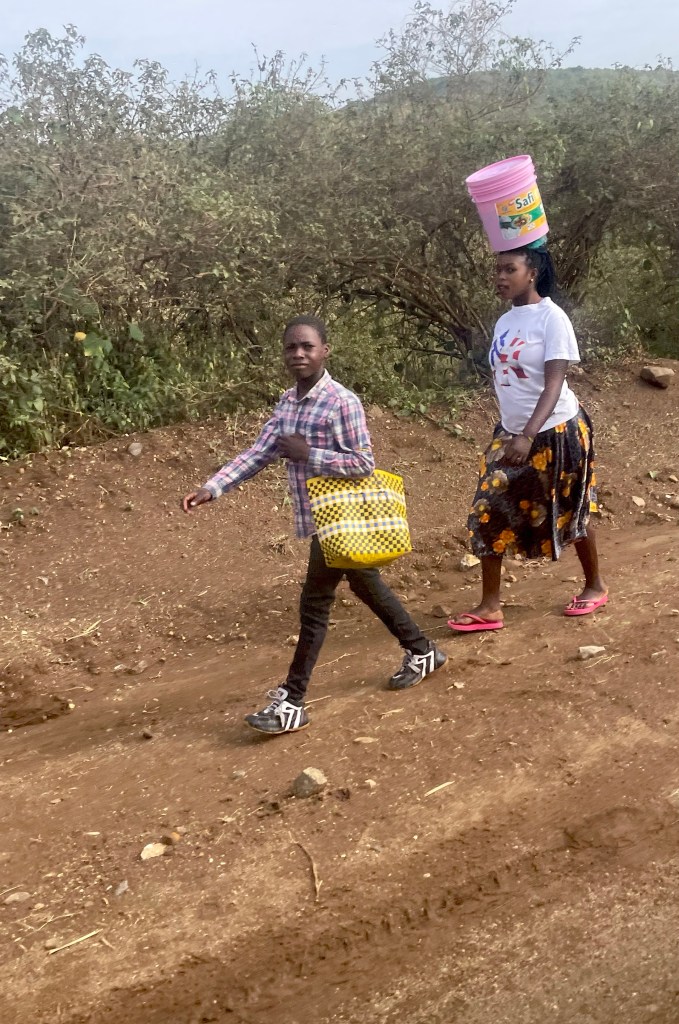
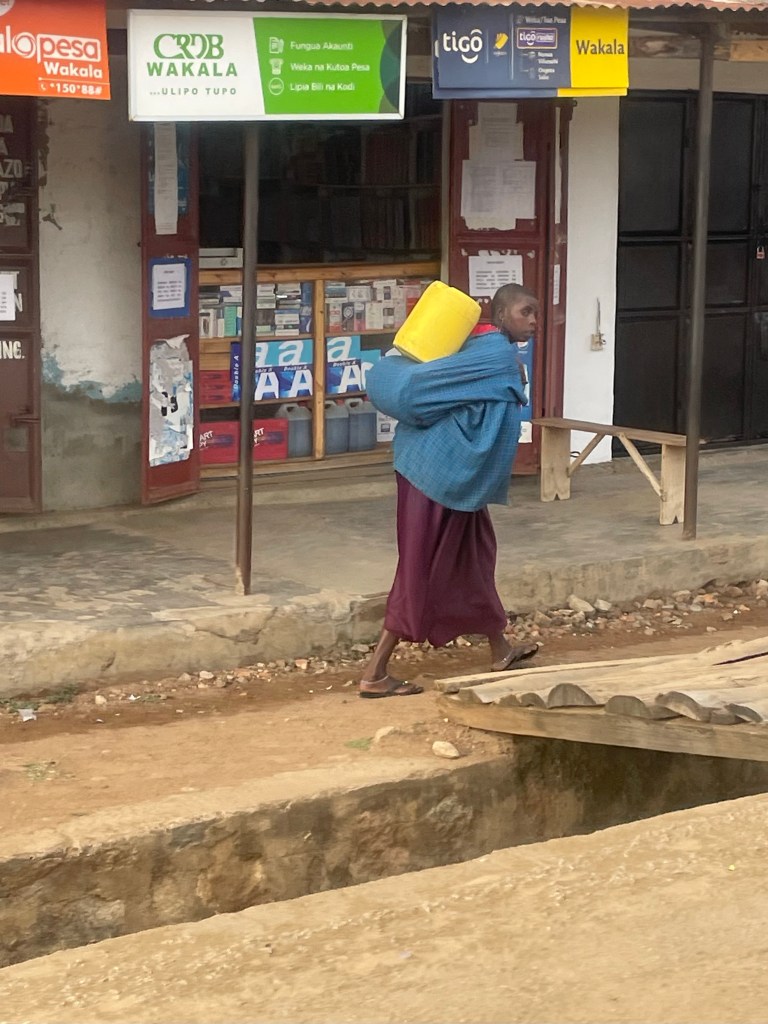
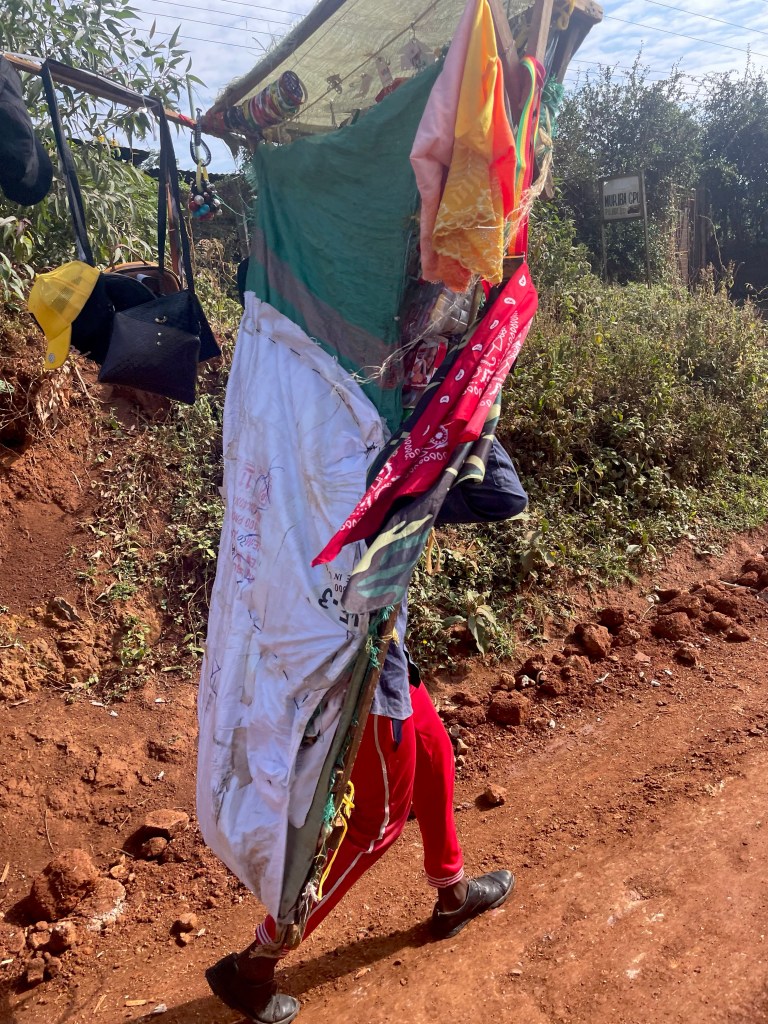
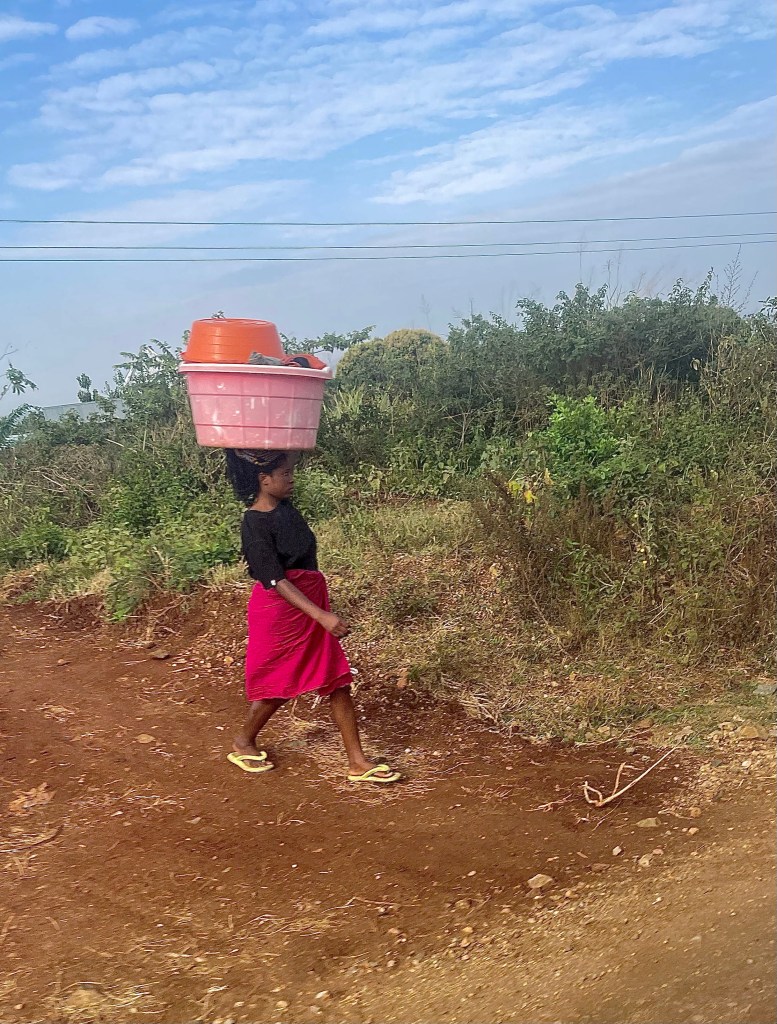
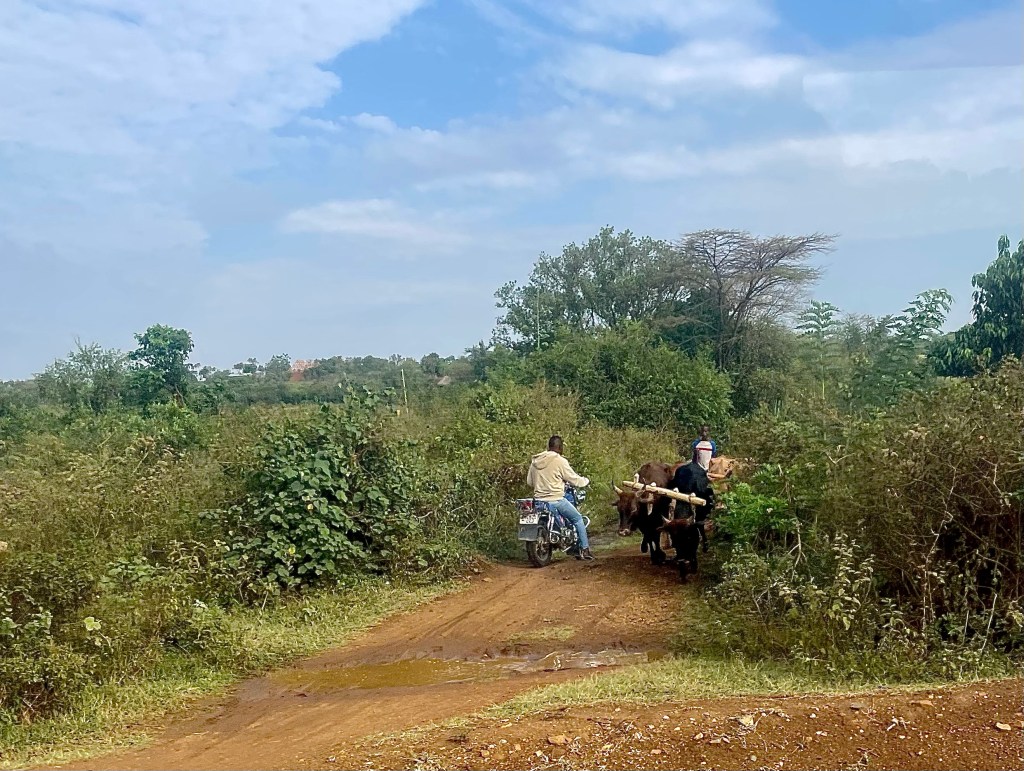
A selection of street views driving through Tanzania on the way to the Kenyan border:
Saying goodbye at the border to Big John, our Tanzanian driver
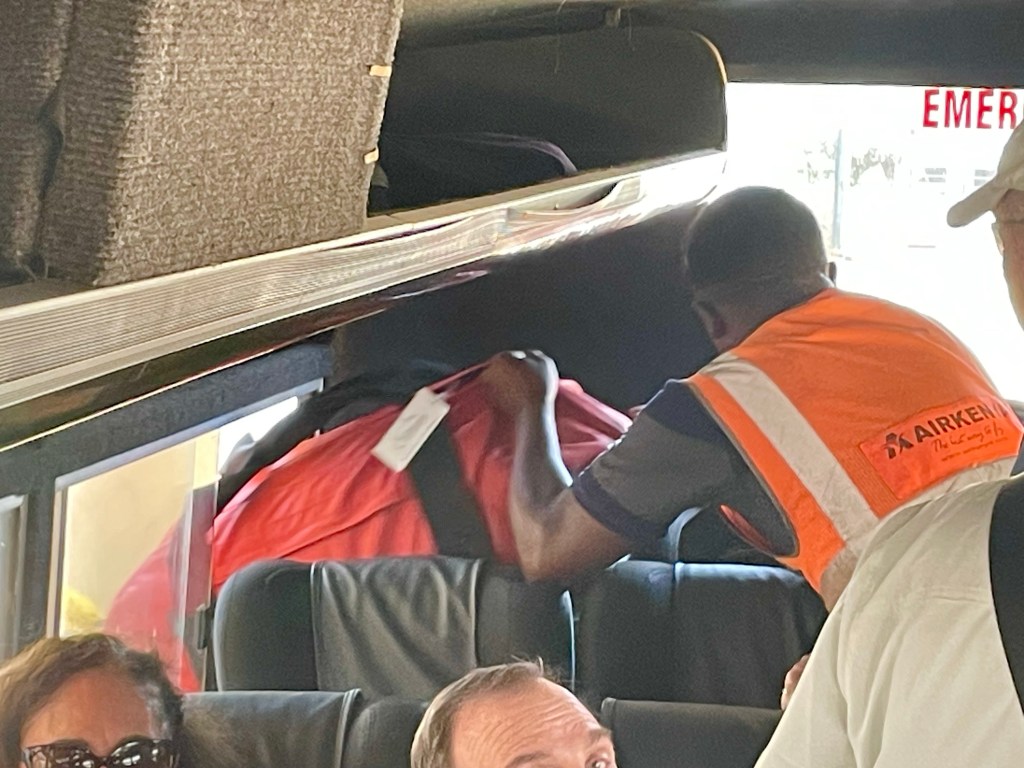
After clearing in to Kenya, we bused to the airport after loading luggage via the rear window
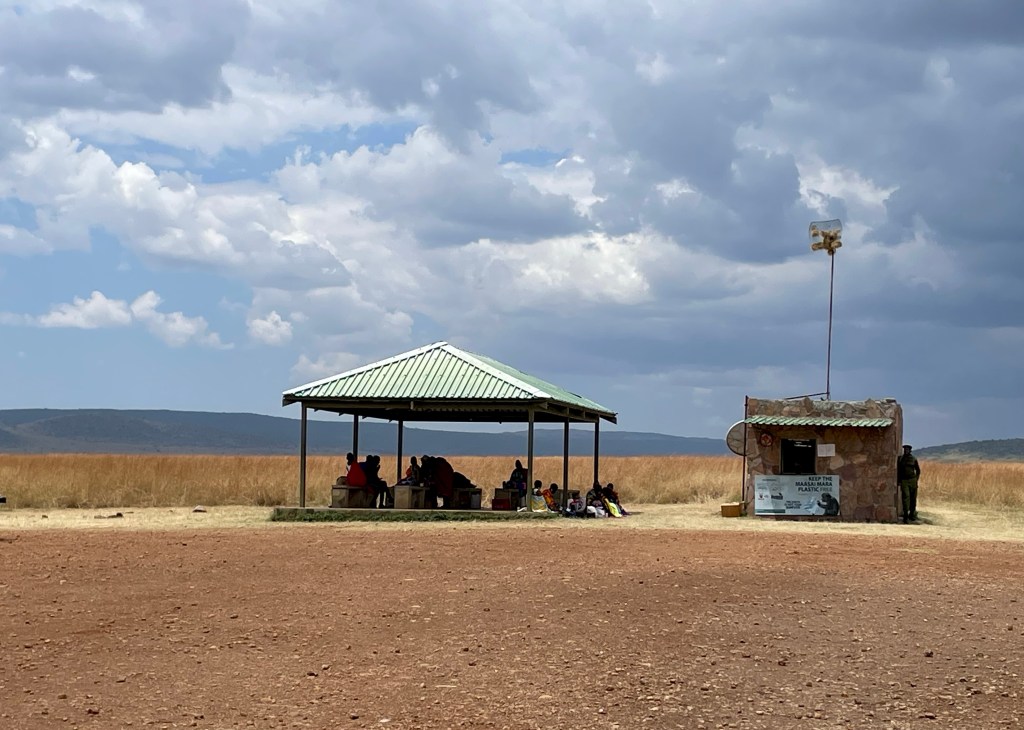
Airport terminal. No boarding passes required, just take a seat.
A quick game drive once in Masai Mara
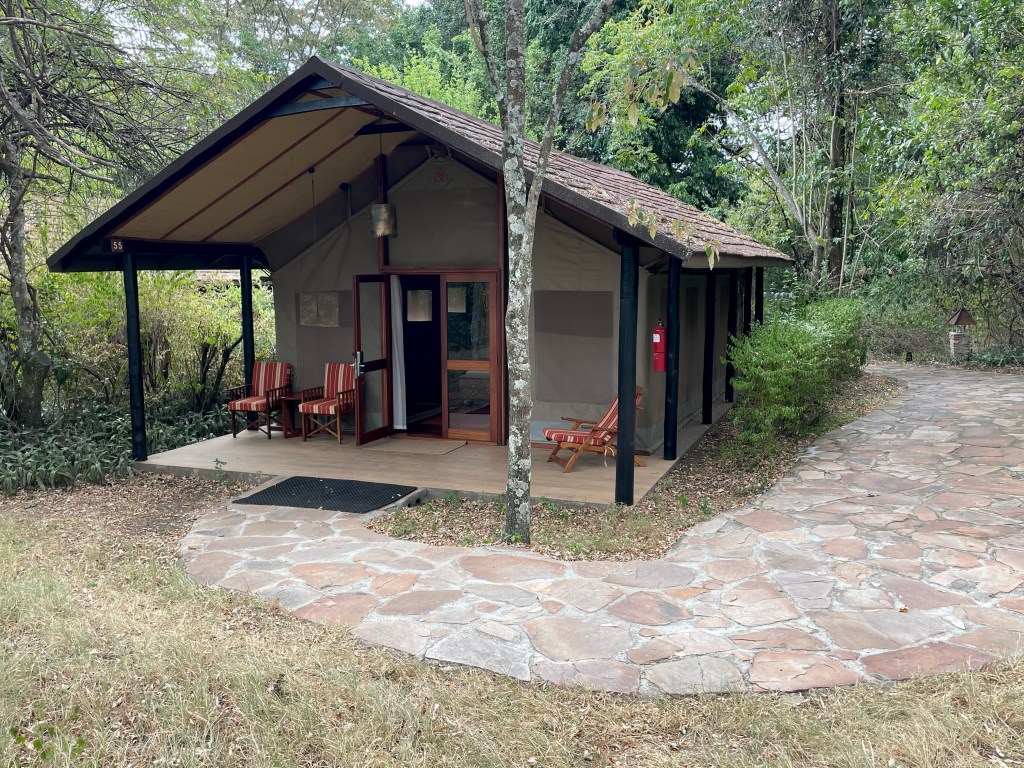
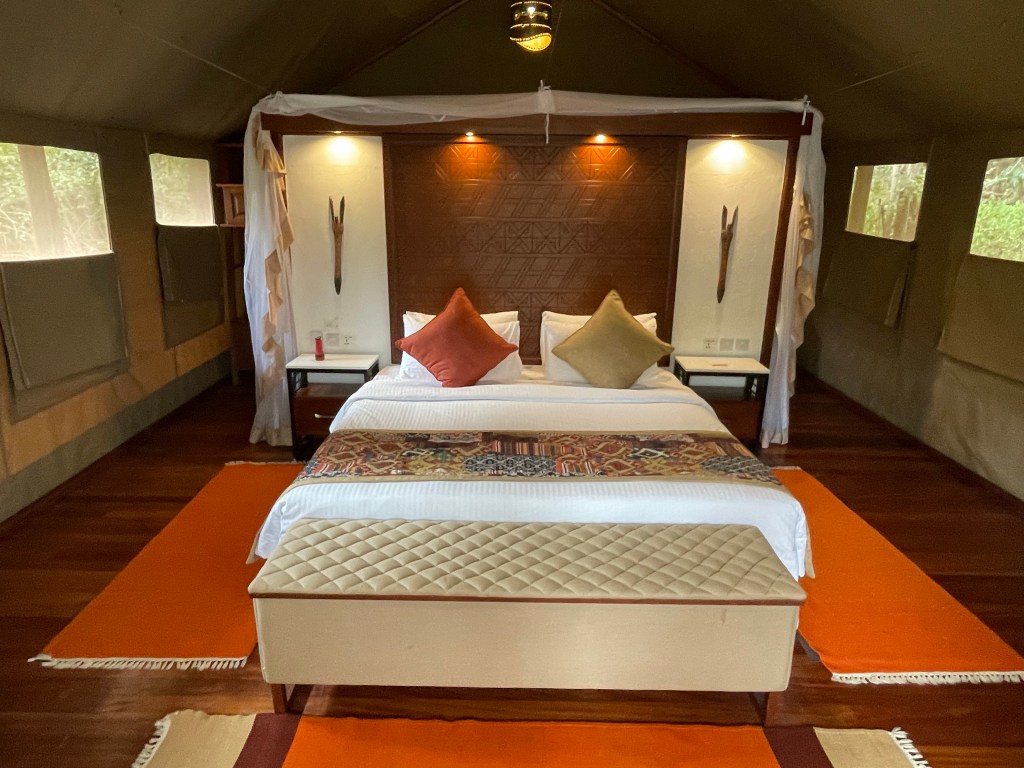
Arrival at our tent camp after a full and fun day!
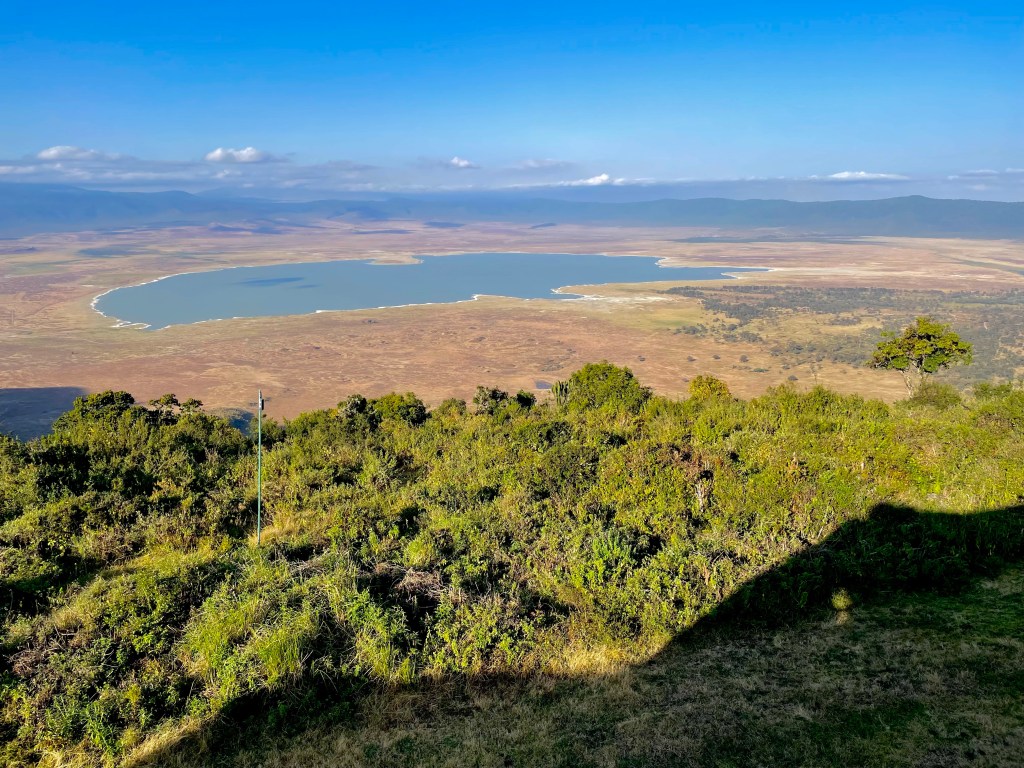
About 2.5 million years ago, the Ngornogoro volcano did what volcanoes do – blew its top! Smoke, fire, lava, ash, destruction and death rained down on the surrounding area until at last the volcano quieted and ultimately became dormant. Left behind was the Ngornogoro crater in the Arusha region of northeastern Tanzania.
As time went by, the layers of sedimentary ash provided the foundation for the evolution of an ecological wonder: a 100 square kilometer area bounded by high natural walls that supports about 25,000 wildlife.
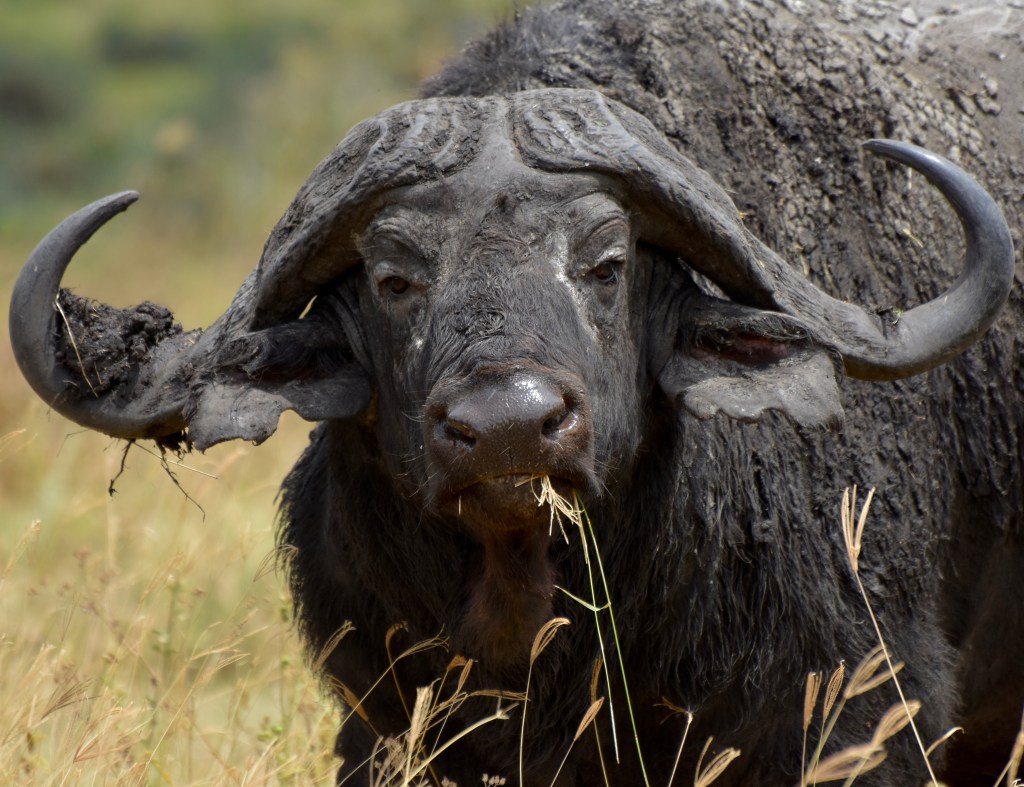
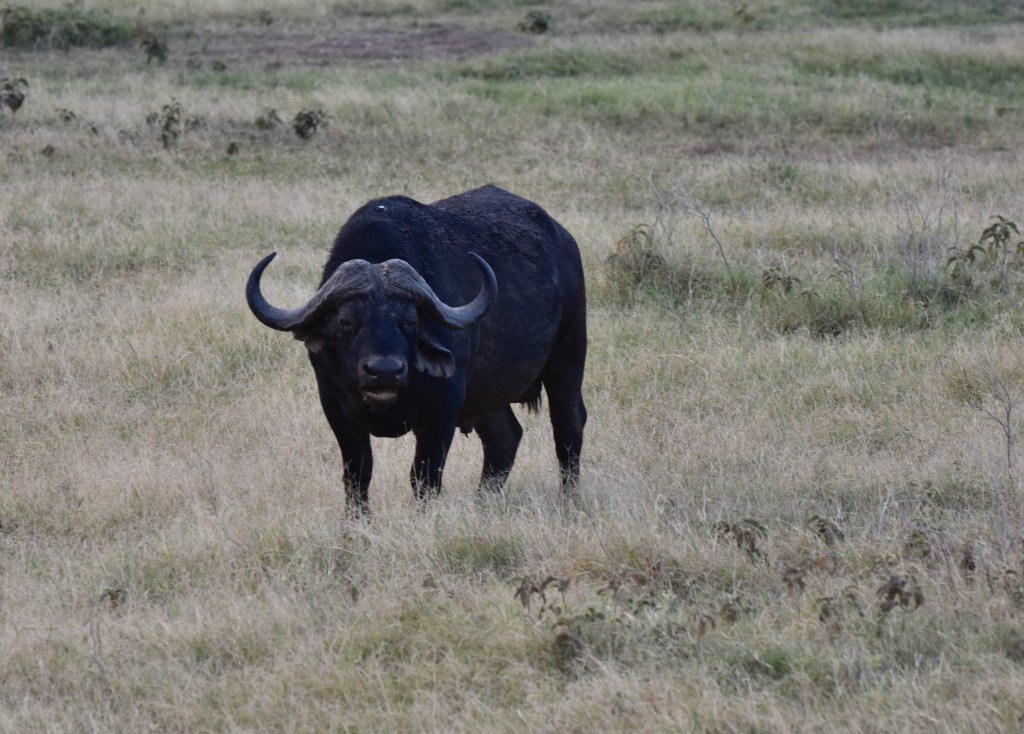
Stream fed fresh water lakes, ample grasses for grazing, lush vegetation for protection – with all this, why bother with the annual migration?Cape Buffalo, one of the Ugly 5
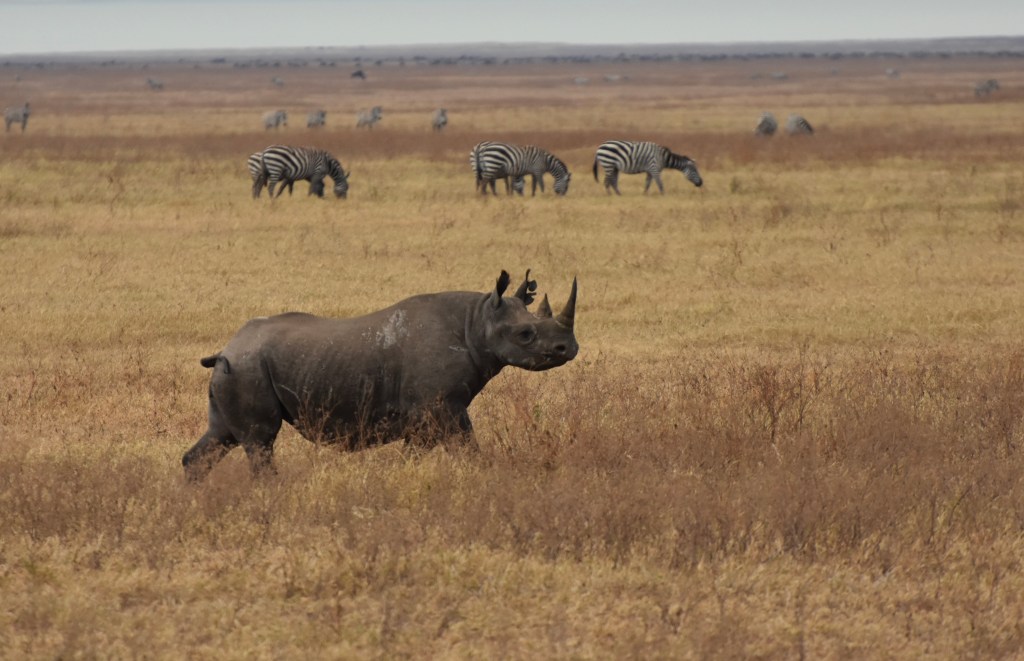
Prehistoric looking like no other animal in this part of Africa, the rhinoceros tends to prefer secure, wooded areas though they will come out in search of food and water especially on cooler days.
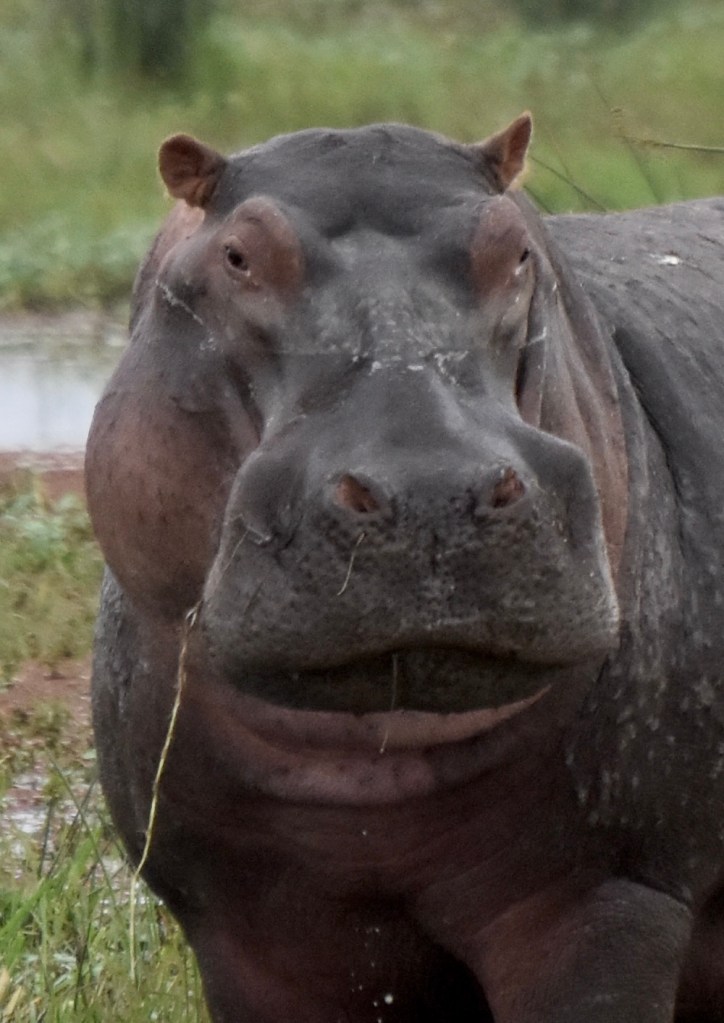
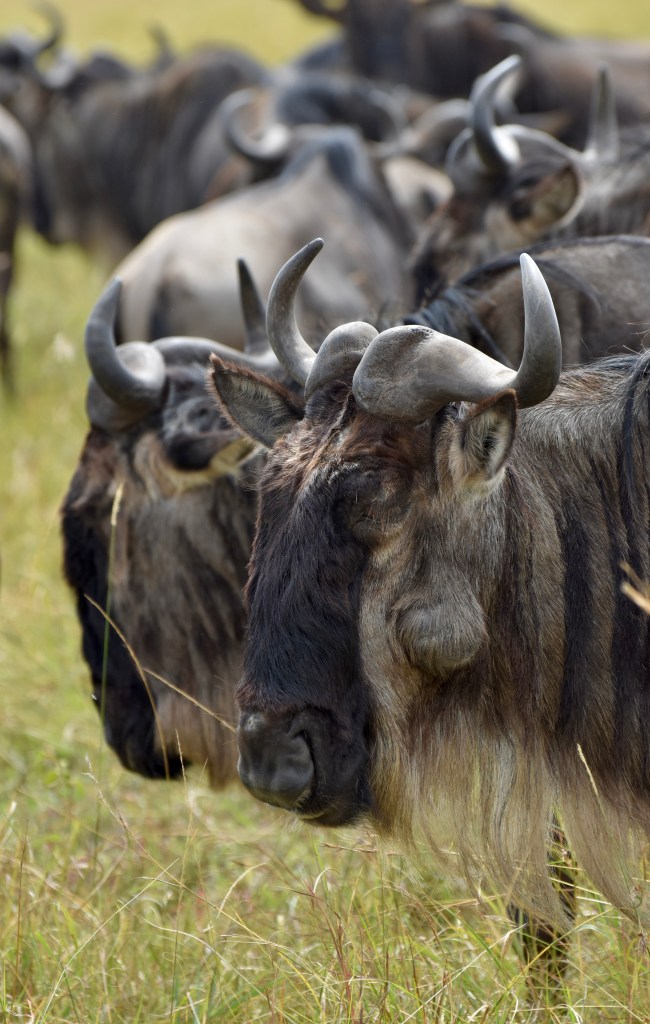
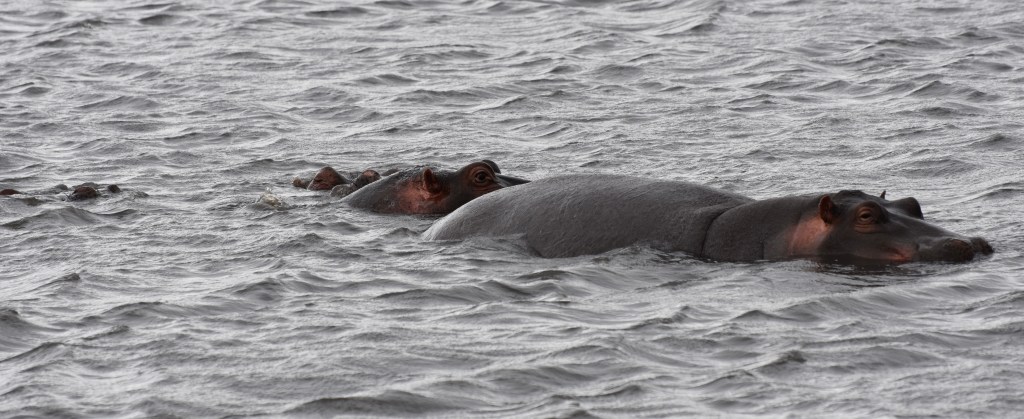
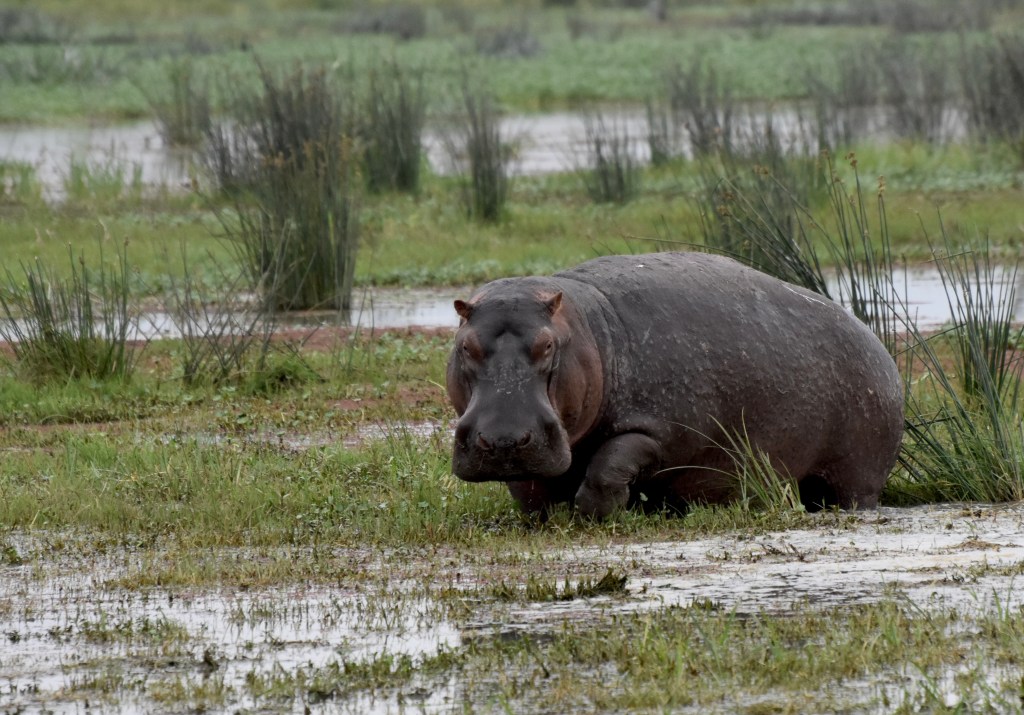
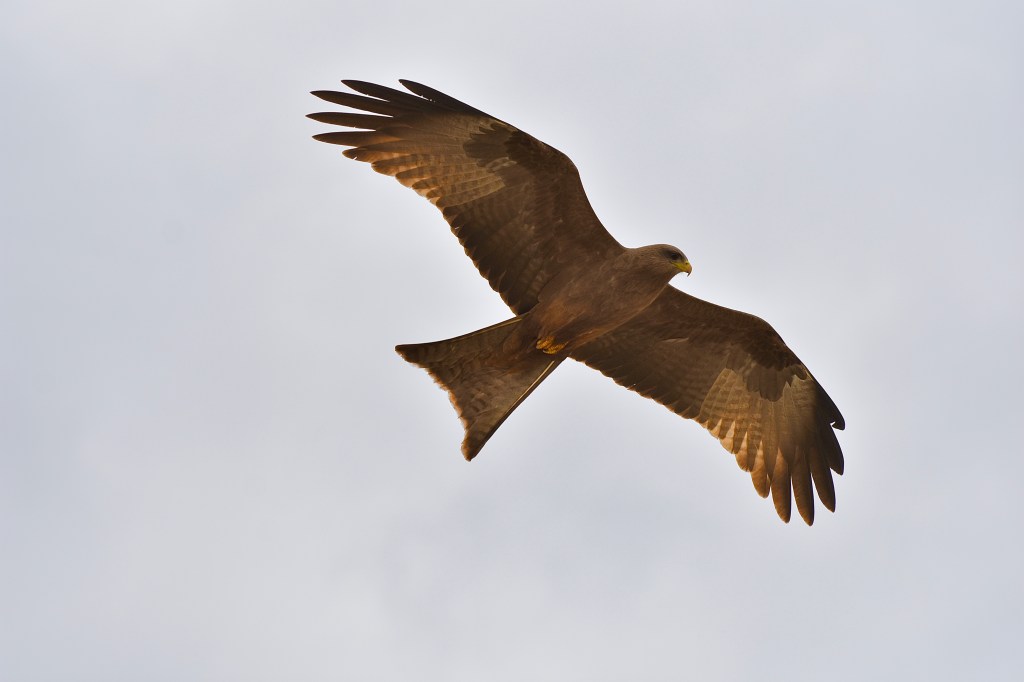
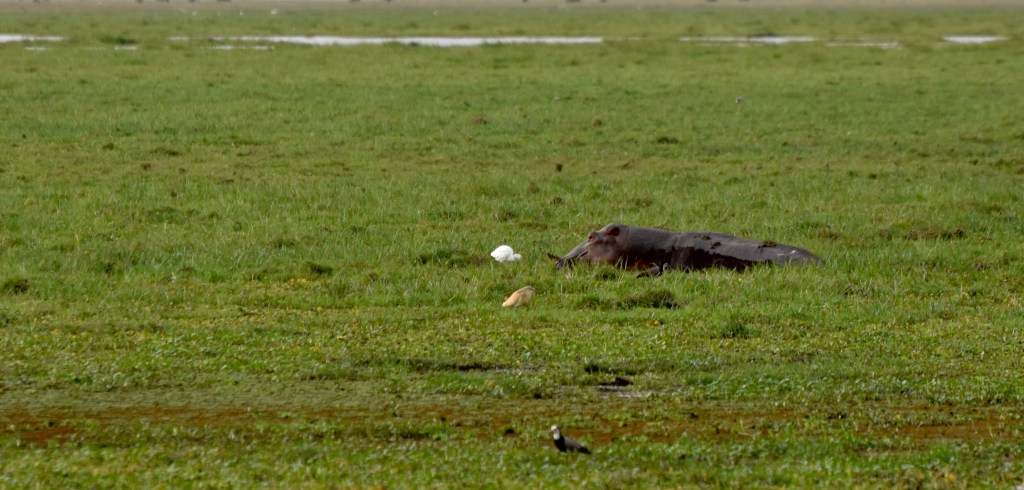
Kind of like icebergs – you can see a little bit of the hippopotamus without knowing just how much more volume is submerged and out of sight.Hippopotamus emerging from a fresh water swampZebras and Wildebeasts live together in harmonyBlack Kite
A collection of Big Cat images:
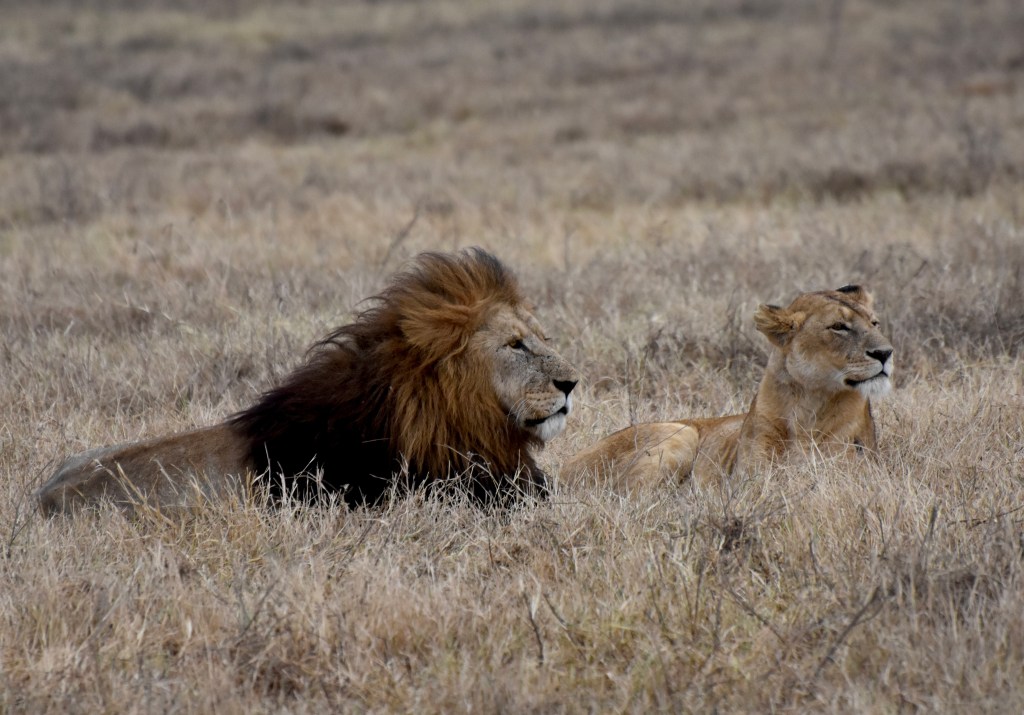
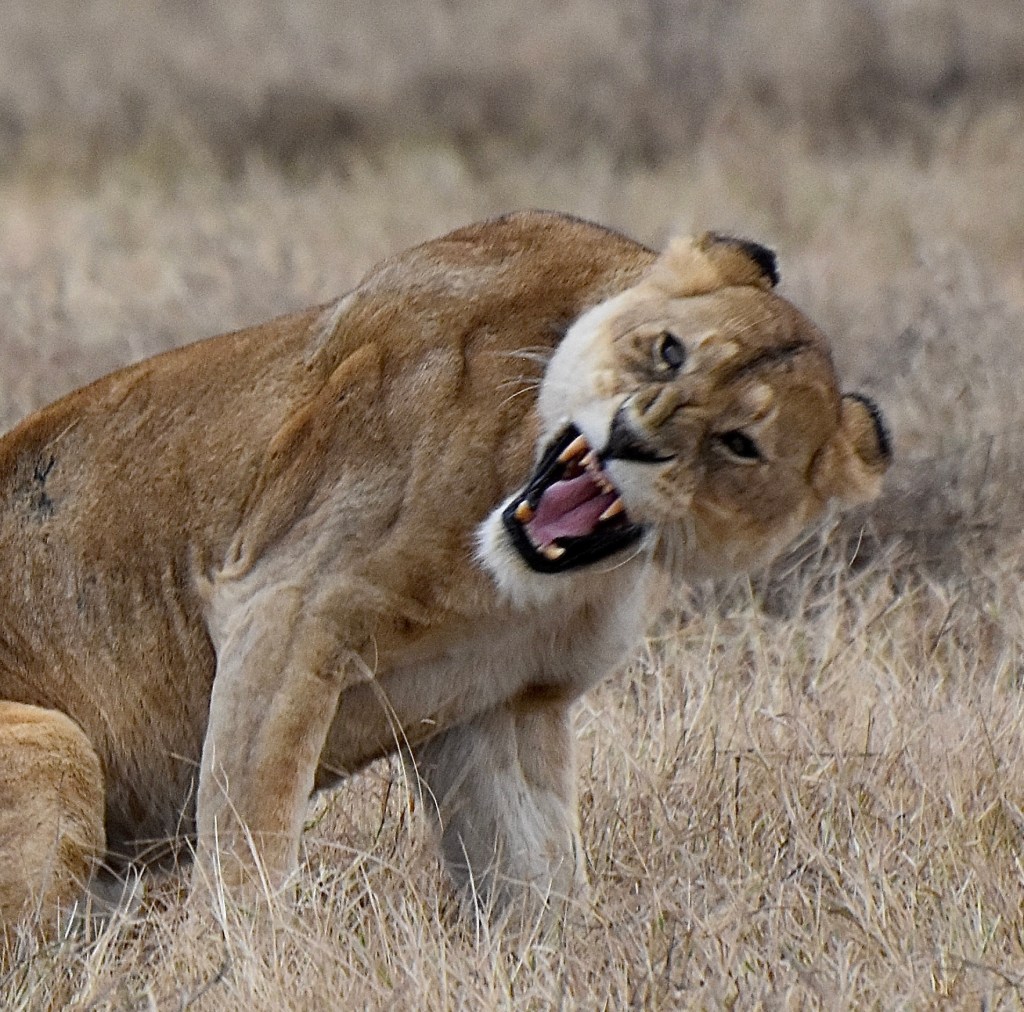
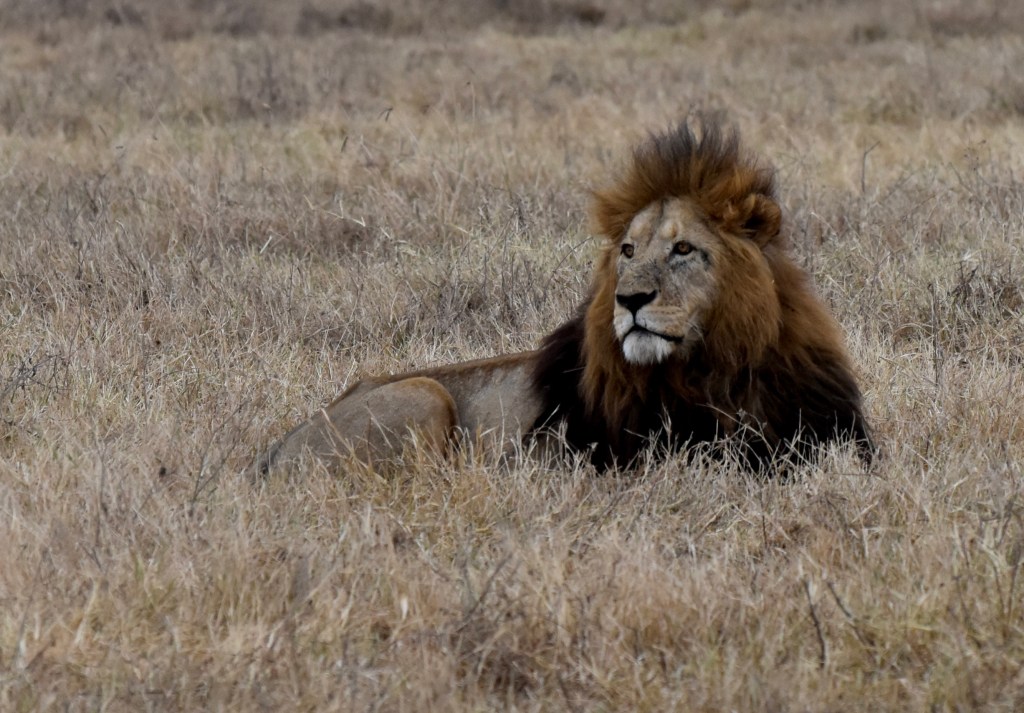
This couple was enjoying a lazy morning in the meadow, then Simba said something to his woman and this was her reaction:The picnic was over, she moved….Feeling lonely Feeling boredAs if he were saying, That didn’t work out so well.
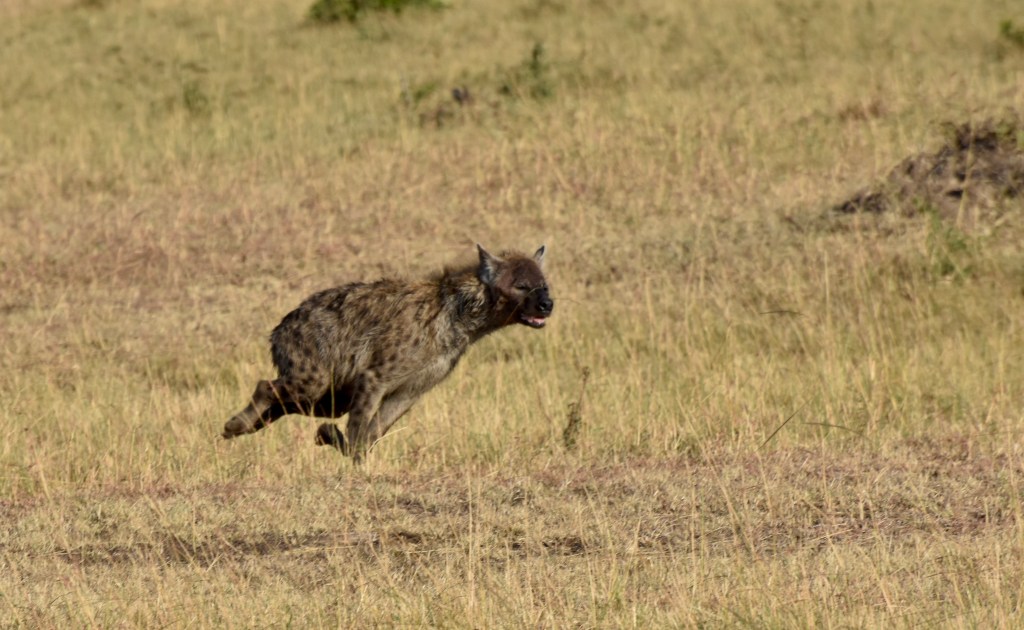
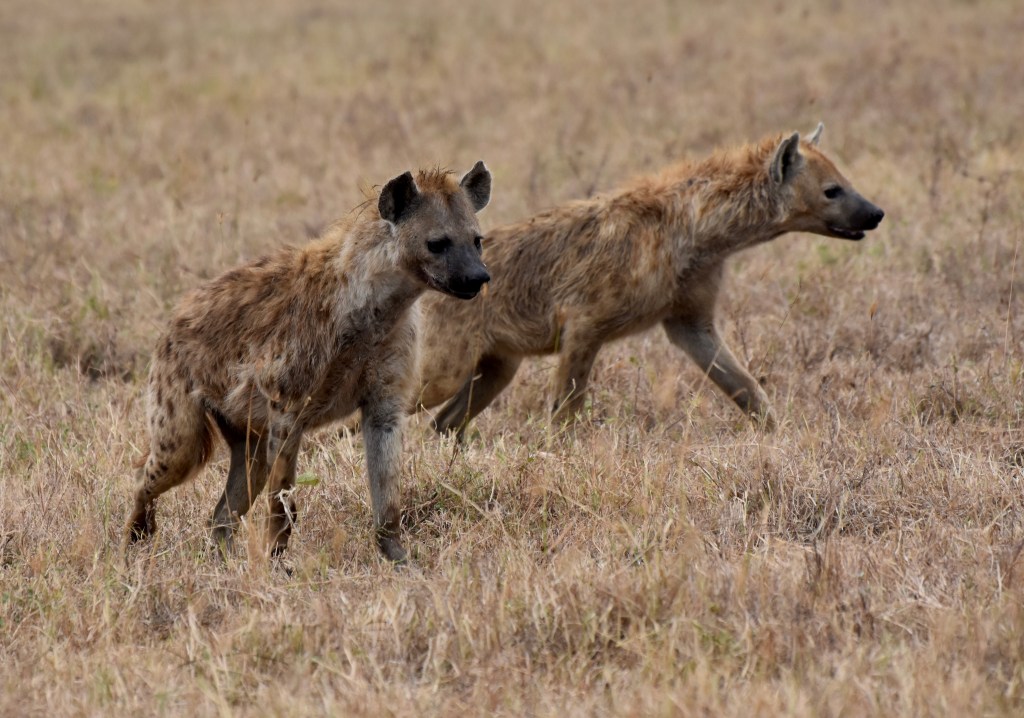
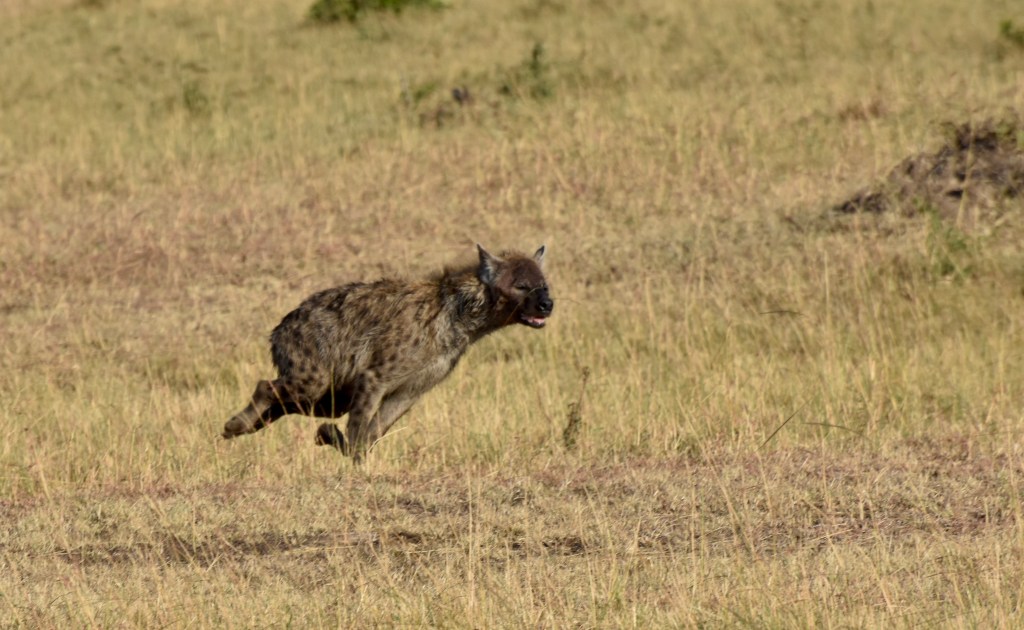
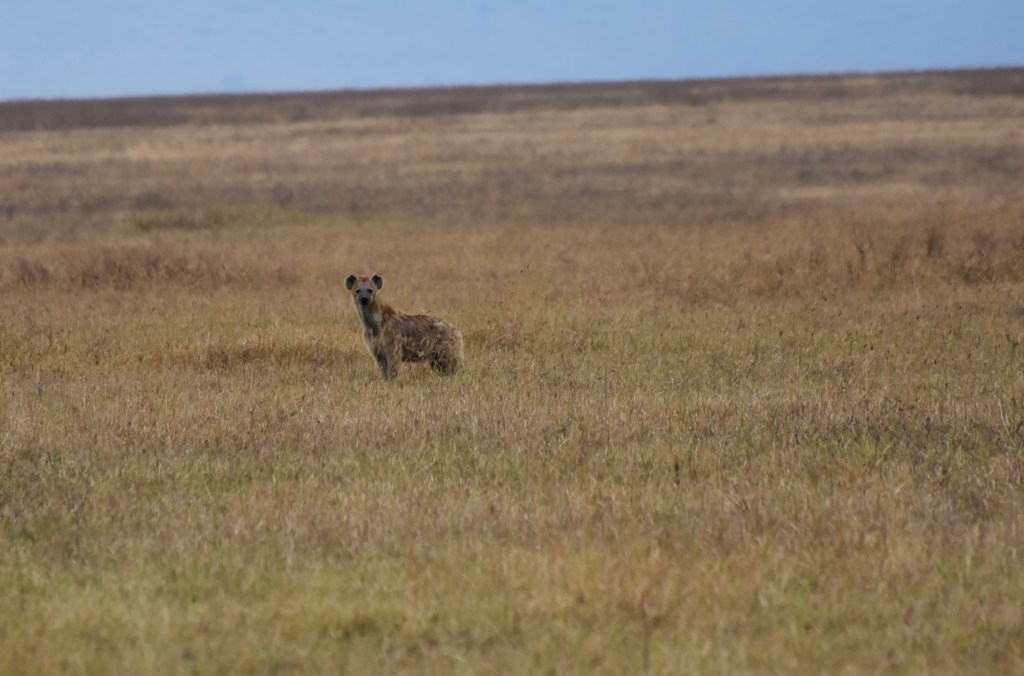
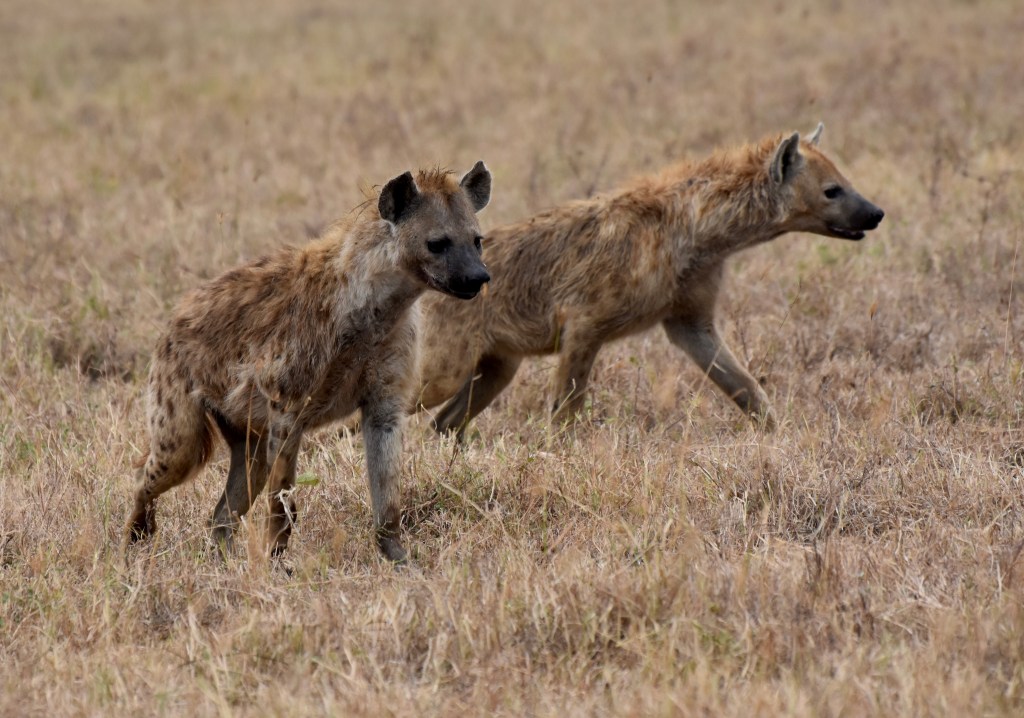
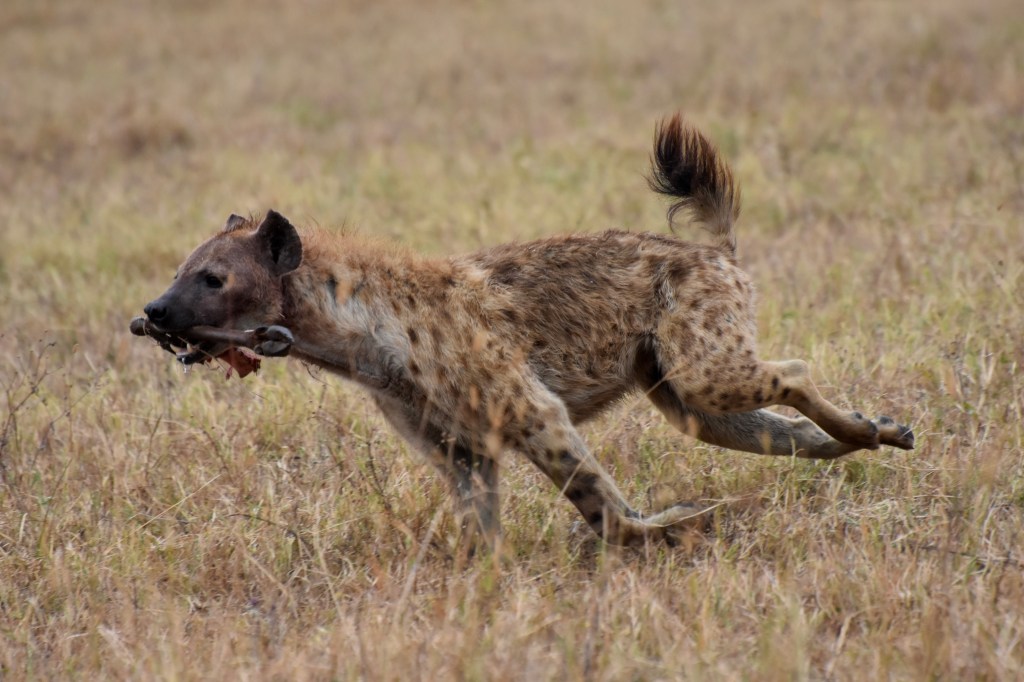
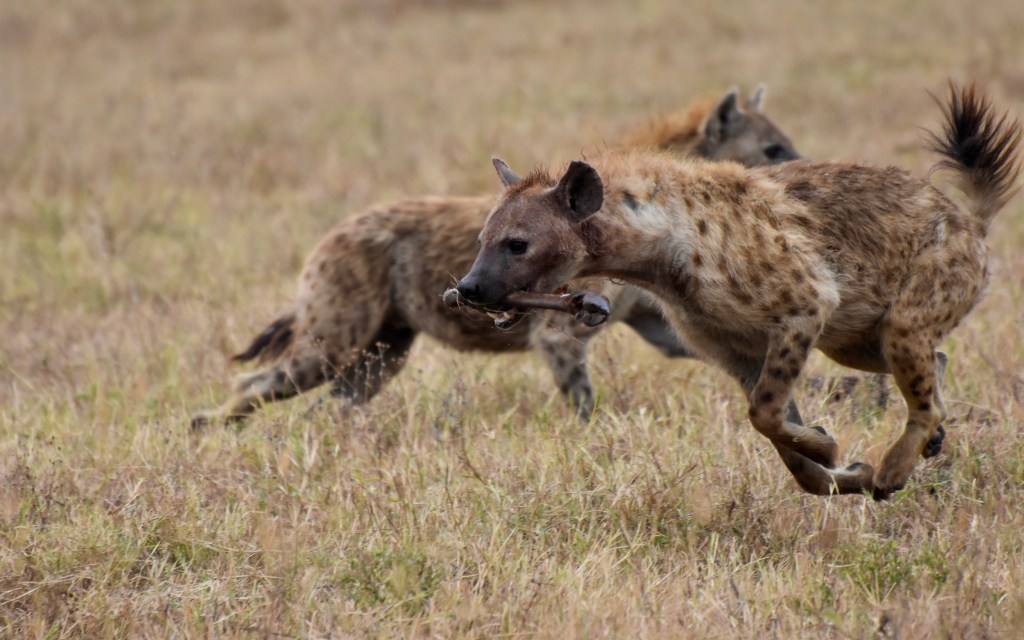
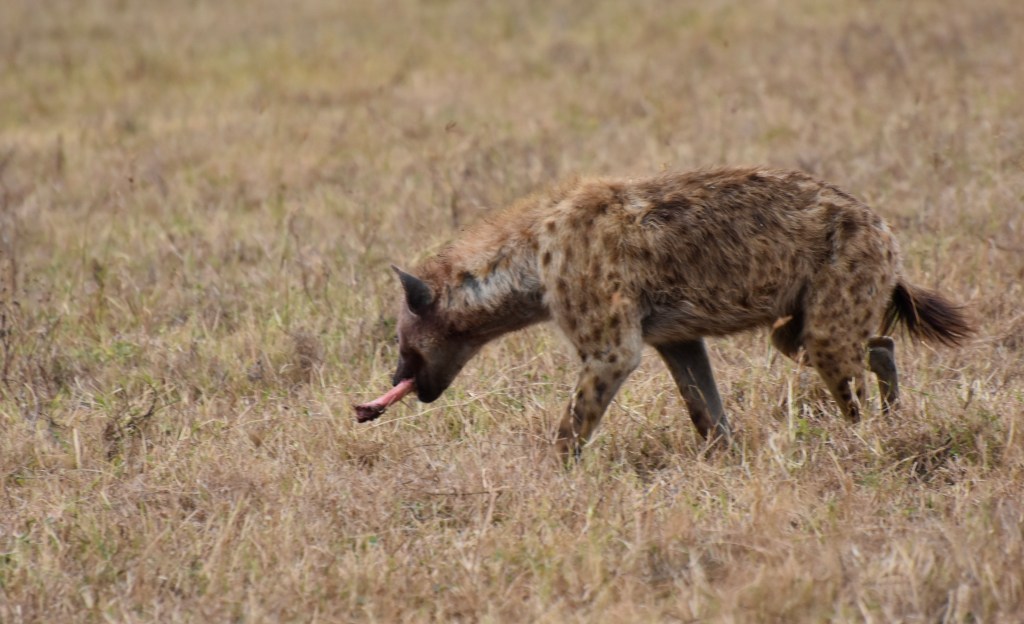
Hyenas are the garbage disposal of the savanna – they eat absolutely everything right down to the bones. Pack animals to the core, they steal or kill their next meal as a pack. But once the food is secure, it’s every hyena for themself. They attack the kill, tearing off a piece and then sprinting away about 30 yards to devour it. Then the run full speed back to the kill for another bite. It’s wild aggressive manic animalistic – and fascinating to observe.
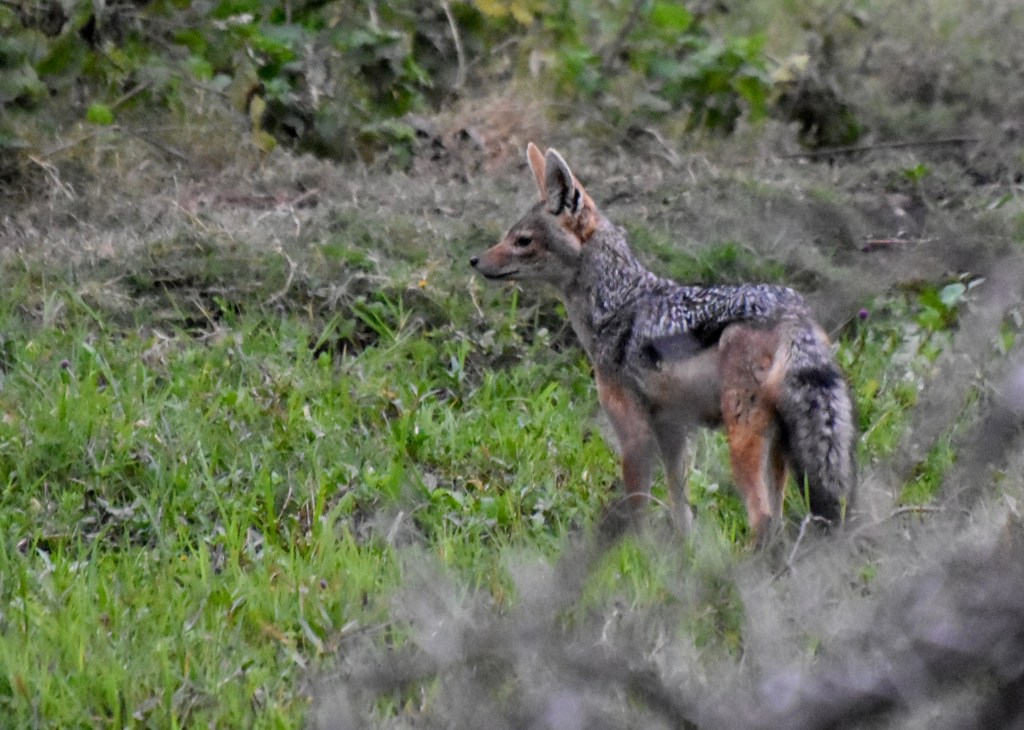
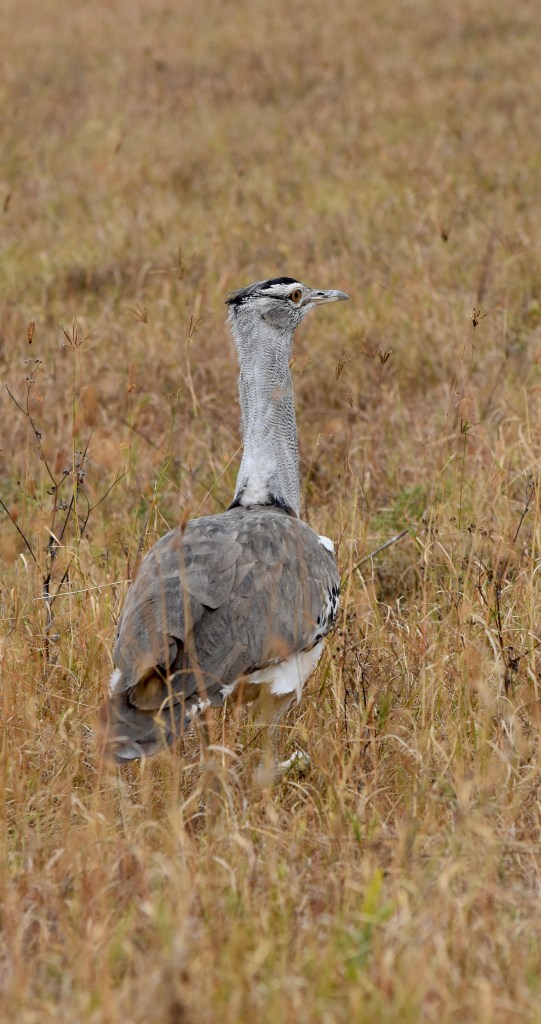
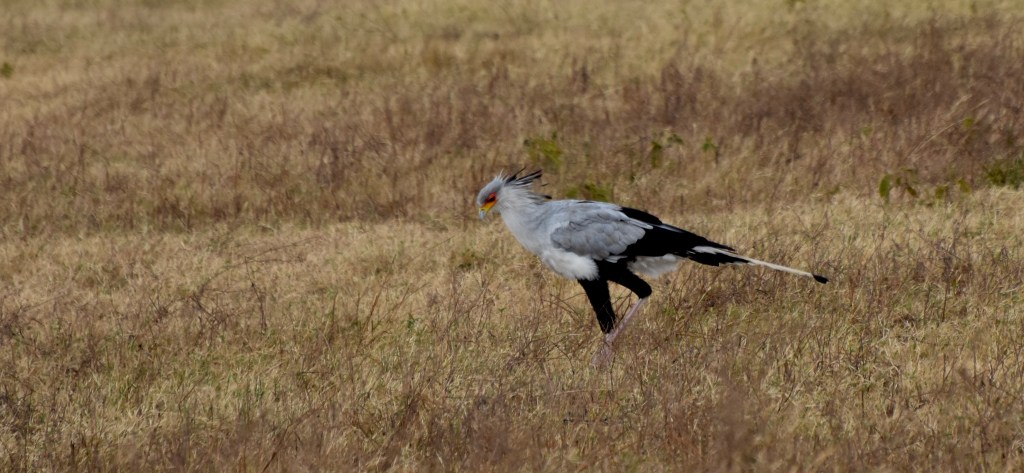
JackalKori BustardCalled a Secretary bird, named for the markings: black skirt and stockings. Honest!
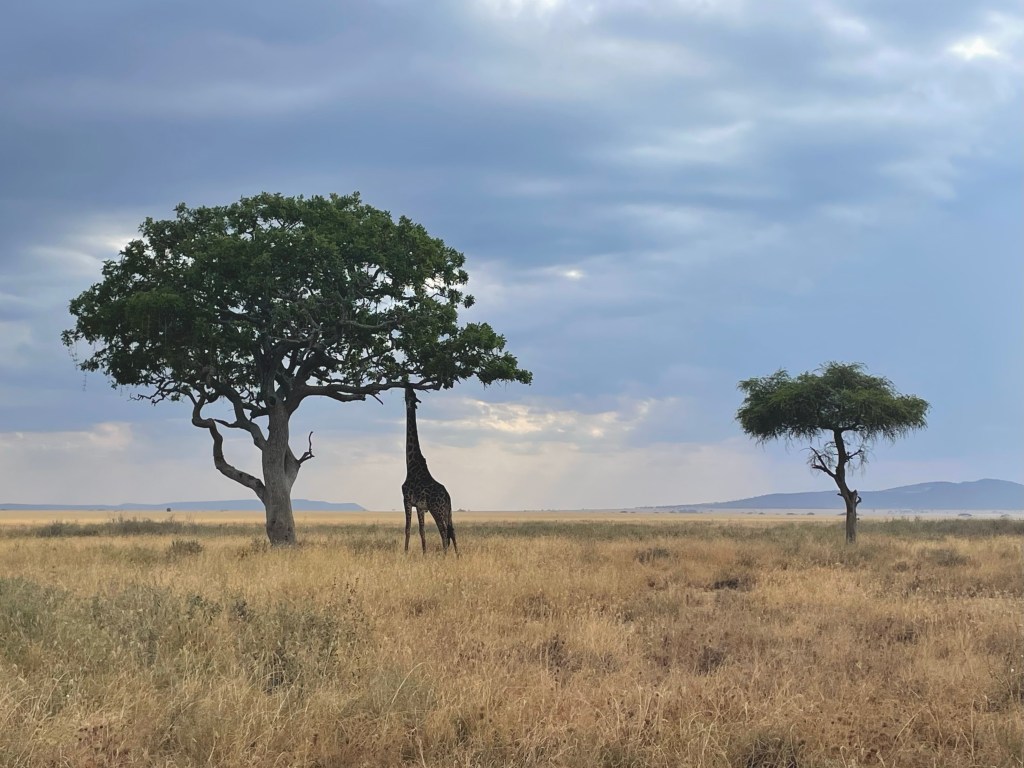
Tanzania has set aside an astonishing 40% of its land area for wildlife in the form of national parks and conservation areas. Likely the most famous is the Serengeti, a vast expanse of grassland savannas and arbored forests. The Serengeti is home to 28 hoofed animals and hundreds of bird and insect species – truly an amazing place to explore and observe wildlife in the most natural of habitats.
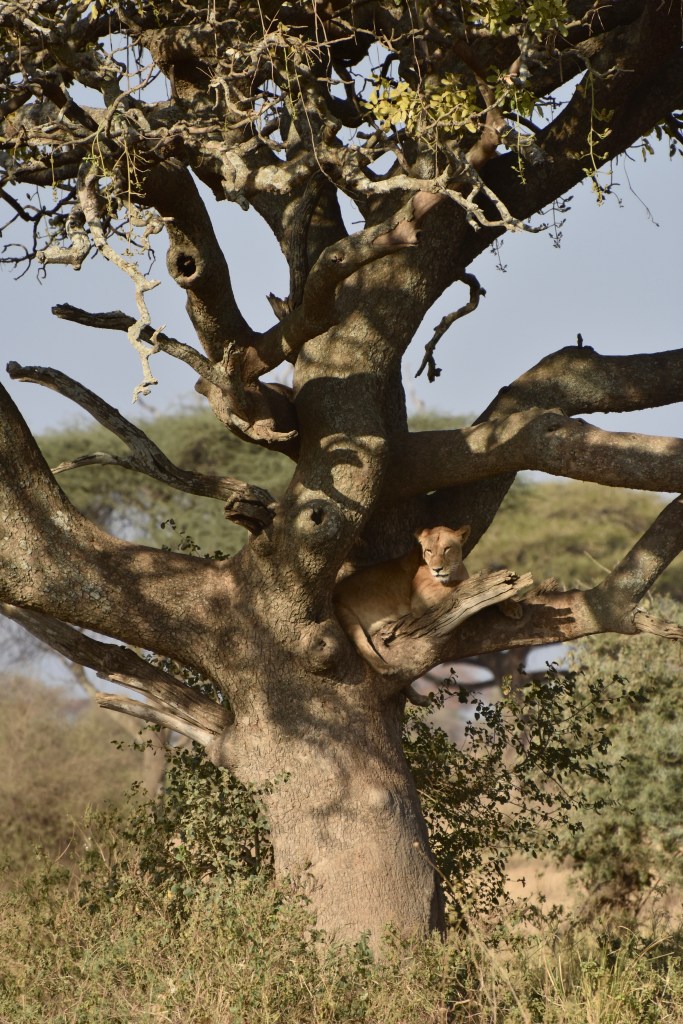
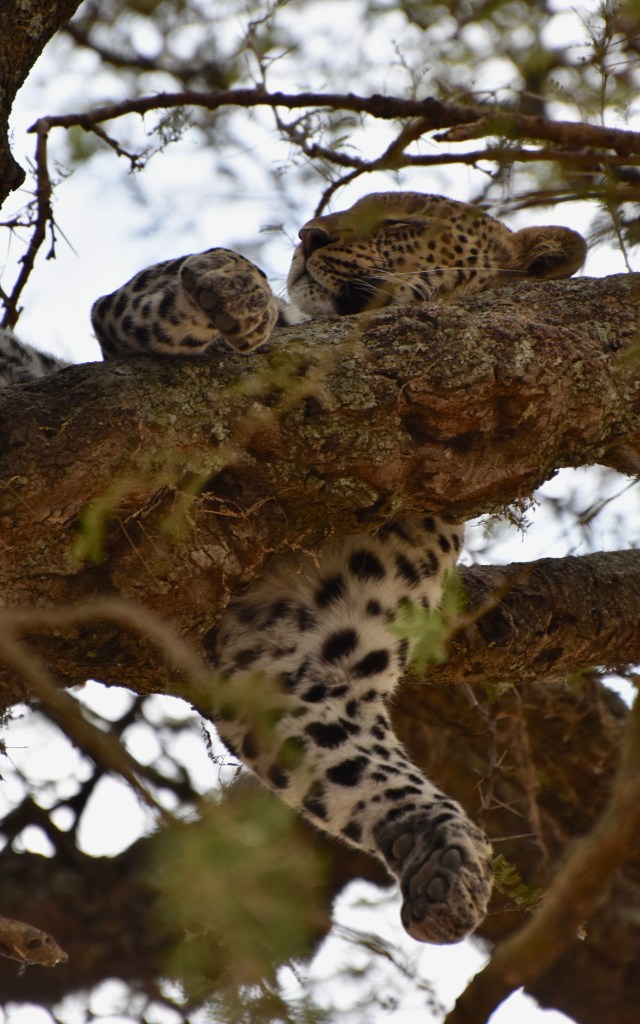
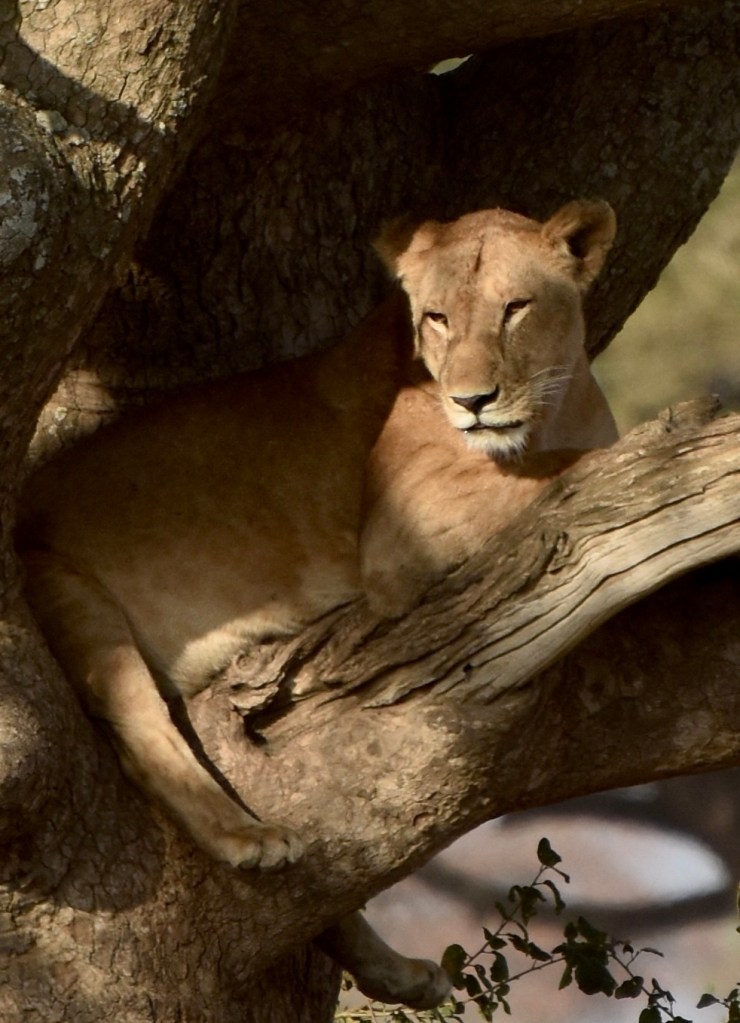
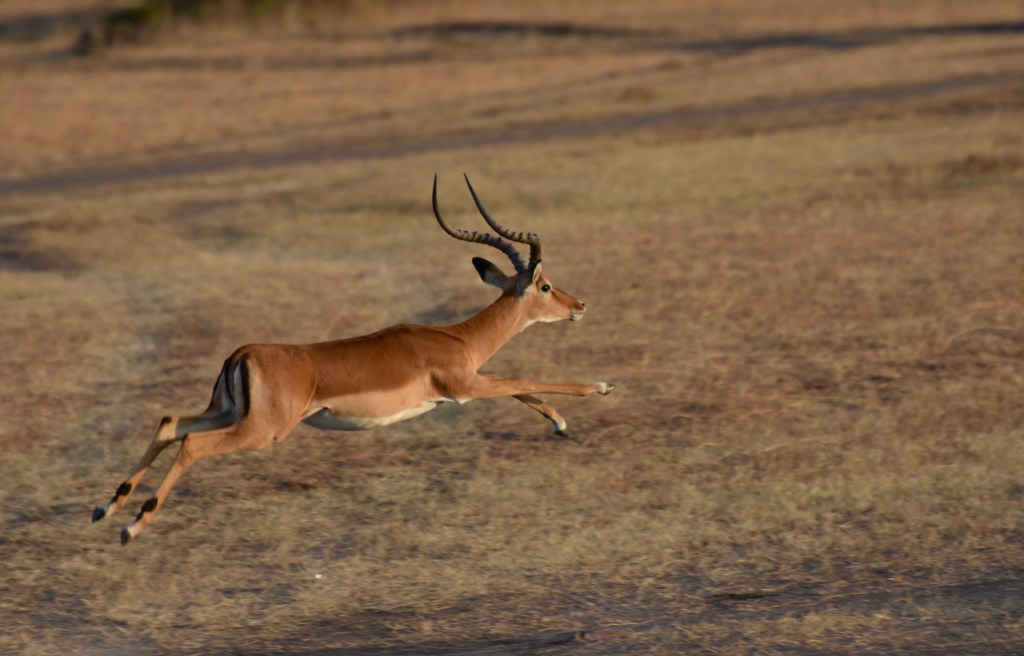
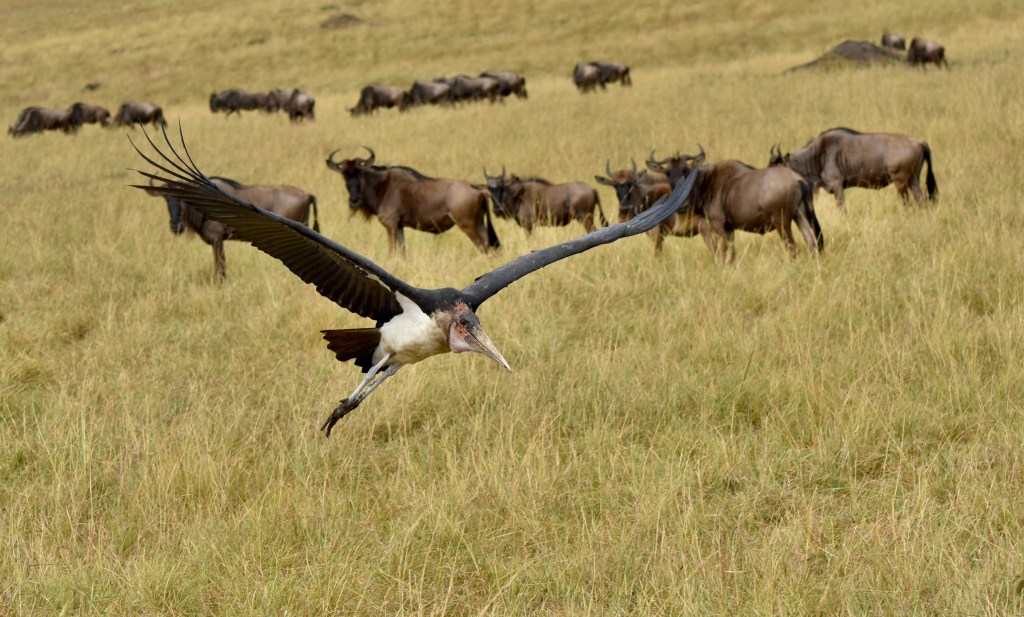
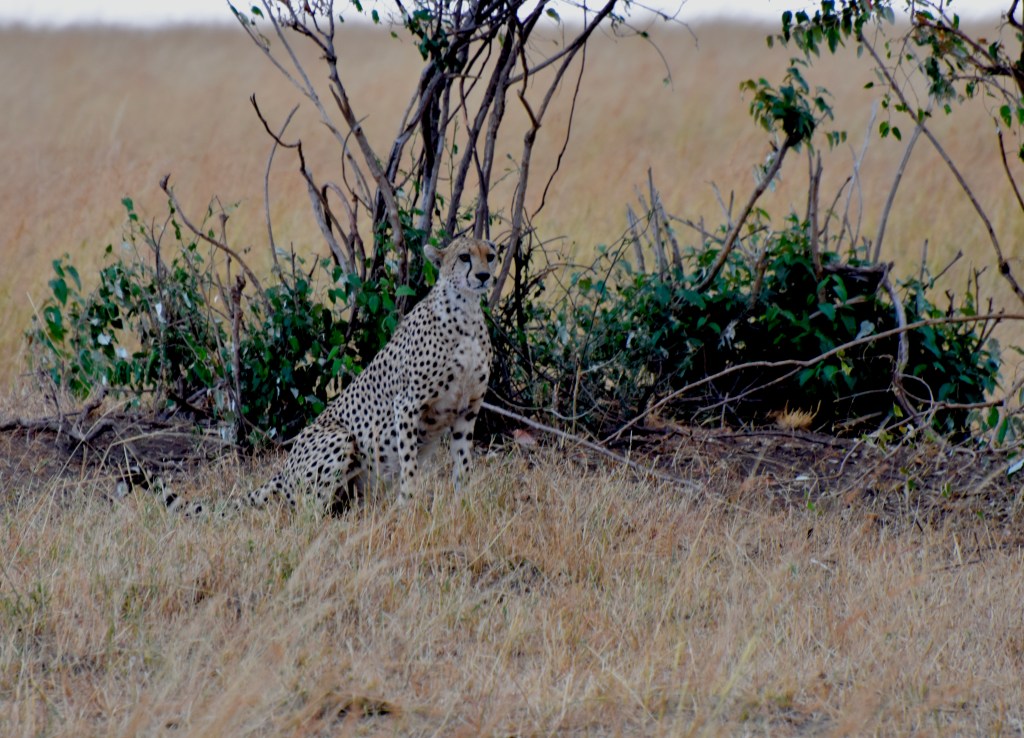
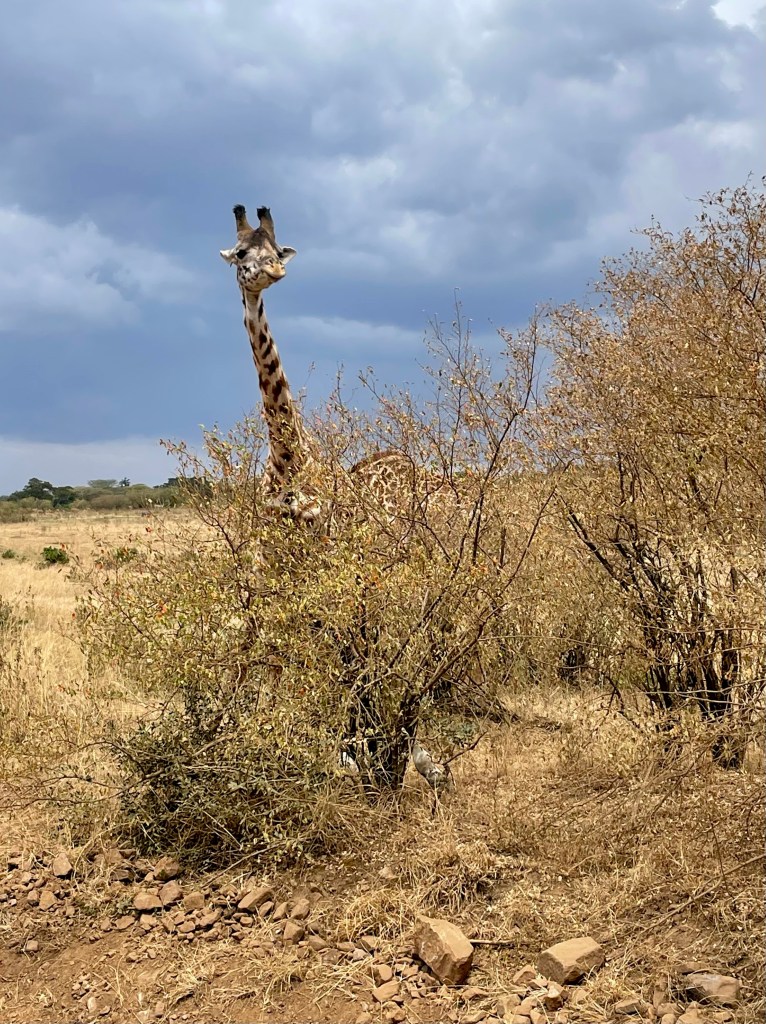
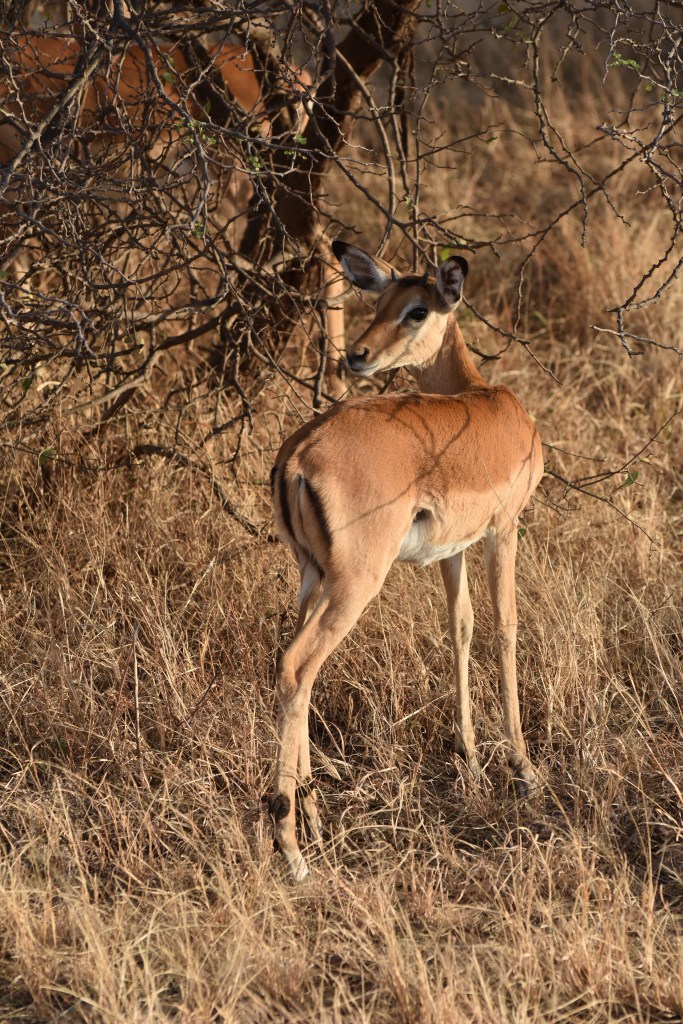
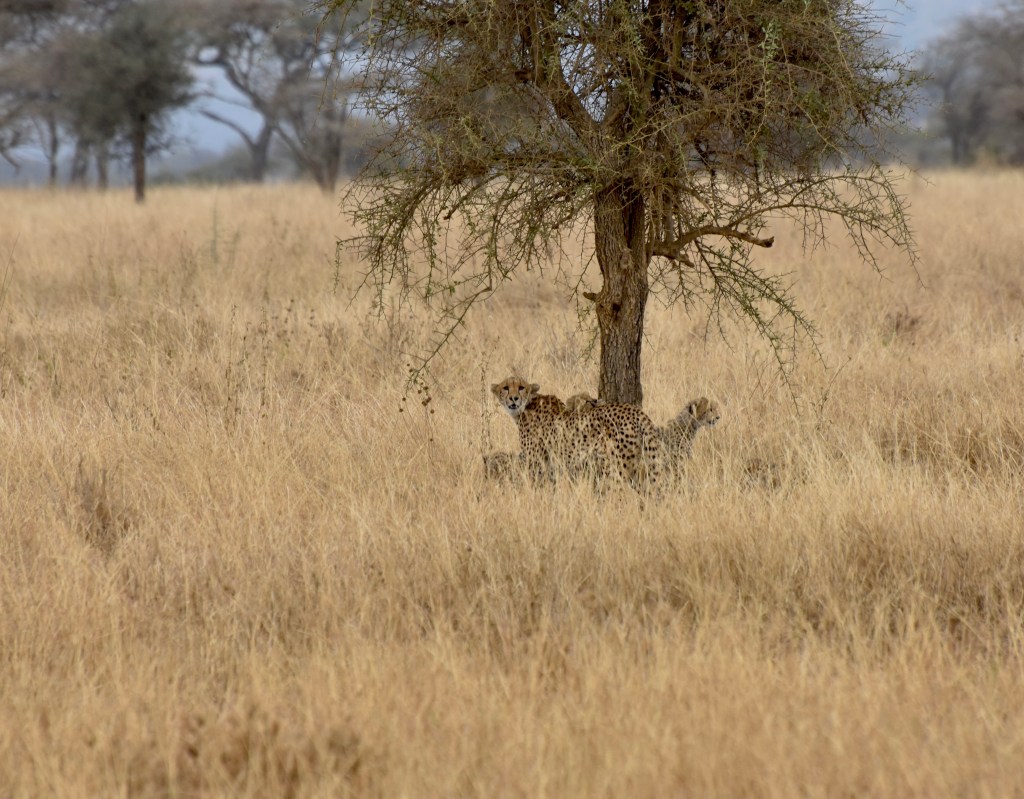
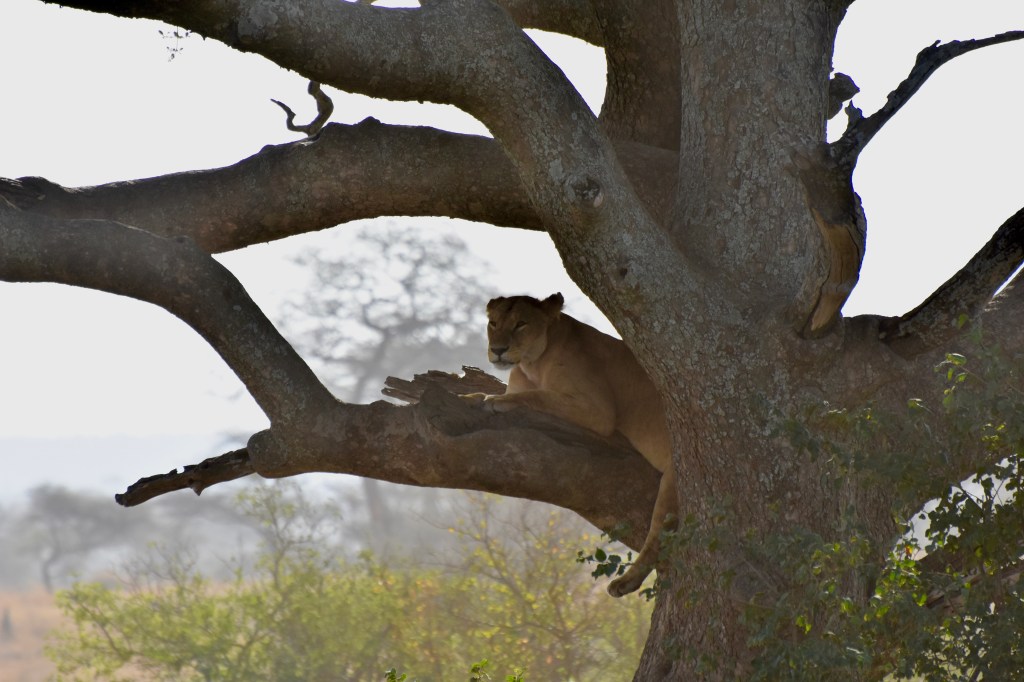
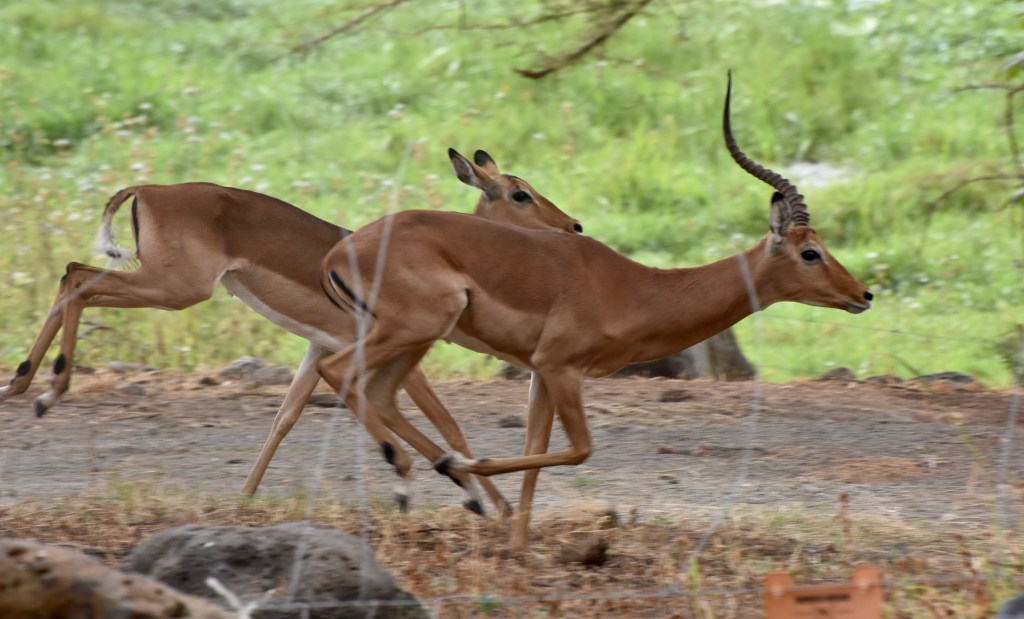
Rare leopard sighting, sleeping in the tree after a big meal of impala (hanging in the tree on a lower branch)ImpalaOstrich do not fly, rather they use their wings for lateral stability when running. Raised trunk = I am not happy!I think I can with this long tongueCheetah with cubsMom wandered off, cubs maintaining the lookout Hippopotamus partyNot the most beautiful….Mother and child heading for swim lessonsBig, big, bigNo camo for this birdDik Dik
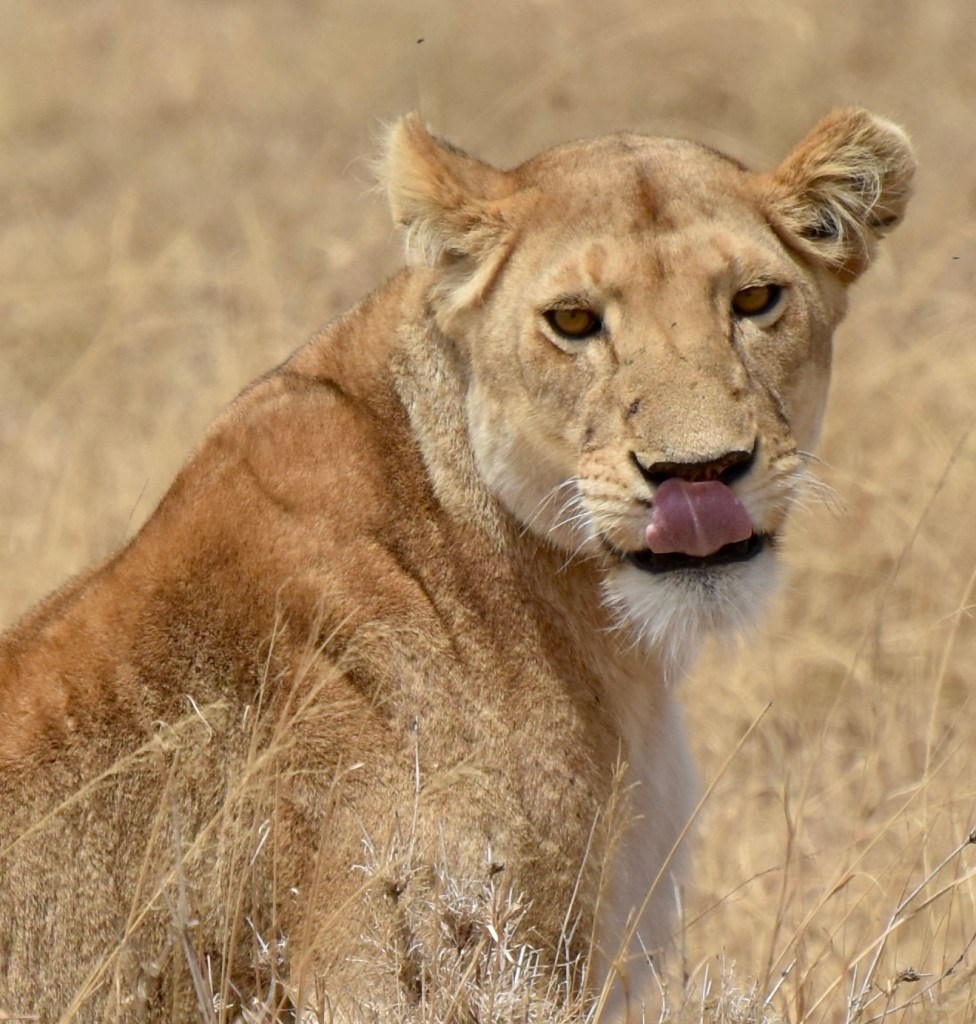
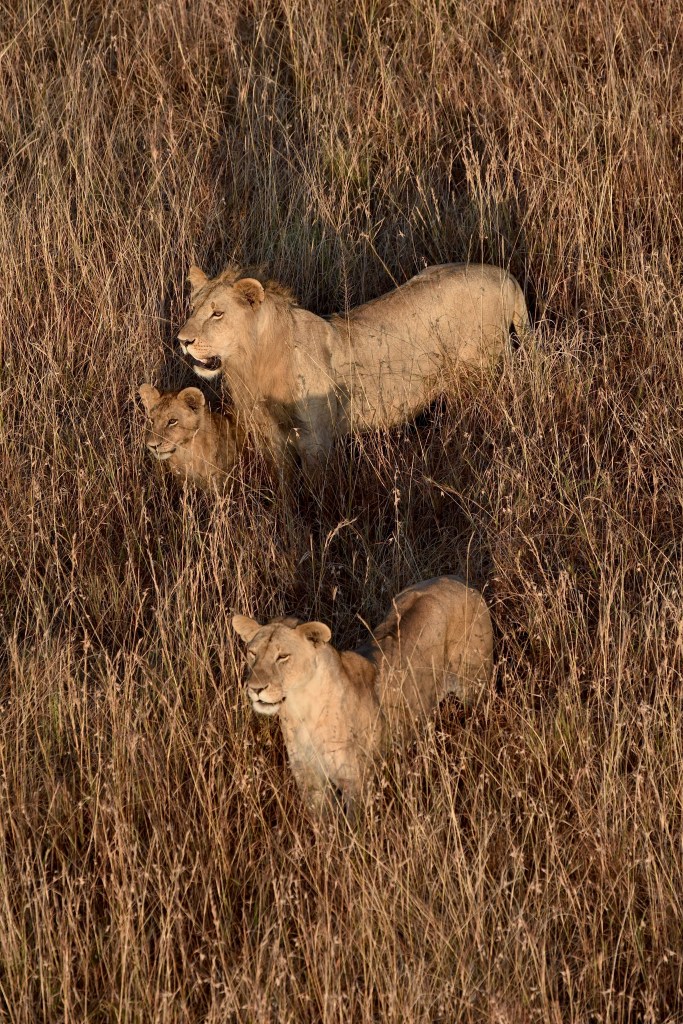
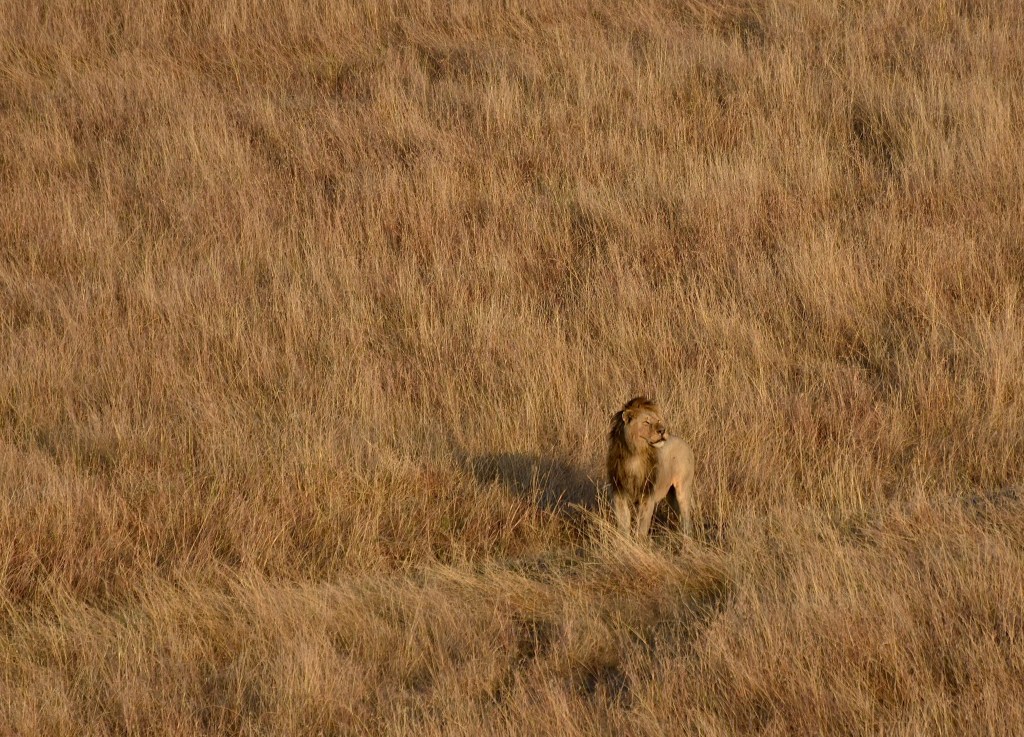
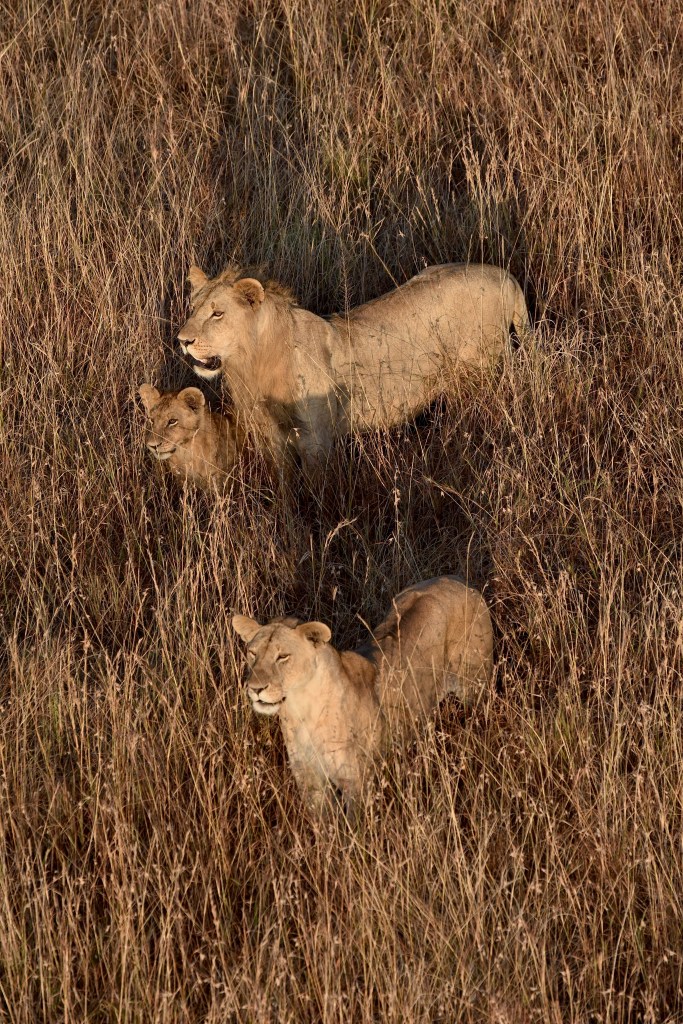
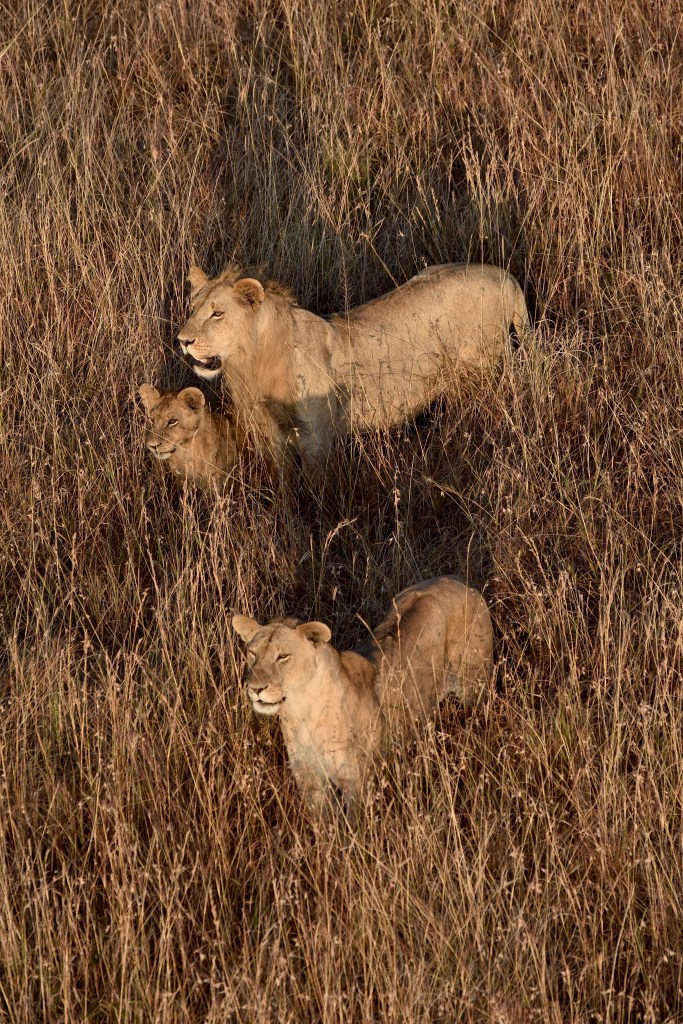
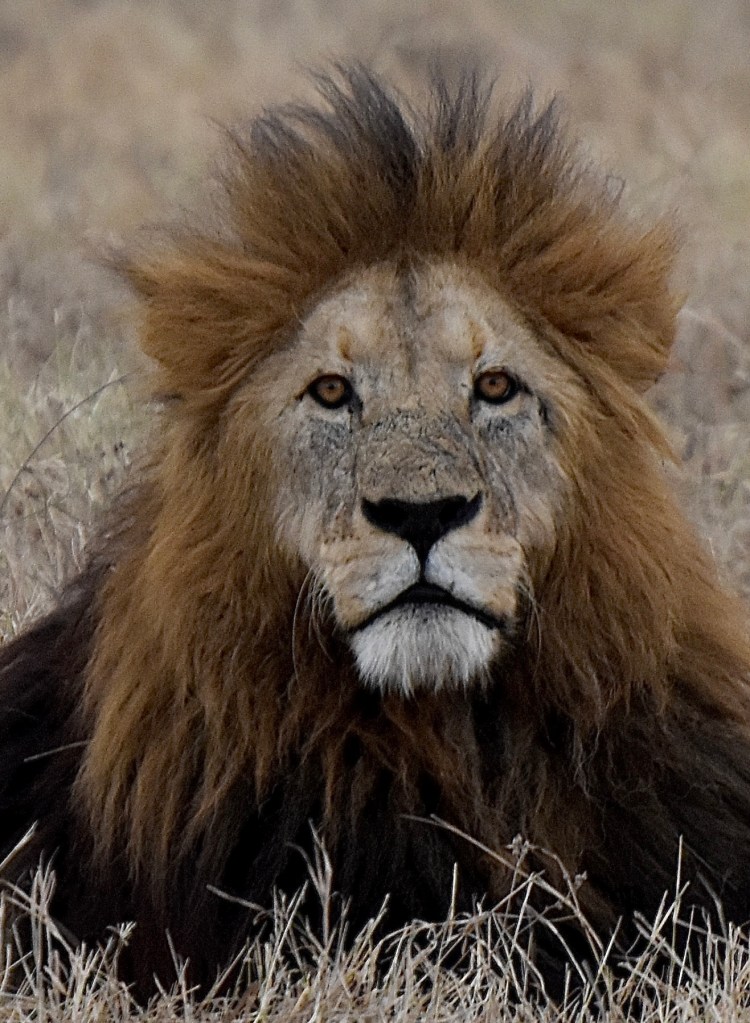
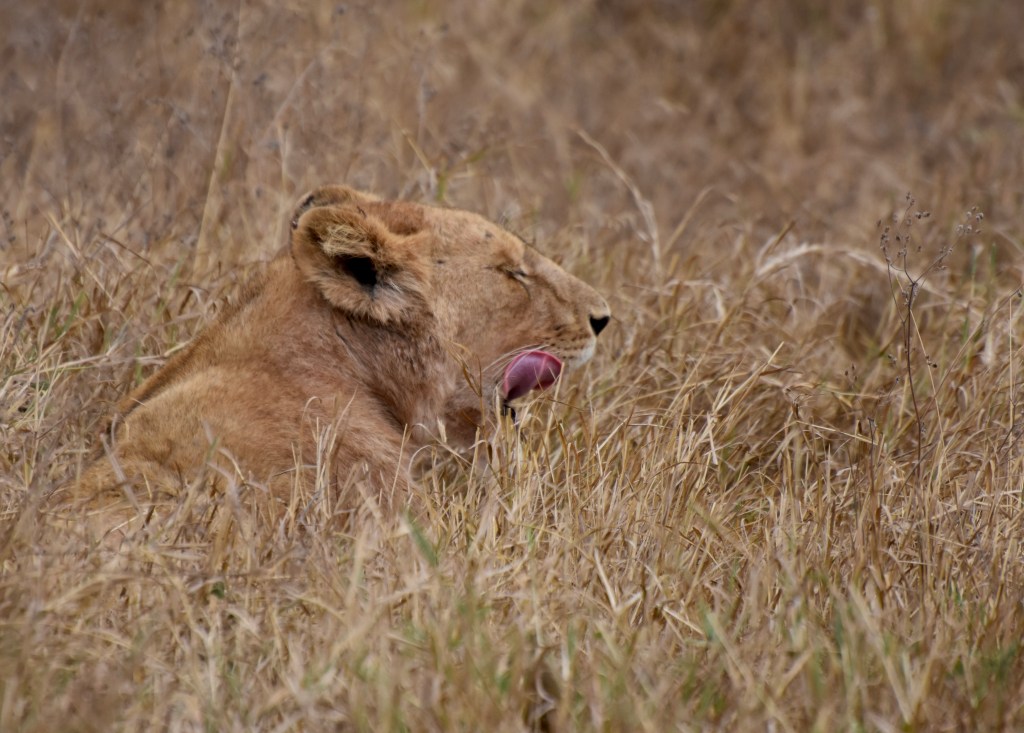
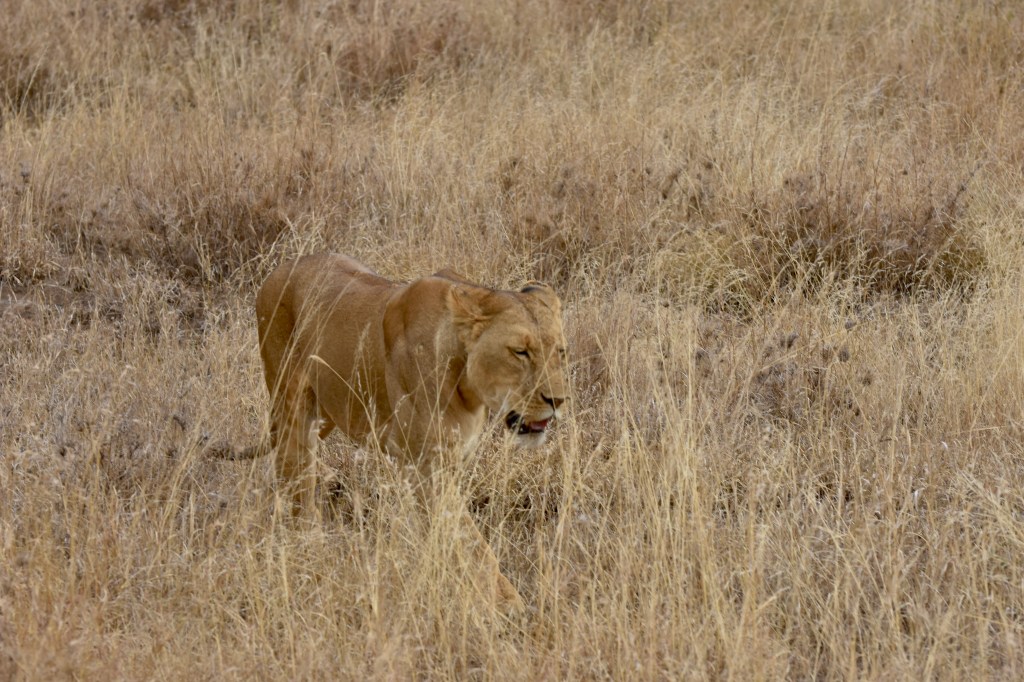
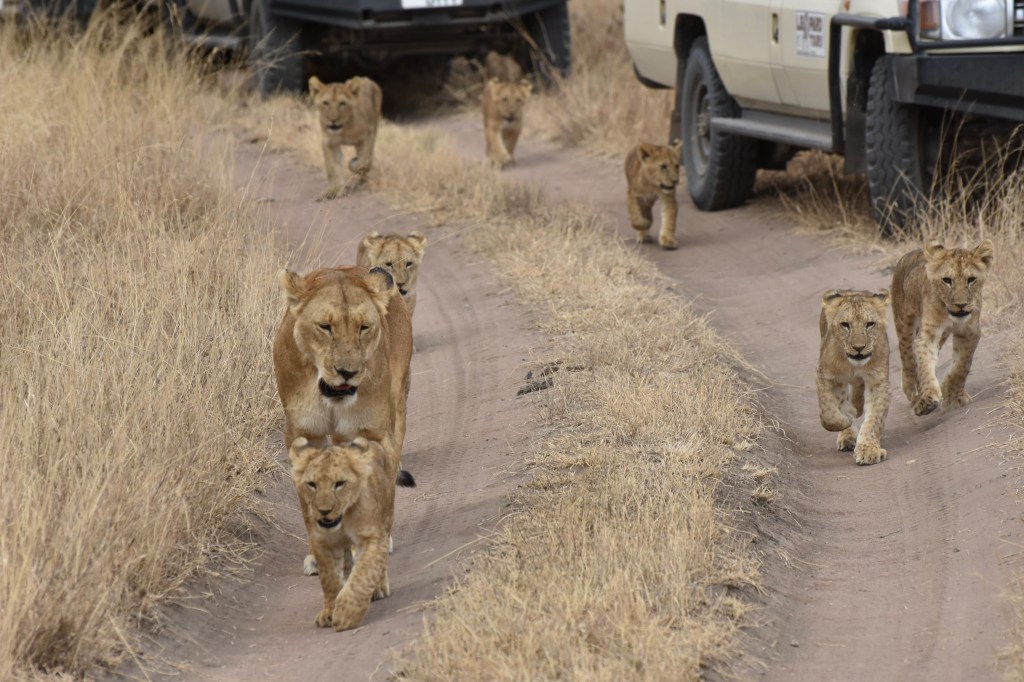
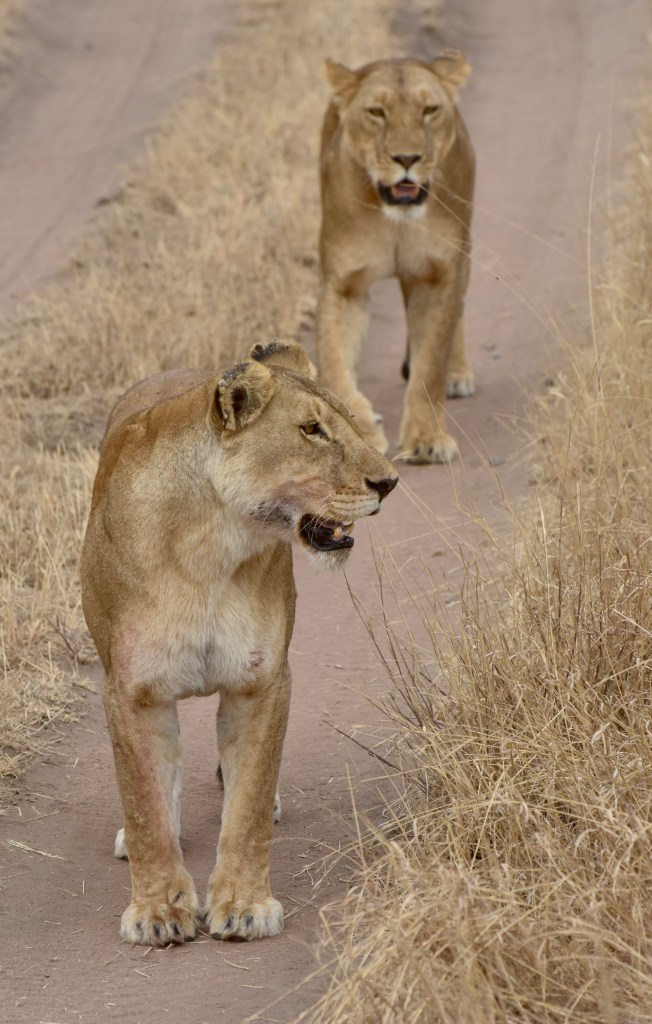
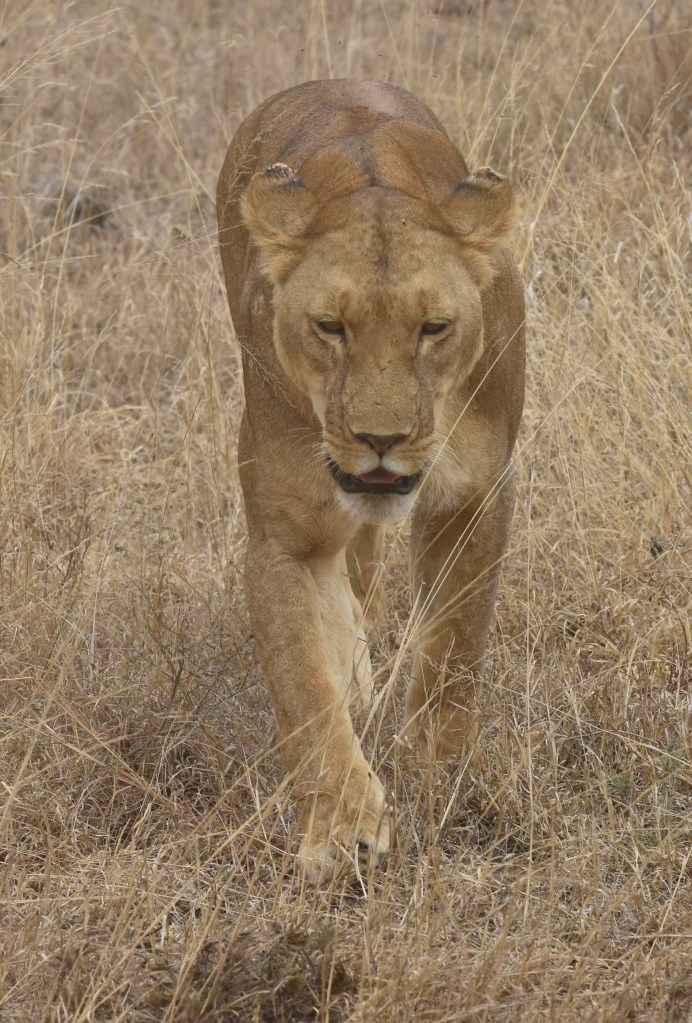
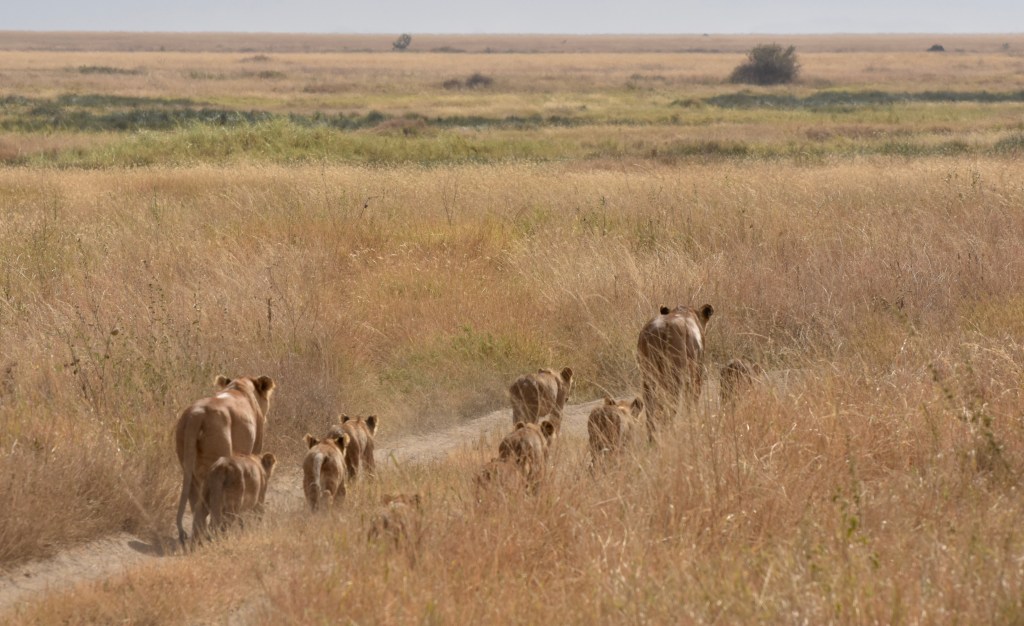
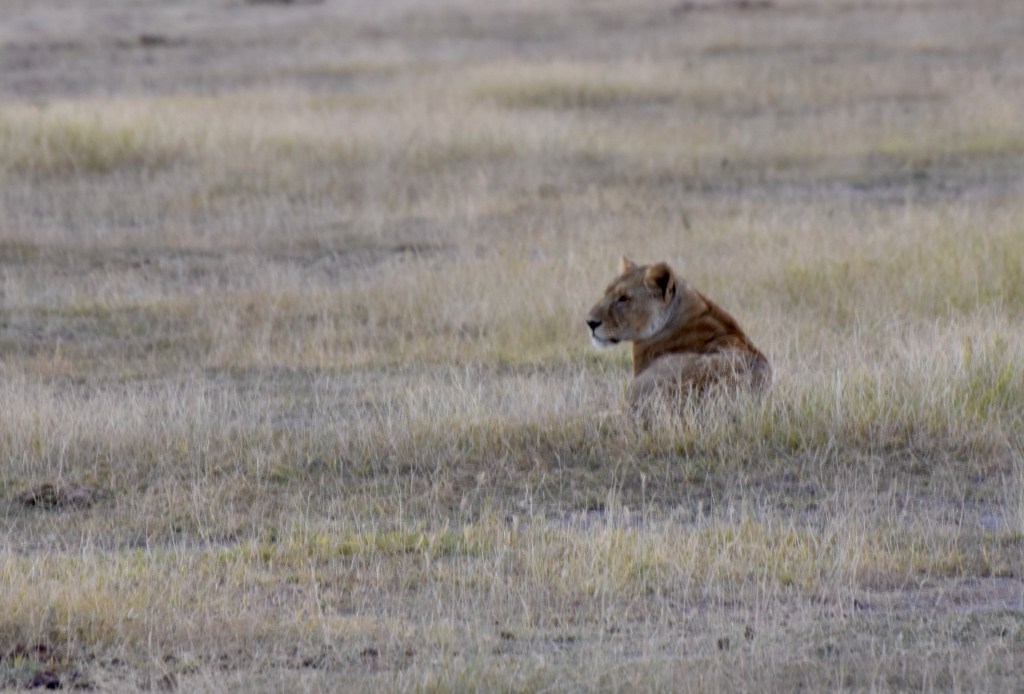
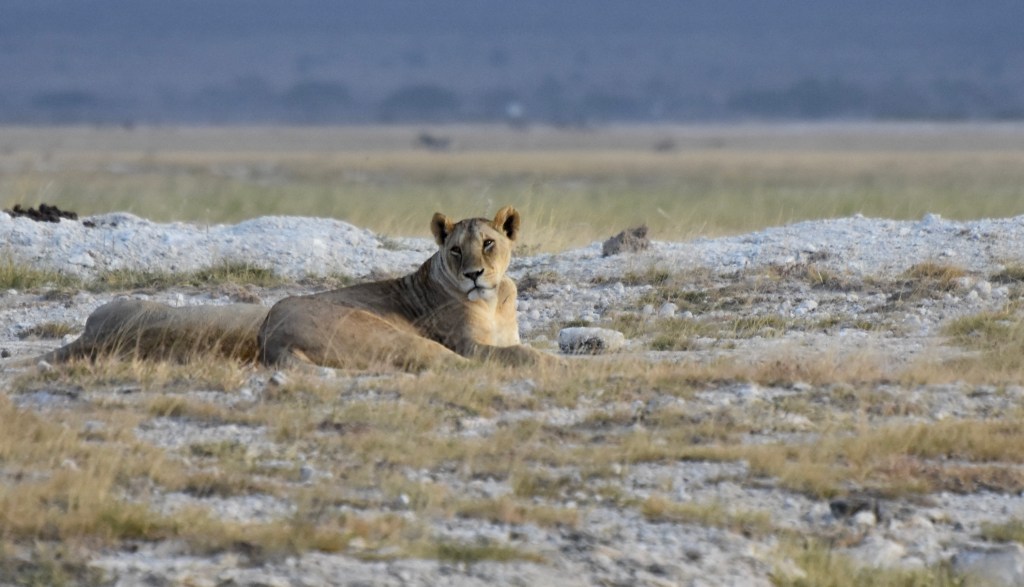
Here’s an interesting series of lion images – they’re in charge and they know it from early on.
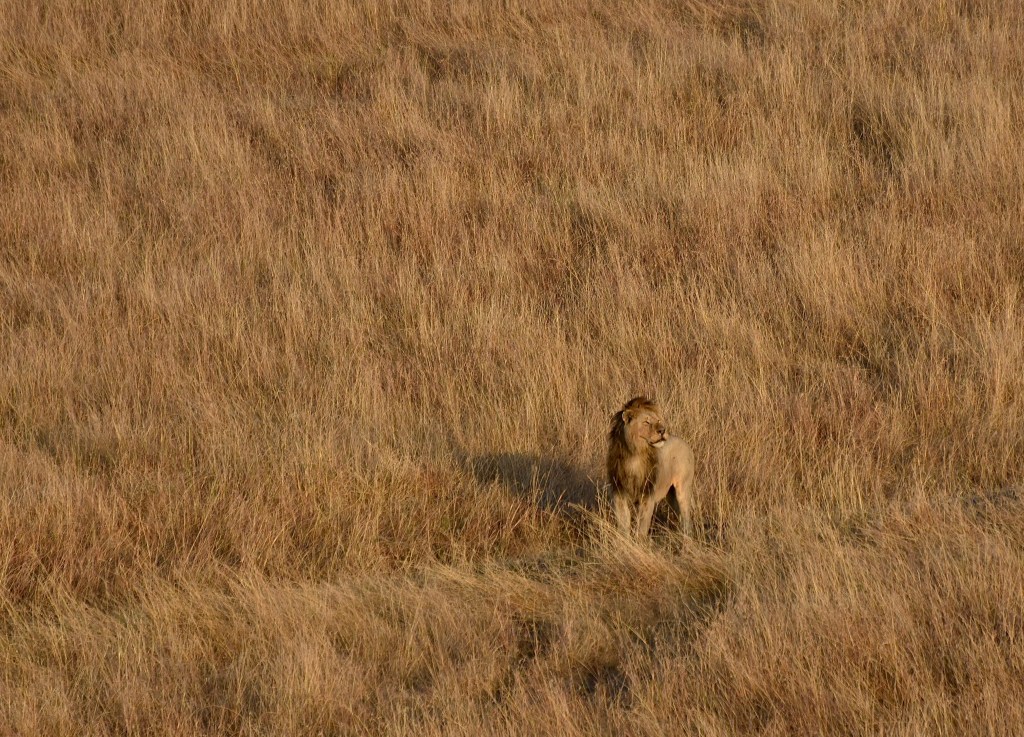
I am King!Yes, but we are Queens!Very challenging for prey to spot these cats in the tall, yellow grassesThe Toyota Land Cruisers are demonstrably non threatening But we are!Practicing friendly facePracticing aggressive faceGrateful for a long zoom lens9 cubs with two of the three lionesses heading for the green grasses, a sure sign of a water sourceImproving core strength Moist, wet green grass digests nicelySometimes it feels good to just blow a trunk full of dirt all over your body.Lush savanna wetlandsAnother tree dweller Kama Sutra
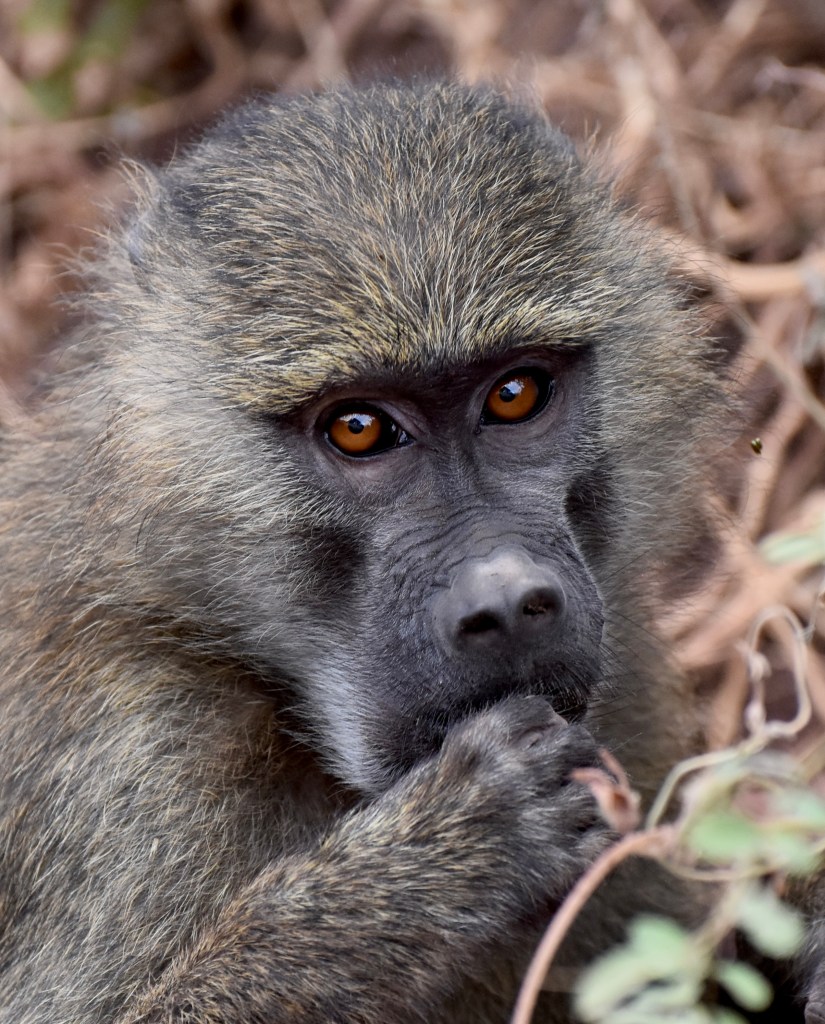
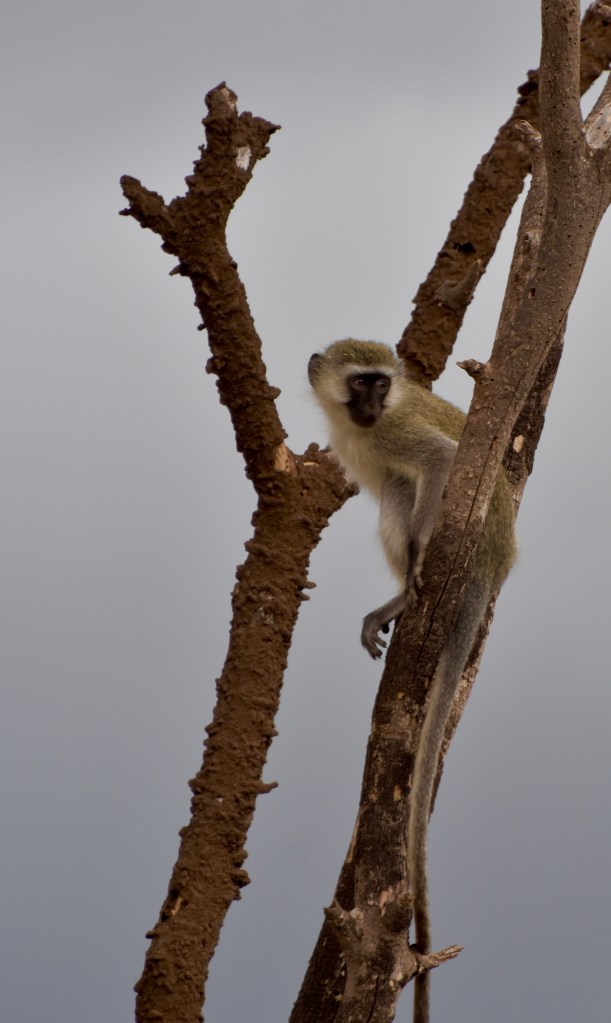
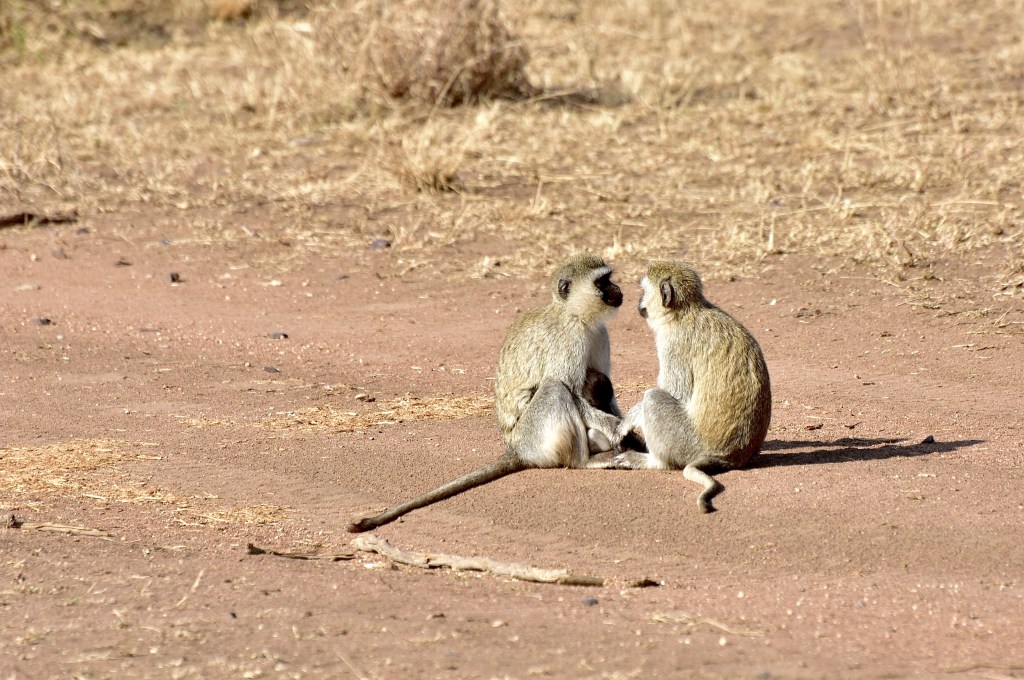
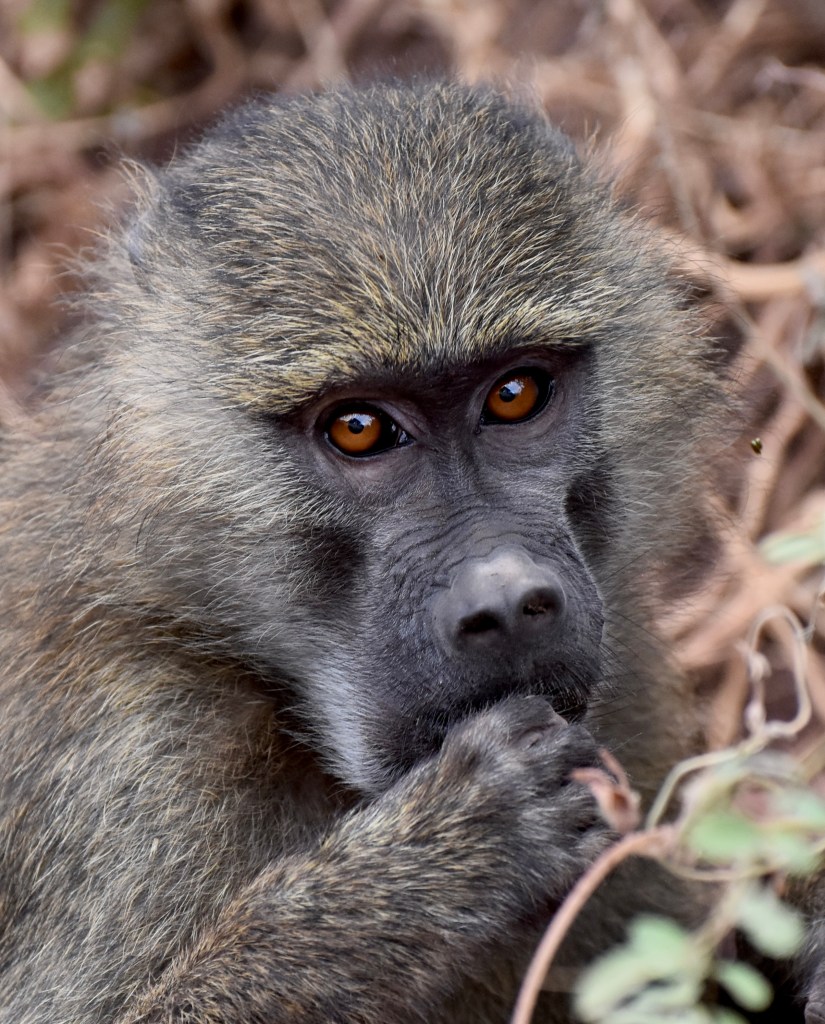
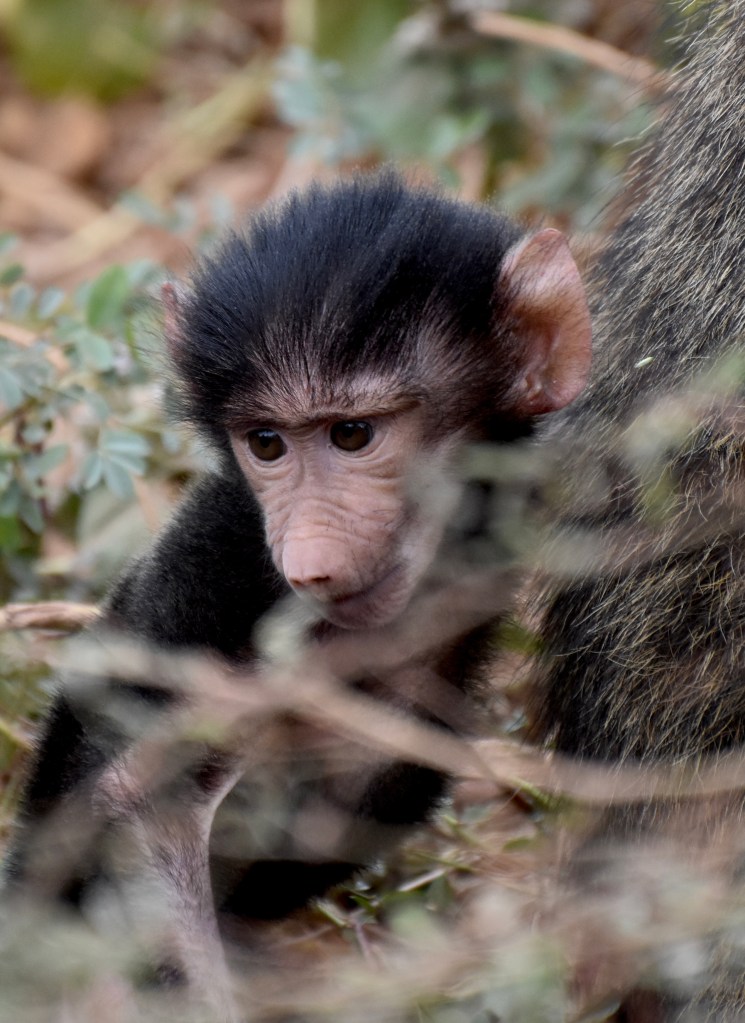
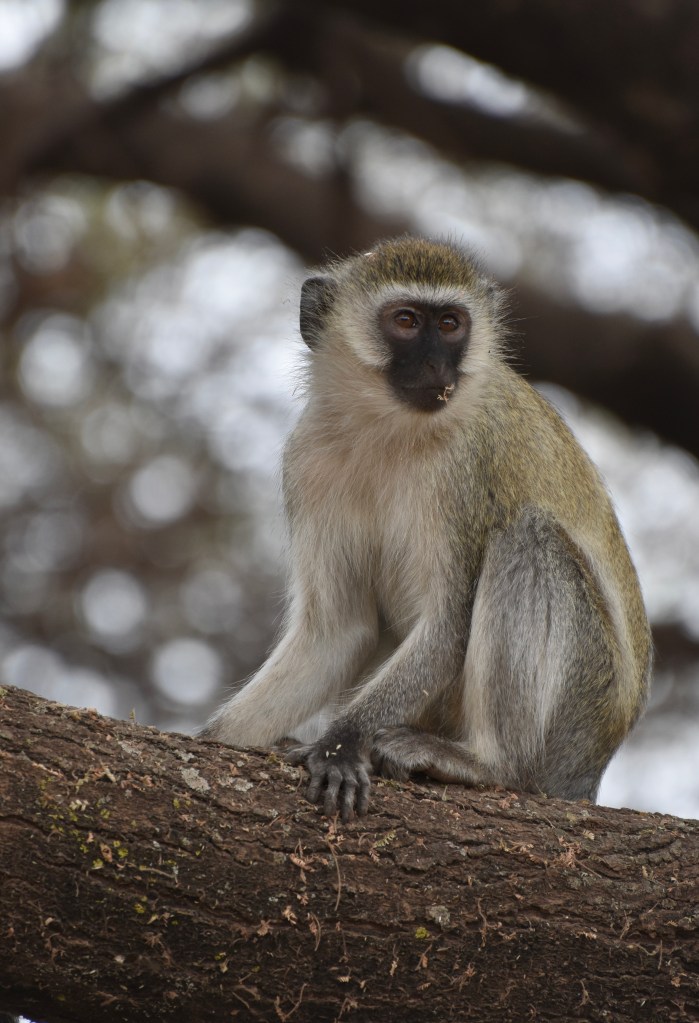
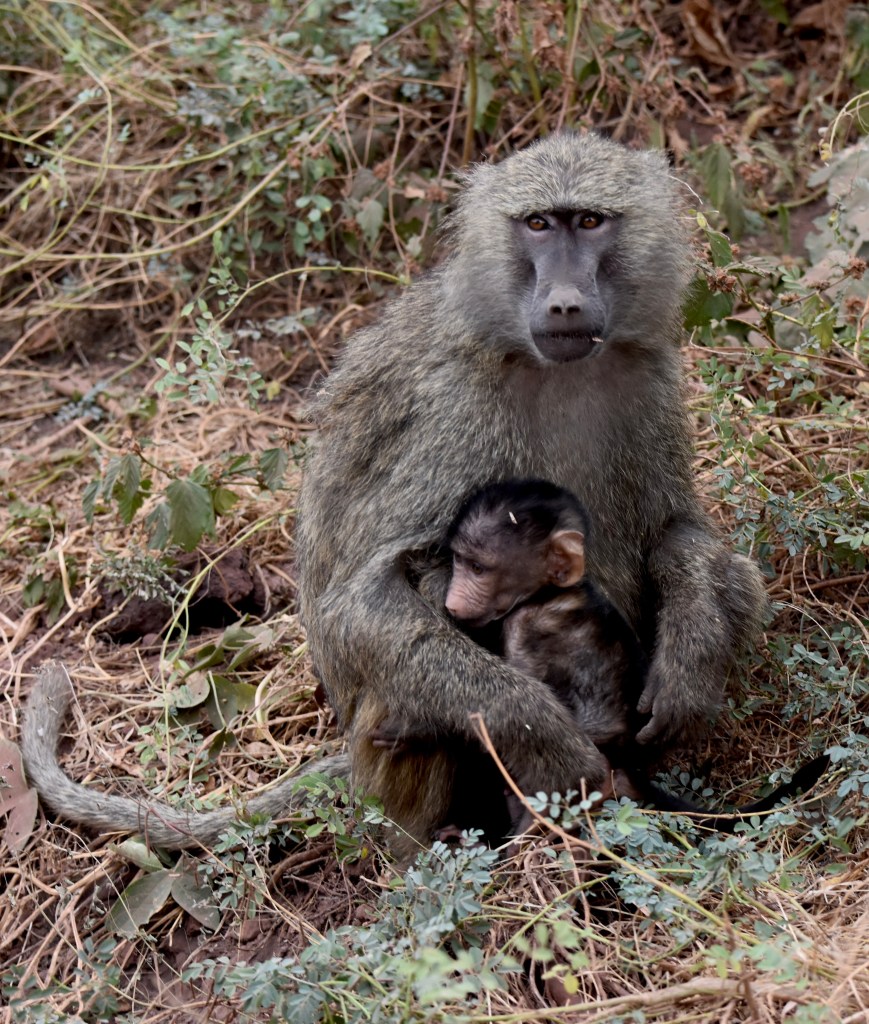
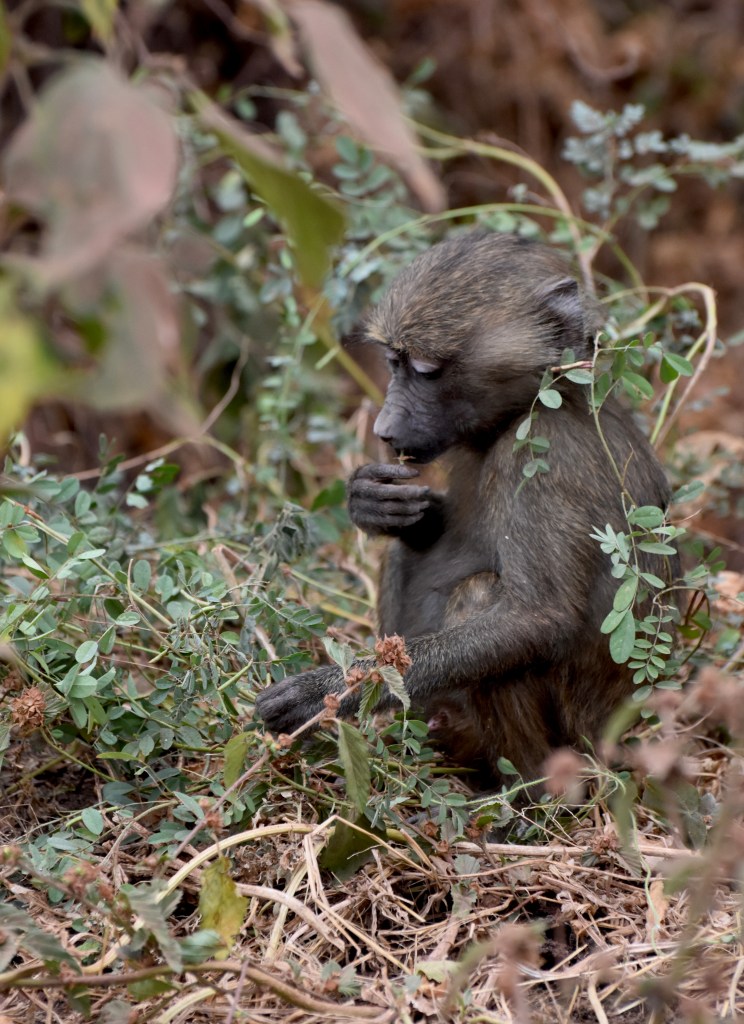
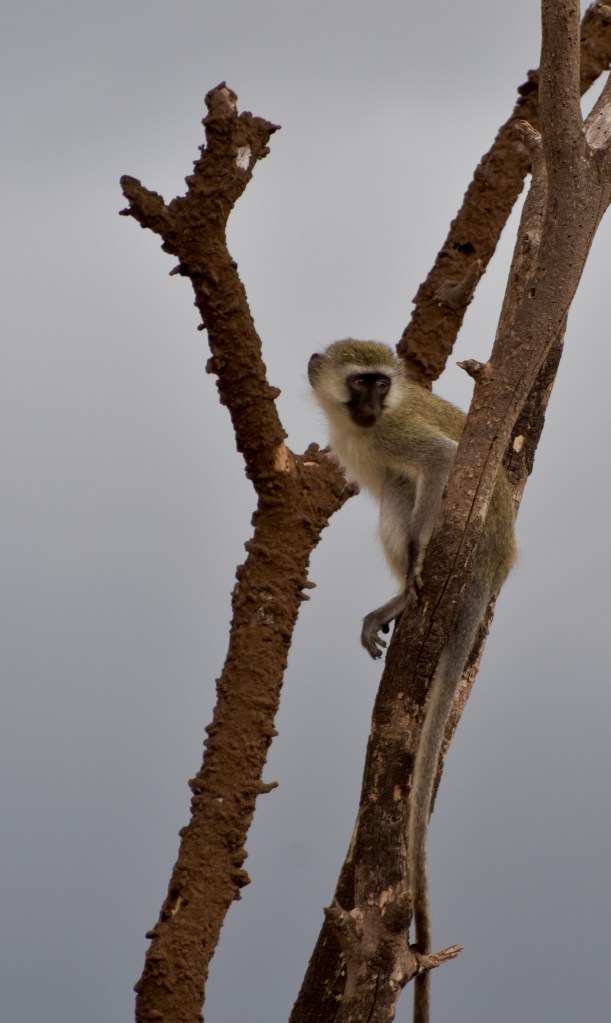
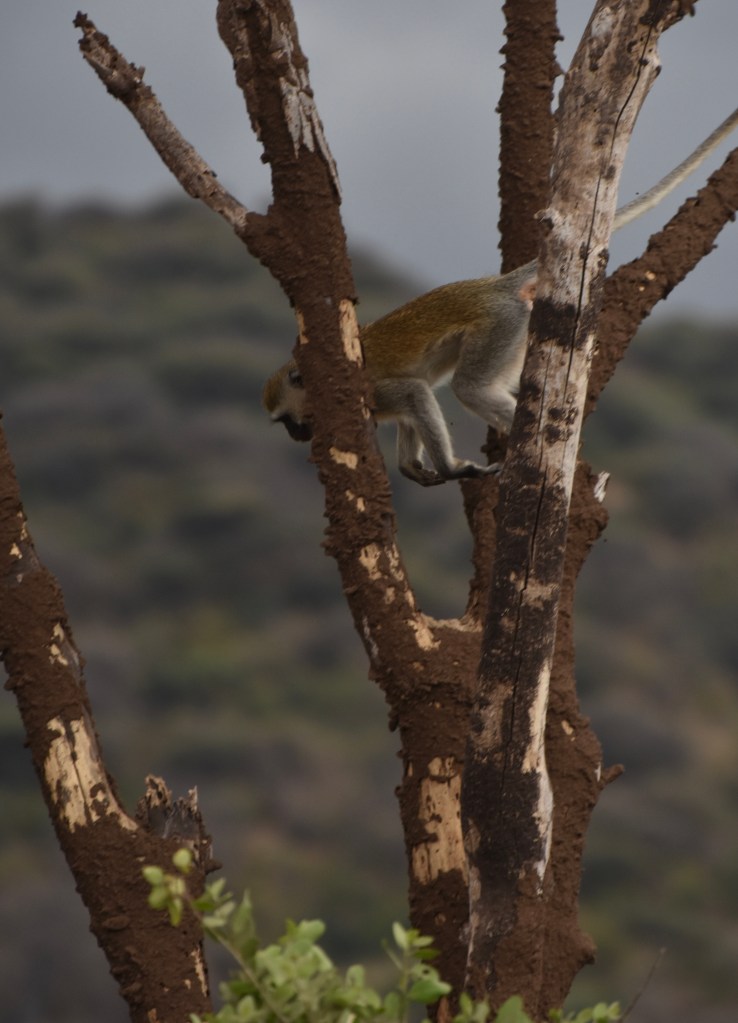
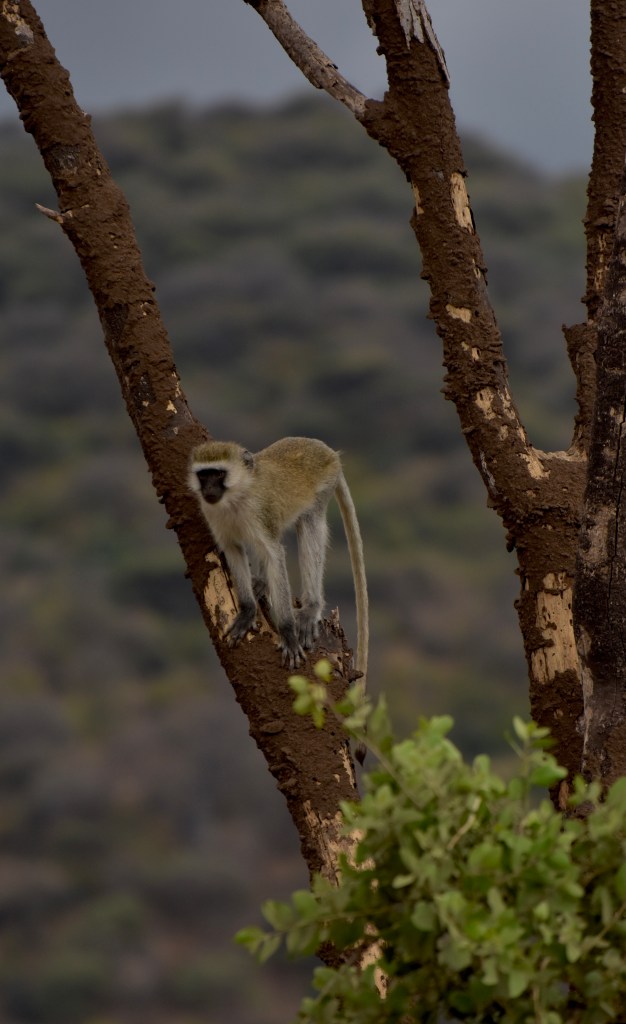
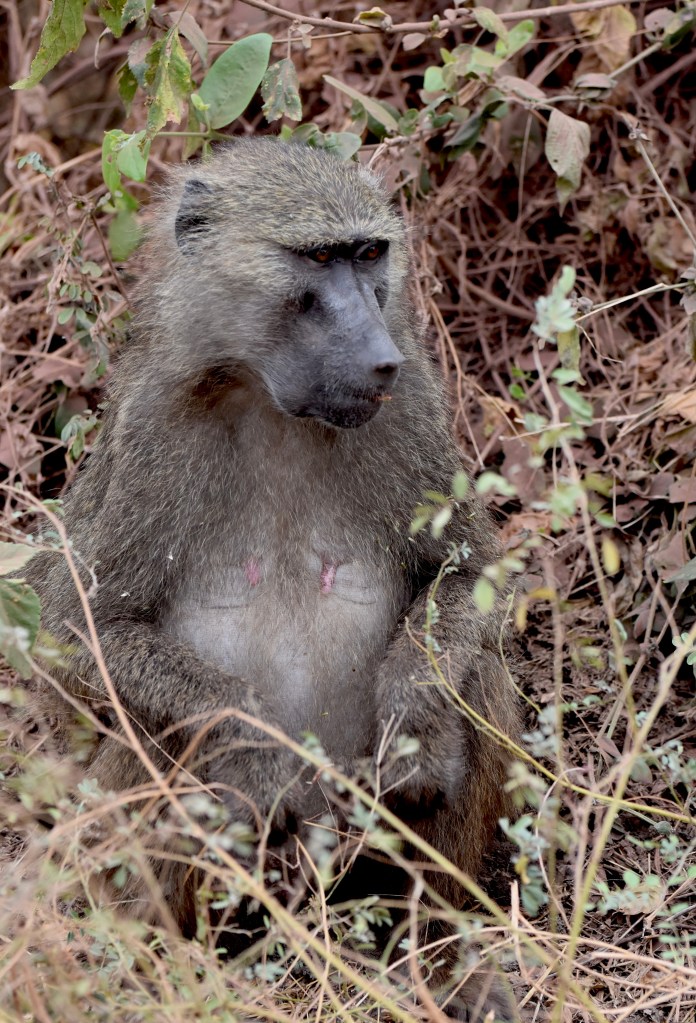
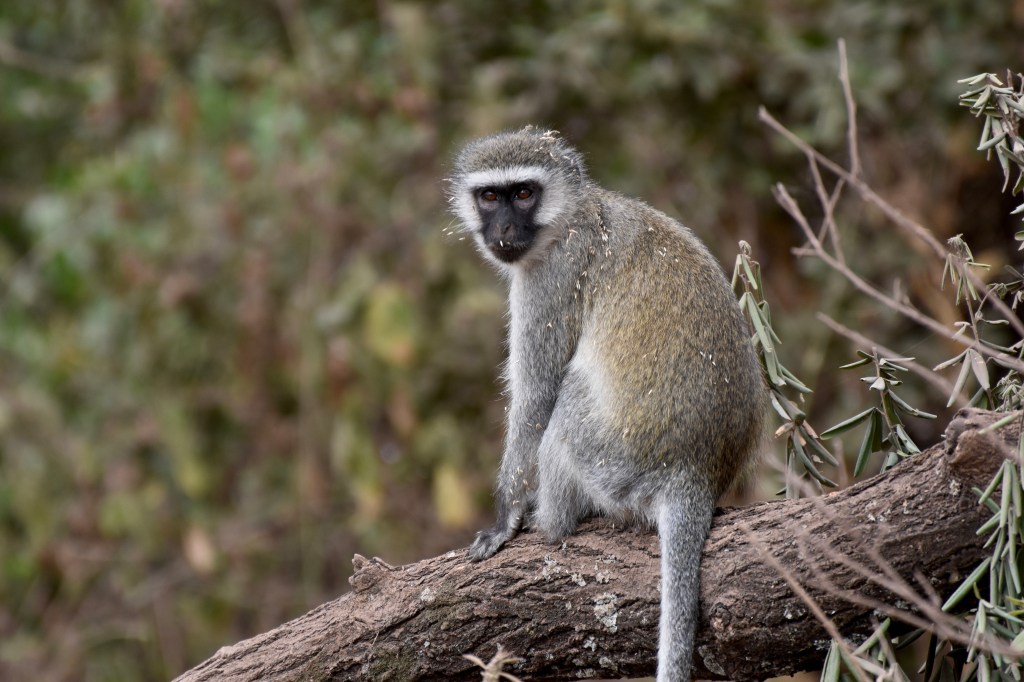
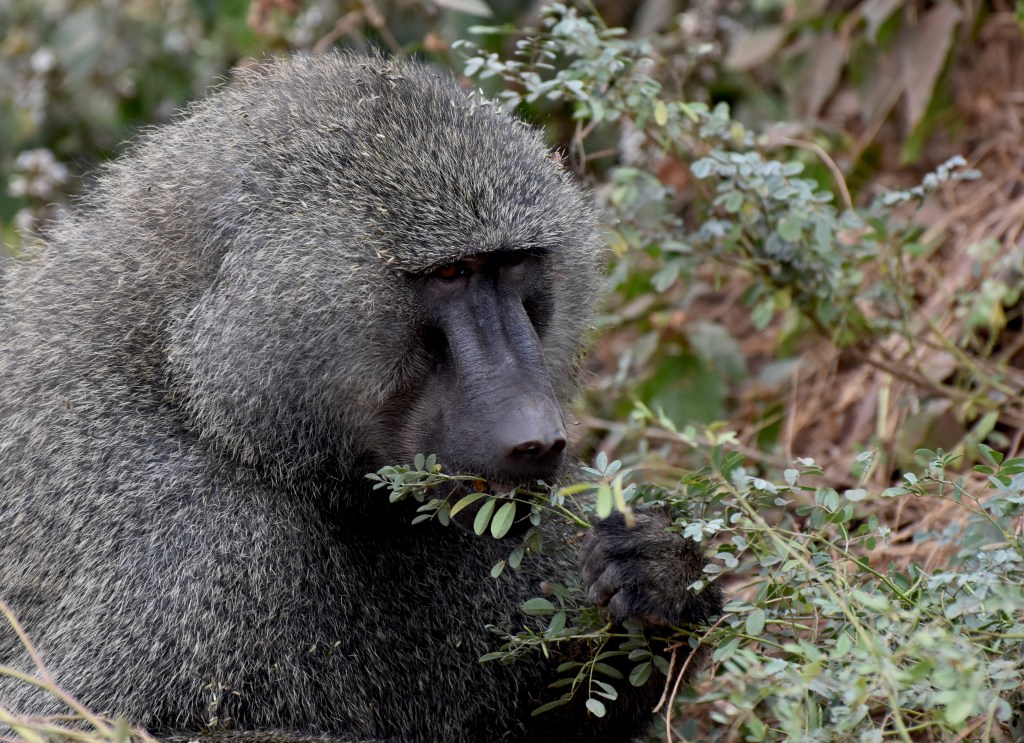
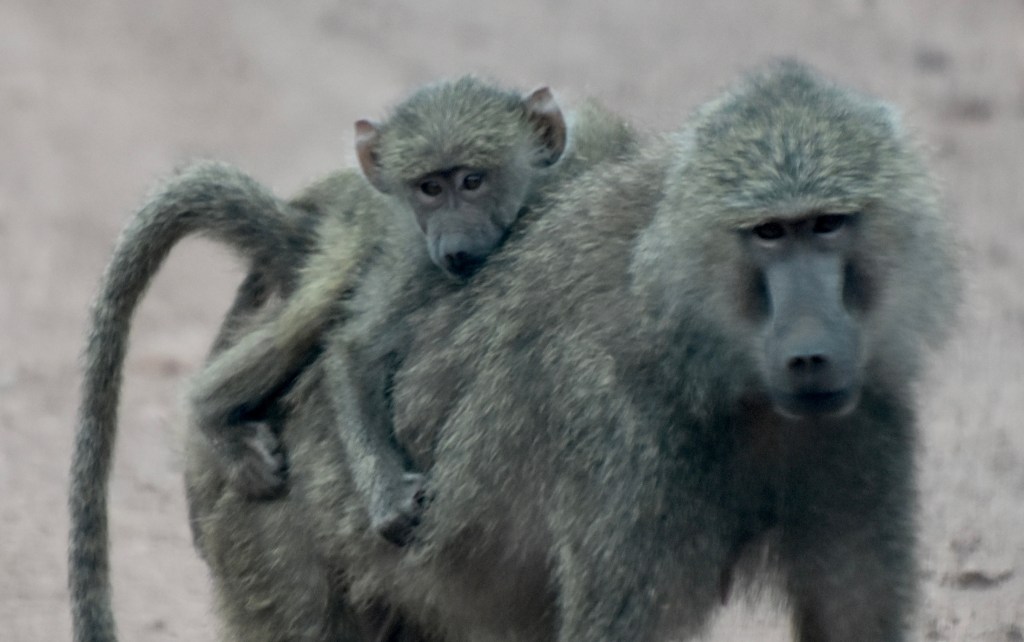
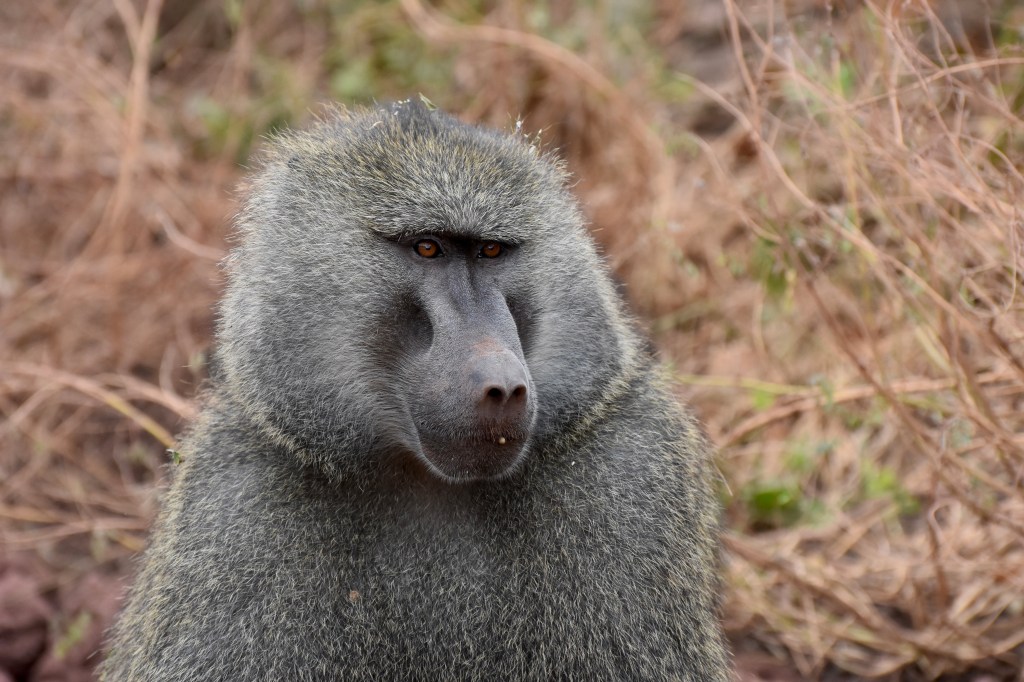
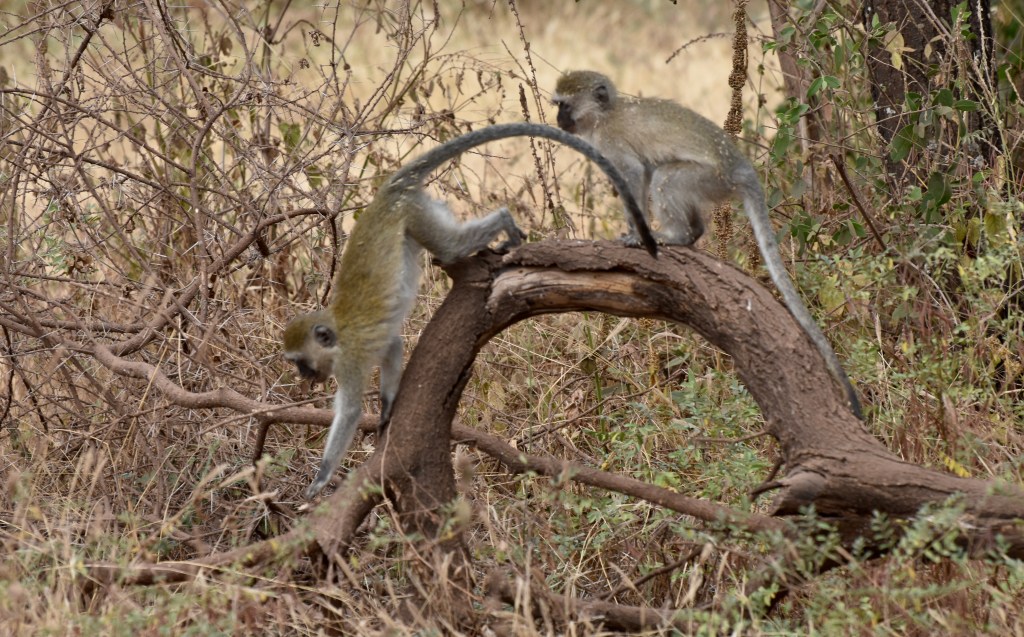
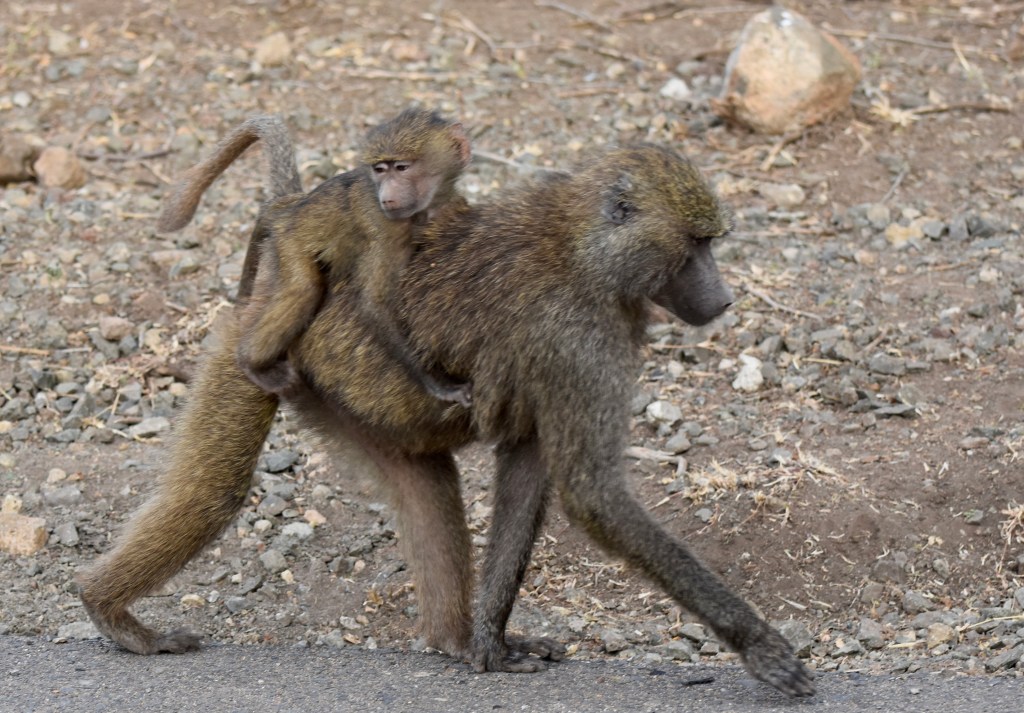
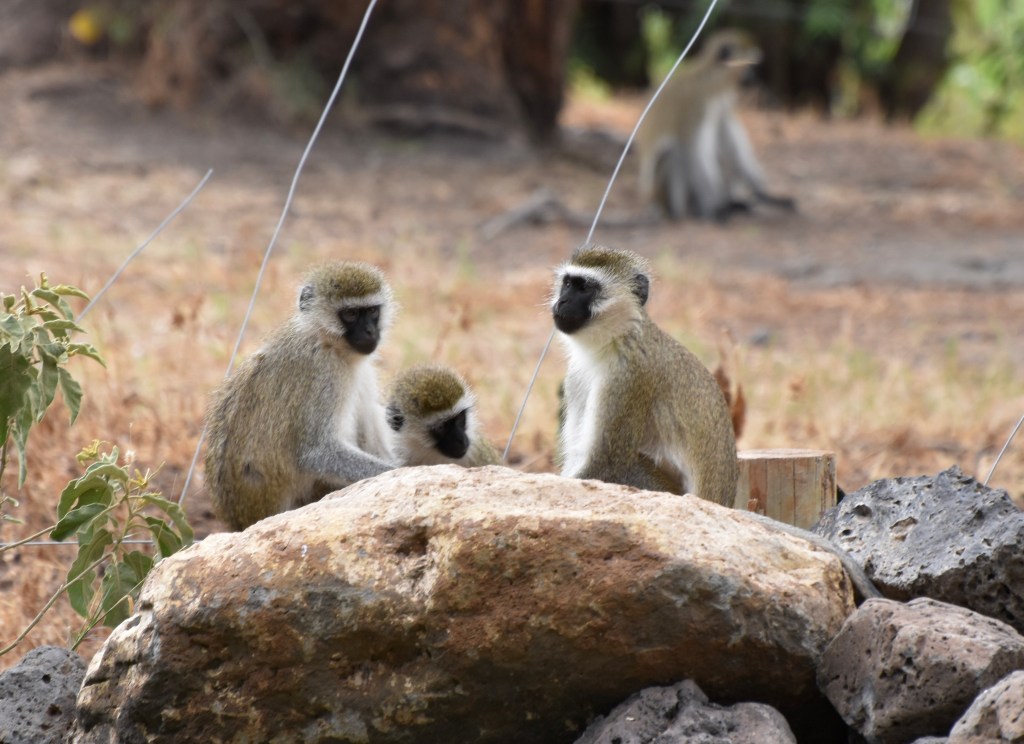
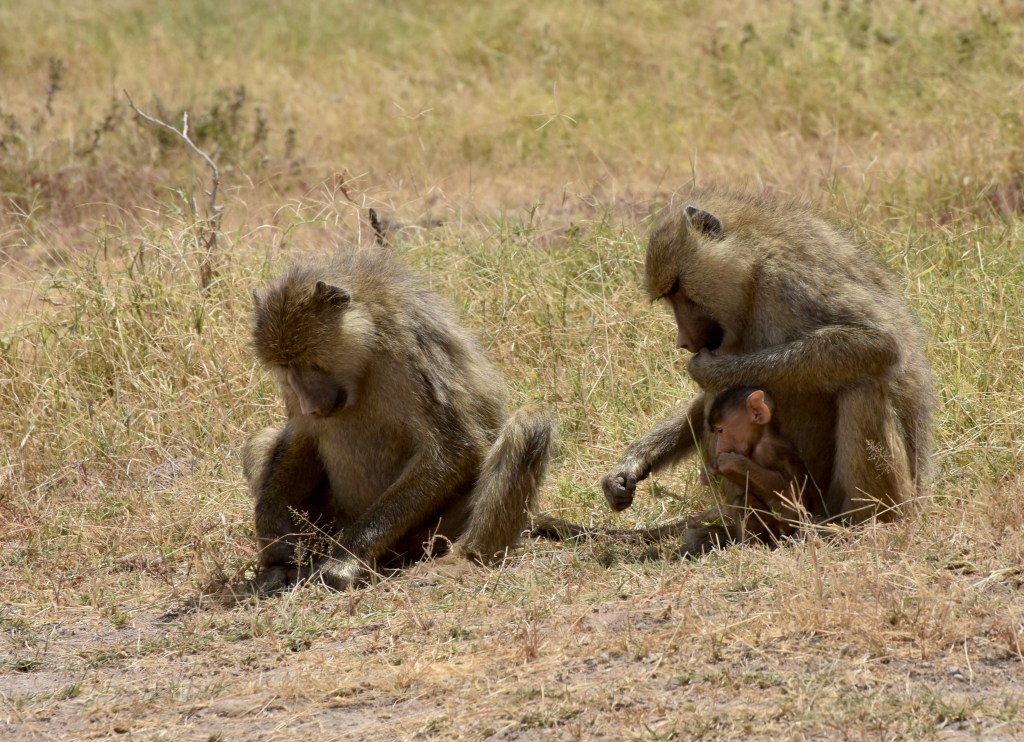
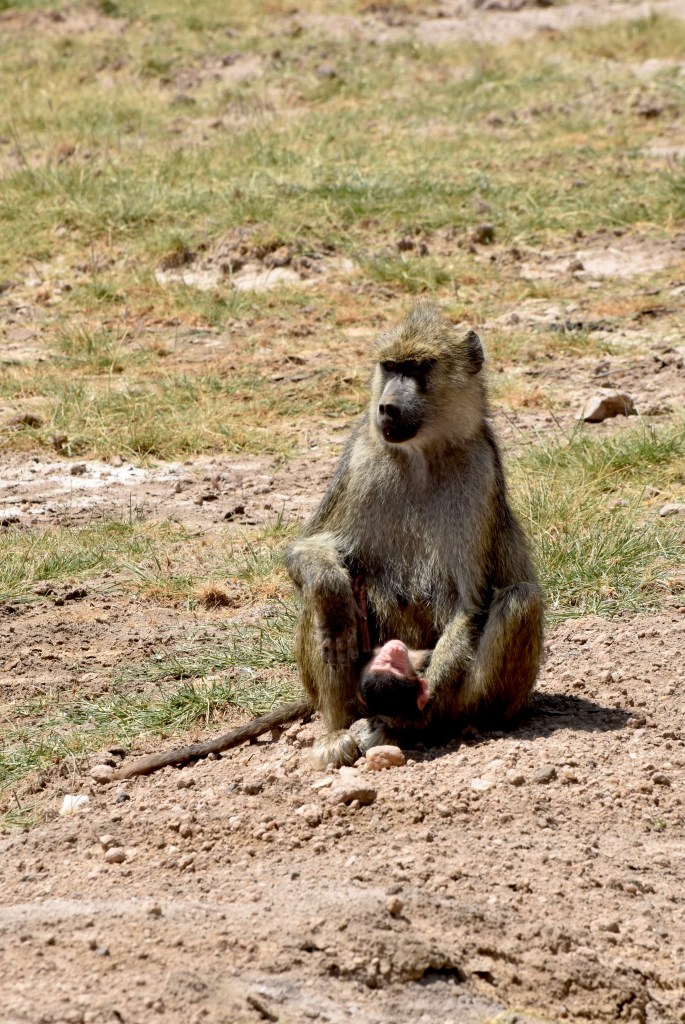
Leaving Amboseli and entering Tanzania, we spent an evening at Lake Maynara which is home to a number of baboons and monkeys, all of whom were very comfortable with us being nearby and also very photogenic.
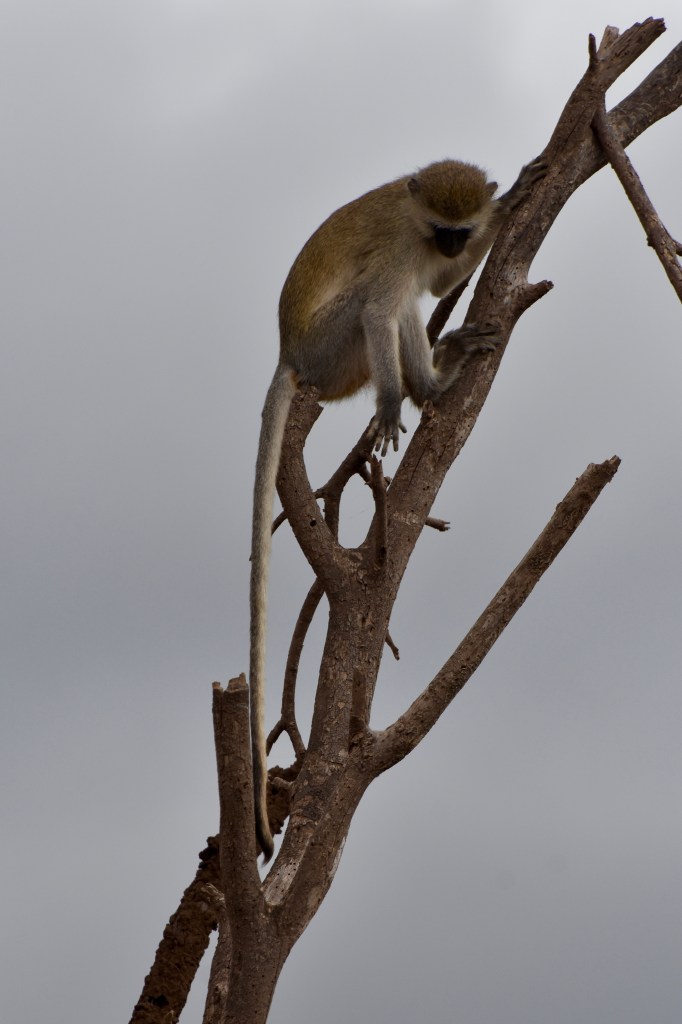
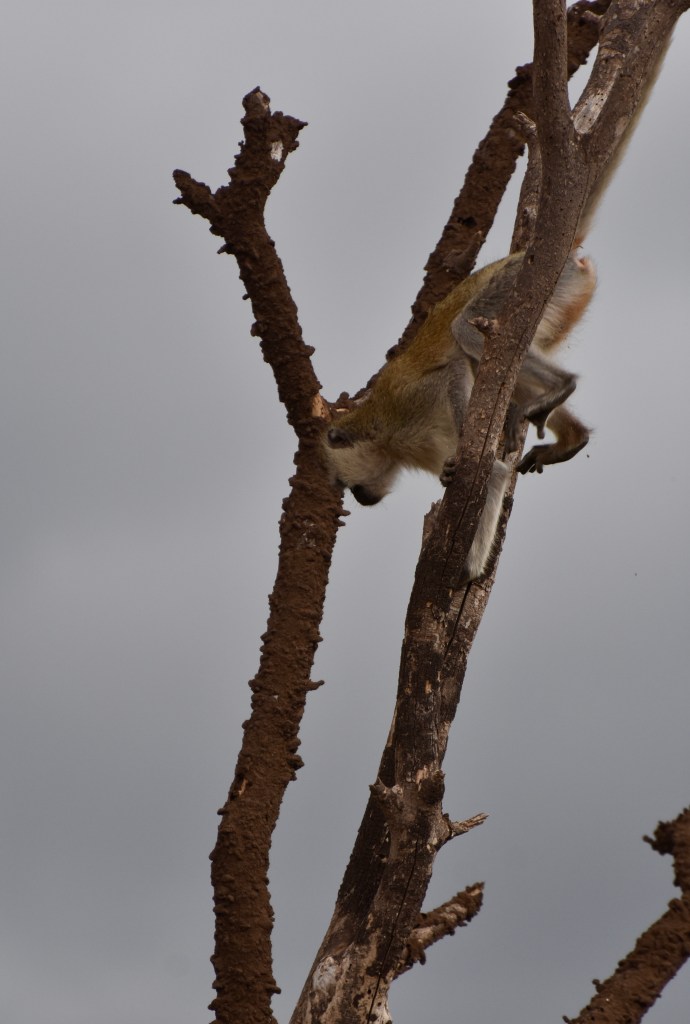
A tree jumping sequence follows. The monkey made it to the top but ran out of tree branches….
Now it’s time to get back down….Time for leap #1….Now leap #2….Ah, a much better vantage point. Success!Quite a sight when this big family came around the corner
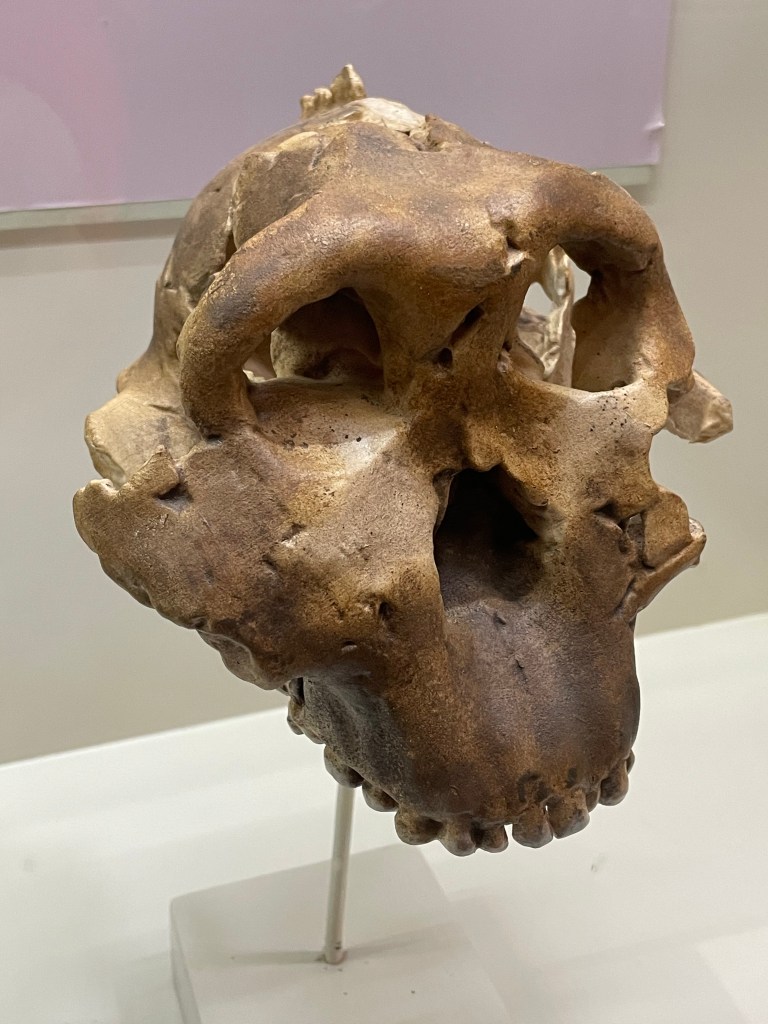
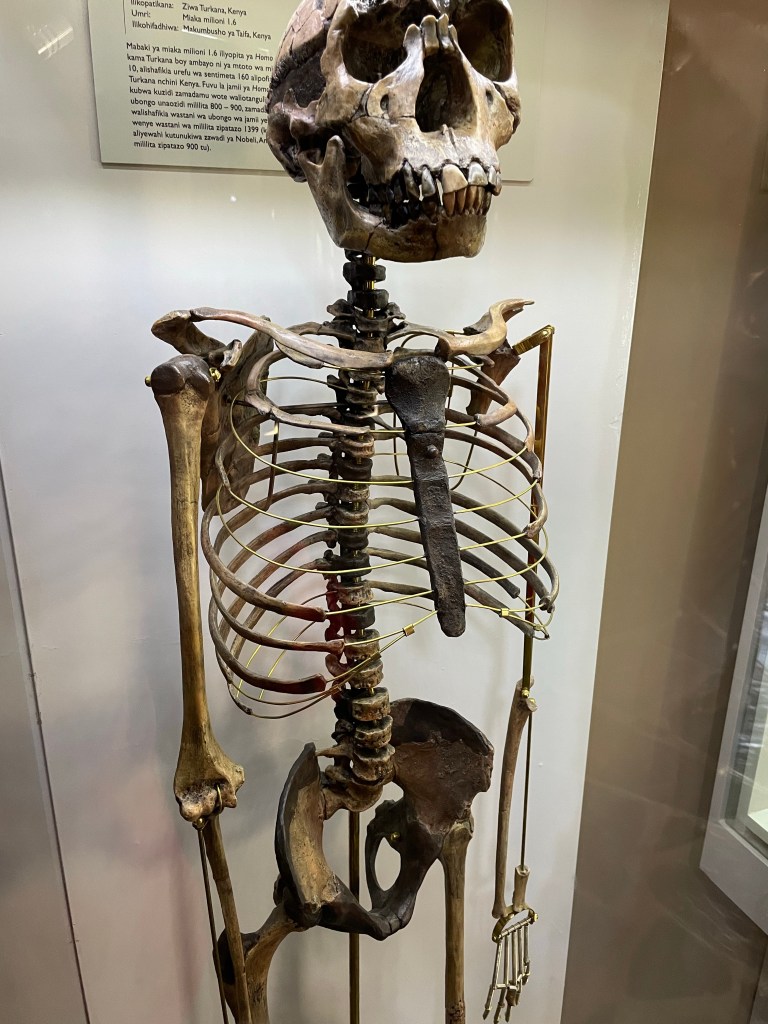
It was only appropriate to follow this up with a visit to the world renowned Olduvai Gorge, the excavation site in Tanzania where Mary and Louis Leakey spent 50+ years on an archaeological dig that validated and documented the evolution of our species from Homo erectus to Homo sapiens, including the fossils of Lucy.
Paranthropus Boisei, considered the most famous of the fossils found at Olduvai Gorge, dates to 1.75 million years ago. Dr. Karen will most appreciate this.Leaving Olduvai, it was time to head for the legendary Serengeti!
Leaving Nairobi before sunrise on a cool, overcast Sunday morning, we headed south on the road to Mombasa, then after a couple hours we turned onto a washboard gravel road. Traveling at 80 klicks, we experienced our first free Kenyan massage inside the 8 person Land Cruiser. But arriving at Amboseli National Park in the shadow of Mt. Kilimanjaro was well worth it as the park was teeming with wildlife.
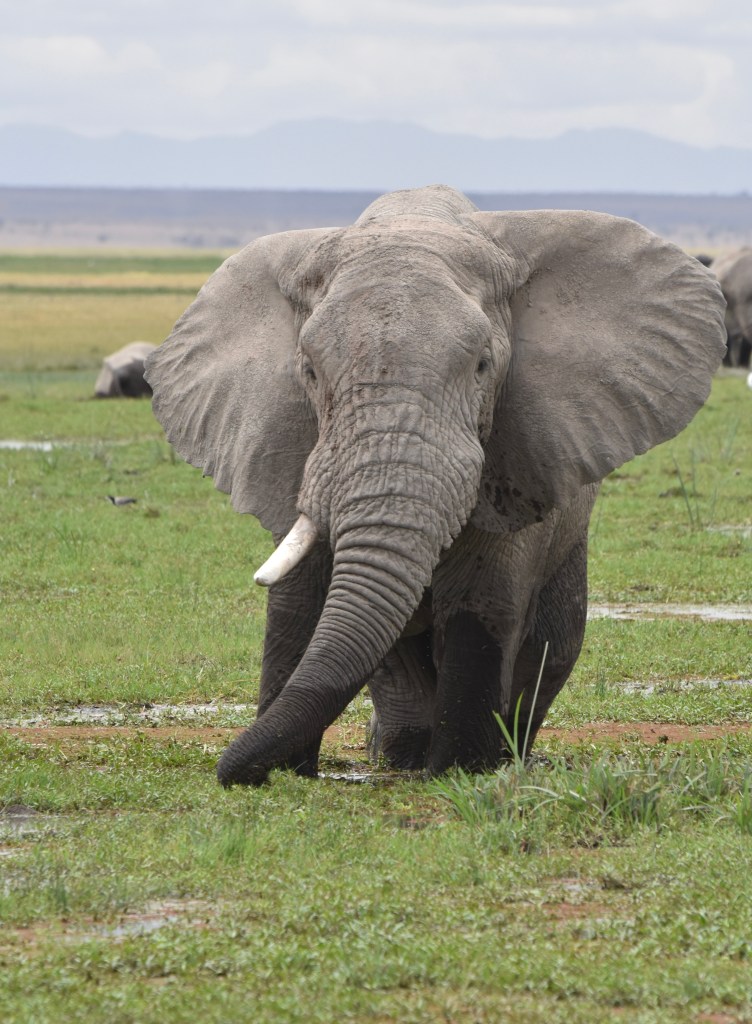
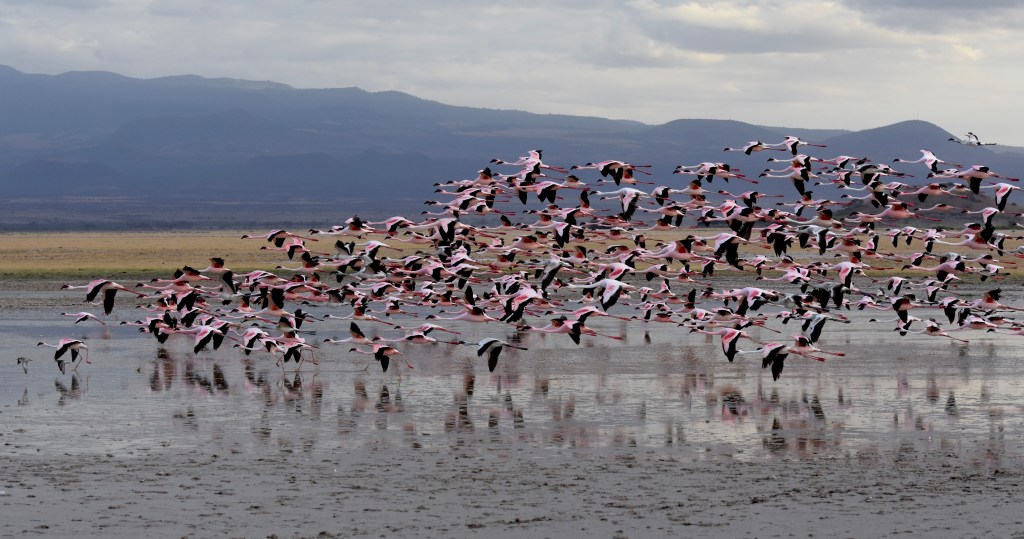
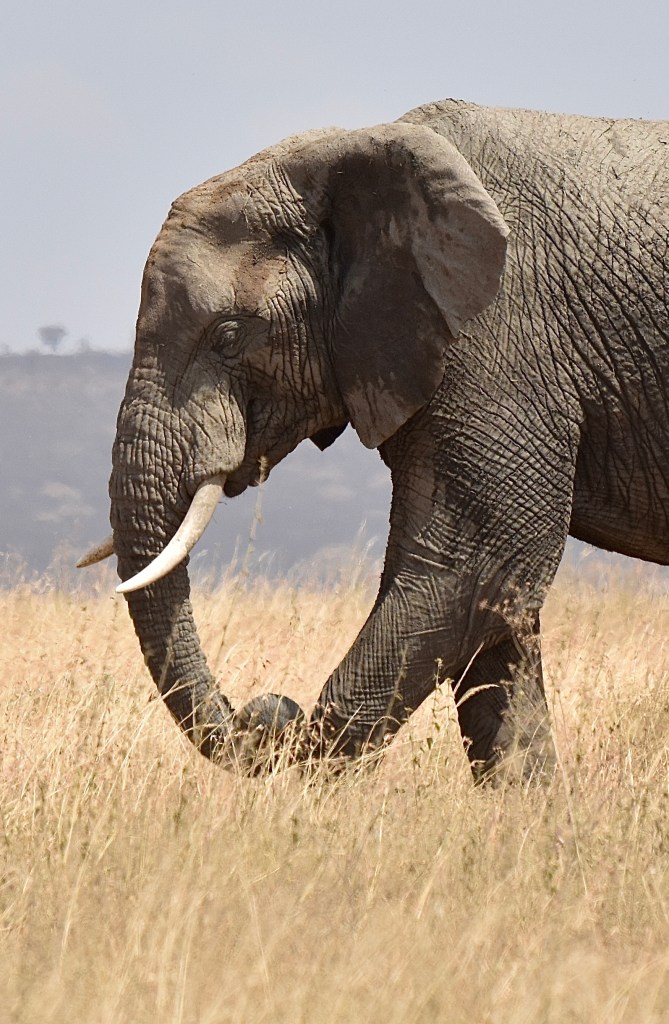
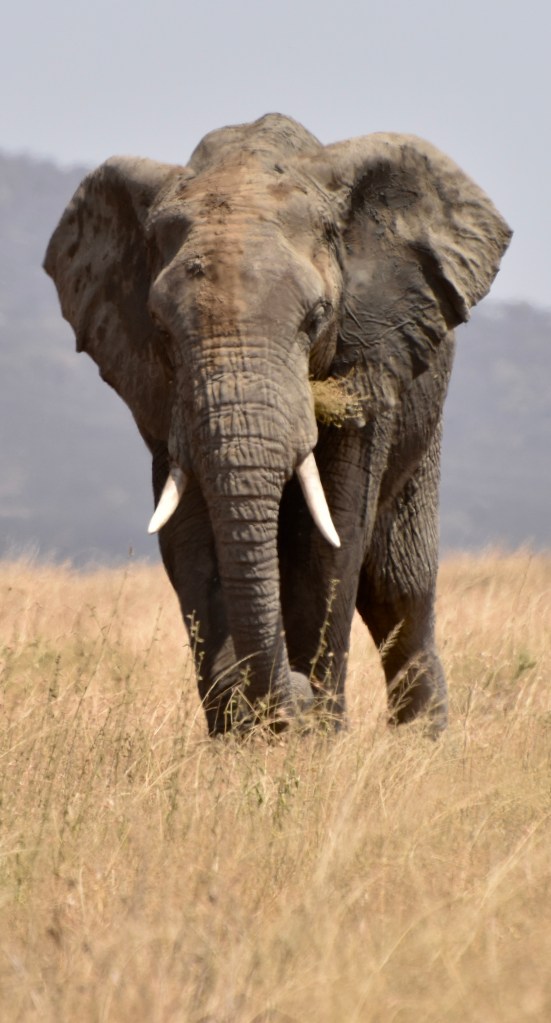
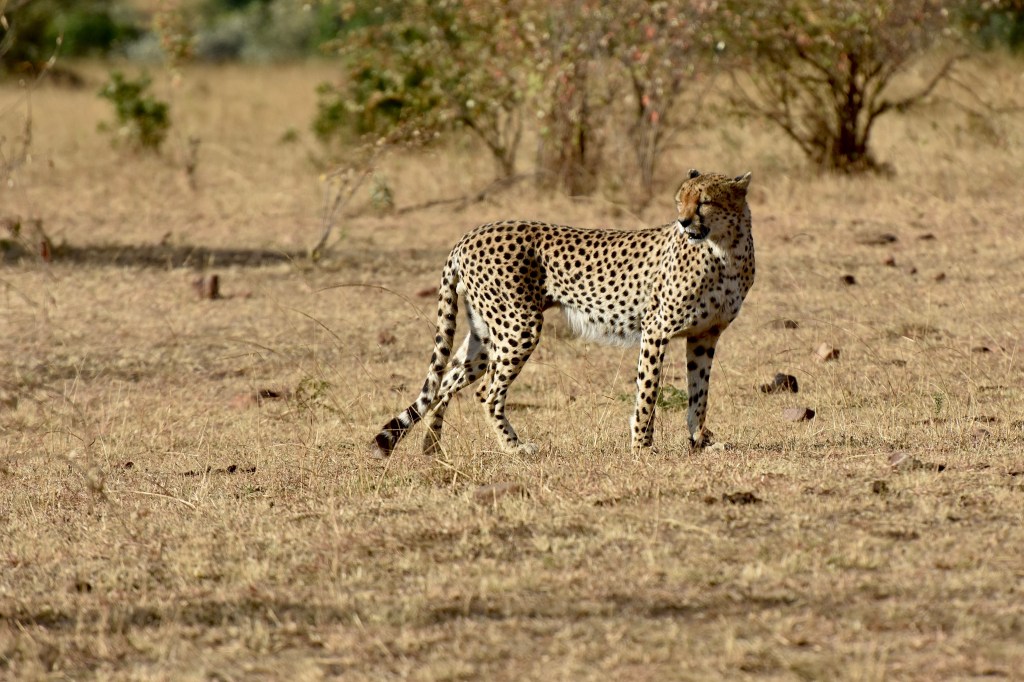
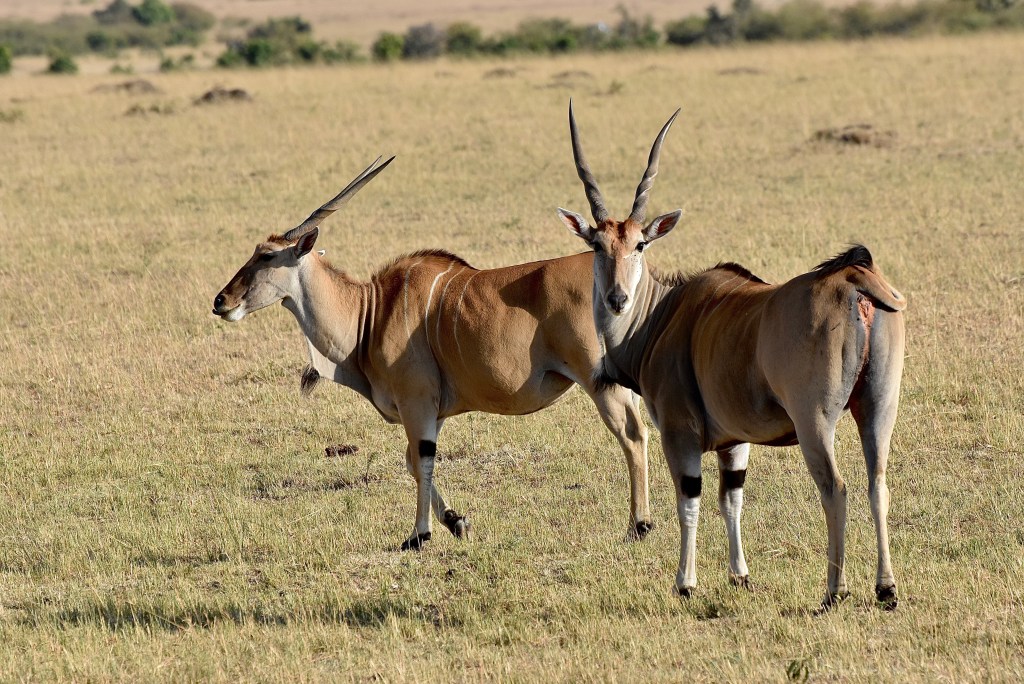
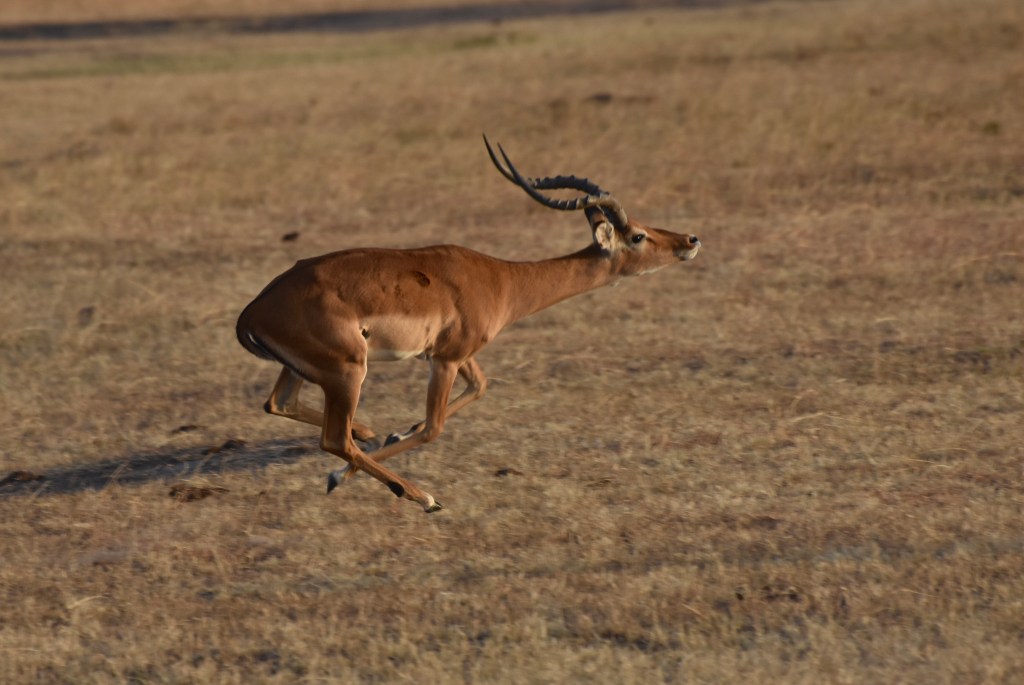
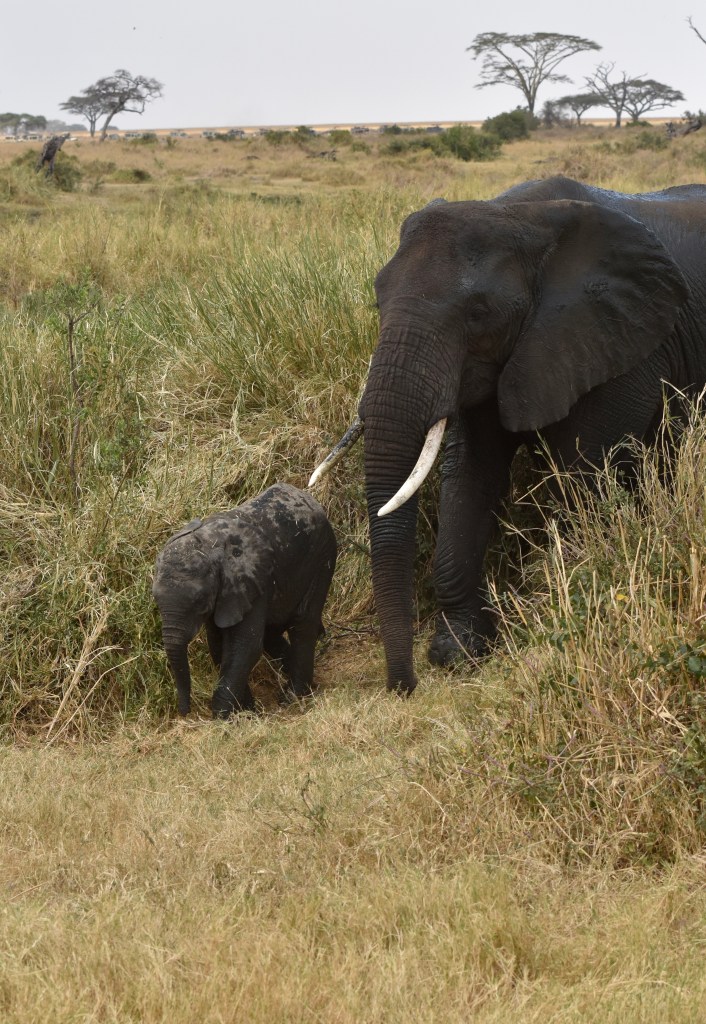
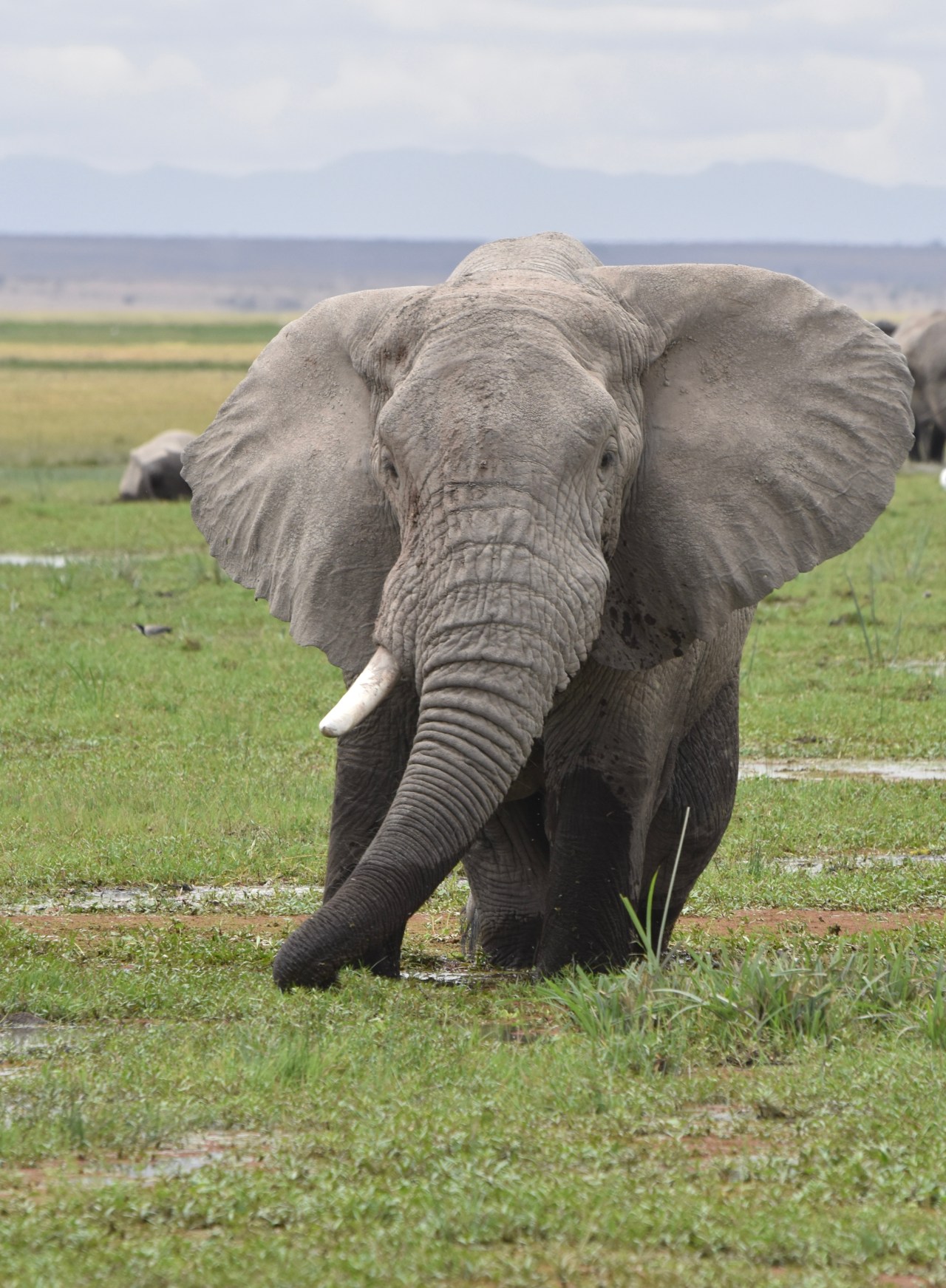
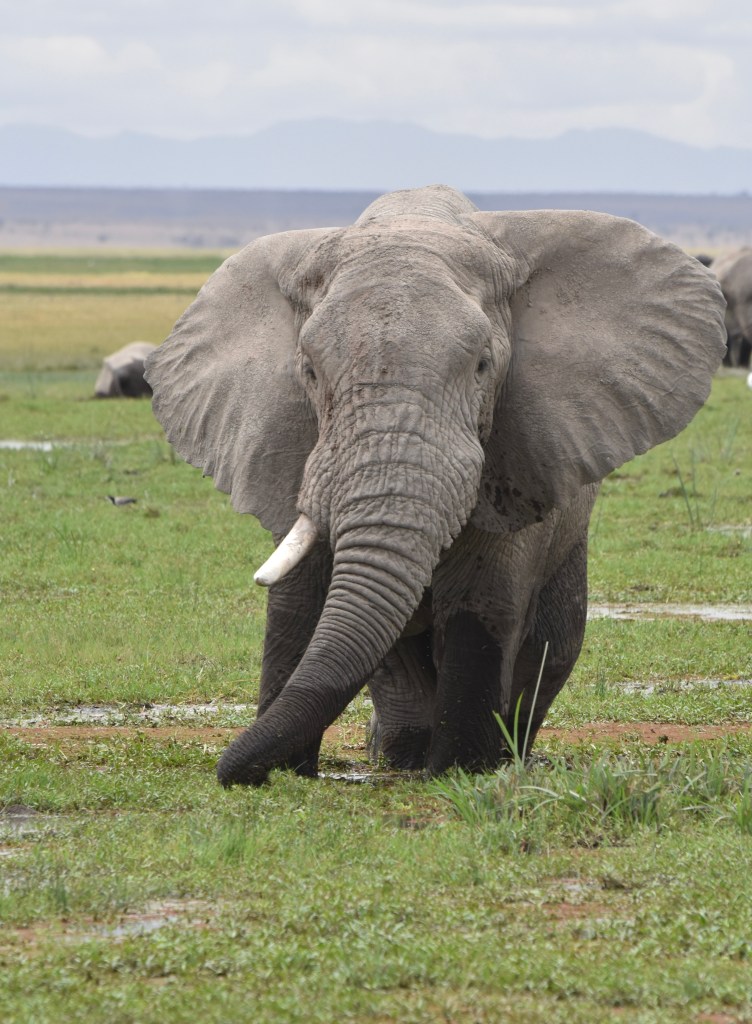
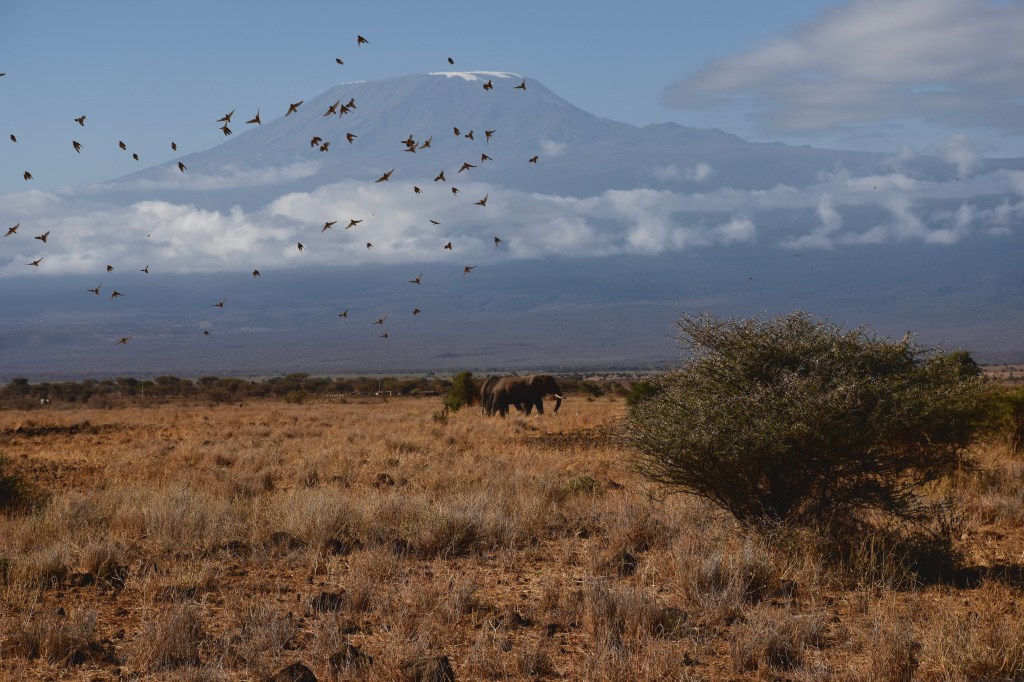
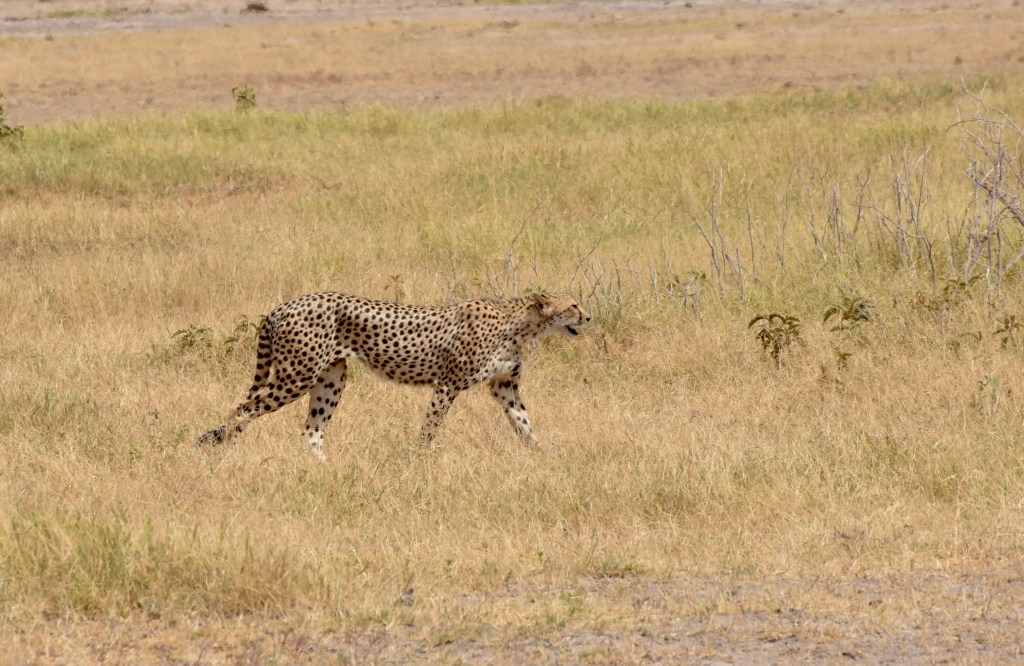
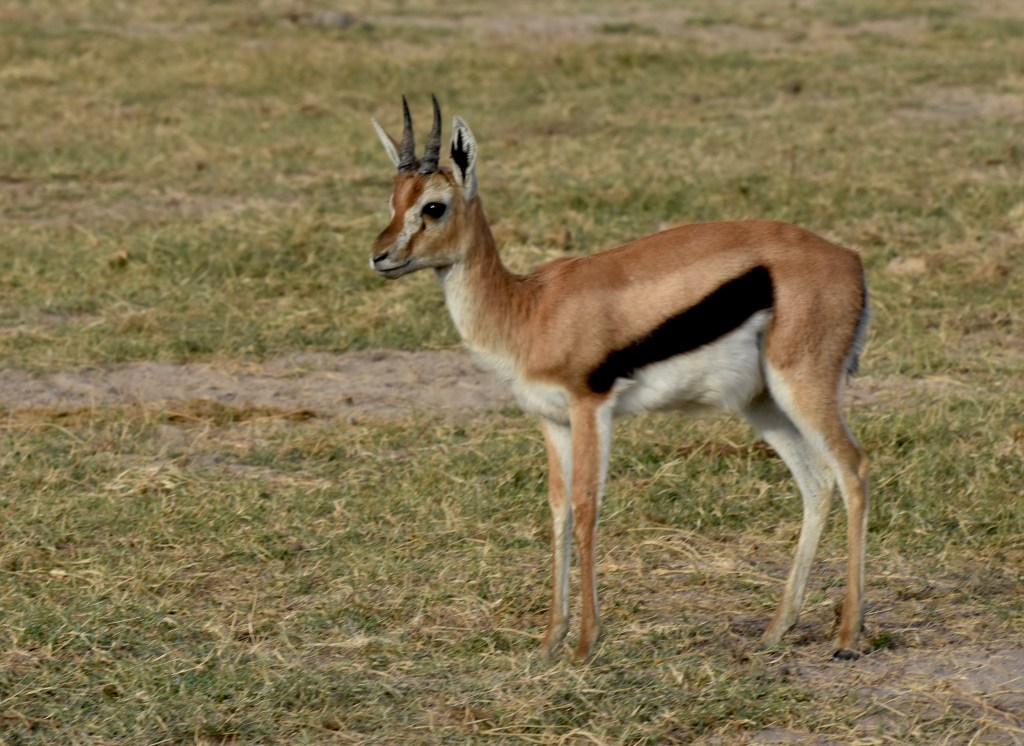
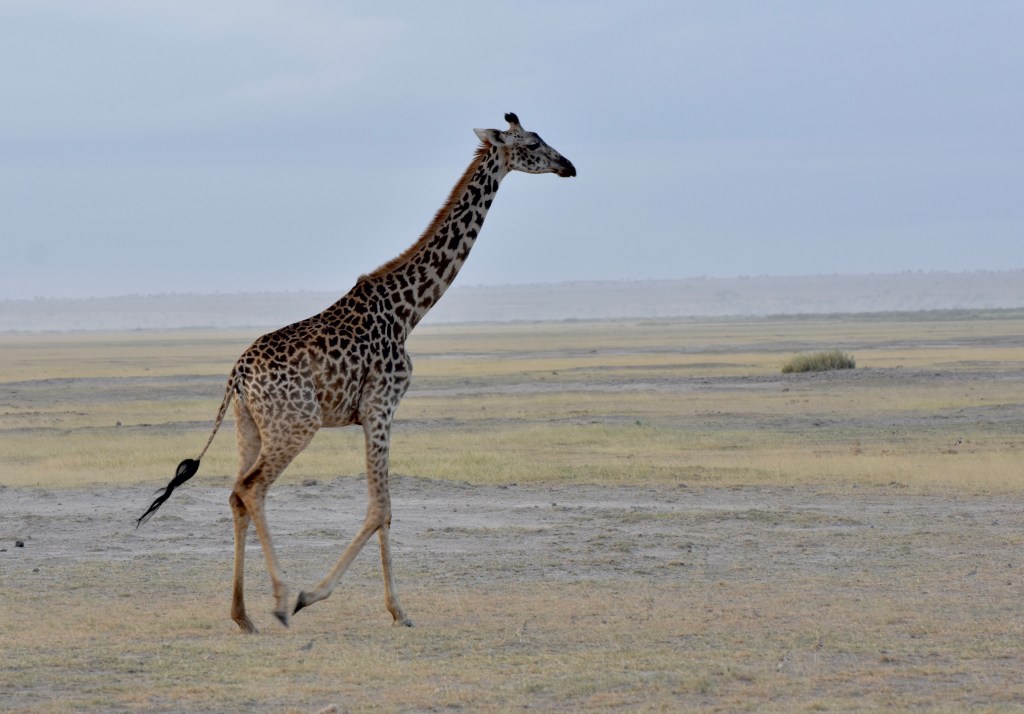
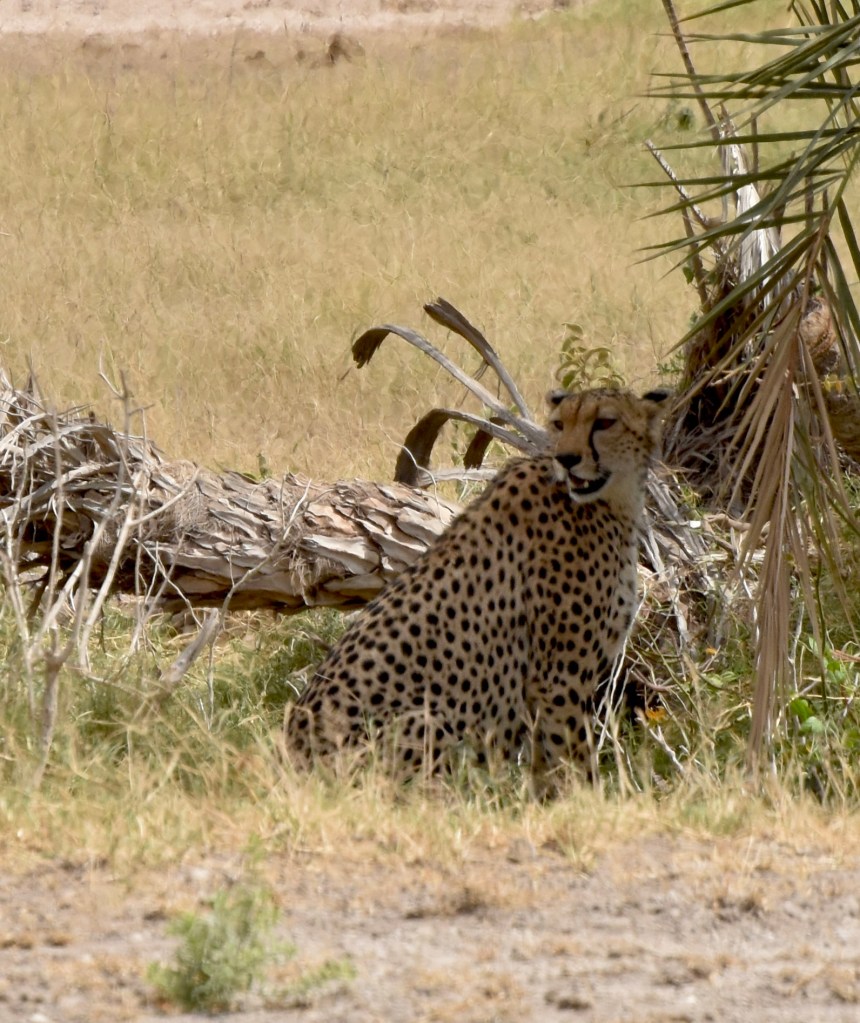
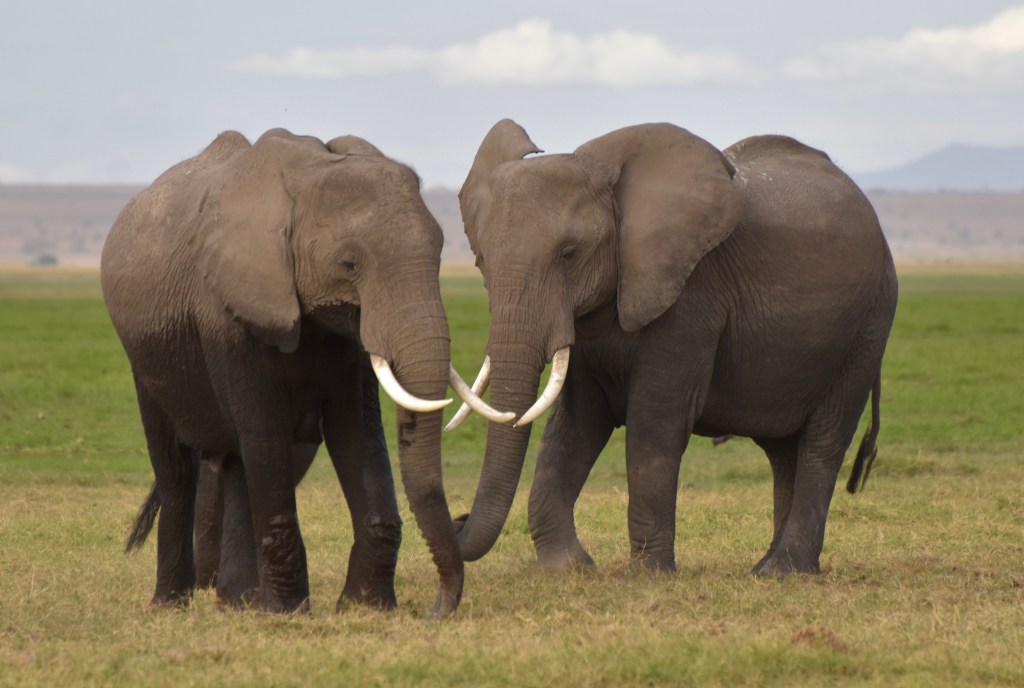
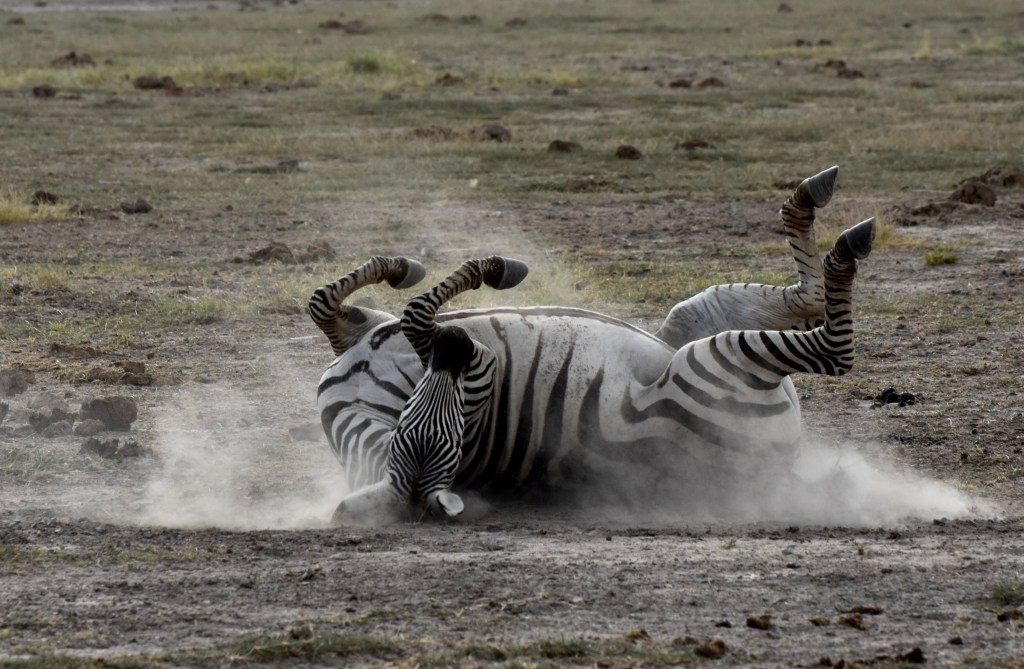
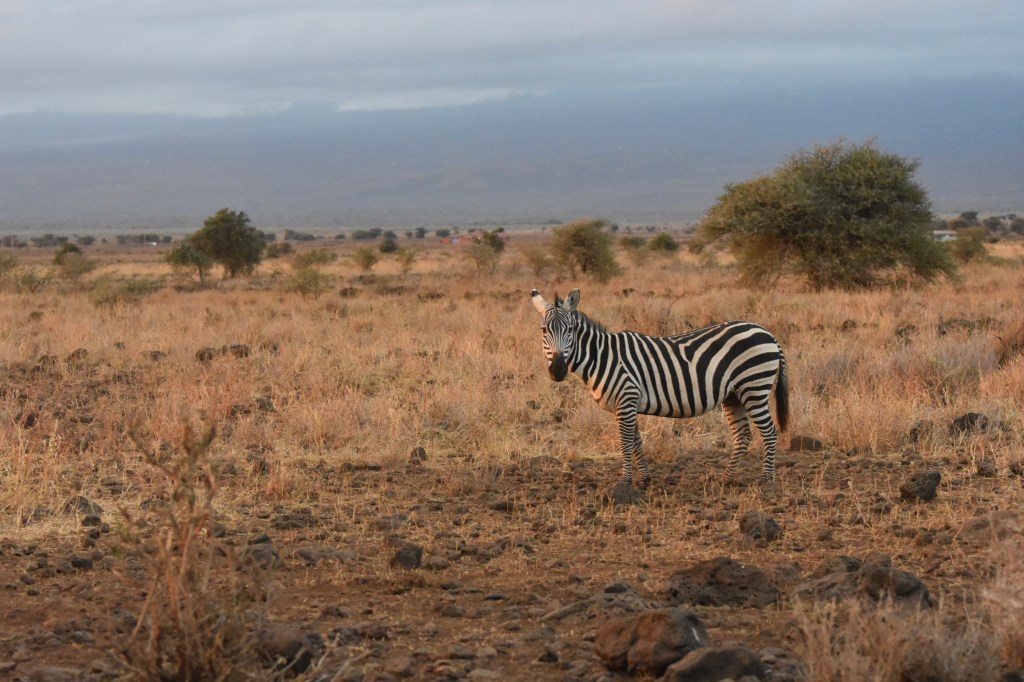
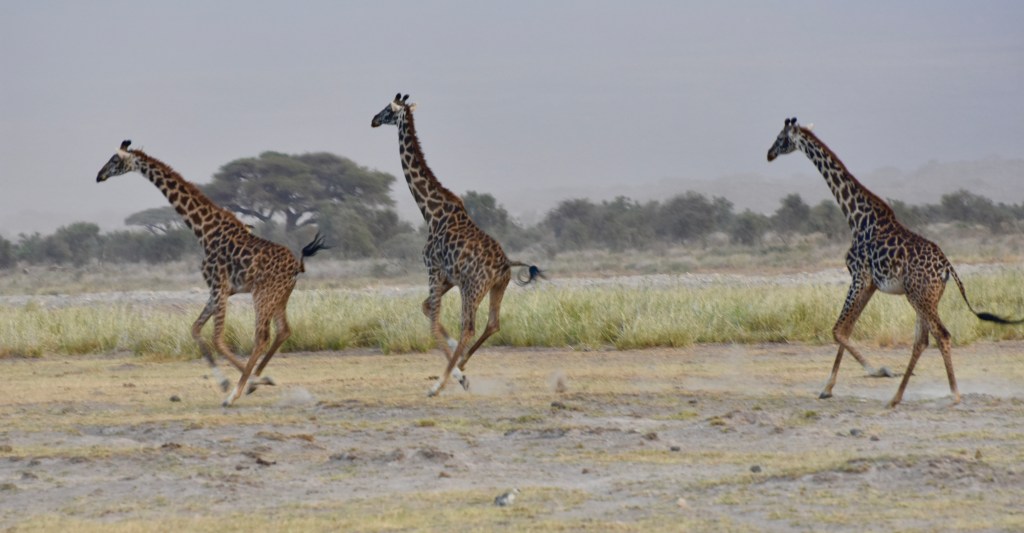
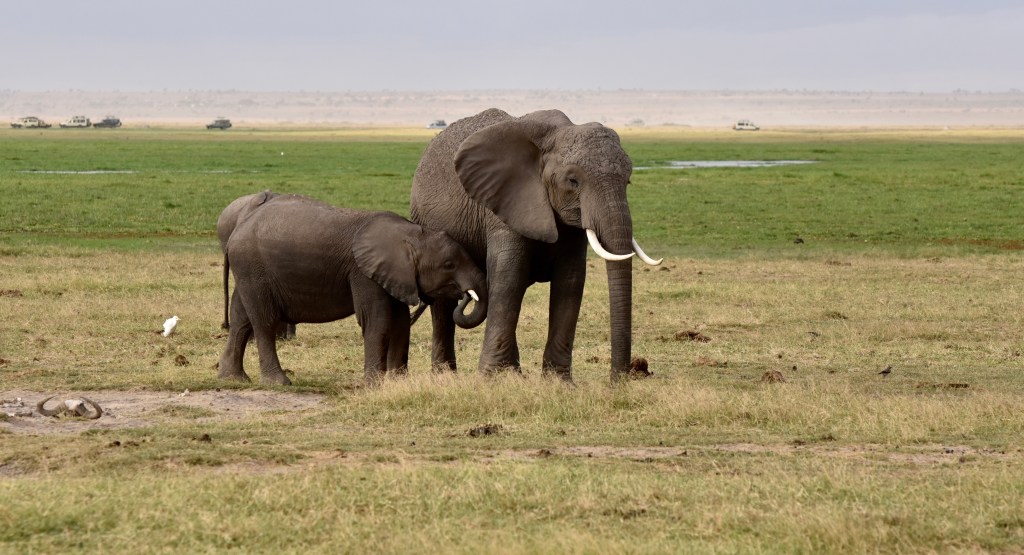
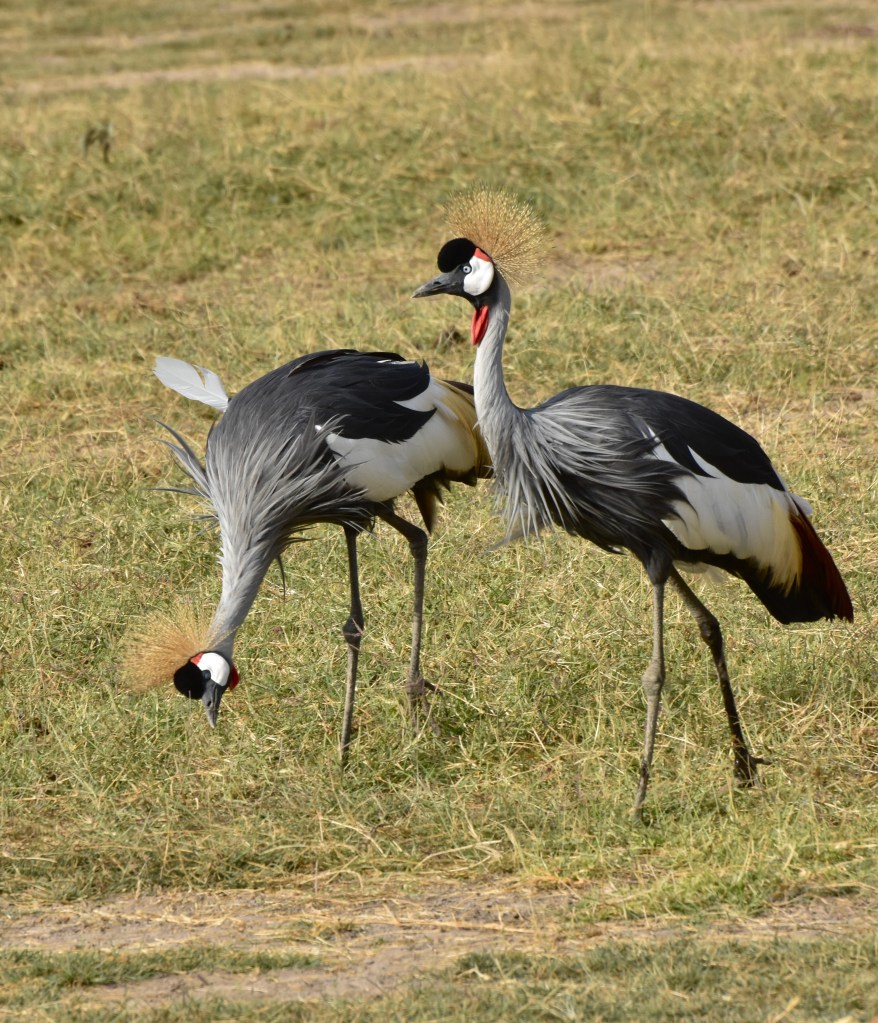
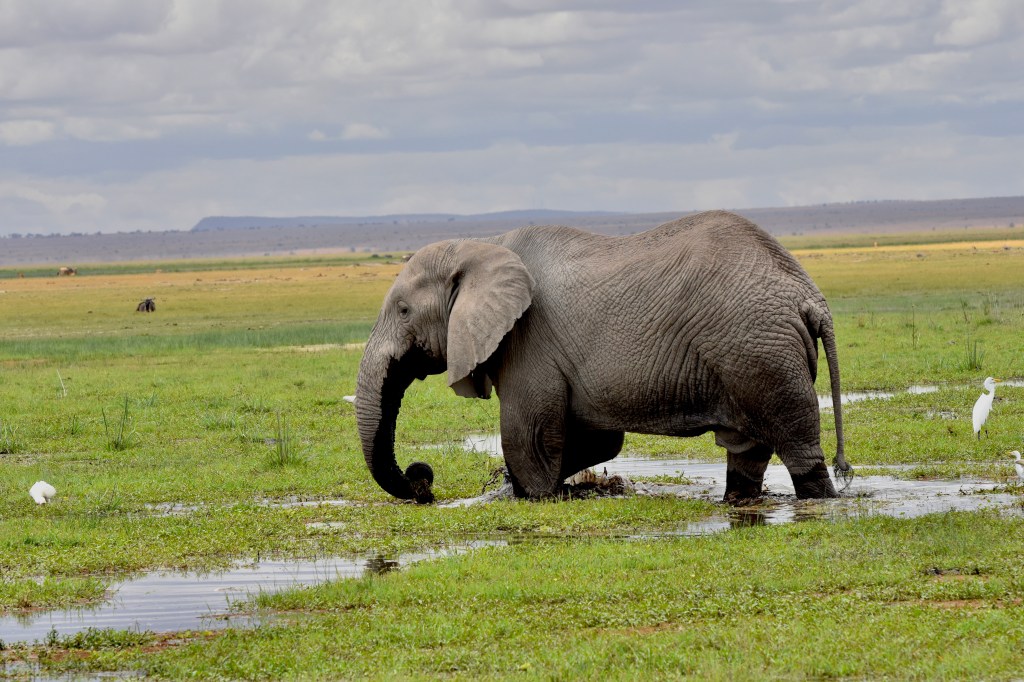
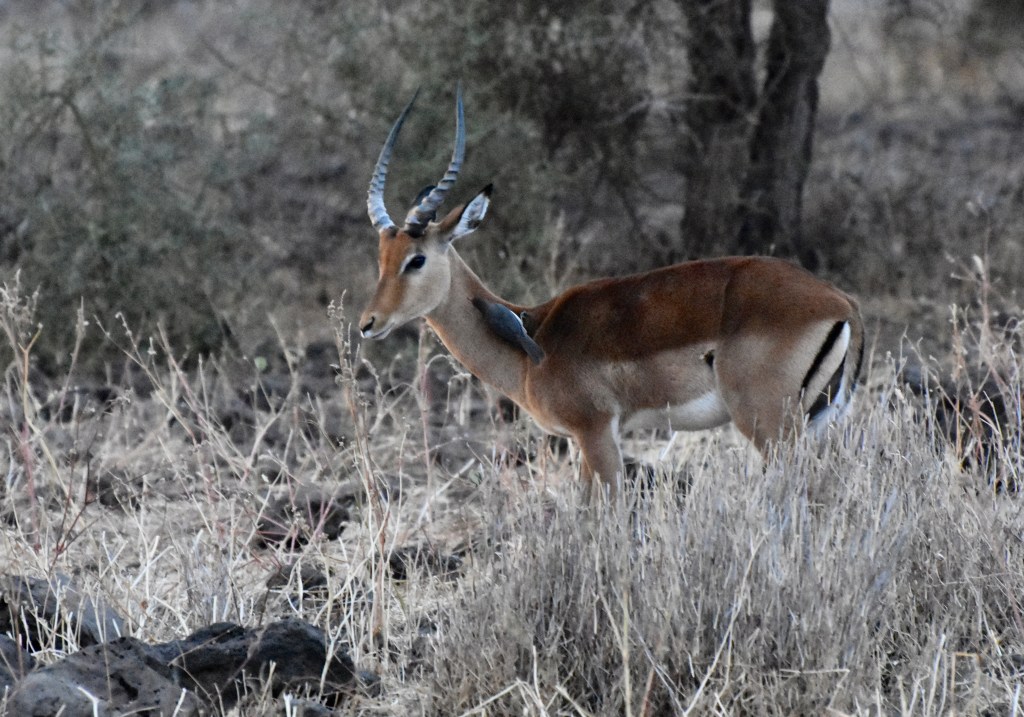
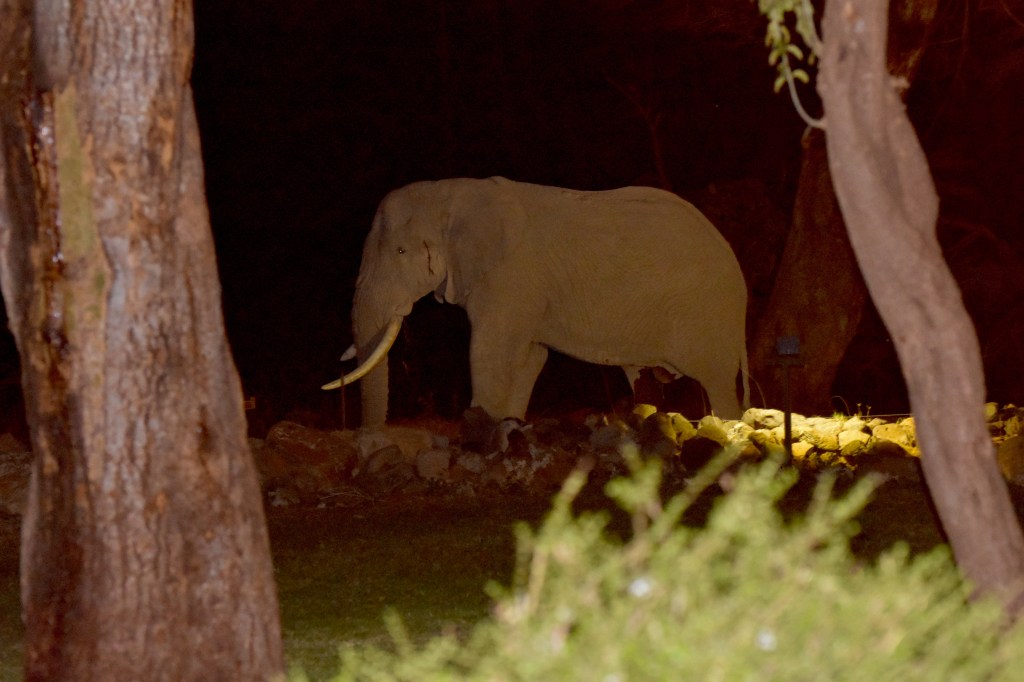
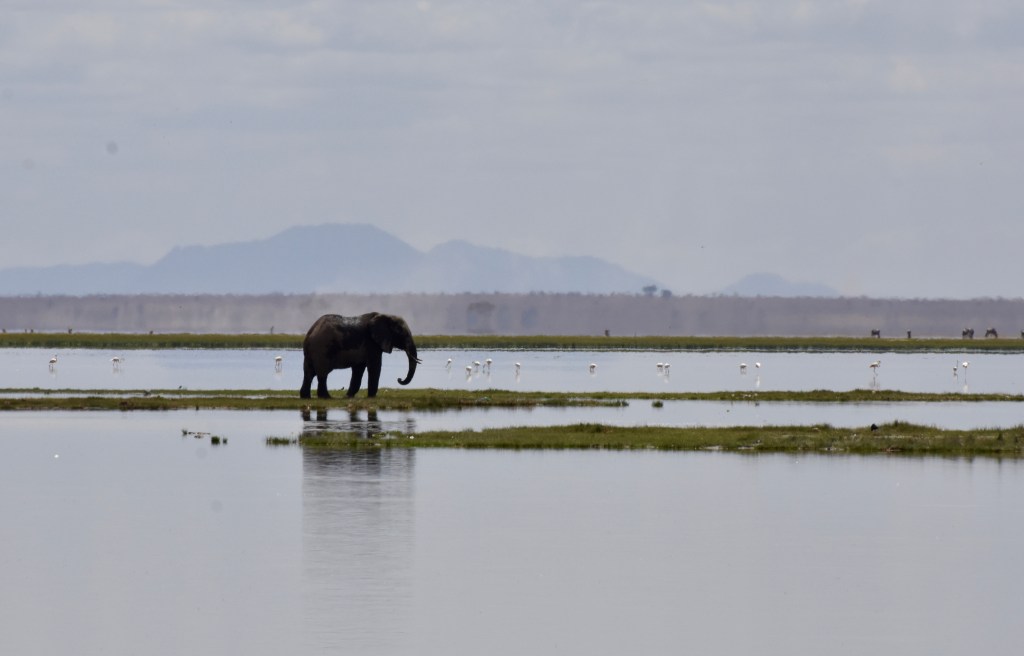
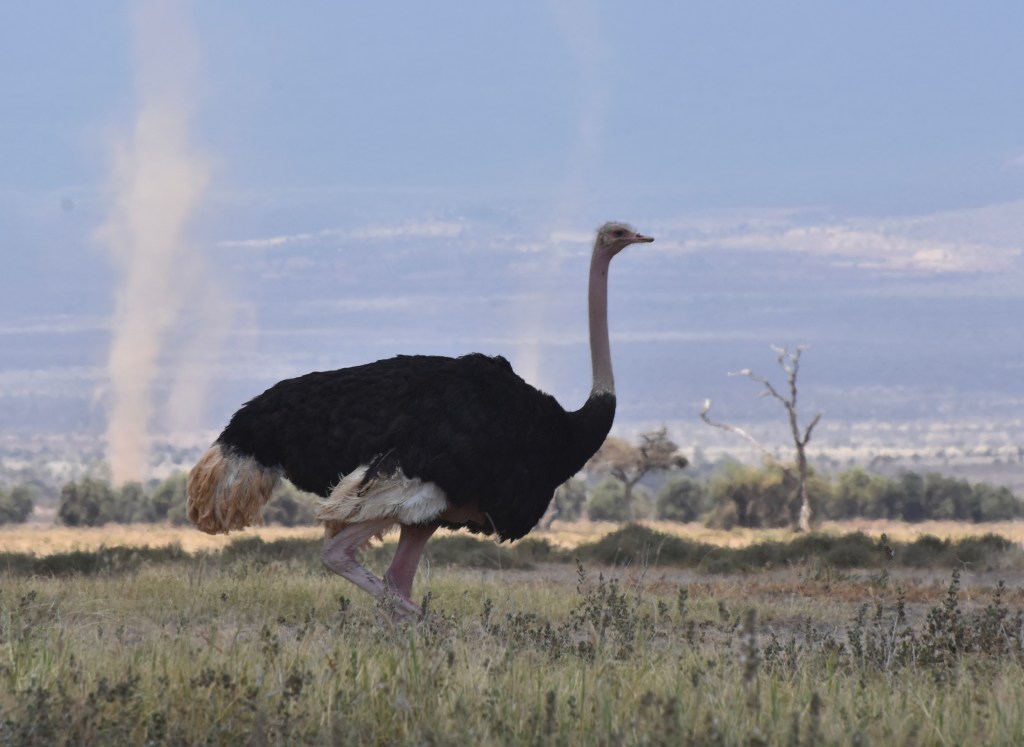
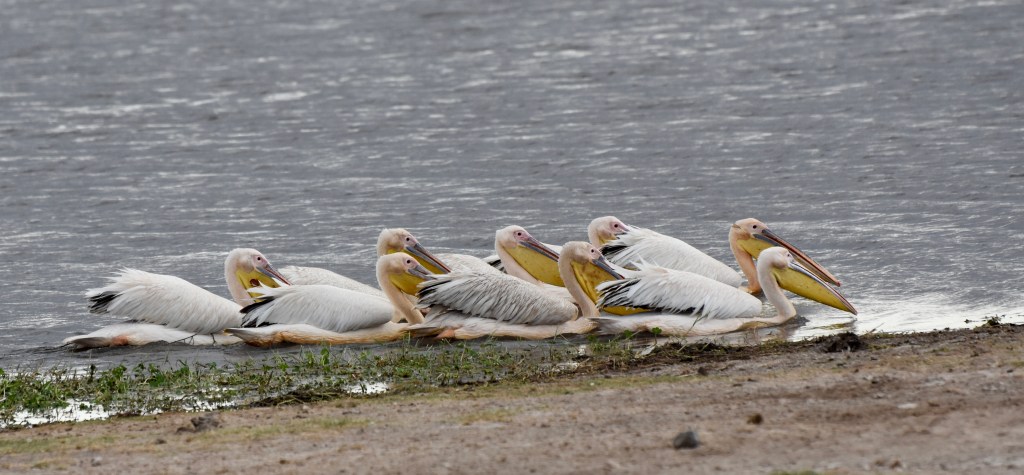
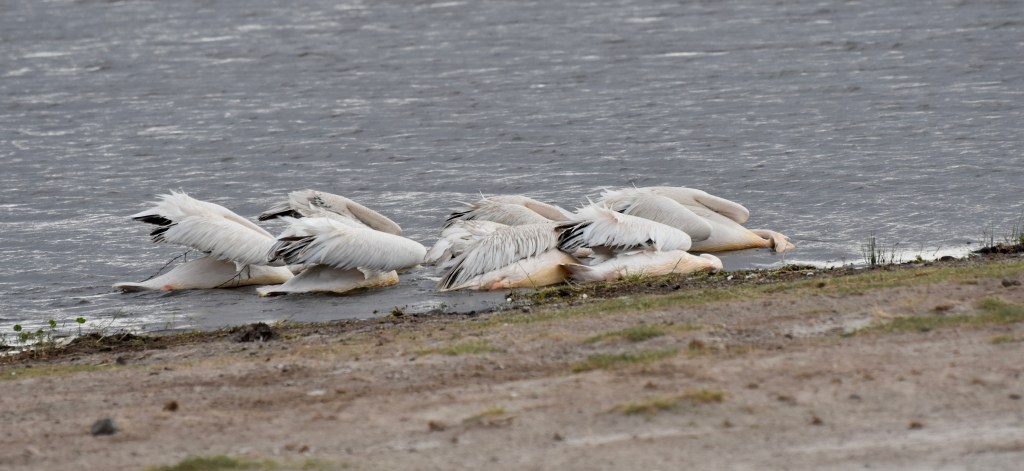
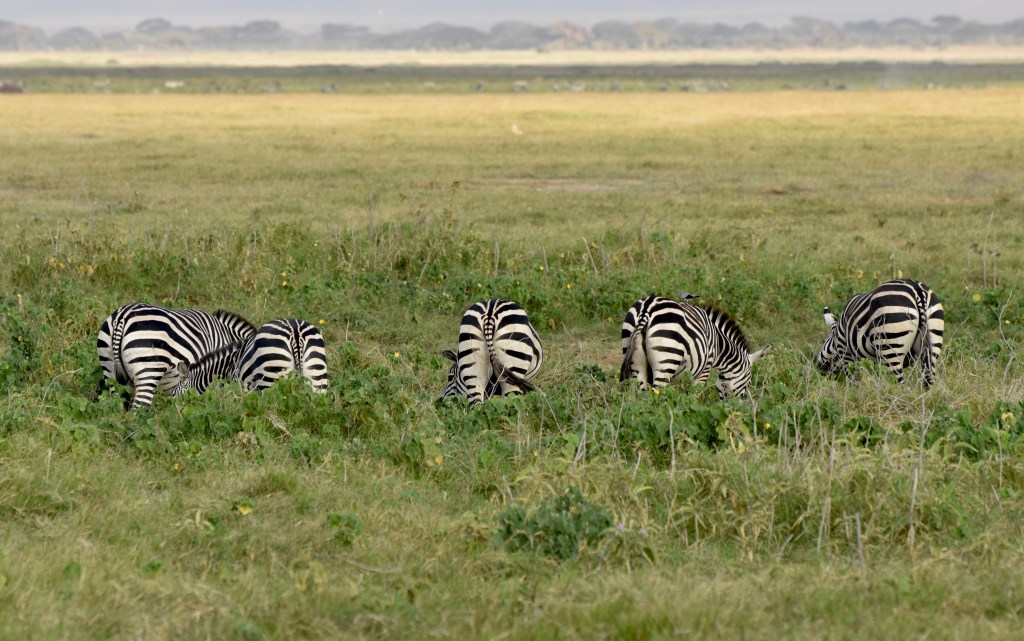
Considered one of the most intelligent of wild animals, elephants can remember a trail they took or a person they interacted with twenty years prior. Gray Crested CraneMajesticPink flamingos My. Kilimanjaro with grazing elephantsRare Cheetah sighting – focused on the prey aheadThompsons Gazelle, apprehensive about the proximity of the CheetahRelocating to safer groundThe Cheetah regrouping in shade after no success finding the next mealThe Zebra stripes serve as a protective mechanism against their primary predator, lions, because the lines blur and create a mirage that the lion cannot focus on.The darker shades occur from walking in the muddy swampAfter breakfast, do not take a banana from the restaurant buffet and walk down the path to your room unless you want a monkey to come at you full speed for that very banana!Zebra dust bath Cape BuffaloFamily of threeEgyptian Goose, named after Cleopatra for the eye makeup, working on flexibility, core strength and balanceNo Ambien needed by the female lion as they have no natural predators Great White Pelican Classic African savannaIbis Running at full speedHeading for higher altitude as dusk approaches. Hippopotamus are most comfortable in the water, and most aggressive when out of the water. Antelope at full sprintMother and child reunionGray Crested CranesThe very long toes enable this bird to walk on water, hence the name African Jesus birds. ImpalaWhile we were sitting on the hotel patio having a drink with friends before dinner, Susan spotted this passerby.Our guide estimated the baby to be two days old.Who knew the Ostrich is huge. Dirt devils in the background.Two males meeting, but they deferred resolving the territorial dispute until later.Great White Pelicans fish together…….and then all of a sudden, simultaneously, they submerge…..and then they re-emerge, simultaneously. The Pelican on the left had success!The End!
Jomo Kenyatta is the father of modern day Kenya, serving as the first President in 1964 when the struggle for independence and self rule meant the end of British East Africa (comprised of Kenya, Tanzania and Uganda) and the beginning of the nation of Kenya. He understood that to unify 42 separate and distinct tribes there needed to be a common language: Swahili. This was necessary because these 42 tribes each have their own language, traditions and customs.
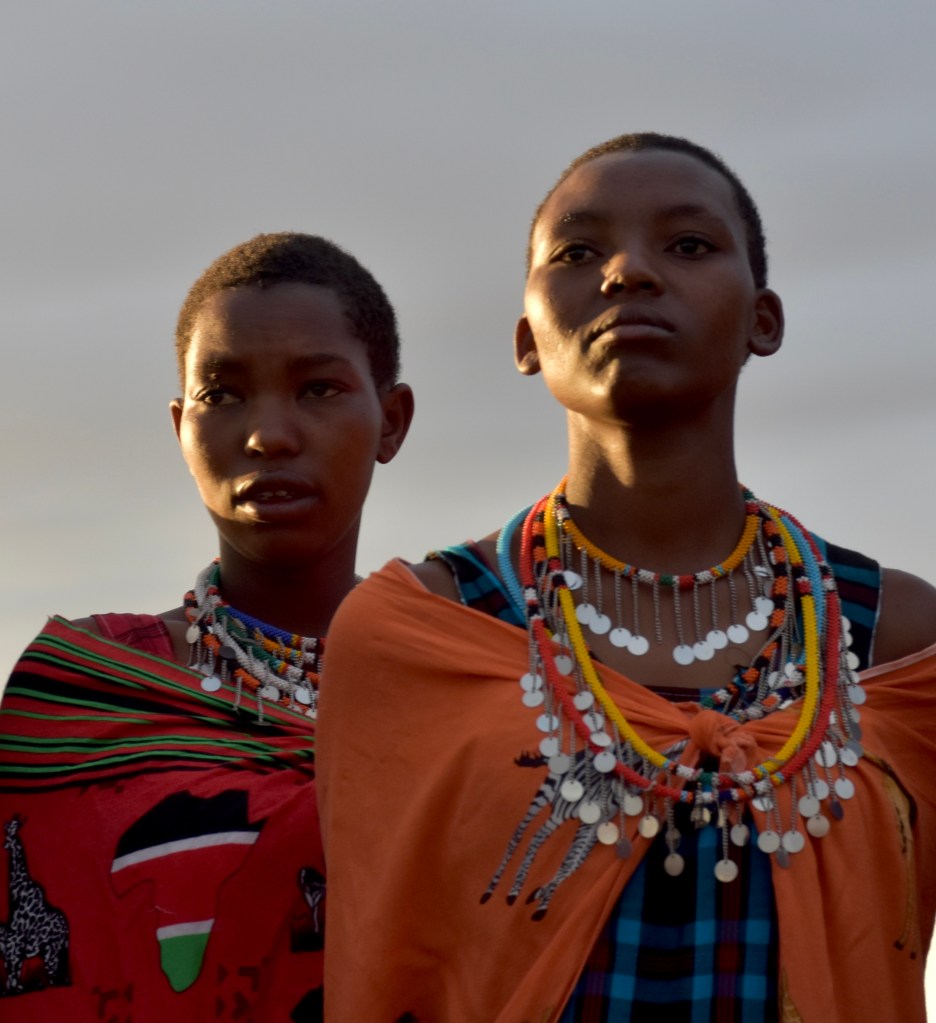
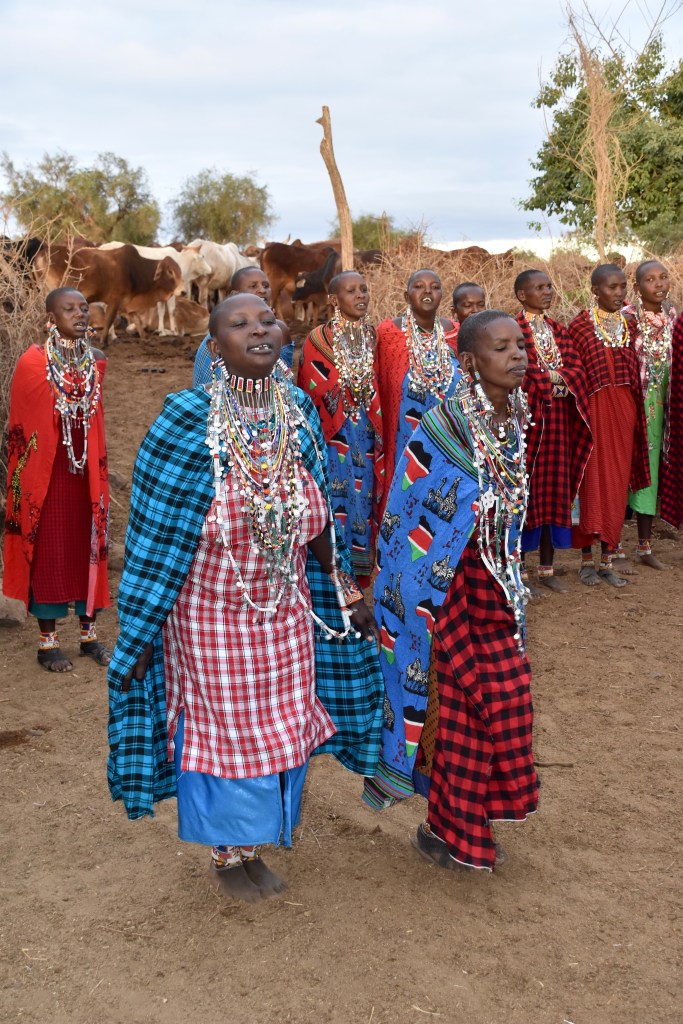
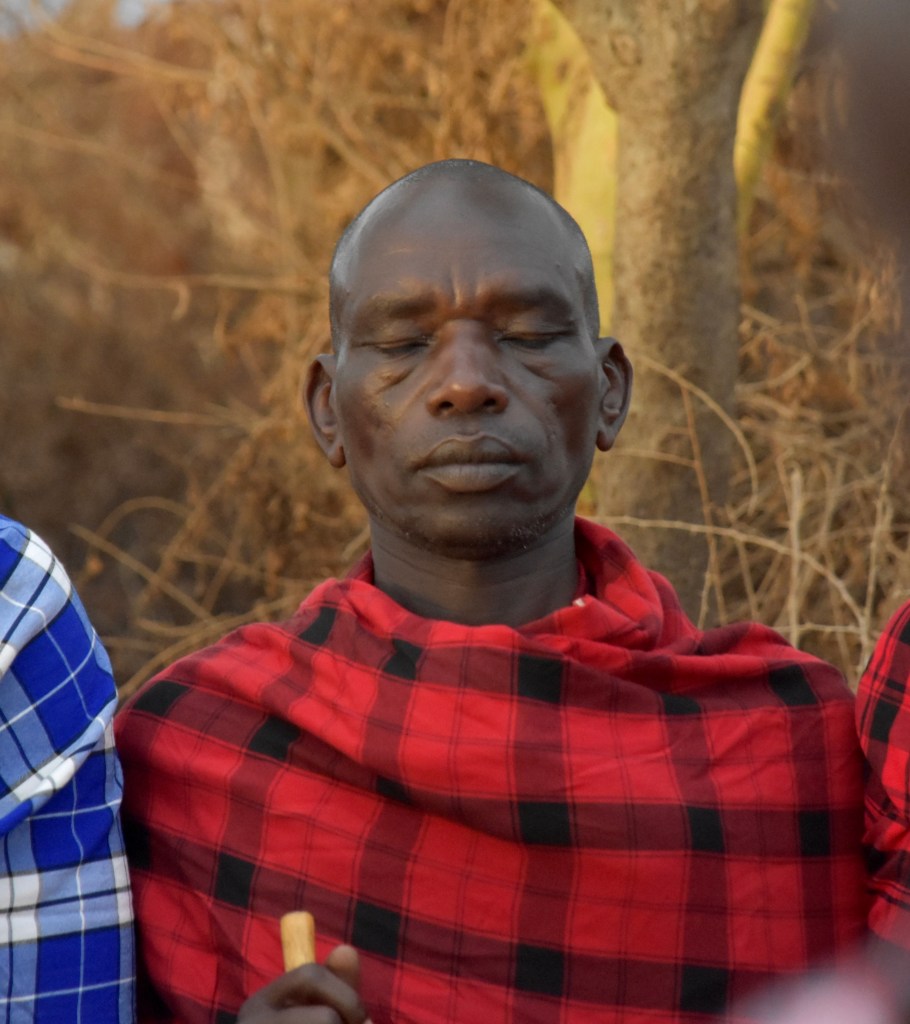
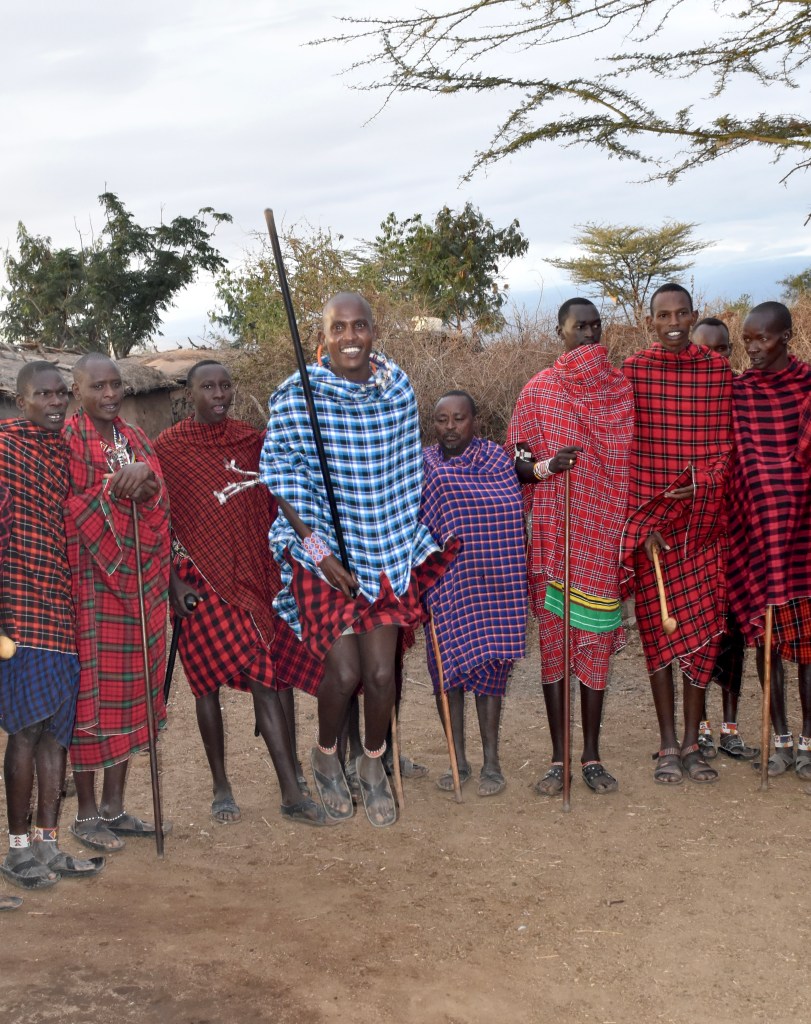
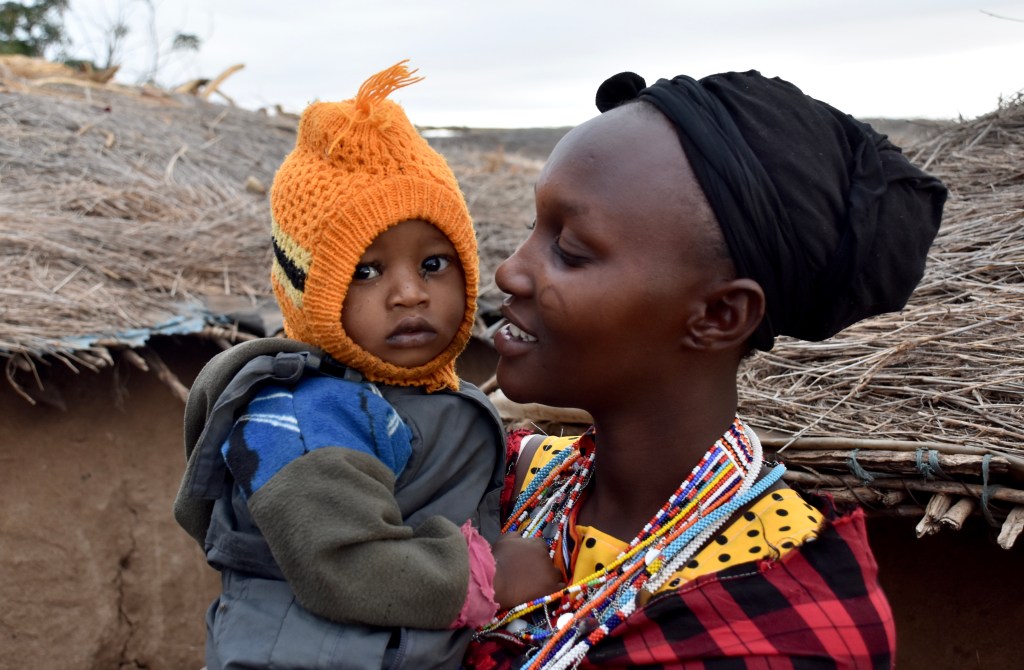
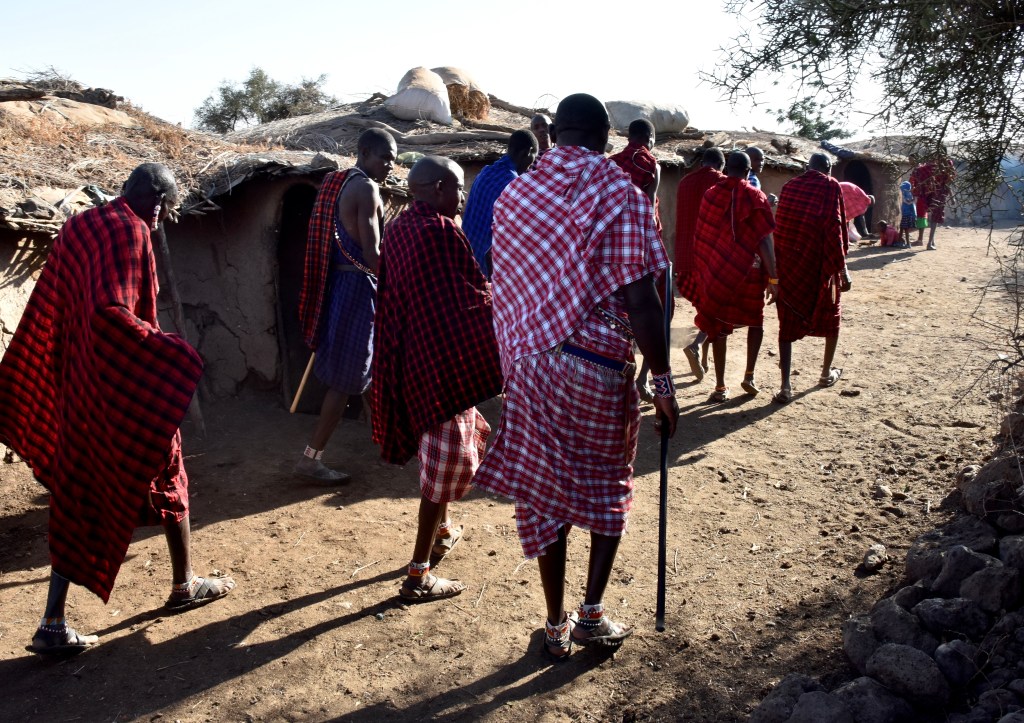
The Maasai tribe is one of the smallest in the Kenya / Tanzania area with a population of about 1.2 million. Many Maasai continue to live the traditional lifestyle of the past generations. Their village is built in a large circle; their cows and goats occupy the center of the village, whilst homes are built on the perimeter of the circle. They have no electricity or running water, share property and assets on a communal basis, practice polygamy subject to each wife receiving her own home, emphasize education, and typically have two meals a day – milk and beef.
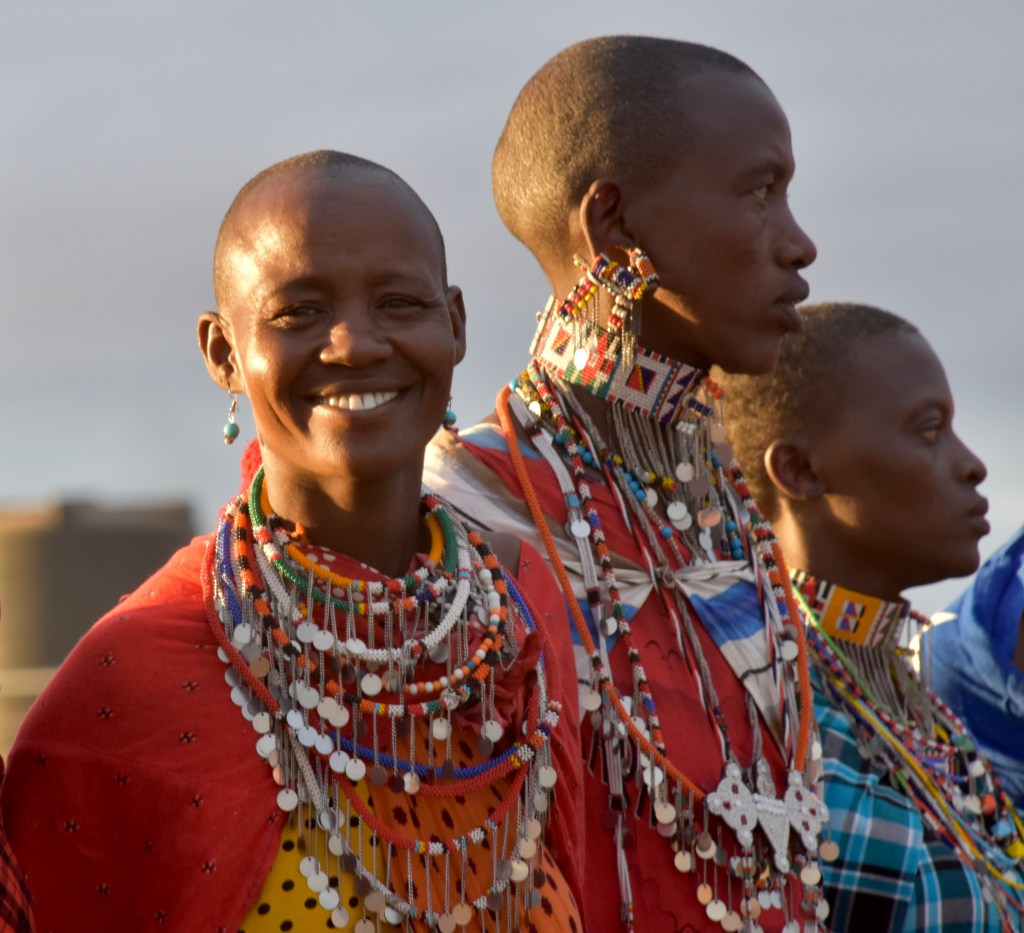
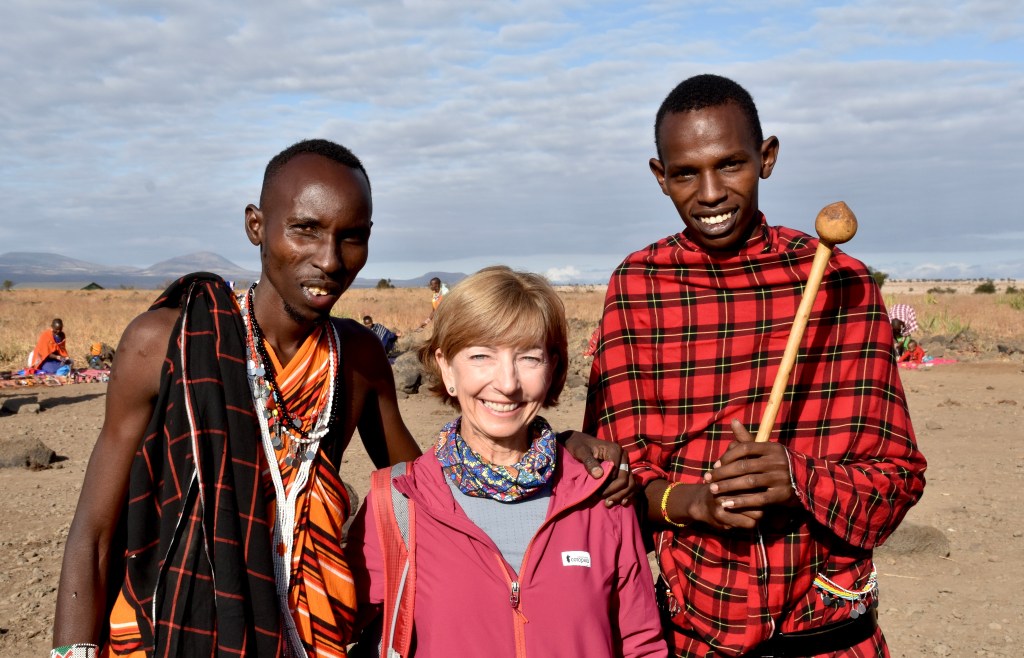
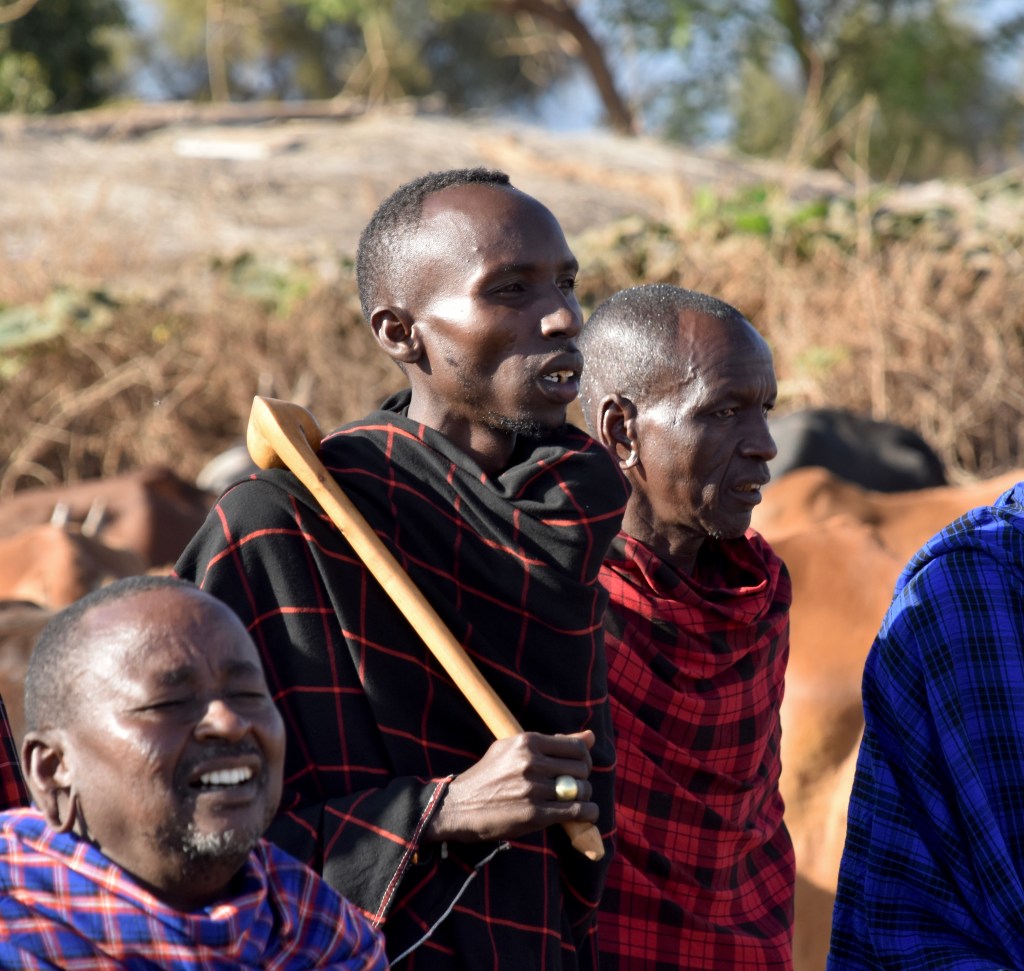
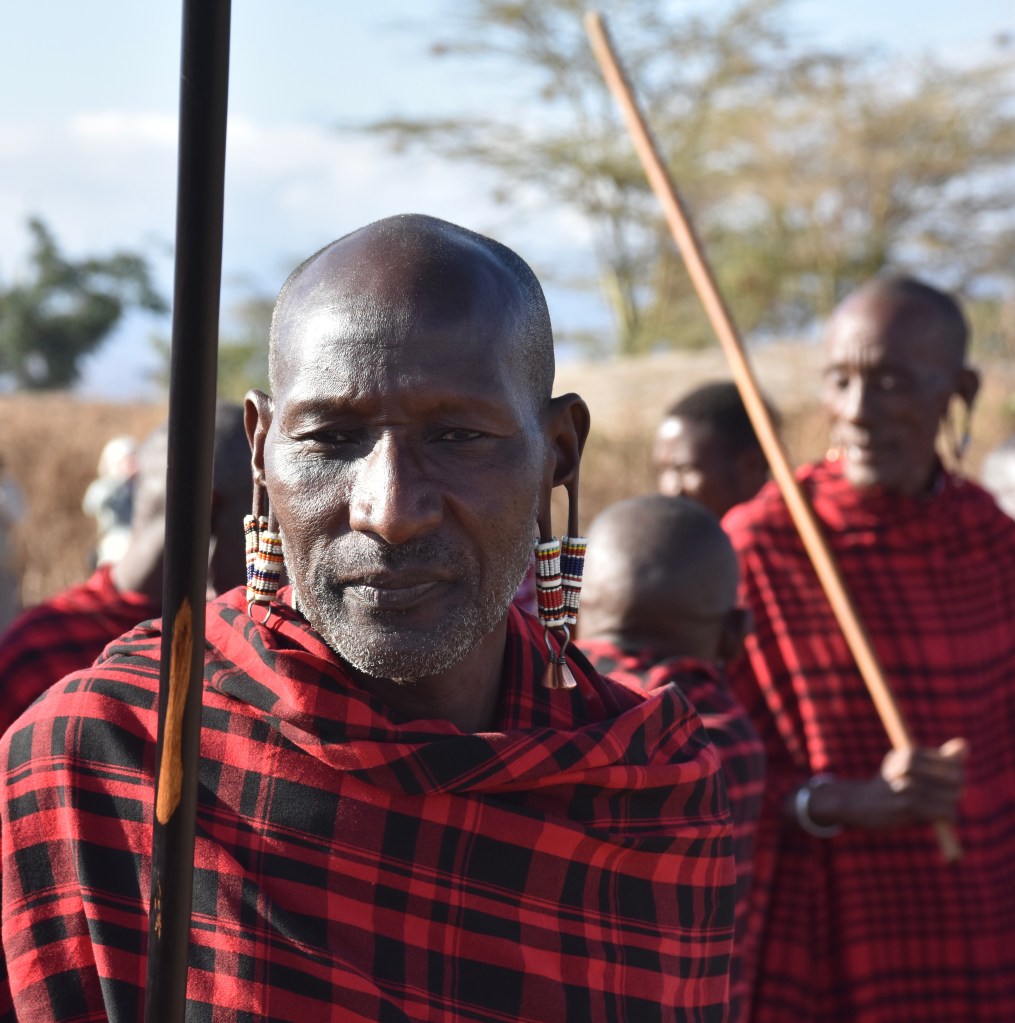
Intensely private, they are very averse to having their photo taken as they believe it takes part of their soul. We were fortunate as our guide is a member of the Maasai tribe, and he was able to facilitate an invitation to visit the tribal village located within Amboseli National Park. As a result of being invited guests, we were welcomed with song and dance, visited with many members of the tribe (most Kenyans speak at least three languages: Swahili, English and their tribal language), toured their village, and invited to take as many photos as we wished.
And so I respectfully share these images of an unbelievably memorable morning.
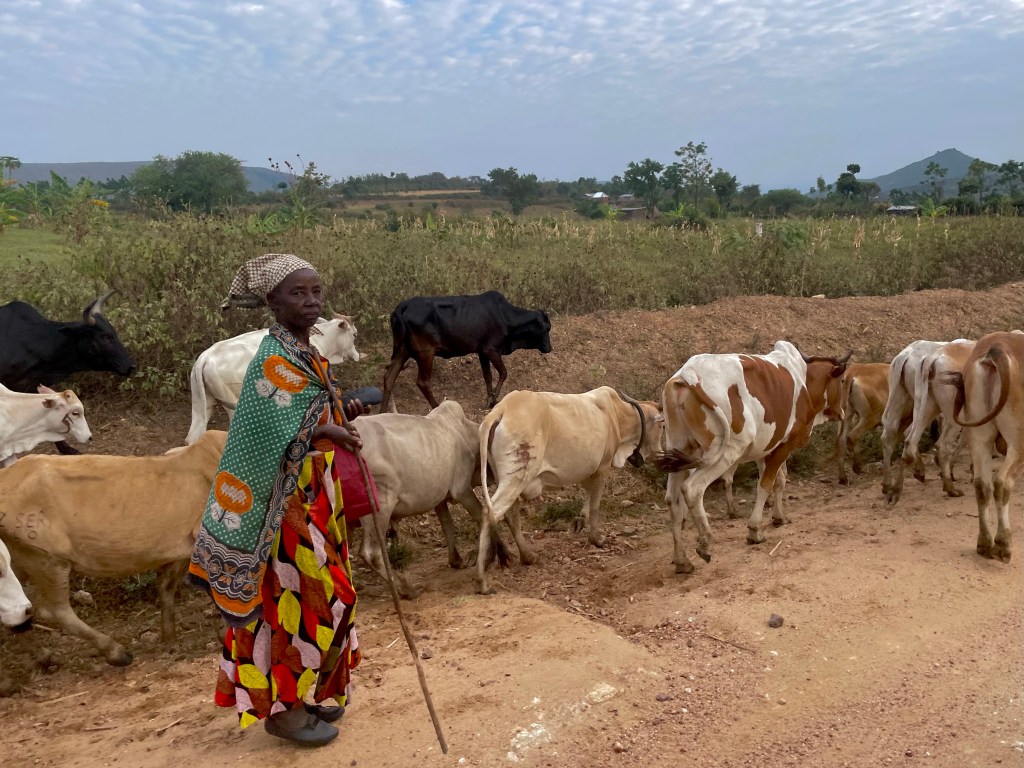
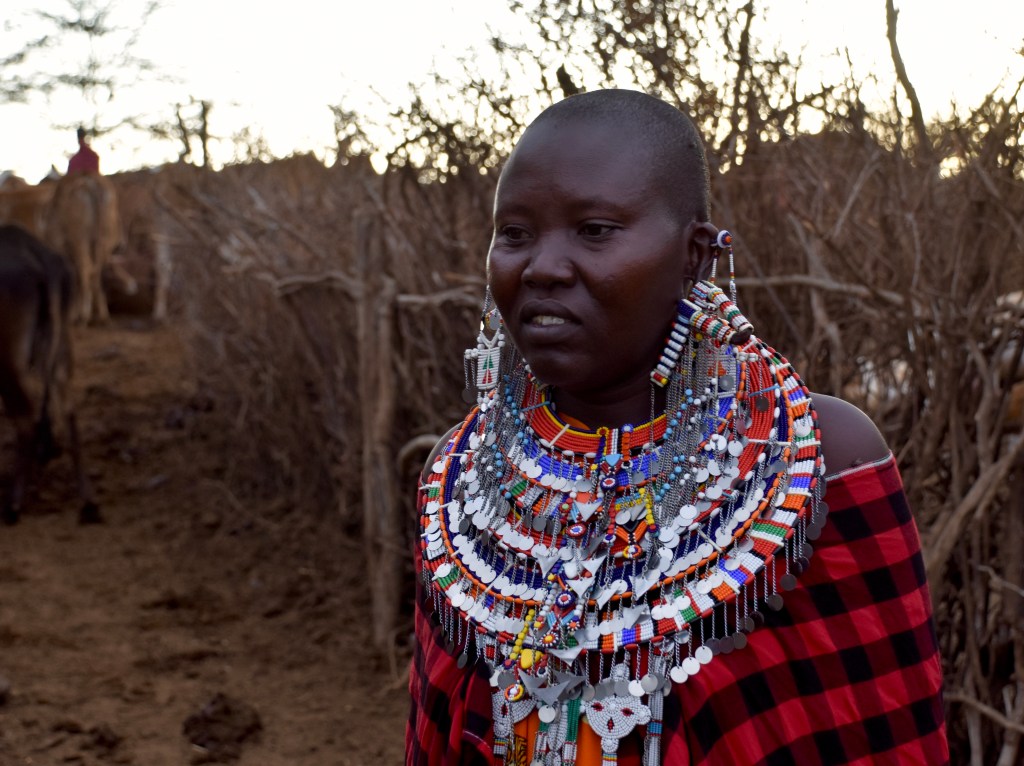
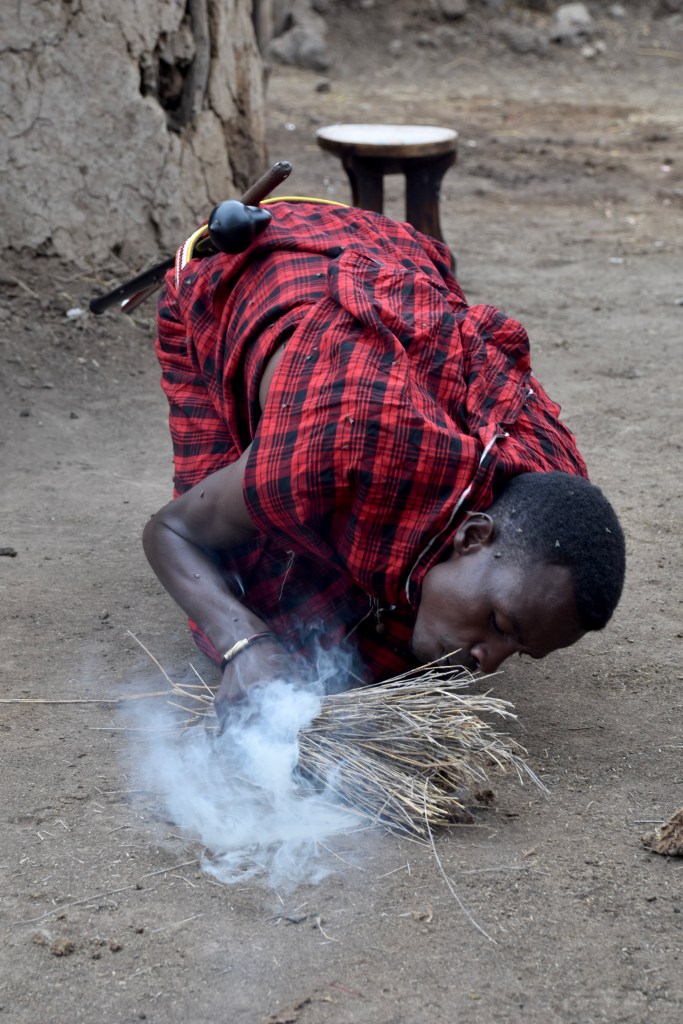
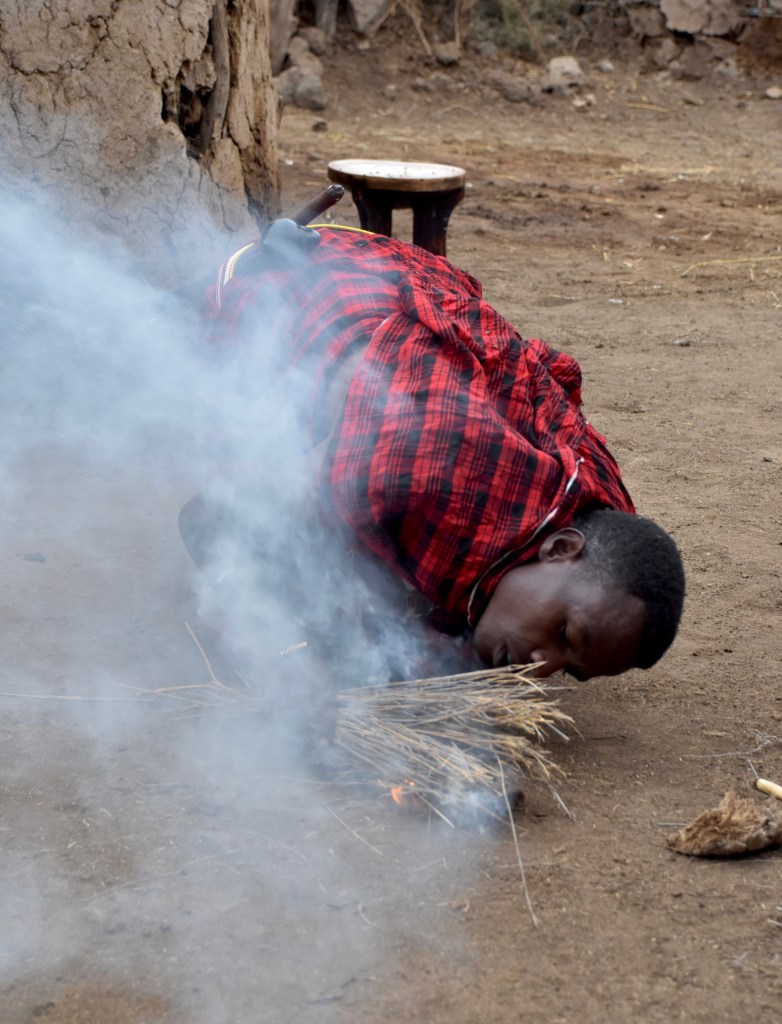
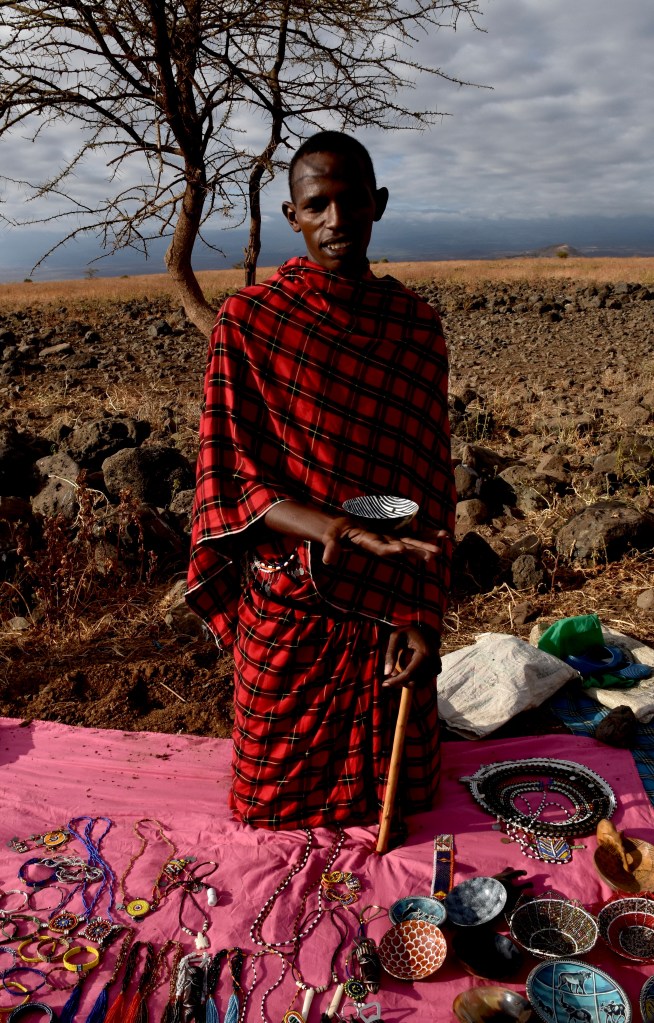
Joseph, the Maasai chief on the right, and his brother Tom, greeted us.Welcome SongThe early morning light just radiated her beauty.On the path to manhoodSmile, and they will smile back 🙂Moment of reflection Jumping, and how high a young man can jump, is an important skill as young women evaluate prospective husbands based on their vertical leaping abilities as this is seen as an indicator of strength. Jump!Proud MamaRed is the predominant clothing color as it keeps the Maasai safe from lions.We arrived before the young children had gone to school (they start school at the age of 3 1/2). They sang a Christian song about Jesus, and recited the alphabet, the days of the week and the months of the year, and counted to 20.Straw roofs and walls made of cow dung ensure the homes are dry during rainy season.The home interiors are spartan – two beds built with animal skins for mattress, a fire in the middle of the room for heat and cooking, a small hole overhead for venting the smoke, and 3 five gallon jugs for fresh water. The Maasai demonstrated how they start a fire, using dried cow dung for kindling and rapidly spinning a straight stick to create friction…..….and soon the initial smoke…..…..and then fire!We were invited to their market – a variety of beadwork, jewelry, carvings from cow horns and soapstone, and other creative arts.Robert holding the bowl he made from cow horn – my first purchase. Susan with the tribe’s banker (left) and Robert after concluding her market purchases.Elders walking through the village.By the time we were to depart, the herd of cows had already been led through the village gates to begin grazing. Saying goodbye
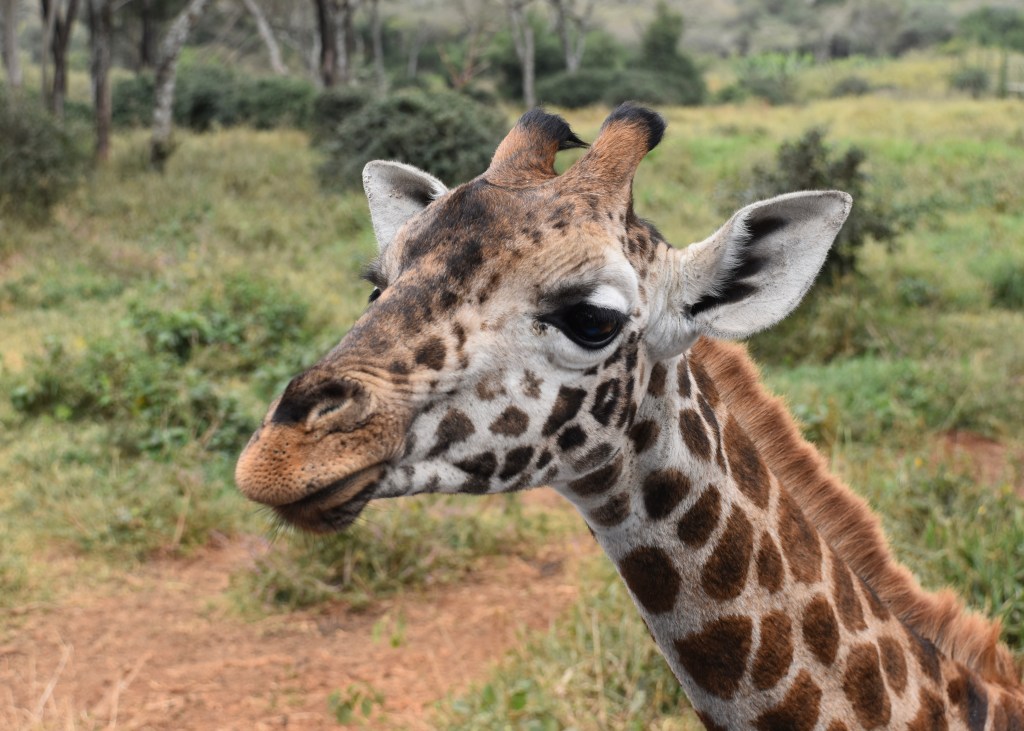
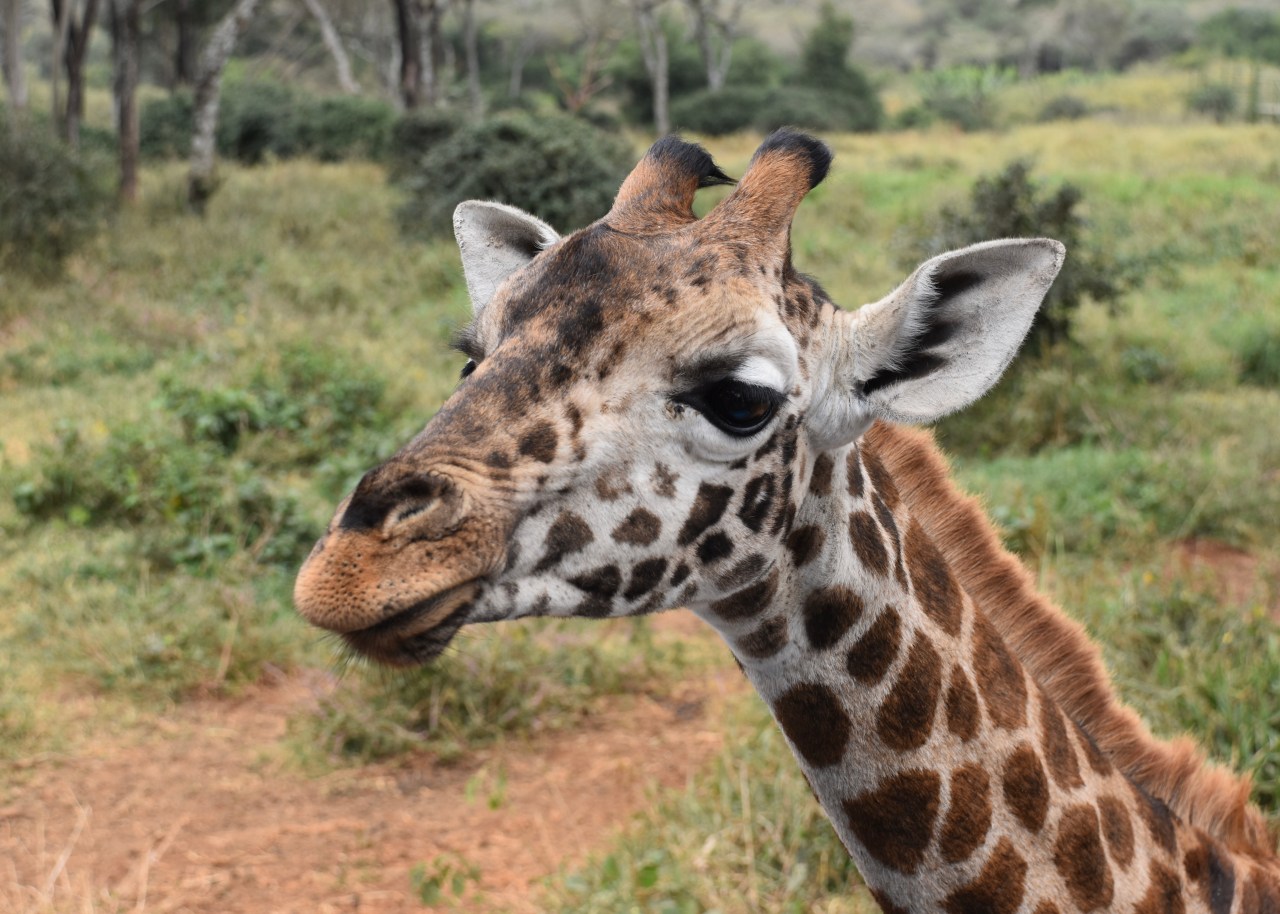
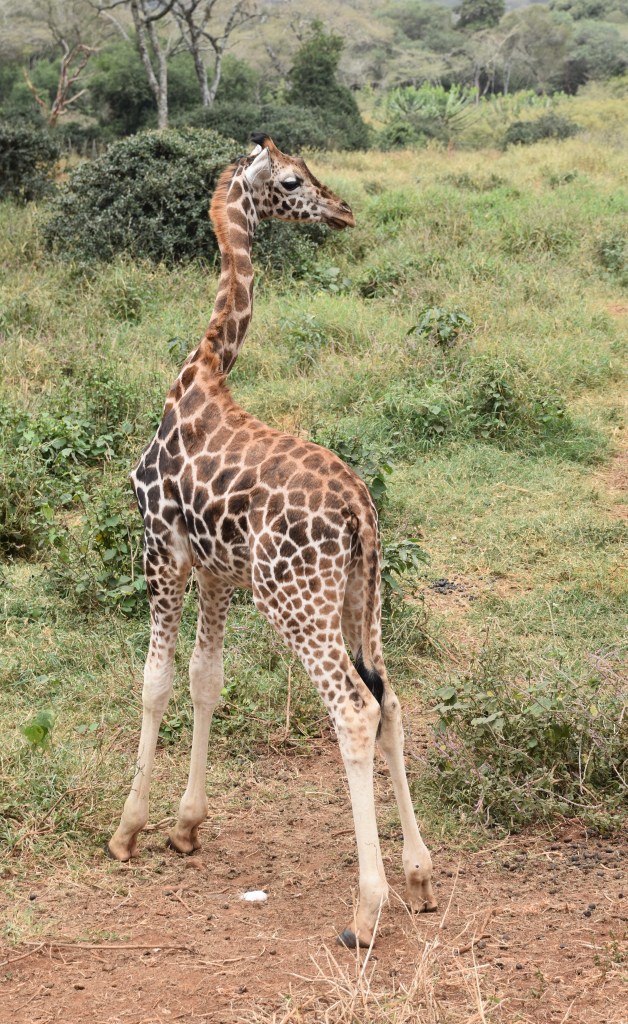
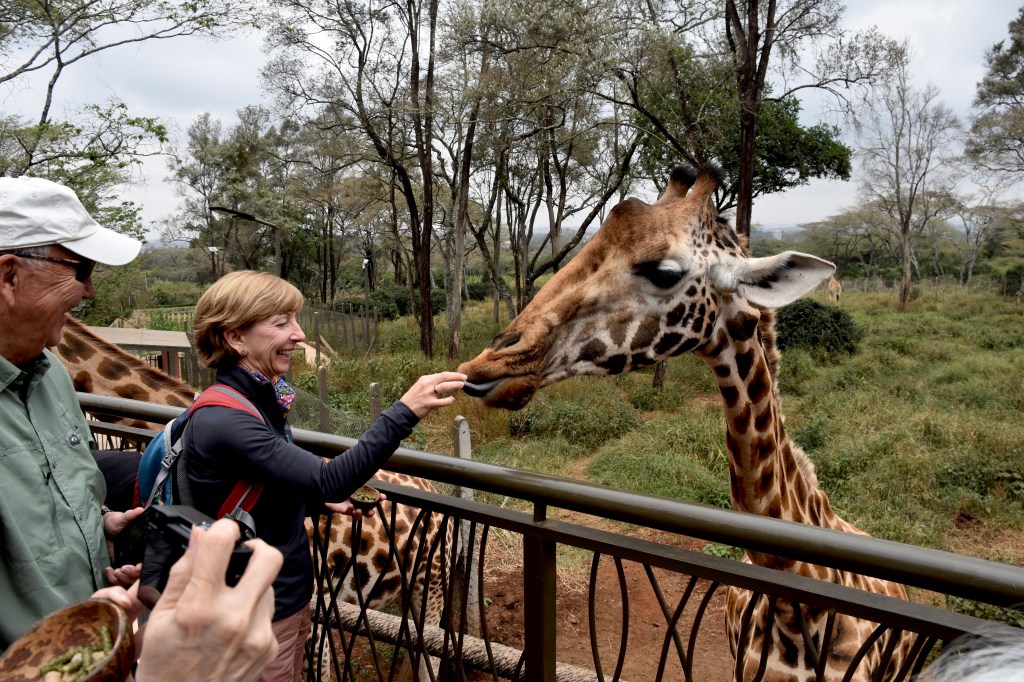
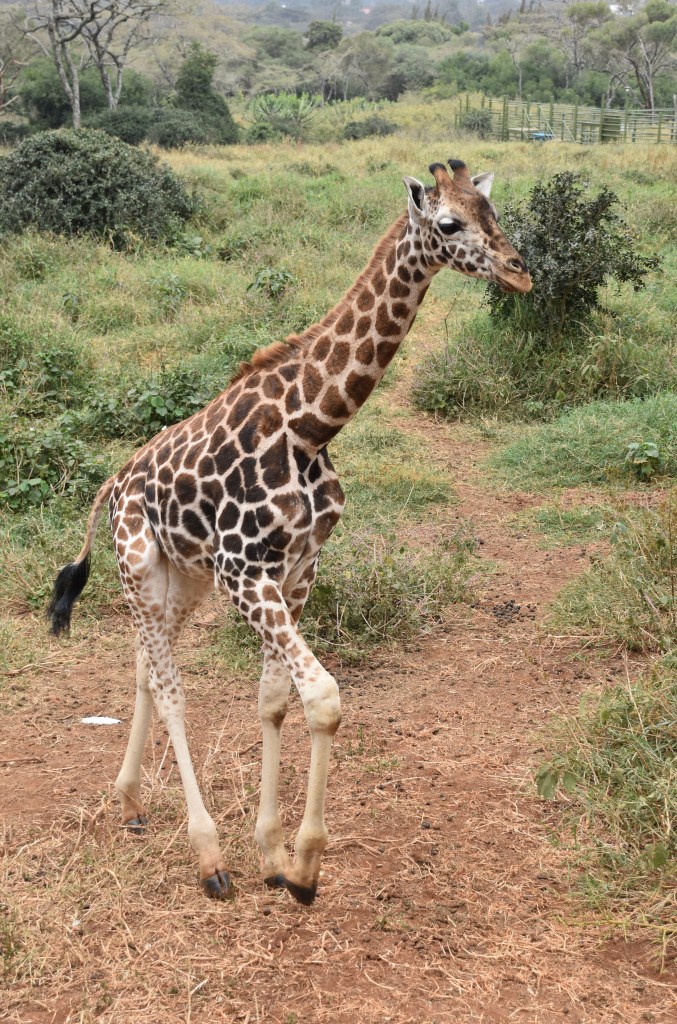
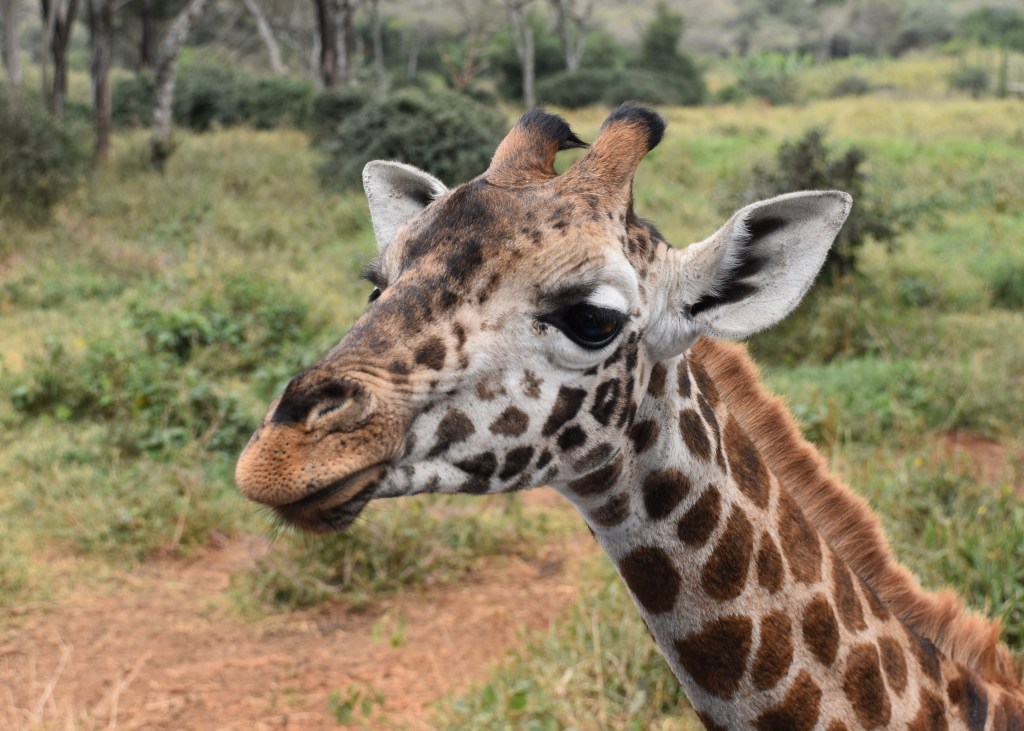
A lush, verdant expanse of land sitting on a low plateau on the outskirts of Nairobi is the home of The Giraffe Centre. Founded in 1979 to rescue the endangered Rothschild giraffe as there were only 120 remaining, the Centre has created an environment in which baby giraffes are born and raised until the age of 4 at which time they are introduced to their native habitat. Wildly successful, today the Rothschild giraffes number over 900.
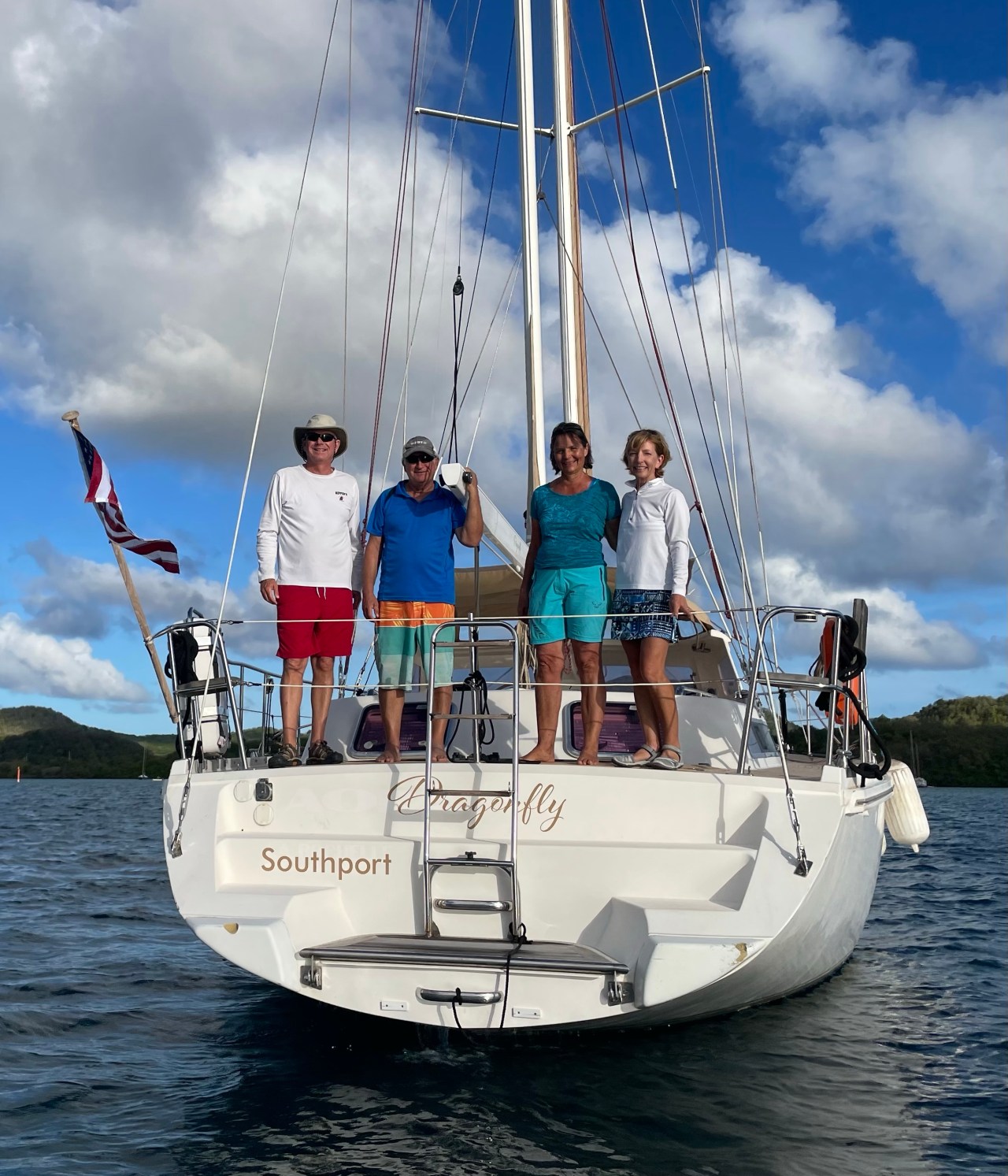
After 8 easy months on the hard with nary a hurricane in sight, Dragonfly was happy to see us, and we her.
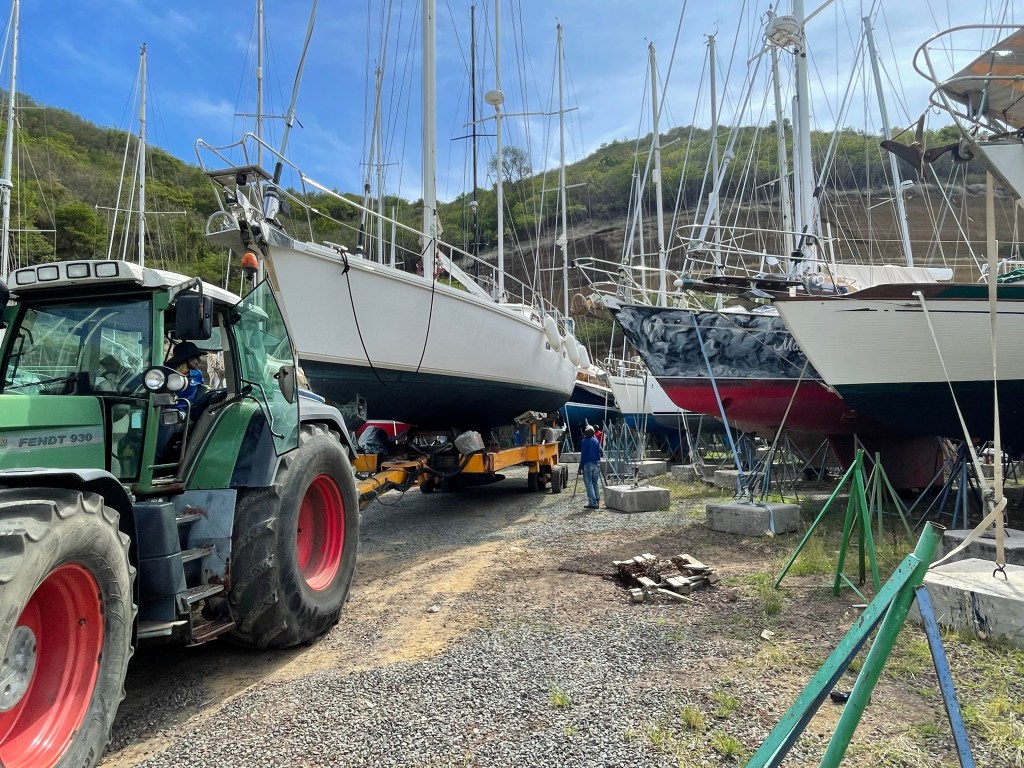
Since we left her in May, Dragonfly had a short trip of 200 meters as the yard needed to launch another sailboat stored behind her.
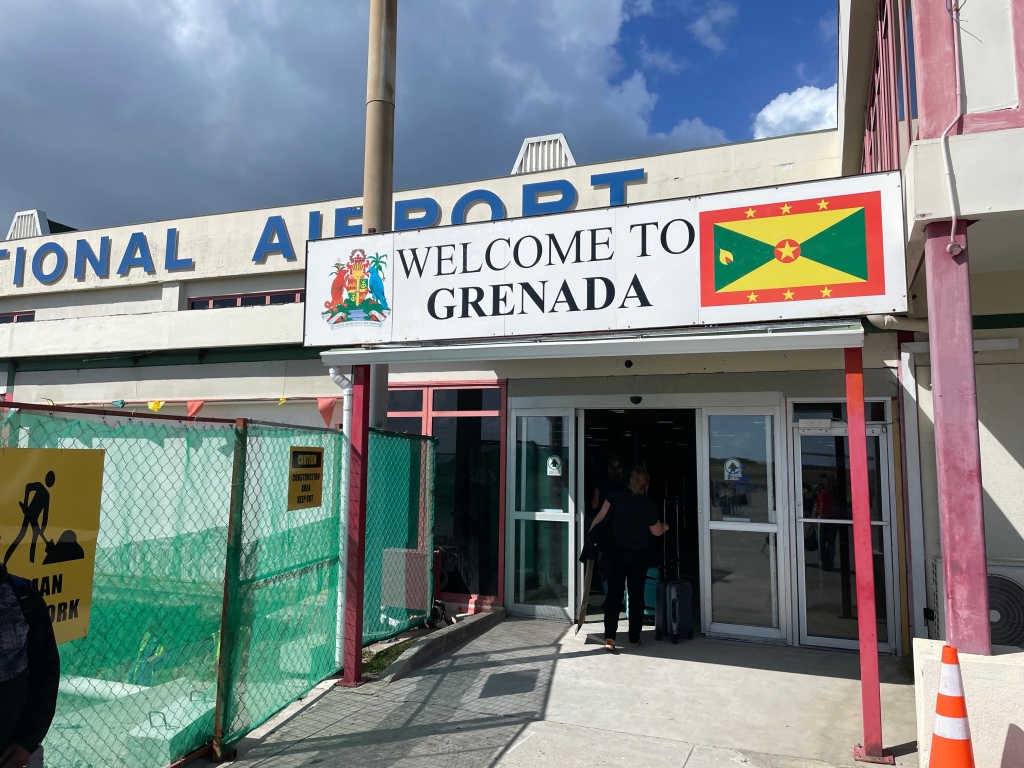
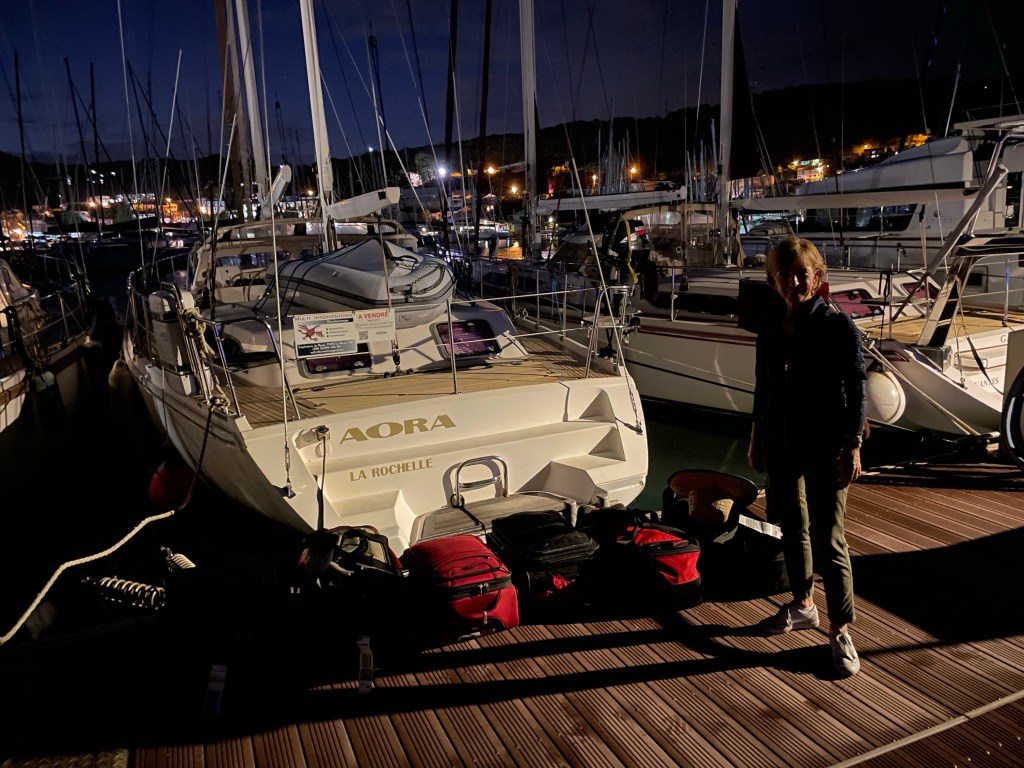
Traveling is always interesting. At the Miami airport we came across a debit card left behind at an ATM. It was a challenge explaining to a group of four airport employees why we wanted to give them a debit card since nobody spoke English.
Lonely luggage – the perfect ad for Apple Air Tags. Sat on the tarmac for 30 minutes. Always a welcome sign
Life in the marina – Dragonfly is on the hard, called this because she is on dry land for safe, trouble free storage.
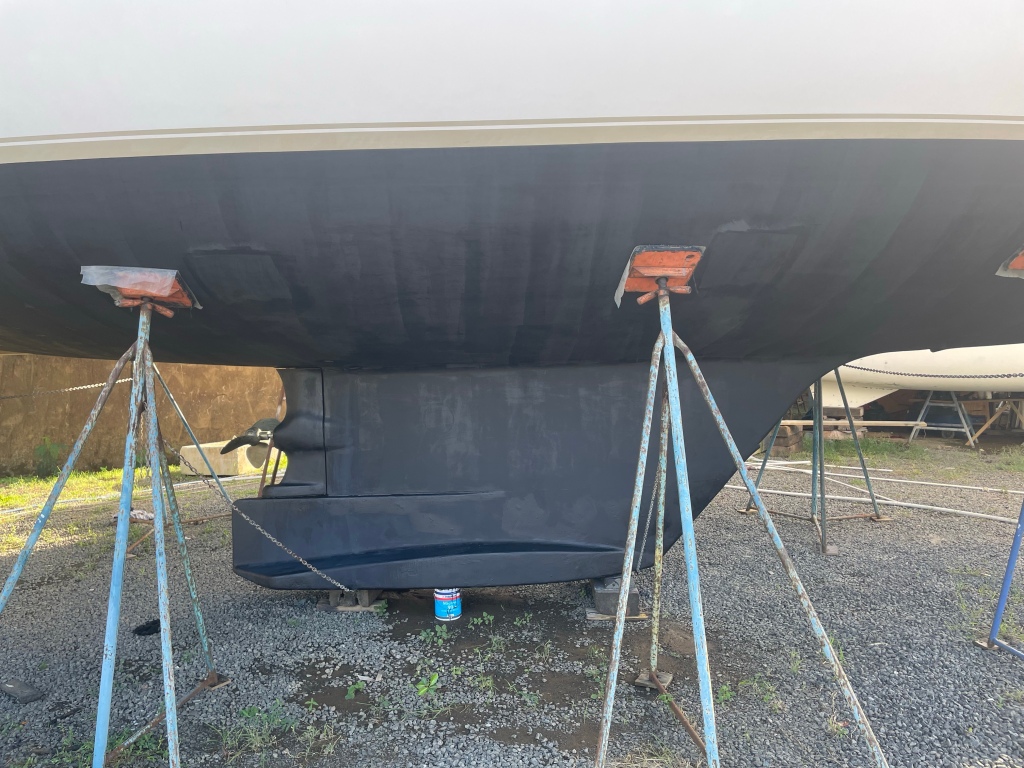
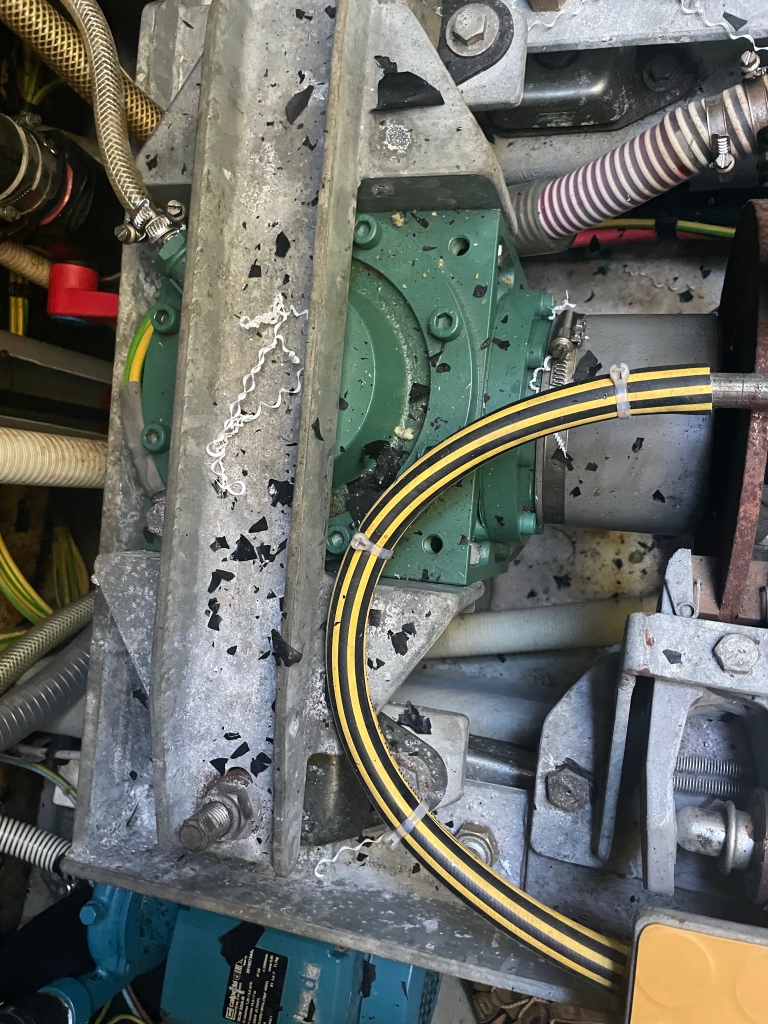
Fresh coat of bottom paint. Transmission C drive serviced, though it was a bit of a do over as the yard didn’t get the wear bearing mounted properly. Nicholas installing the new Spectra loops for the mainsheet blocks. New halyards too. The forward stateroom doubles as a sail locker when on the hard. The guys installing the new automatic fire extinguisher in the engine room must have thought the owner was looking forward to cleaning up after them. After the scary and dangerous unfortunate bow thruster incident on the last day of last season, we had the entire electrical system replaced. Our brand new custom cockpit canvas cover looks and fits great. Our neighbors on the hard with the blue water and green hills beyond. The contractors working on Dragonfly could not find a tall enough ladder in the yard. Not a problem – they lowered the swim platform tied a short ladder to it, then found a couple of railroad type ties to rest the ladder upon. Not sure what the rusty propane tank is there for – maybe they used it and upgraded to the railroad ties. Kind of exciting leaving the boat at the end of a long day. But the first Painkiller is the best!
All this in the first 24 hours! More adventures ahead….
It’s quite an undertaking to get ready for life ashore – lots of physical work to prepare Dragonfly and mental work to readjust to life ashore in the Land O’ Plenty.
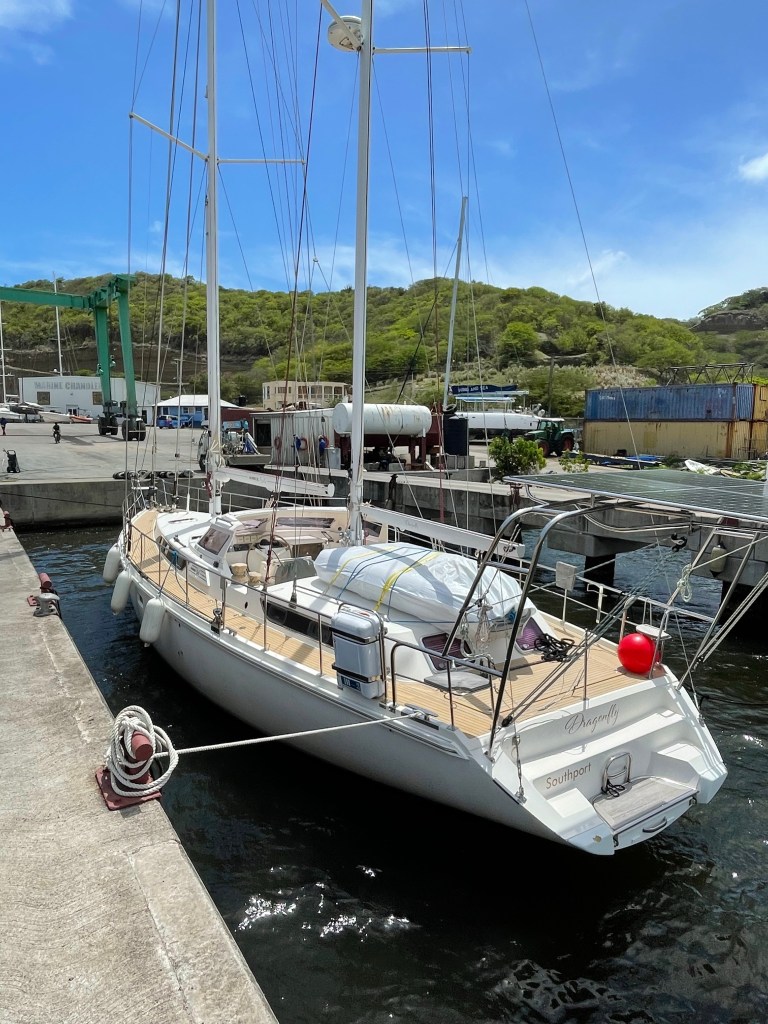
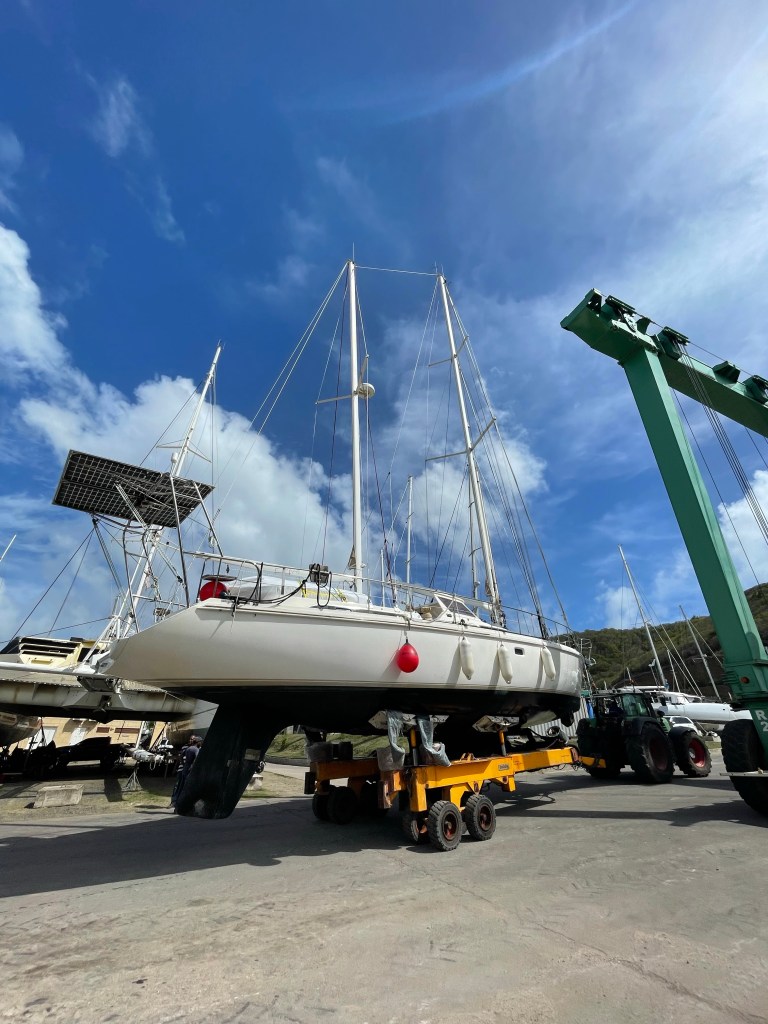
Dragonfly at the unrigging dock at Clarkes Court Boatyard in Grenada
Mr Insurance Man in London said we could leave Dragonfly in the Caribbean as long as we were south of 10 degrees 12 minutes north latitude, so the south coast of Grenada is now our boat’s home for the hurricane season.
Too heavy to lift, the Genoa is moved down below for storage with the help of the spinnaker halyardLook who’s coming to dinner!Dinghy upside down and tucked in bed under a tarp for sun protection
Taking the boat out of the water makes the most sense as there are fewer risks, and so the sails come off, the dinghy gets stored, the canvas bimini is removed, the water maker pickled, basically everything is unrigged.
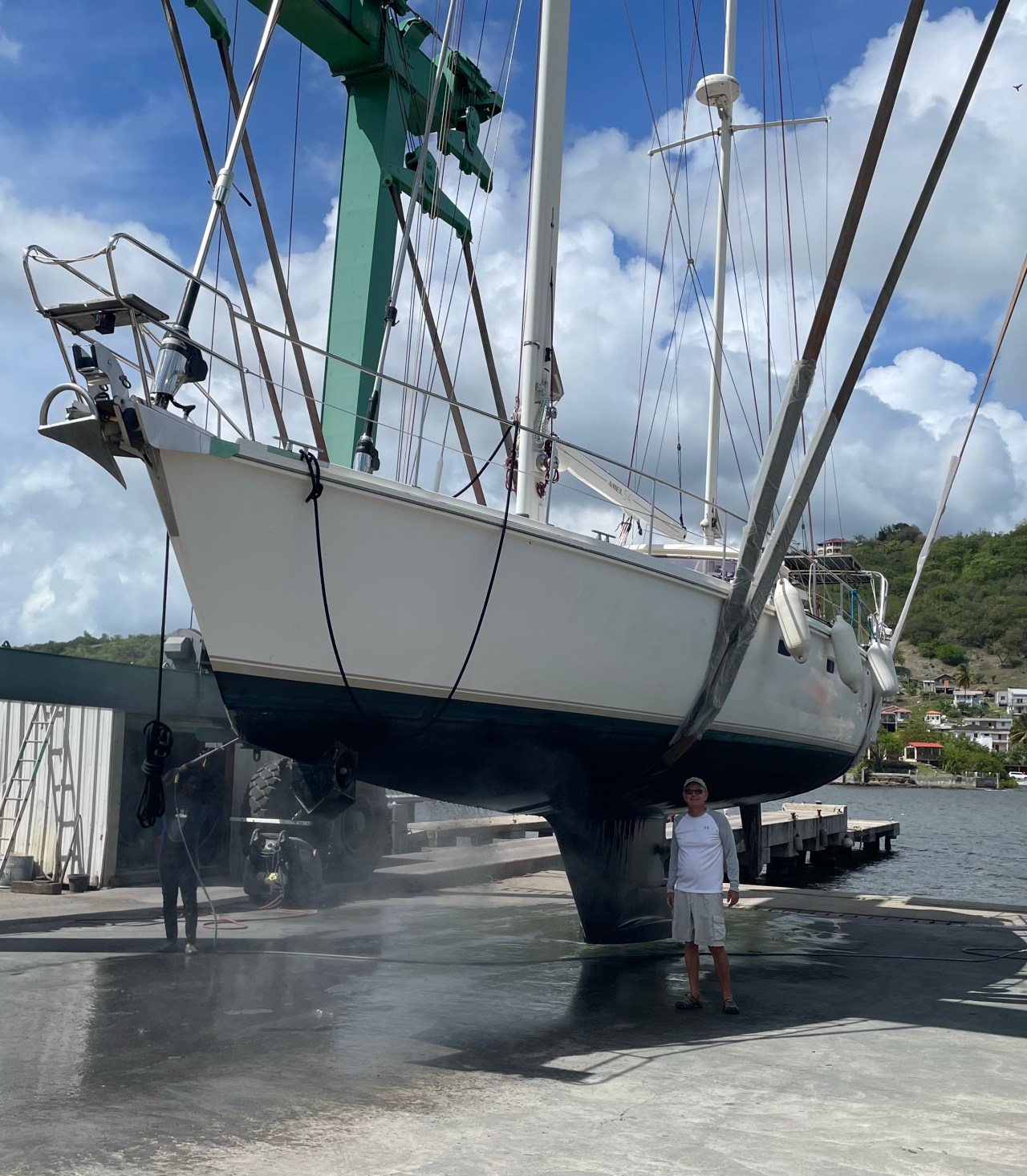
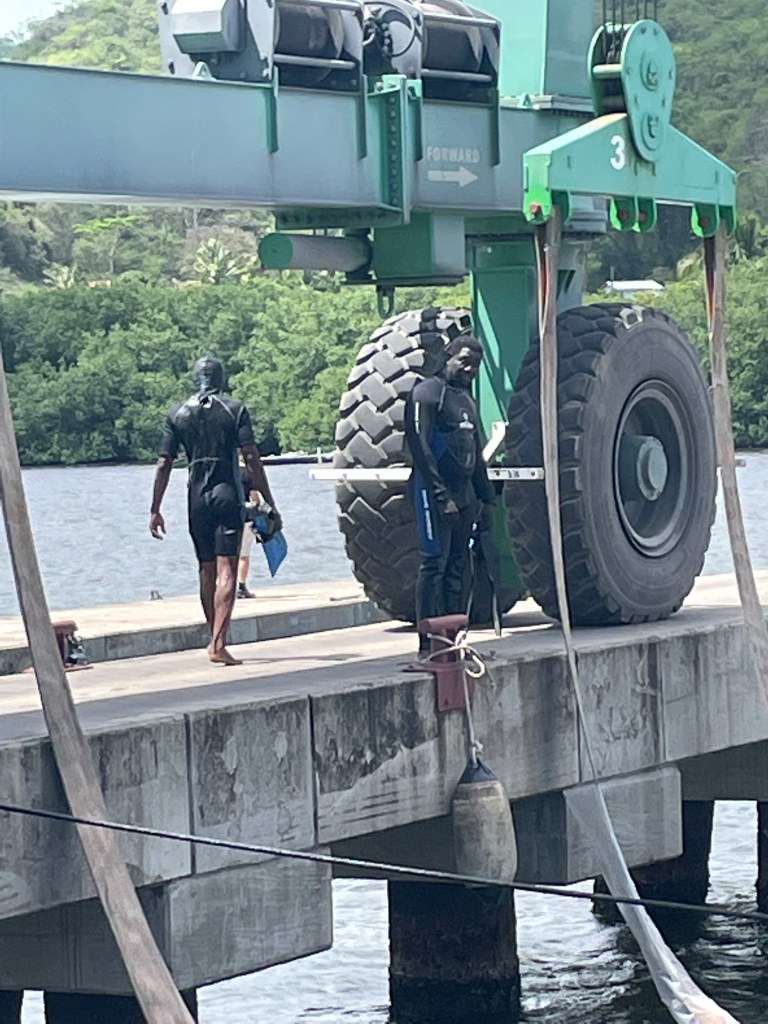
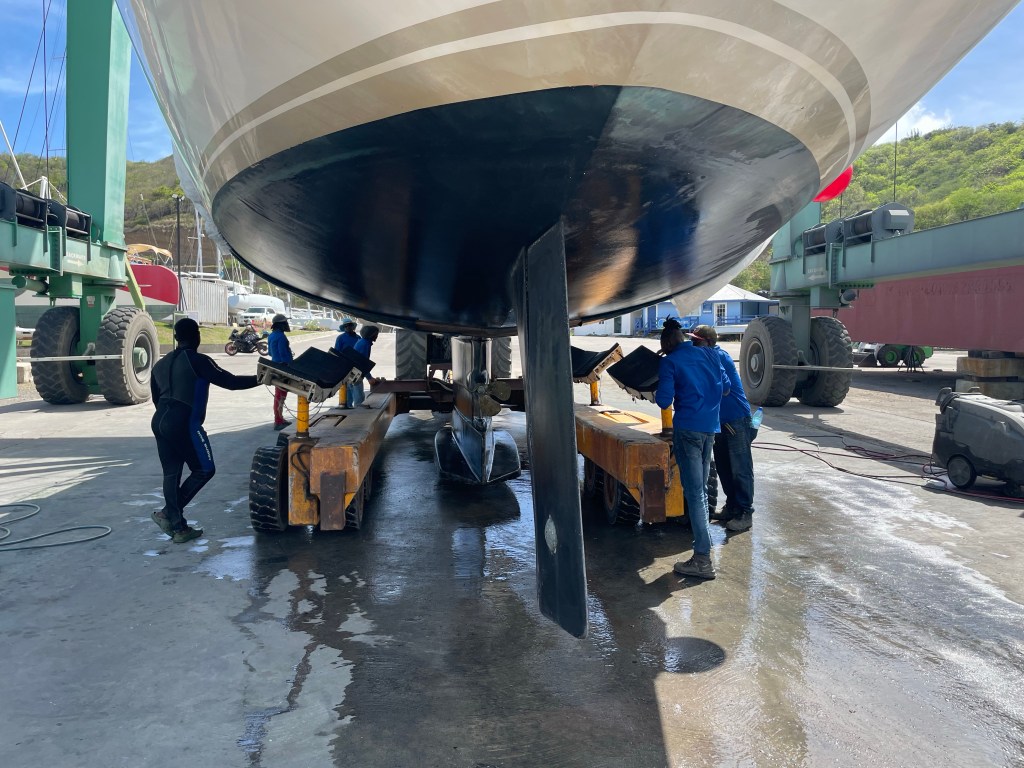
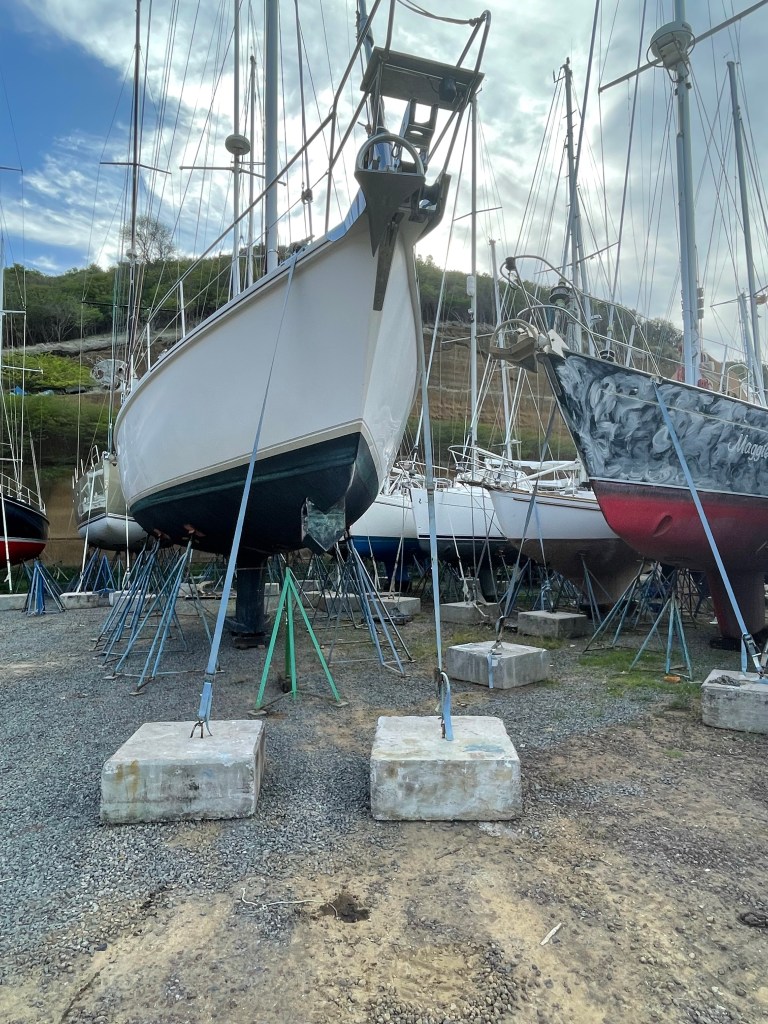
Moving into the slingsTwo divers will properly position the slingsIn the slings and getting power washed8 guys transfer Dragonfly from the 242 ton Travelift to an adjustable hydraulic trailer pulled by a tractor that can get in tight spaces. Airline straps attach to all four corners of the boat and are tied off to large concrete blocks that are put in place with a Bobcat
And so when it’s all done and Dragonfly is securely stored in the boatyard, it’s time to head home and start looking forward to next season and all the places to be explored.
Whew! Both negative!Already thinking about a future anchorage.
Brigitte and Gerald live full time on a sister ship of Dragonfly – Jetlag is an Amel Super Maramu and they were docked directly across from us when we arrived off the plane in Martinique. As we stood on the dock contemplating how best to get all our gear onboard and dry, they hopped off Jetlag and just started helping out. A great friendship was born.
Brigitte and Gerald are from Switzerland, he’s a retired Swiss Air pilot and she is a retired schoolteacher.
They initially cruised the Med and crossed the Atlantic a few years ago to spend time in the Caribbean. Jetlag overlapped with us in Martinique as they were undertaking an extensive refit before heading west on a long planned, slow circumnavigation (10 years is the current thinking). After receiving much technical repair advice and help, trips sailing and to the beach, dinners and game nights, it was time for hugs, goodbyes and well wishes.
Gerald and Brigitte of Jetlag with the harbor at Le Marin in the background
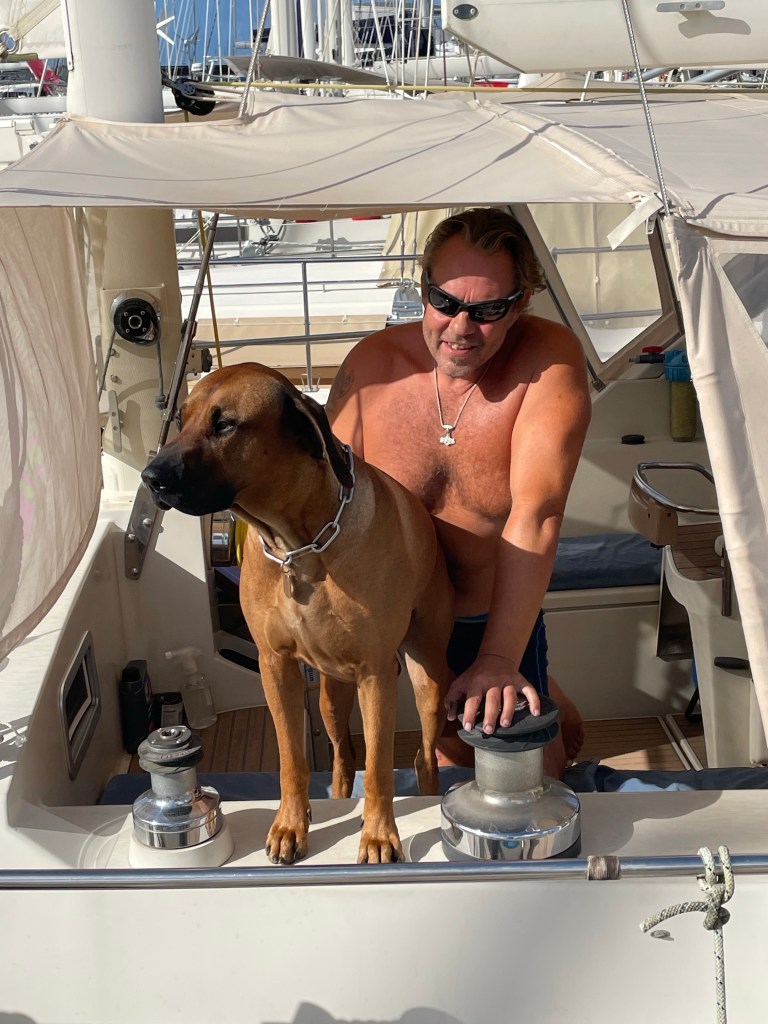
Terry and Balsa
Terje and Balsa are from Norway. Far northern Norway. Terje goes by Terry as it’s easier for people outside Scandinavia to pronounce. I called him the Teddy Bear in Underwear, because every single day the only thing he wore was his boxer underwear.
Terry and Balsa of Django, another Amel Super Maramu
Totally mellow, he was in Martinique to thaw out; he had spent his career as a Volvo heavy equipment diesel engine mechanic working north of the Arctic circle. His hands continually hurt from the nature of his profession and the location of his employer. Balsa is more zen than Terry and would walk off the boat’s passarelle to greet folks on the dock. He only had a problem with a large, ornery old cat from a nearby boat. It seemed to be a mutual hate/hate relationship but everyone lived another day whilst we were there.
Captain Nick
Nick was part of what I called the Scandinavian mafia – amazing how many cruisers there are from Norway, Sweden, Finland and Denmark. He and his wife own a 75 foot steel schooner called Skydancer; they spend their summers in Greenland hosting charter guests aboard for sail and ski vacations, as well as research scientists, documentary film makers and the like. They spend their winters in the Caribbean recovering and warming up. Nick is a huge guy, very friendly, knowledgeable, and willing to share advice and suggestions. Pretty comfortable in the islands, yet easy to see how he’d be in his element navigating his vessel amongst the summer ice flows around Greenland.
Captain Nick
Thomas
Thomas was the other member of the Scandinavian mafia. He was single-handing his Bavaria 55 around the world and documenting it on his YouTube channel: Free Thomas. Terry, Balsa, Nick and Thomas could spend hours in Django’s cockpit telling stories – it became this really nice background noise as they chatted in their common language.
Thomas’s worldview
Krista and Bill
All Canadians are nice folks and Krista and Bill were no exception. We first chatted them up at the marina pool in Canouan and continued to see them and enjoy our time chatting. Bill owned a pharmaceutical wholesale company in St Johns New Brunswick that he sold at an early age. Krista was a school teacher and gets a gold star for being such a good trooper. Maybe 10 days before we met they were going to shore in their dinghy, got out to pull the boat onto the beach, and a wave hit the boat, spun it, and hit Krista directly in the rib cage with the outboard motor shaft. Ouch – cracked ribs, lots of pain then discomfort, but never a complaint and always a great attitude.
Lifelong sailors, they decided to buy a Trintella 57 (Dutch aluminum sloop with Solent rig) and have enjoyed the past 16 winters sailing in the Caribbean. When we met they were quick to make it clear Krista is only 10 years younger, probably because everyone assumes it’s a bigger number.
And So Many More
And then there was Grant and Andrea from South Africa, Duncan and Kathy from Toronto, Nigel and Susan from England / Boston, Joshua and Maaike from the Netherlands, and so many more friendly and interesting people each pursuing their dreams and living life to the fullest. Hope to see all of you in a quiet anchorage someday soon.
When traveling we often look for how things are different because that interests us. But, when we find that things are the same, this is when it becomes fascinating.
For when we find sameness, it exists in an environment that is so completely different from what we know, what we’re comfortable with, what we assume to be true and, oftentimes, what we assume to be ours.
Homemade soup restaurant
Traveling for several months throughout the Windwards, visiting 11 islands spread across four countries, that is what we have seen: the universal truth in how people live. They want to live with Dignity, and to be treated with Respect, and to be part of a Community, and to have a Family.
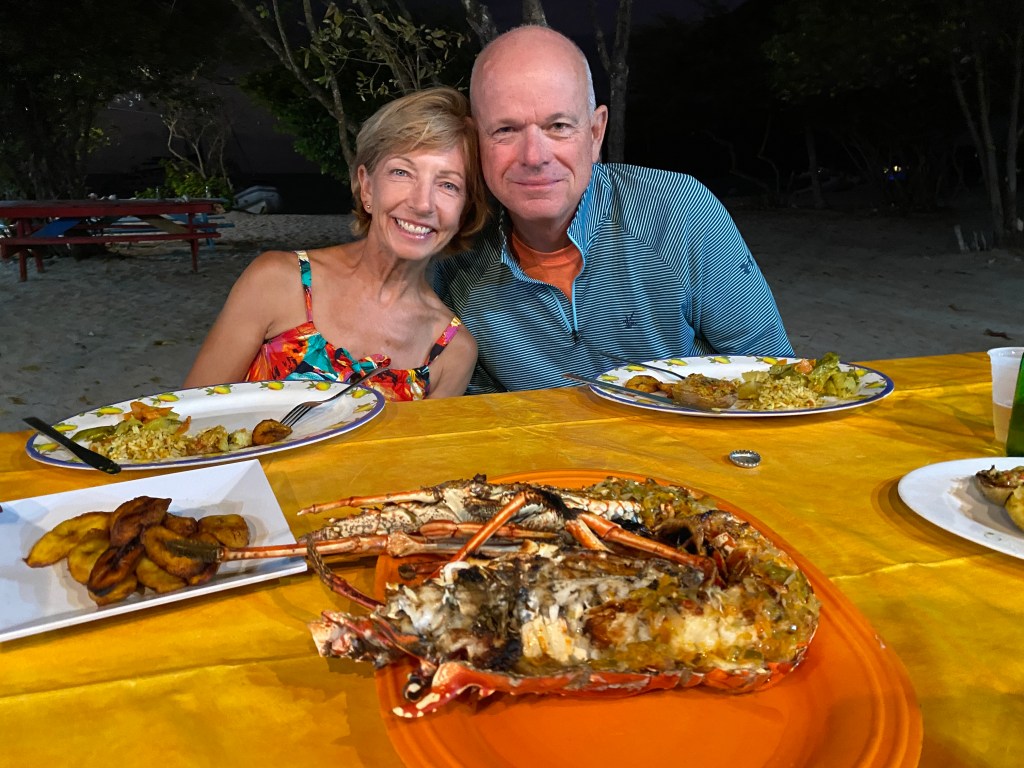
Rashon was the cutest little kid, maybe 7 or 8, full of life and energy and a sparkle in his eyes, but alas quiet and shy and a bit uncertain. Barefoot in the sand, he was closely attached to our waitress at this outdoor beach bbq on an uninhabited island in the Tobago Cays Marine Park. Back and forth they both went to the open air kitchen – grilled lobster, marlin, veggie rice, potatoes, fried plantains and more.
Enjoying dinner at Free Willy’s
We asked our waitress if Rashon was her child. No, he’s my little friend, we like each other a lot, his mother isn’t really able to take care of him, he’s happier when he’s here on the island with Free Willy (the owner of the bbq tent) and me. They looked at each other with the warmest, most affectionate smiles.
Dinner over, plates being cleared, Rashon comes racing up, eager to help. It was a memorable moment, a short moment, but one that we all observed. As our waitress handed a plate to Rashon, he took it, but she paused, reaching back to him, and ever so thoughtfully, carefully, and gently, she took his little hands in hers, repositioned his fingers and wrists, and simply smiled at him. He looked up at her. Nothing said, but love was spoken.
The smallest action, helping a child to find a better way, being part of his life and his community, respecting him in front of a table of four adults, four strangers, four foreigners, allowing him to have a role with pride and dignity.
People want a job, or if not a job, then they want a role, because a job (or a role) allows them to live with dignity.
Johnny of Mustique
Every place we visit, walking down the street, or through a neighborhood, we’re greeted with smiles and hellos and welcomes and can I help you. Boat boys arrive when we arrive:
Can I help you with your mooring?
Do you want ice?
In the morning they are at our side again:
Do you want banana bread? (banana cake at Union Island)
Do you have trash?
Boat boy with fresh baguettes and banana bread
Only once have we felt aggression, but that was in the form of upselling and re-pricing. On reflection, it possibly was driven by hunger and needs and maybe a bit of desperation. And it all worked out
Bonjour. Ca Va.
Hello. Good morning
Fist bump. Thumbs up.
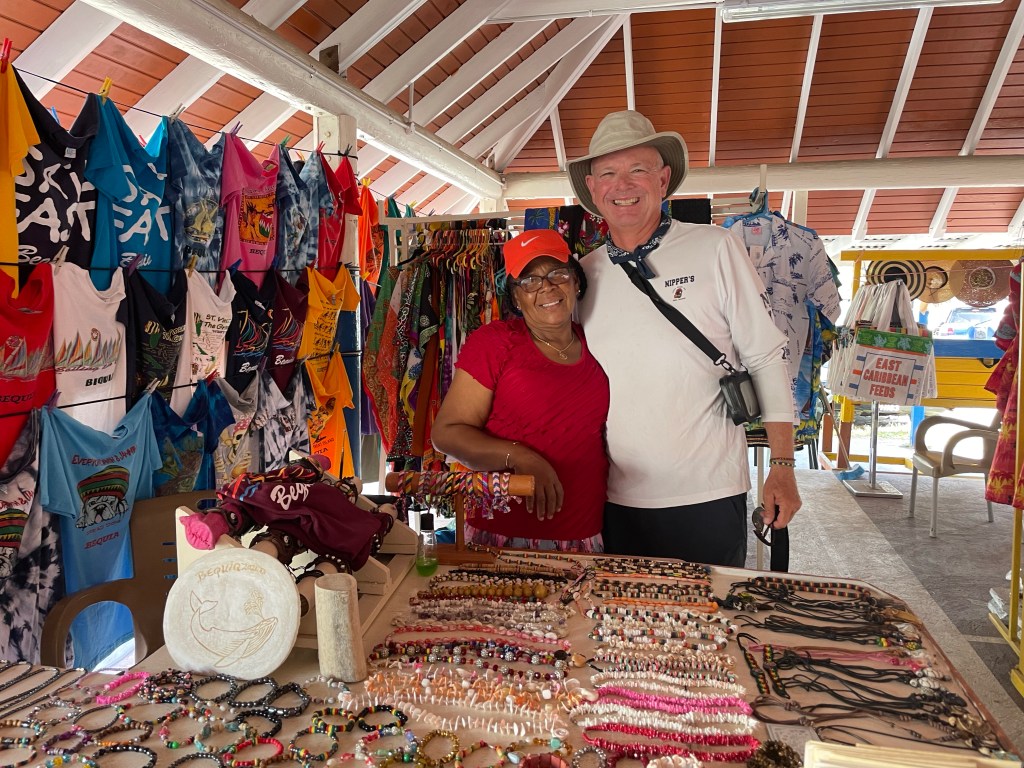
Daphne of Bequai
Nearly everything is closed on Sundays in the islands. Sundays are for church and for friends and for family. But not for work, there is plenty of time for that. Everywhere we went, we saw families in the morning dressed for church and in the afternoon dressed for the beach. Grandma and Grandpa, Mom and Dad, kids, friends, aunts, uncles. Driving to church, walking to church. Sitting on the beach. Grilling on the beach. Playing in the water. Listening to music. Having a drink. Down here, it’s called Limin’. We might say Chilling. Here it’s Limin’.
Sunday
A desire to live with dignity and be treated with respect. To be seen. To be acknowledged. To be engaged. To live as part of a community, to belong. To have a family, and children. And the forever hope that my children will have more opportunity, be better off, have a better life, than I have had.
See me.
Acknowledge me.
Talk to me.
Recognize not the difference between you and me, but the sameness between you and me.
Having tied the dinghy to the park service float, deployed the boarding ladder, and fitted our snorkel masks and fins, we slipped off the Hypalon tubes and into Molinere Bay. Protected by two rock outcroppings to windward and leeward, the bay is on the west coast of Grenada, a few miles north of the entrance to Port Louis at St. Georges.
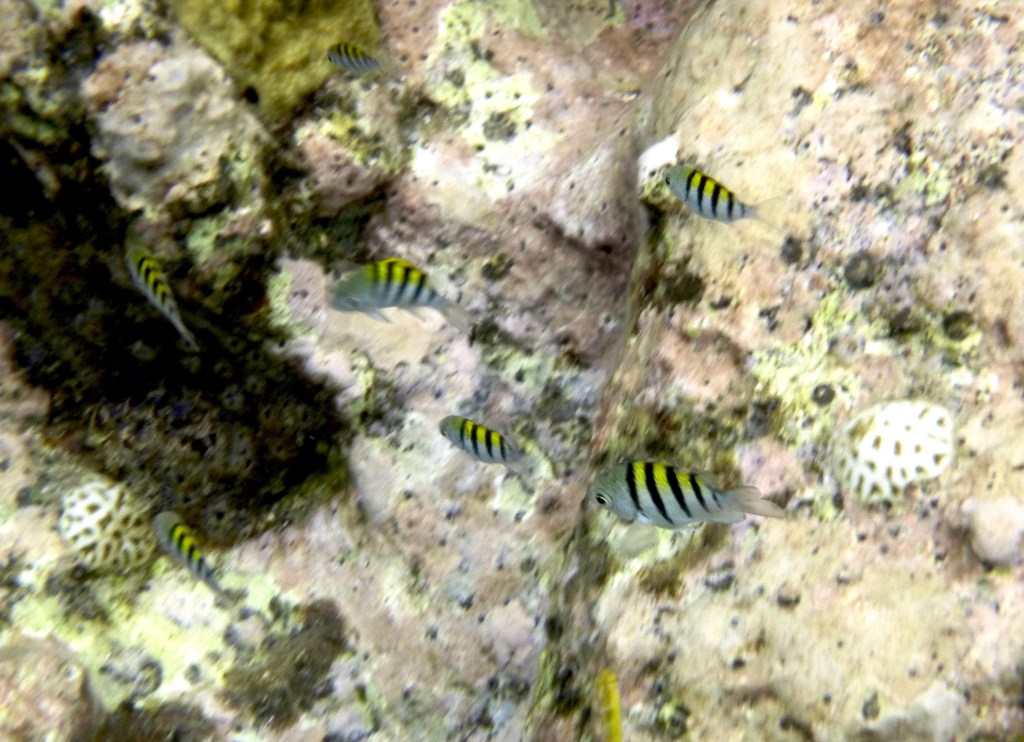
We saw the familiar; brightly colored fish against a backdrop of pure white Caribbean sand.
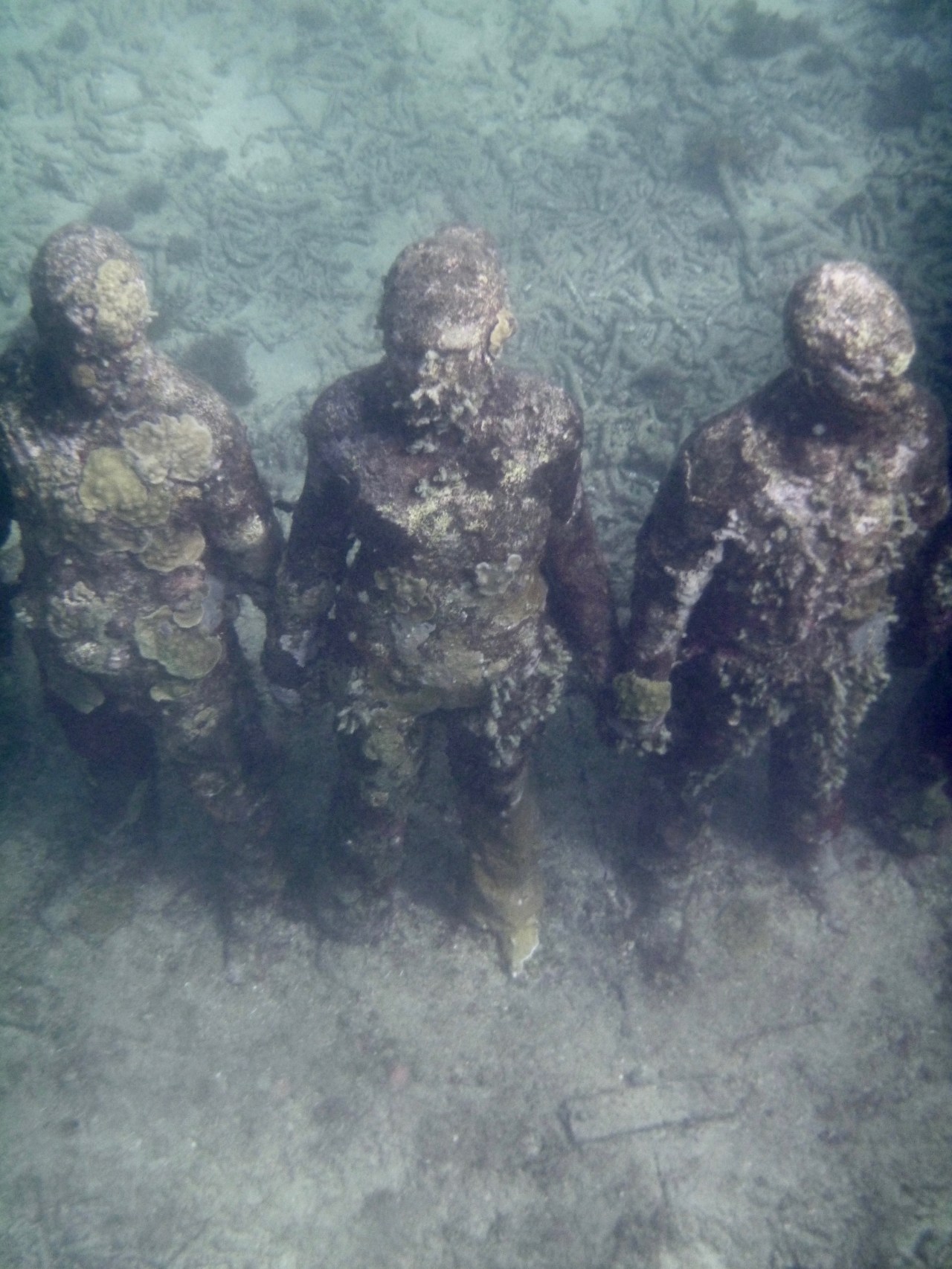
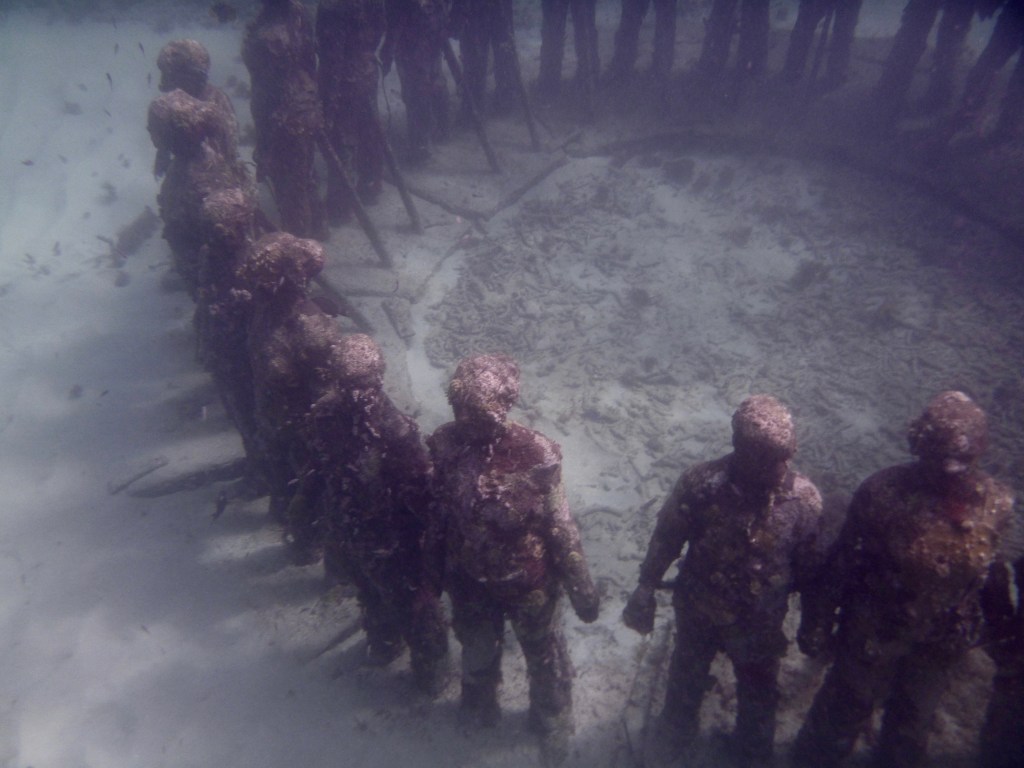
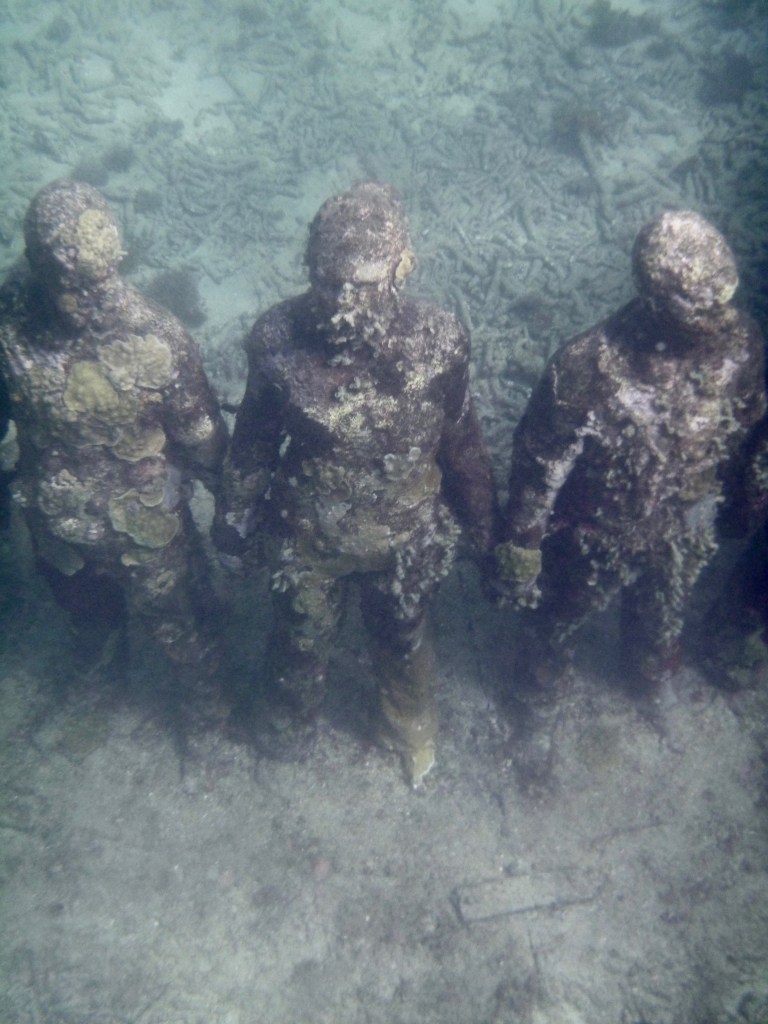
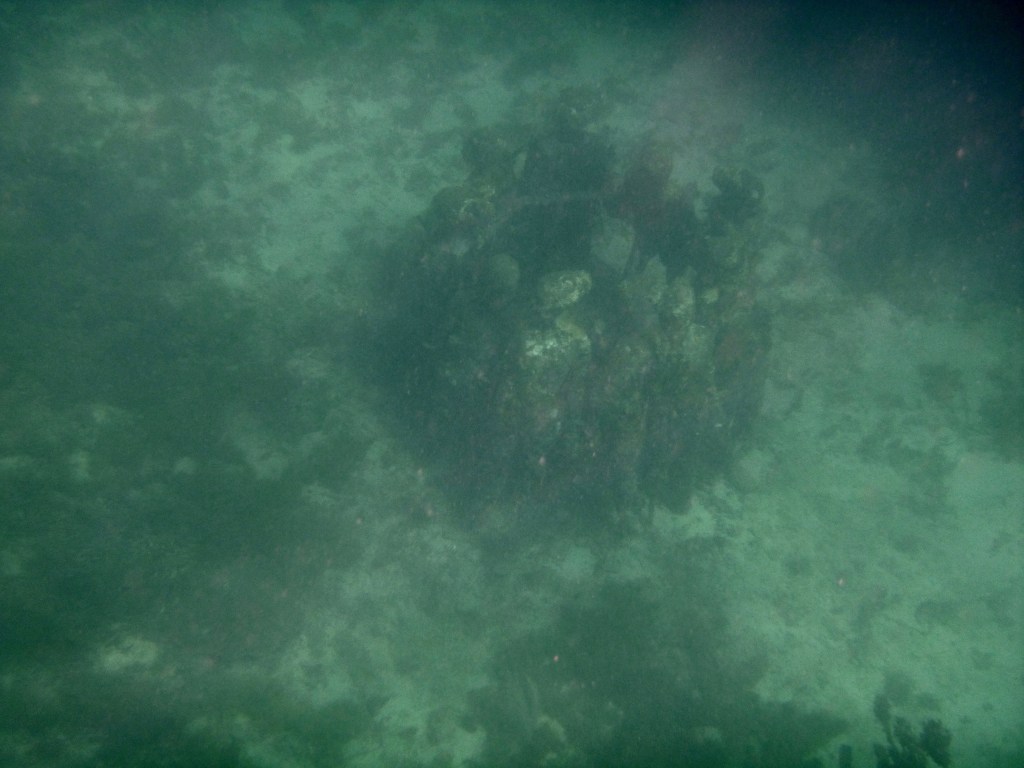
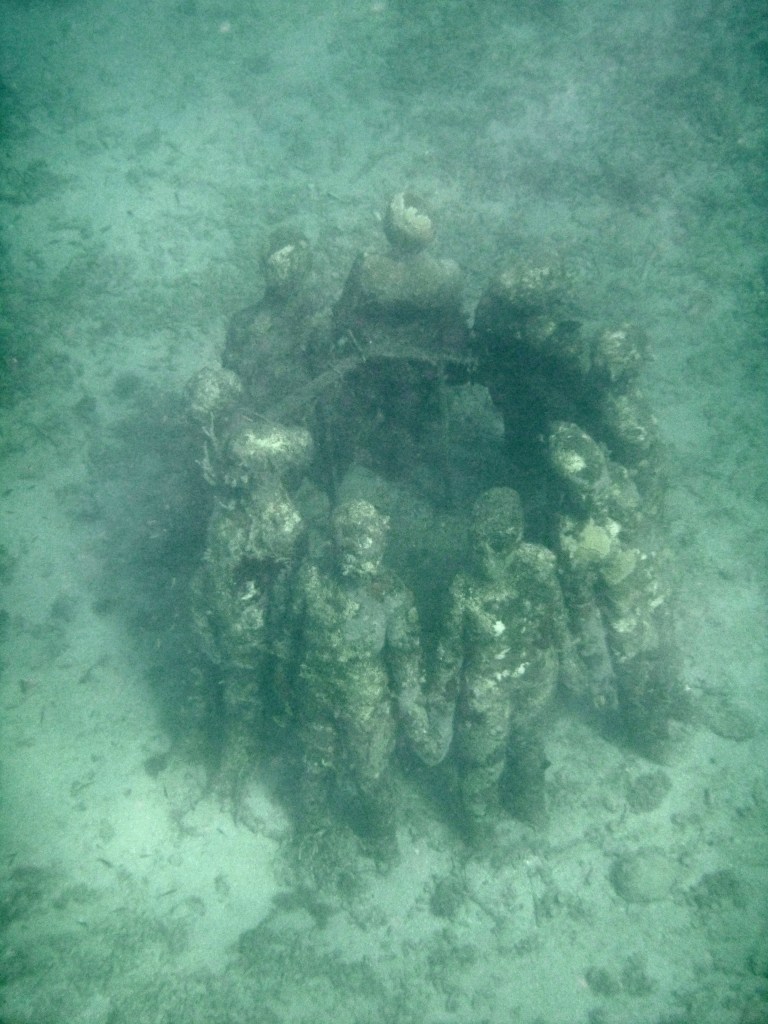
Swimming across the bay in about 20-30 feet of water, we could barely distinguish the outline of a shaped form, as the somewhat overcast skies and turbulent waters made visibility less than clear. As we approached, the outline slowly came into focus – ethereal, almost haunting, lifelike forms, underwater, standing on the seabed, holding hands, yet with sea life swimming around them, small pieces of coral attaching themselves to the body forms. Angled rays of light streaming down.
Haunting.
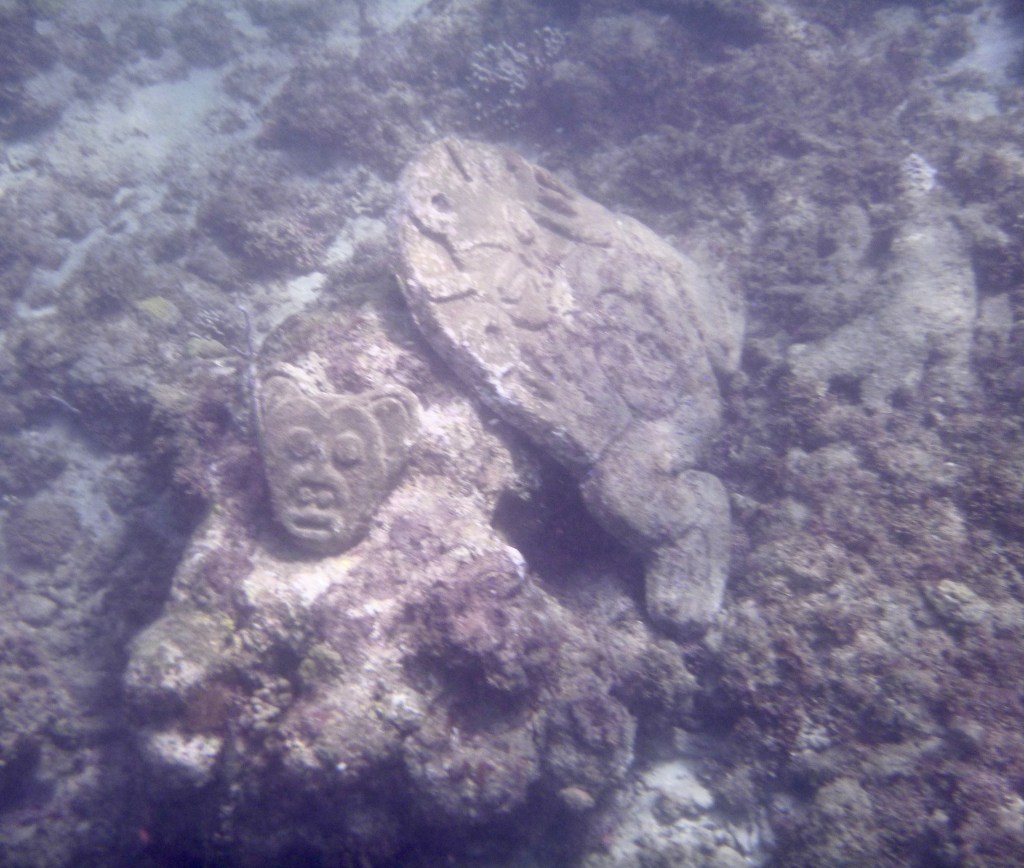
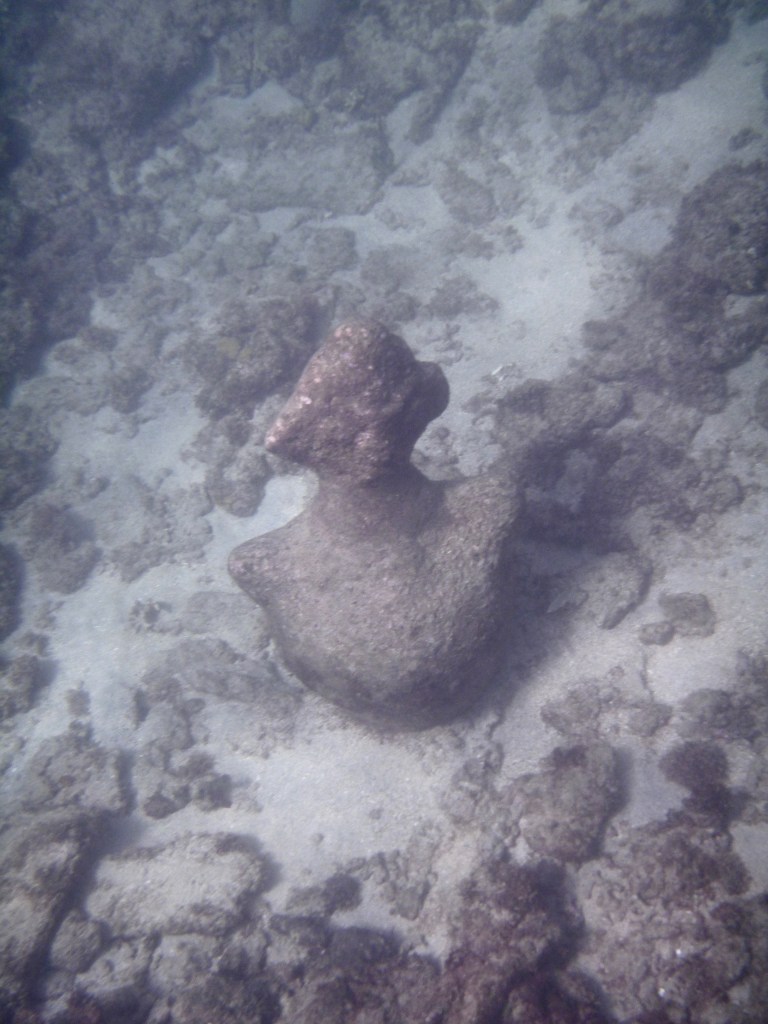
In 2006, the British sculptor Jason deCaires Taylor opened the world’s first underwater sculpture park featuring a collection of ecological contemporary art. The works are derived from life casts of the local community. He installed concrete figures onto the ocean floor, mostly consisting of a range of human forms ranging from solitary individuals to a ring of children holding hands, facing into the oceanic currents.
The artist explains: Vicissitudes depicts a circle of figures, all linked through holding hands. These are life size casts taken from a group of children of diverse ethnic backgrounds. Circular in structure….the work both withstands strong currents and replicates one of the primary geometric shapes, evoking ideas of unity and continuum……The sculpture proposes growth, chance, and natural transformation. It shows how time and environment impact on and shape the physical body. Children by nature are adaptive to their surroundings. Their use within the work highlights the importance of creating a sustainable and well-managed environment, a space for future generations.
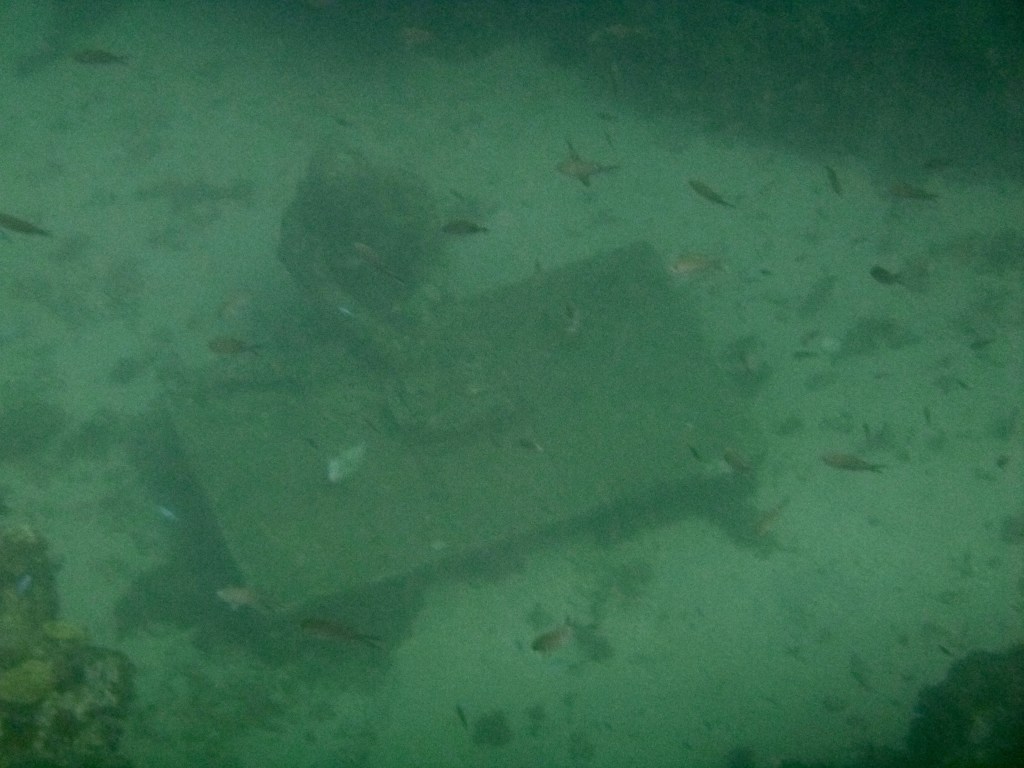
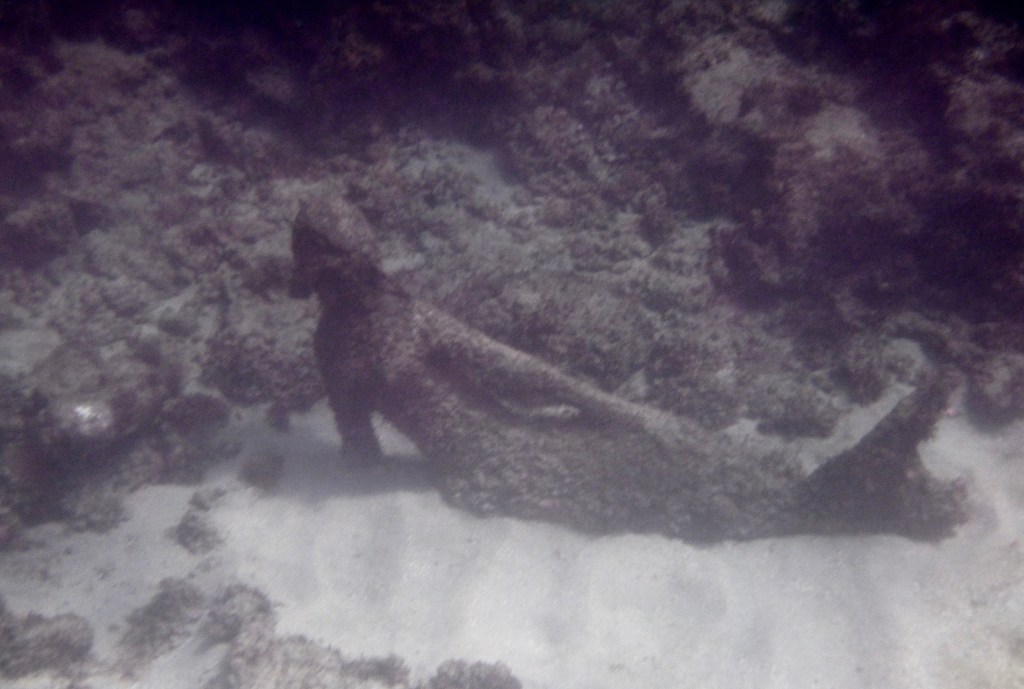
The Lost Correspondent. A modern day Vesuvius disaster, he is a lone concrete figure at a desk poised over a typewriter. The surface of the desk is covered with a selection of newspaper articles dating back to the 1970’s with many holding political significance from the Cuban alignment before the revolution (from Wikipedia)
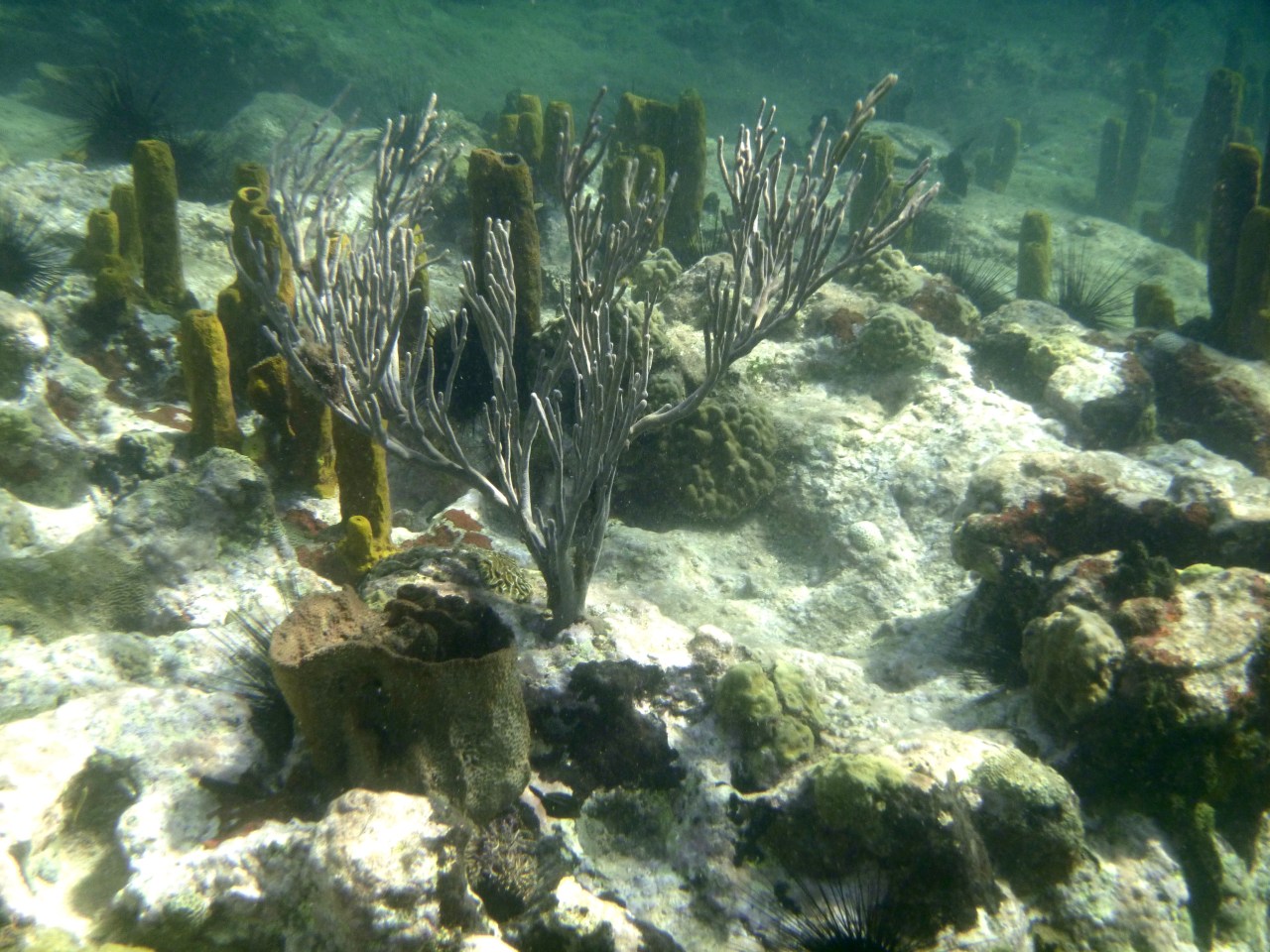
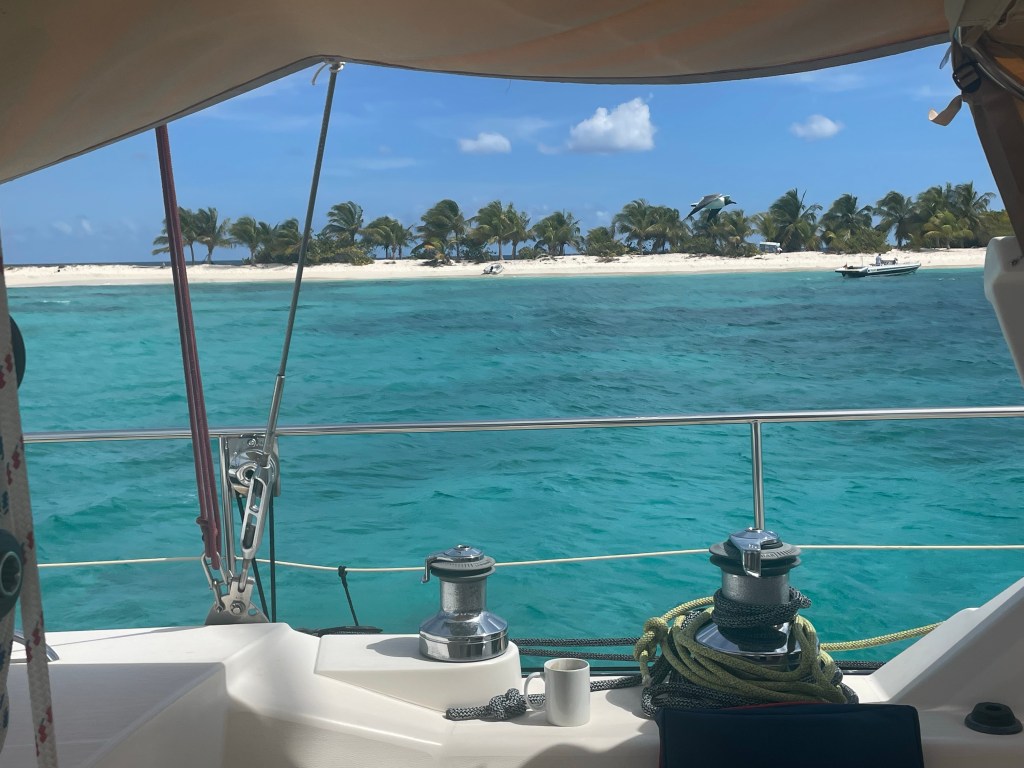
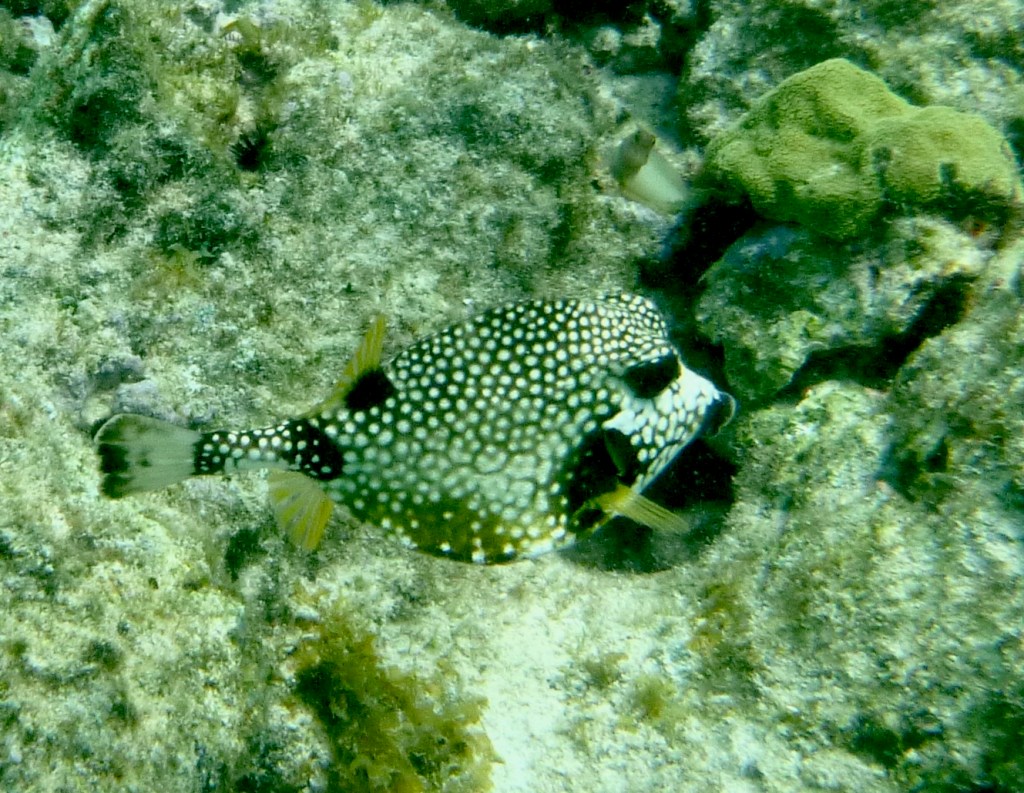
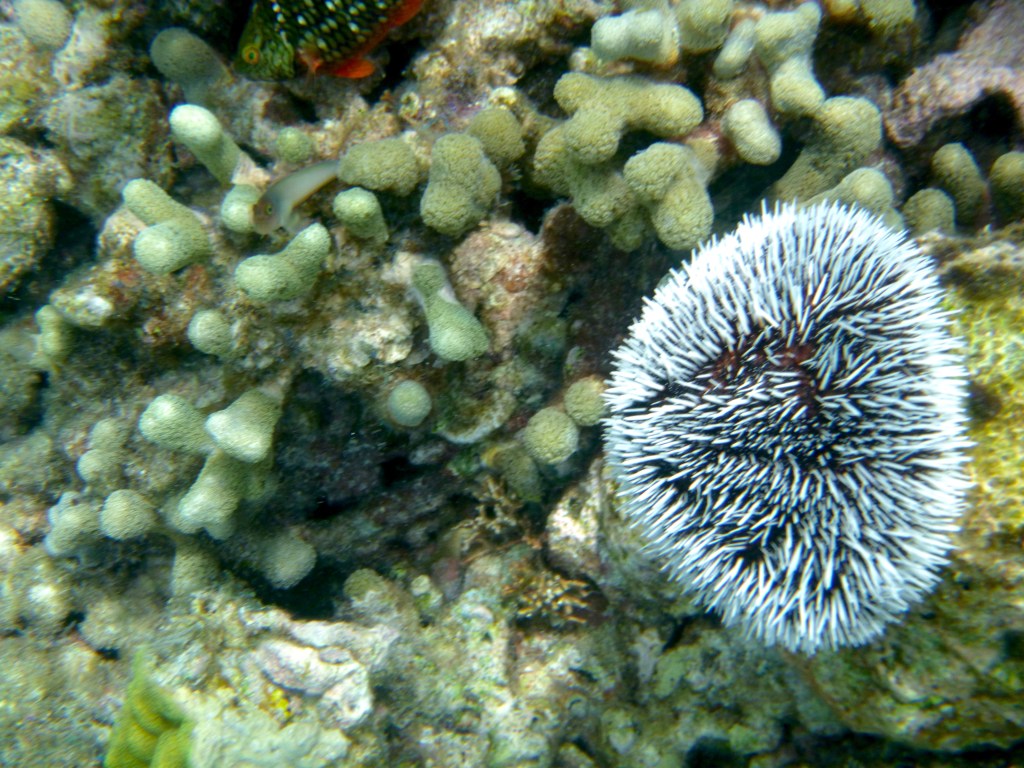
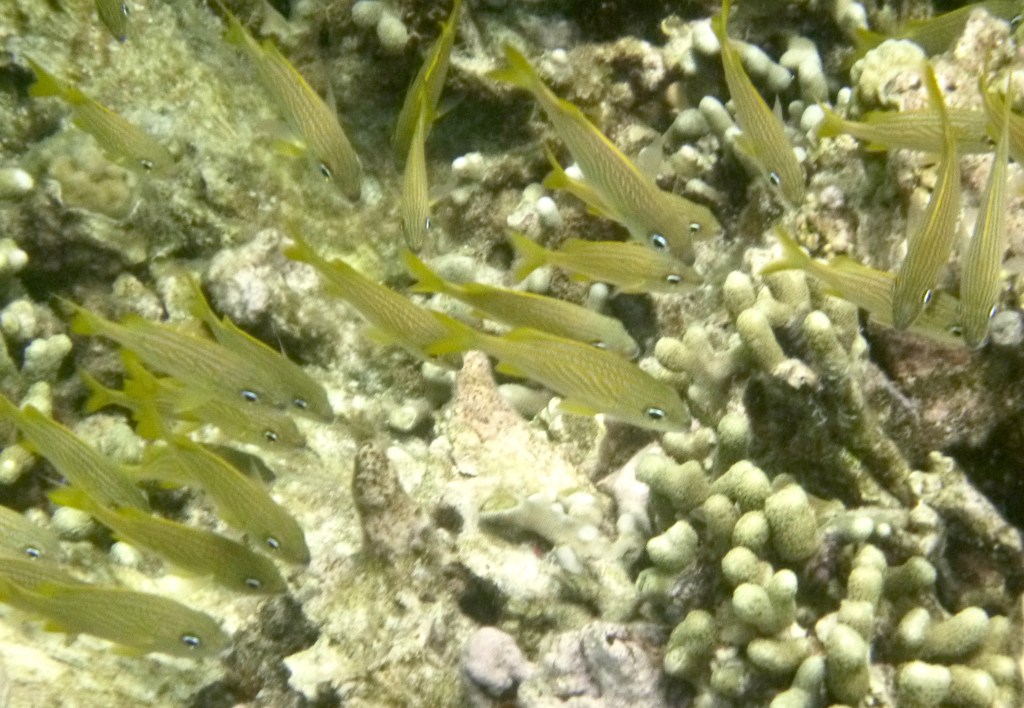
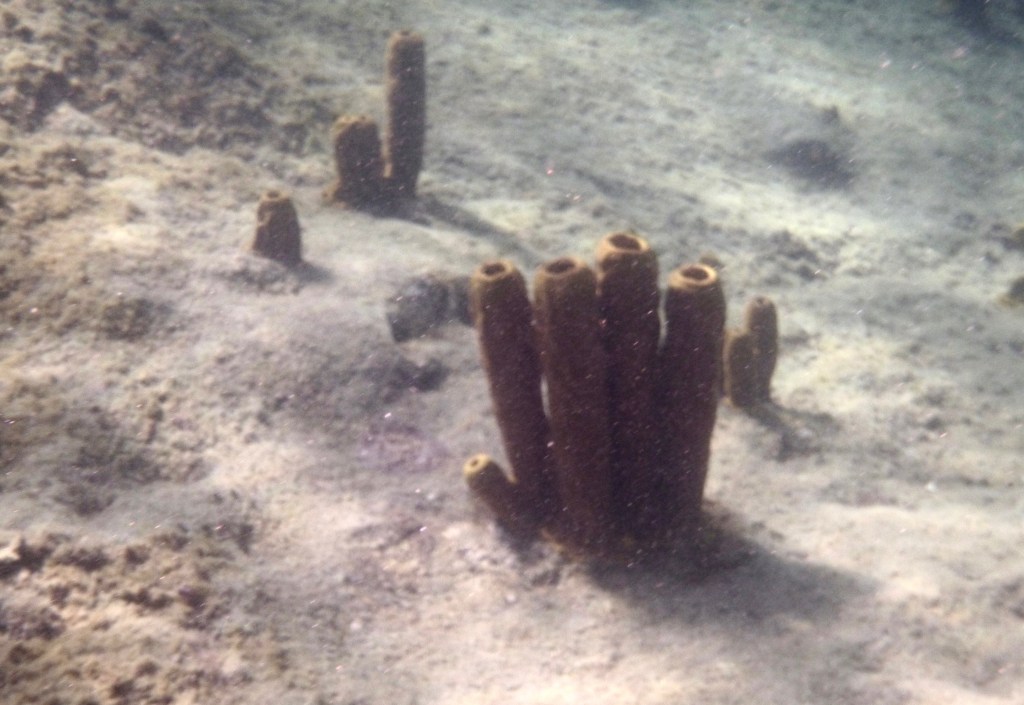
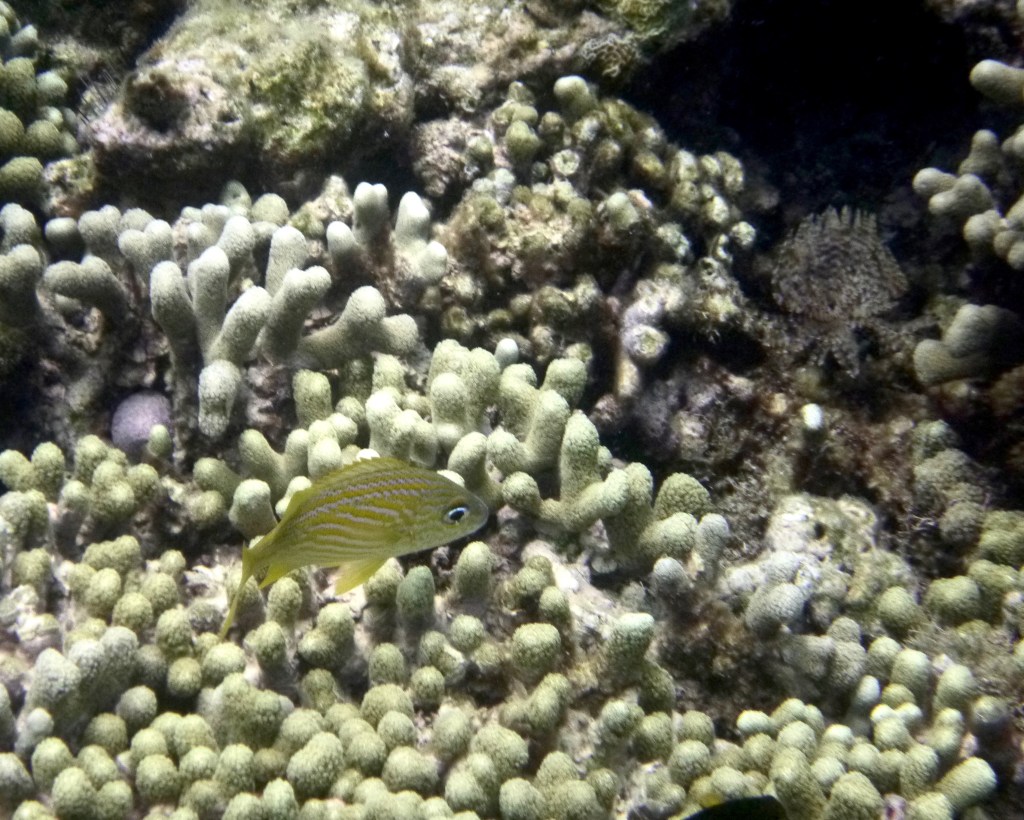
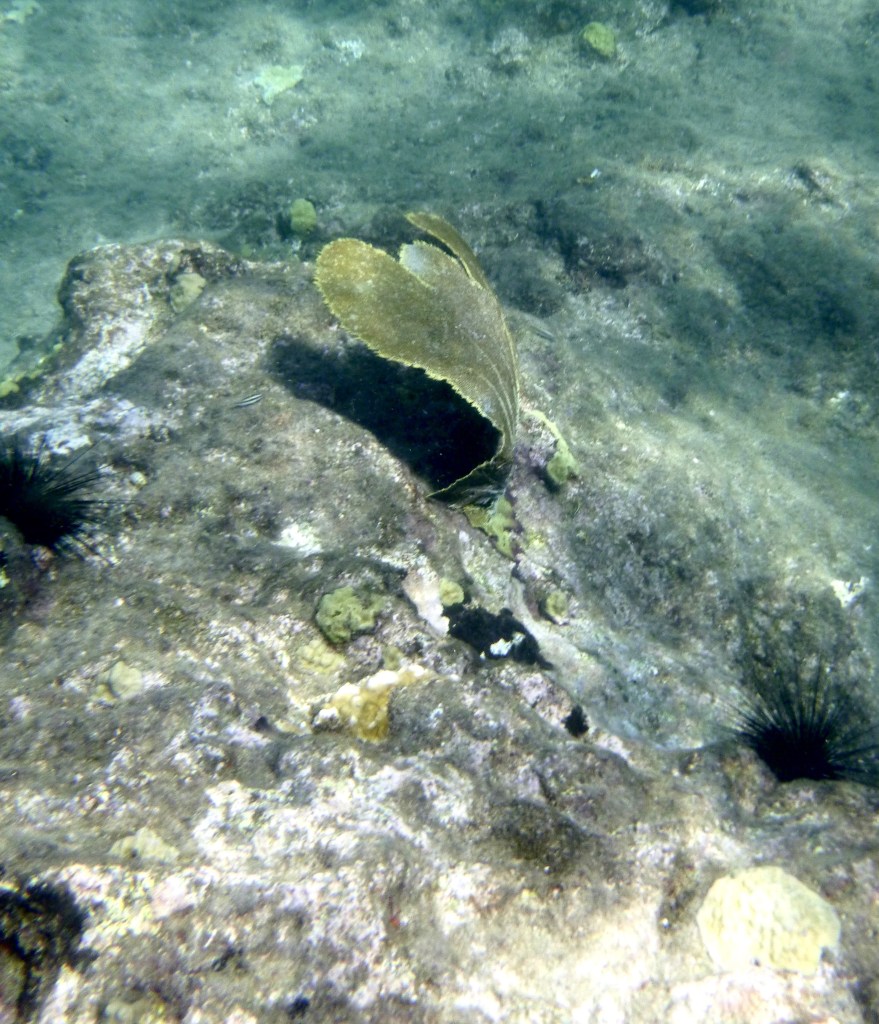
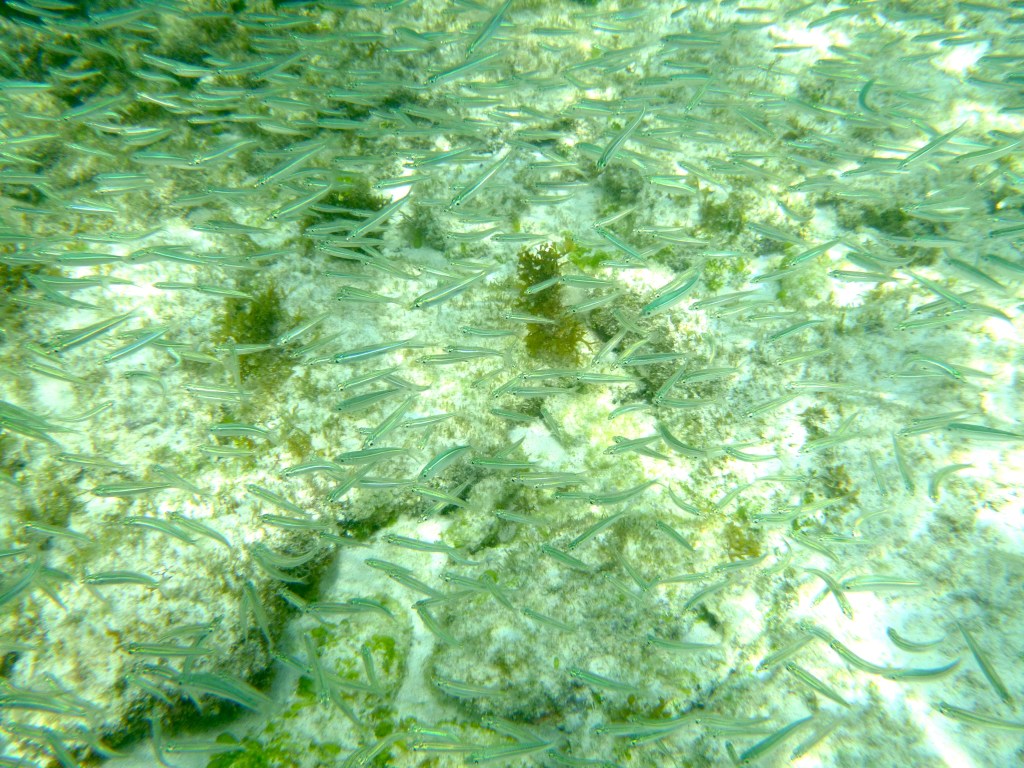
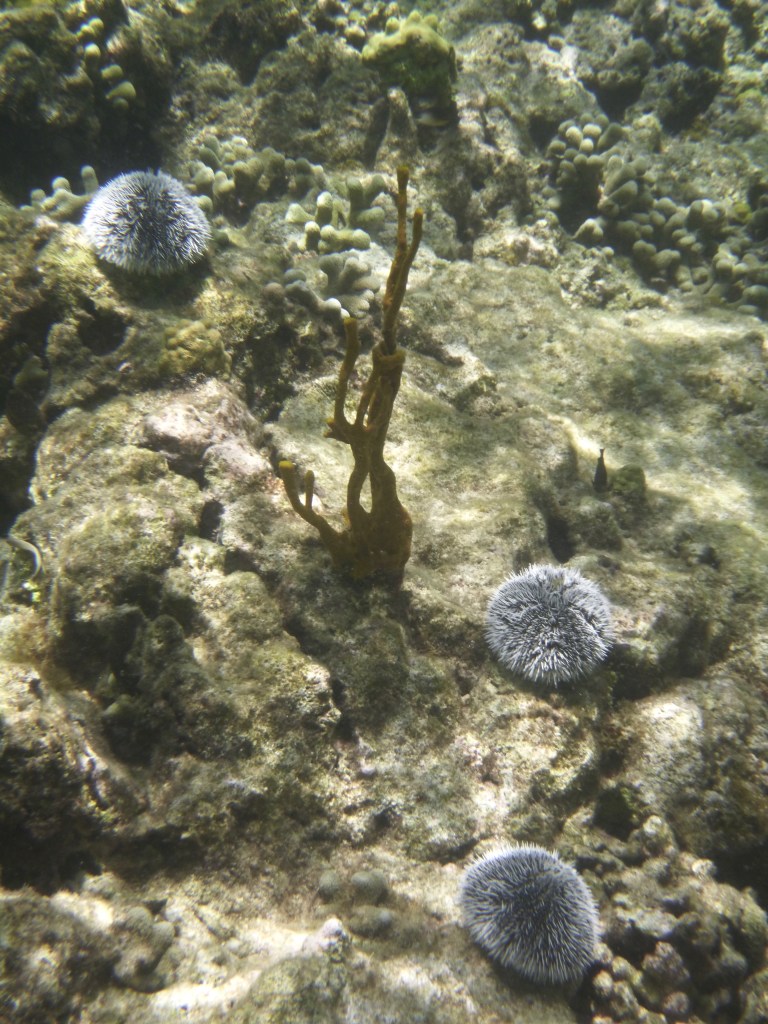
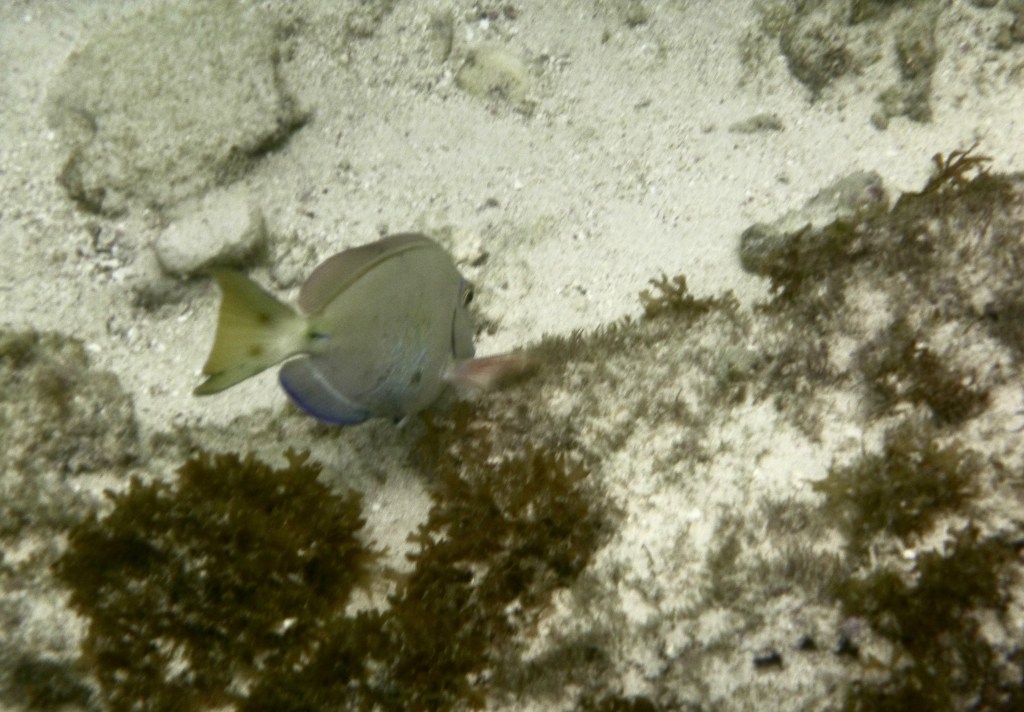
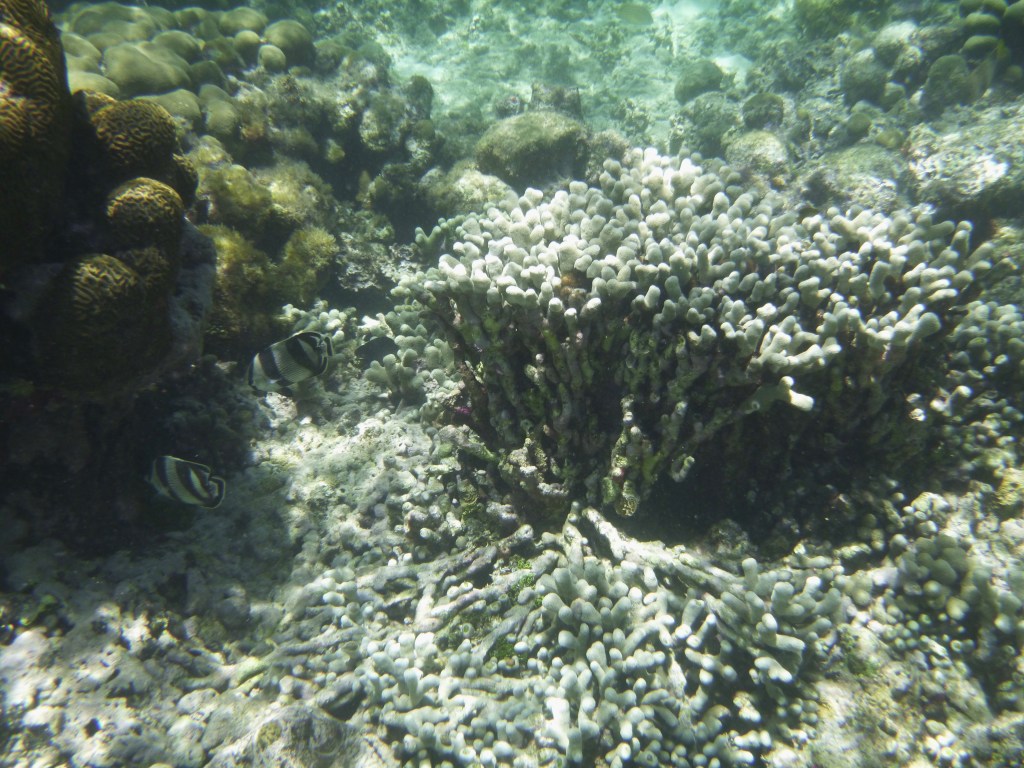
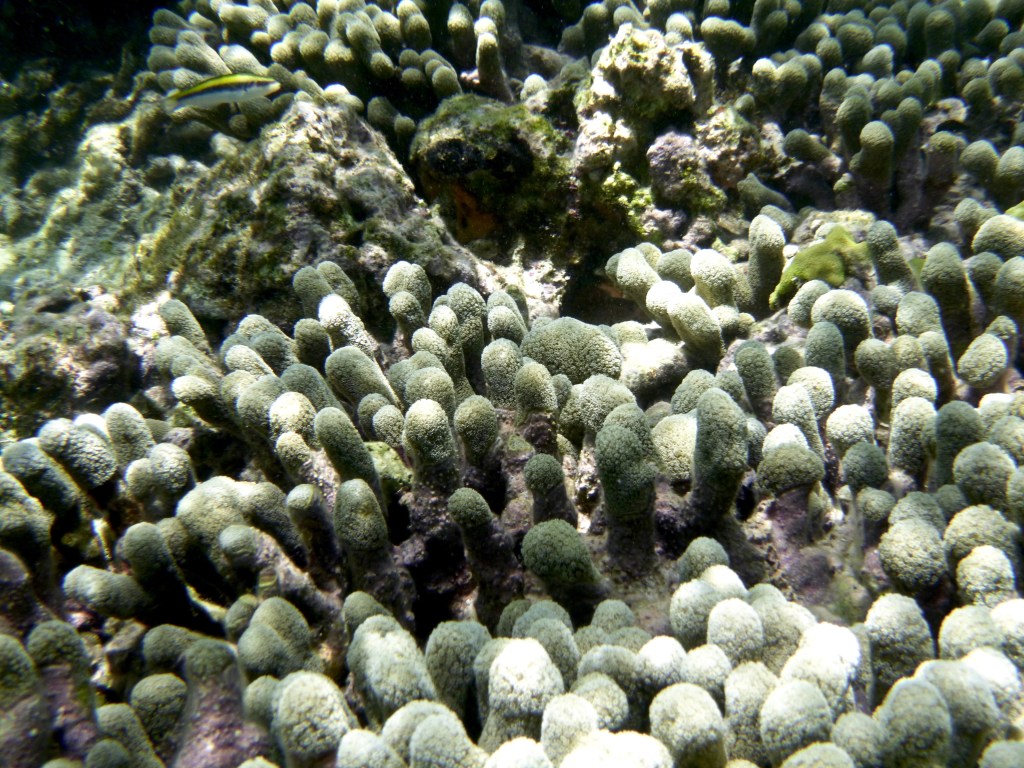
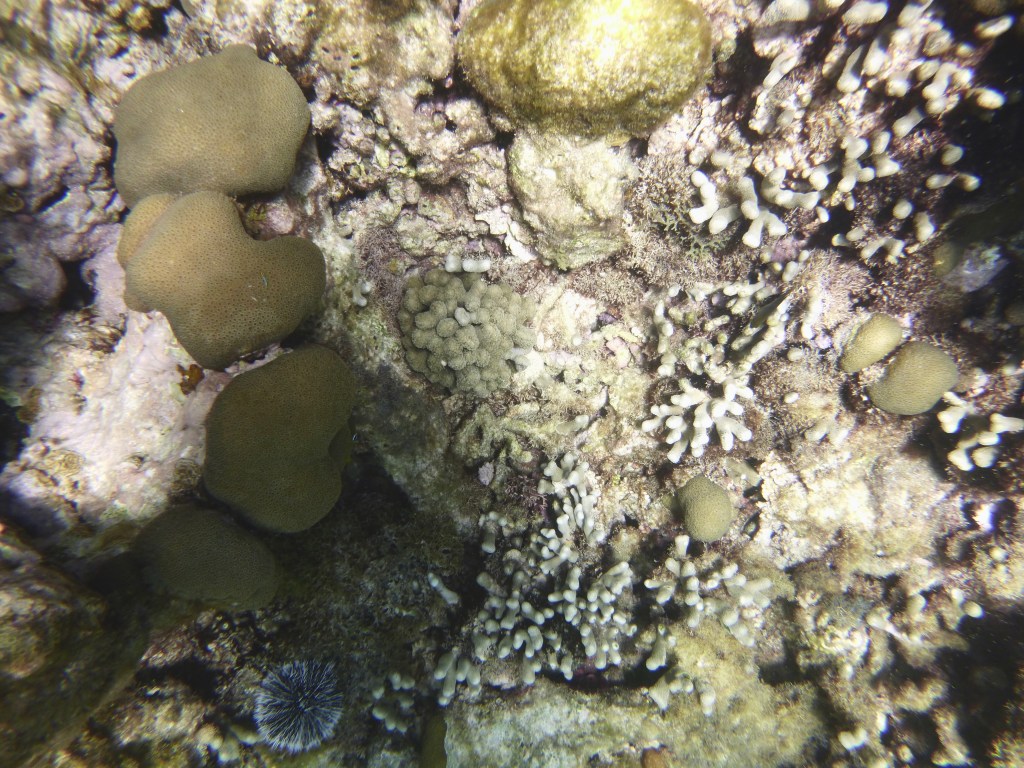
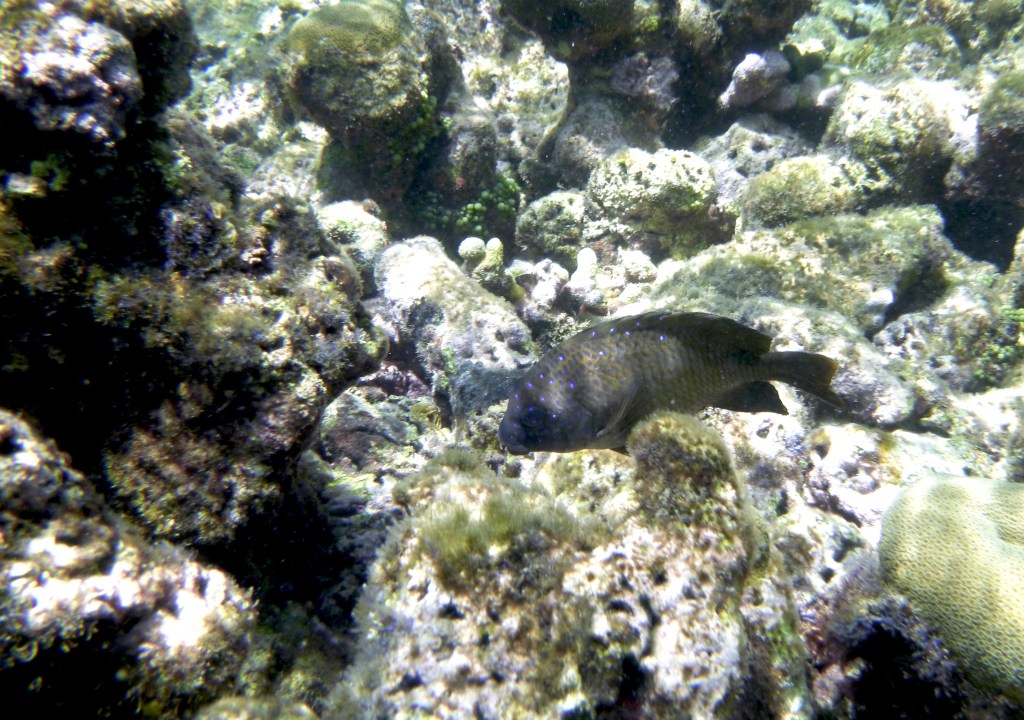
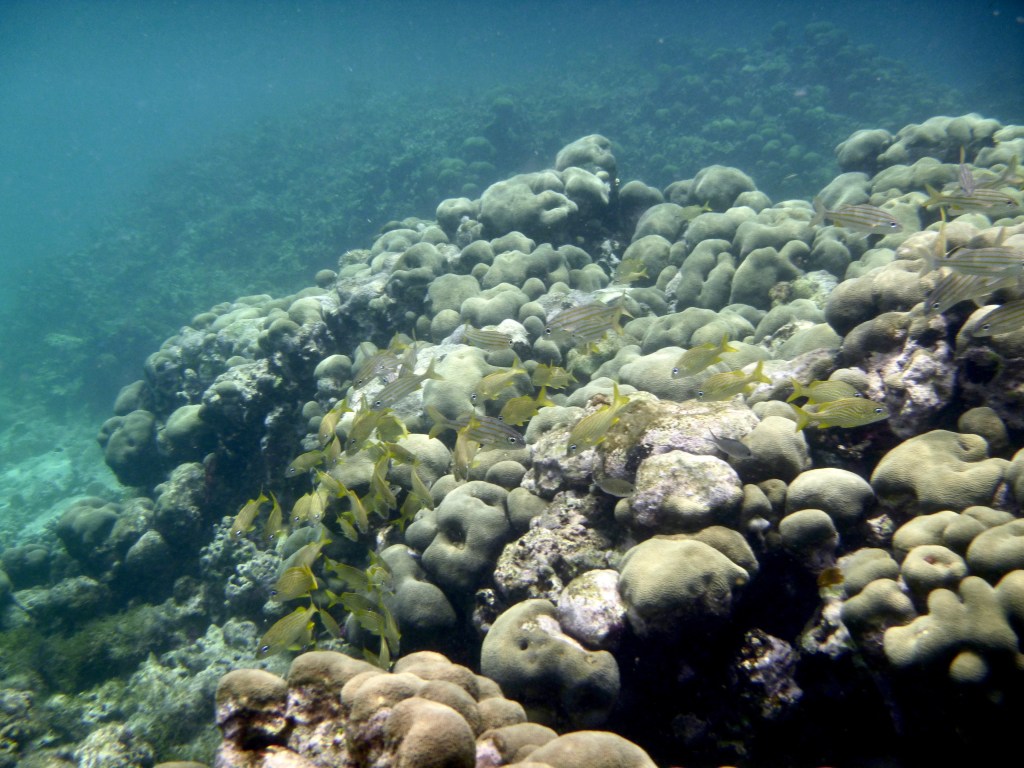
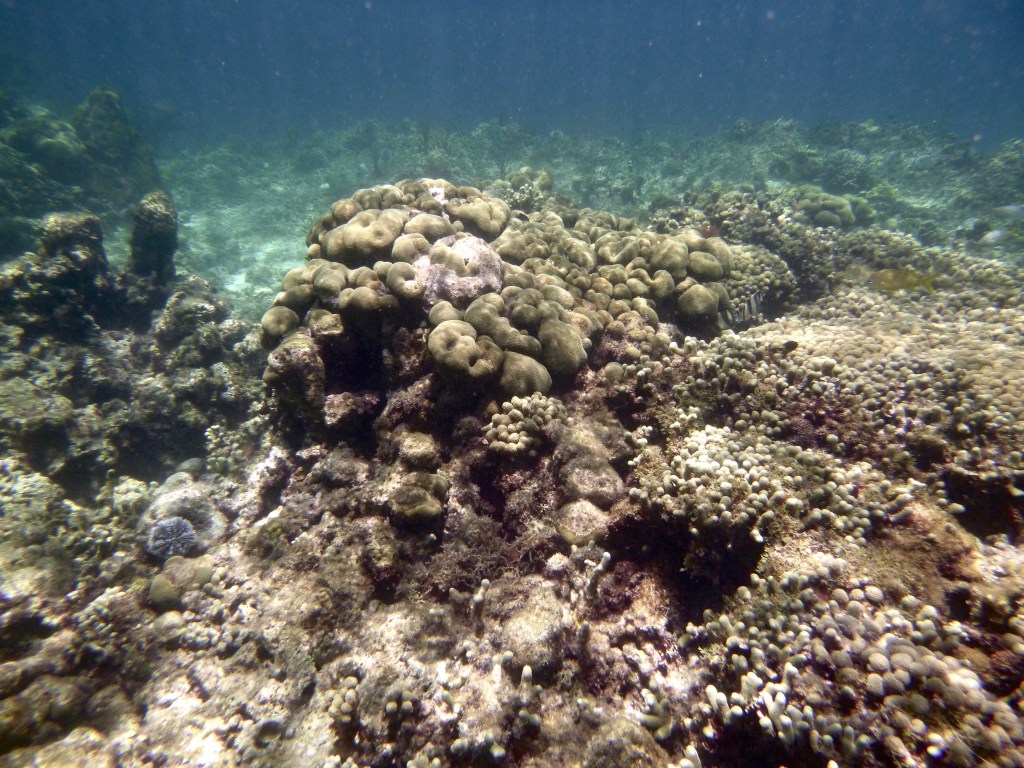
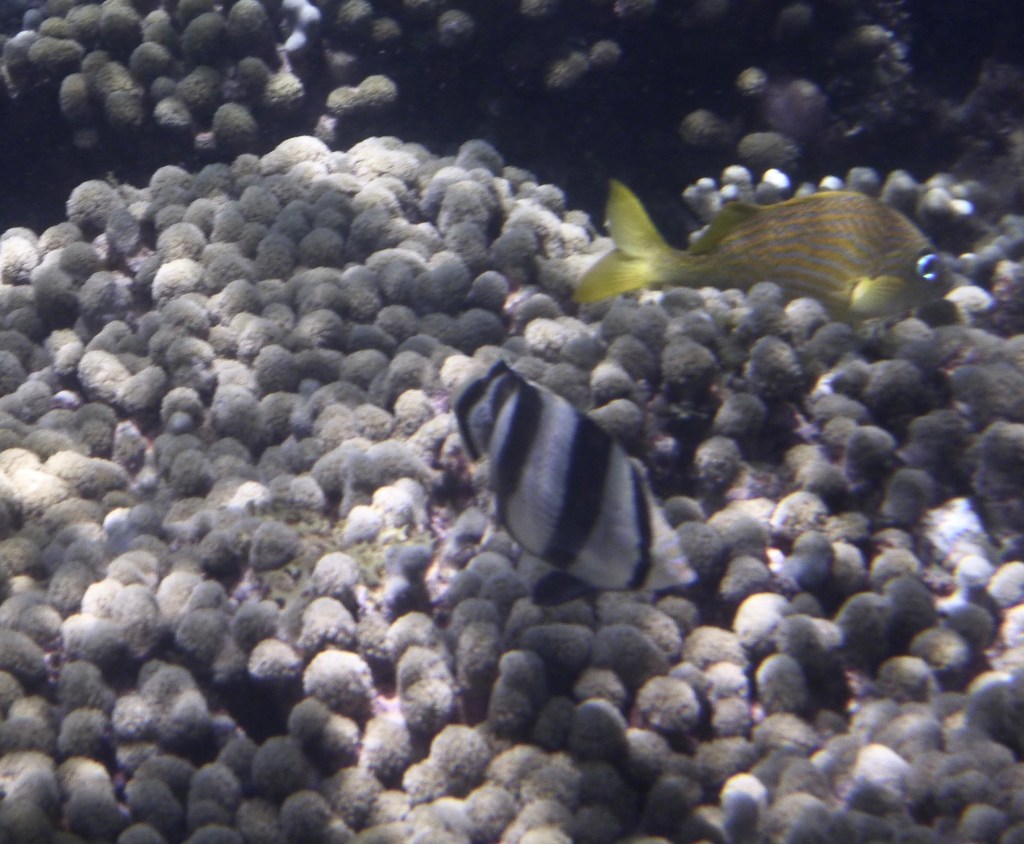
Just off the coast of Carriacou is a picture postcard island, uninhabited, nothing but sand, palm trees, tide pools and a pristine coral reef teeming with a tremendous variety of sea life.
This is the place where you come for a night and stay, and then the next day, decide to stay again. After three snorkeling trips on the reef with a little waterproof Panasonic camera, everyone agreed it was a stop worth repeating.
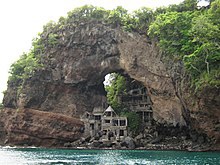
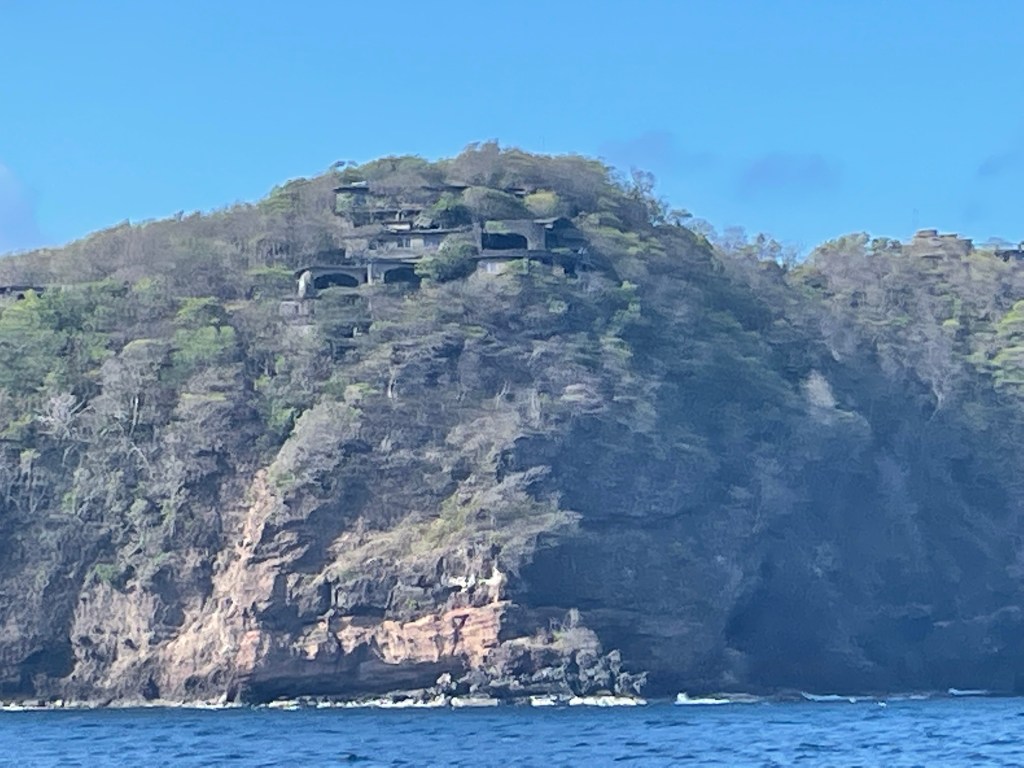
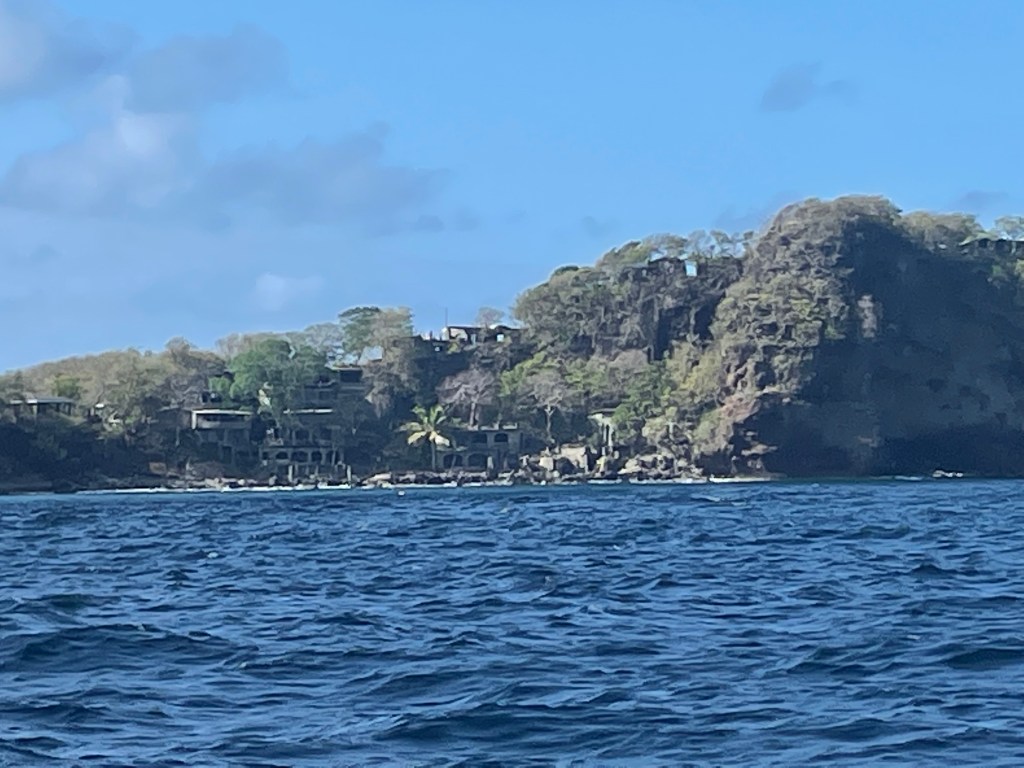
We sailed south out of the Bequai harbor in a mild 15 knot ENE trade wind. Looking out to port, we spotted a series of stone buildings nestled on the tree covered rocky hillside.
We had heard of this place: Moonhole.
Back in the 60’s, a couple of New York advertising execs checked out of the rat race and came here to build a community on the desolate and unpopulated hills of southern Bequai, a tranquil and remote island of the Grenadines.
The name Moonhole derived from a huge arch formed from volcanic substrate through which you can sometimes see the moon.
Photo from Wikipedia
Nearly all of their construction materials were locally sourced stone, rock, and some whalebone artifacts.
They collected rainwater, grew vegetables and fruits, and ate from the sea.
All these years later there are still a few residents clinging to a unique and lonely way of life.
Union is the southernmost of the group of islands forming Saint Vincent and the Grenadines, an independently governed country still part of the British Commonwealth.
Union Island Vibe
The first European settlers were Frenchmen who arrived in 1763 with 350 slaves. The Treaty of Versailles signed 20 years later resulted in Union Island along with the other islands comprising the Grenadines being transferred under the control of England.
Coolest dinghy dock in the Caribbean – the Bougainvillea Hotel and Restaurant converted their saltwater aquarium into a cruiser’s protected landing spot
Ownership of Union Island was held by an Englishman and then a Scotsman and finally a St Vincentian, with all of these families focusing their efforts on growing a very fine strain of cotton called Marie-Gallant.
Even the palm trees are growing weary of the unabated enhanced trade winds.
The double whammy of a bad cotton harvest and a hurricane forced the final owner to sell Union to the British Crown, which then created the Union Island Settlement Scheme. Parcels of 2-4 acres were sold to local residents at favorable credit rates.
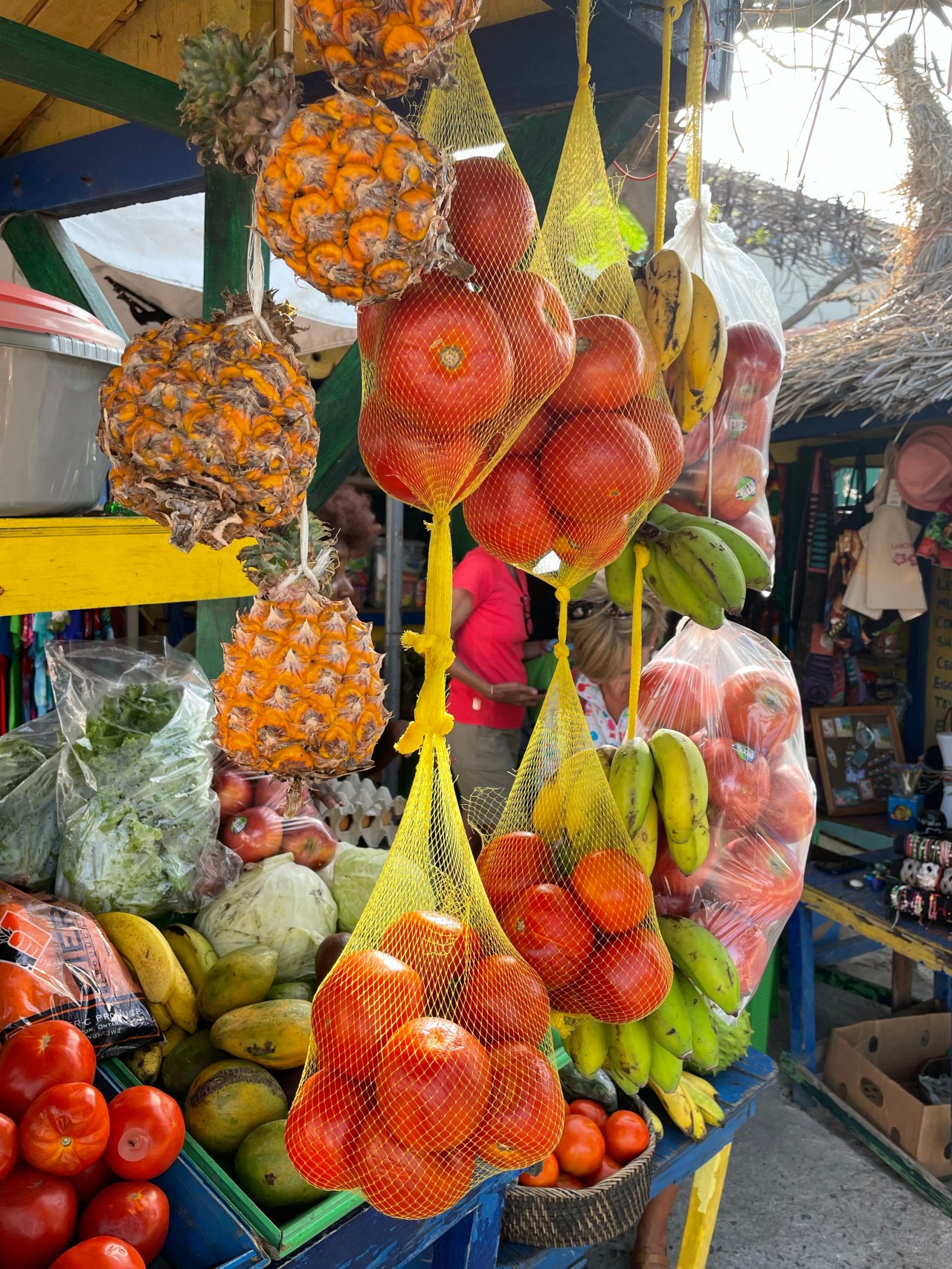
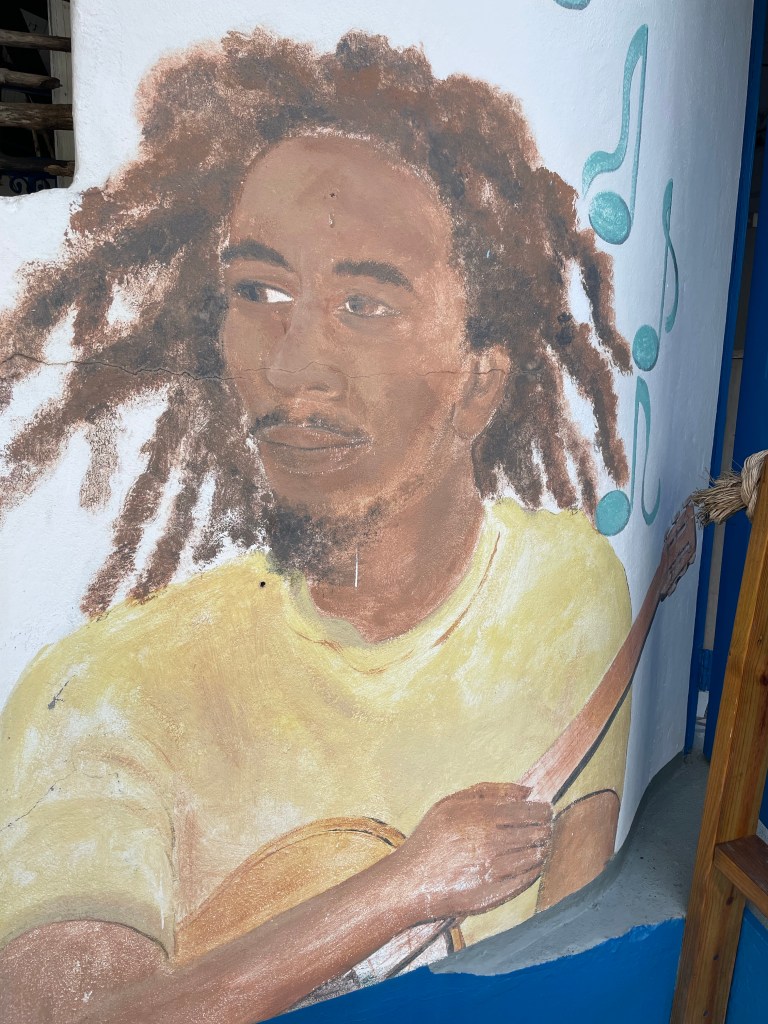
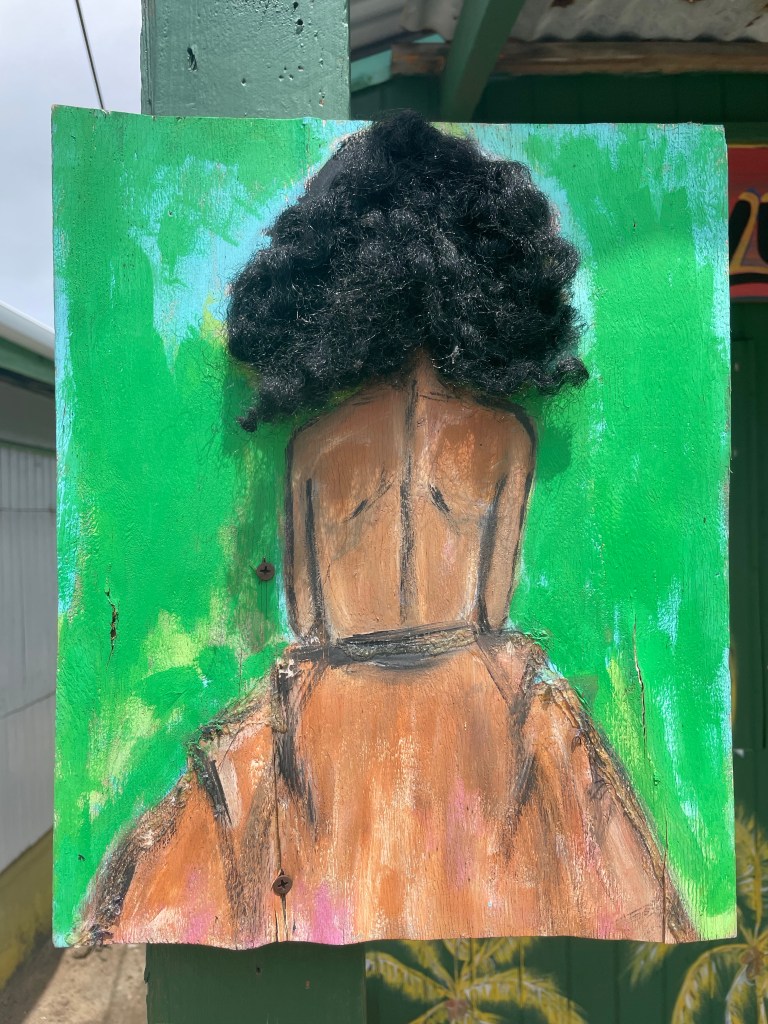
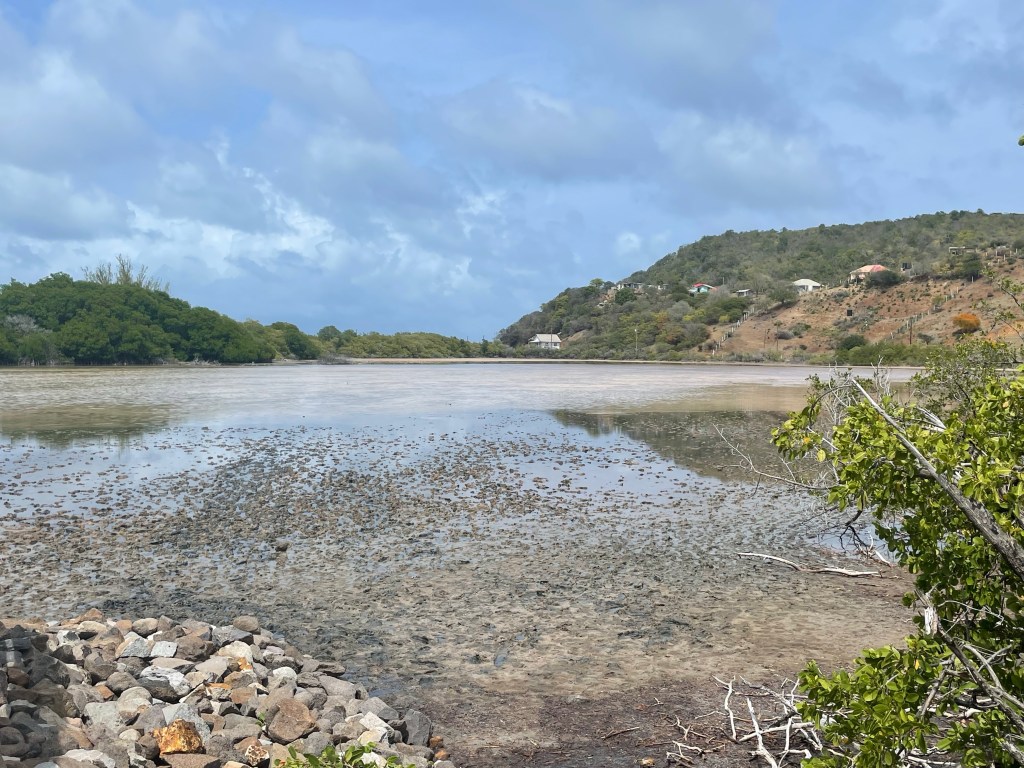
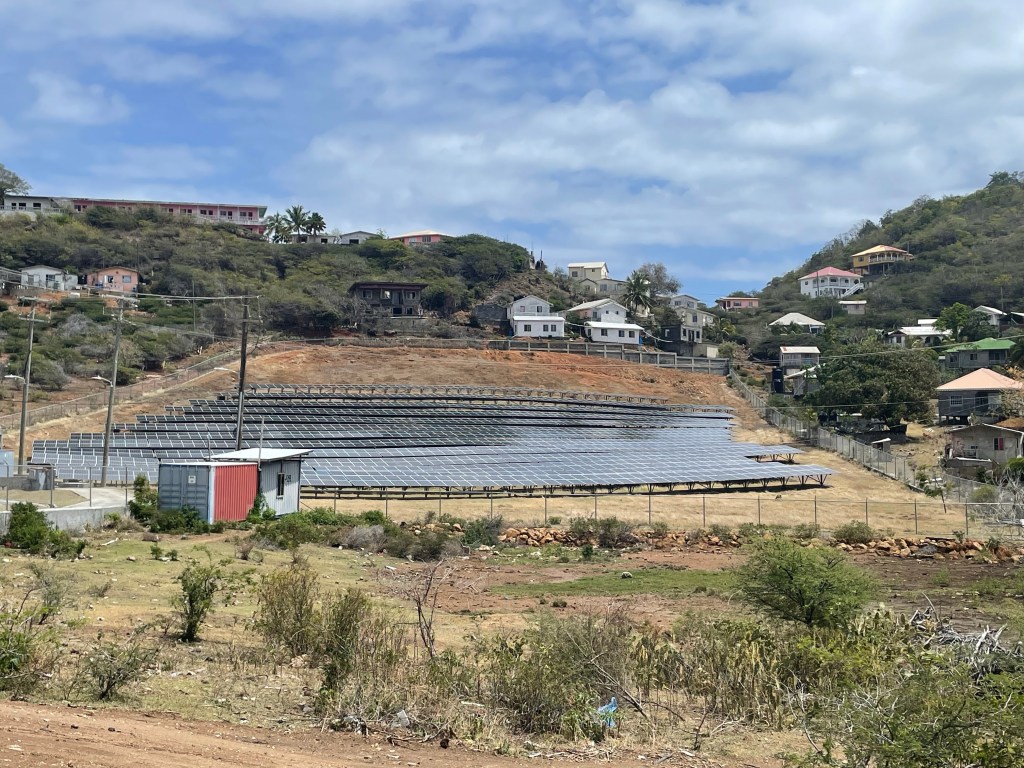
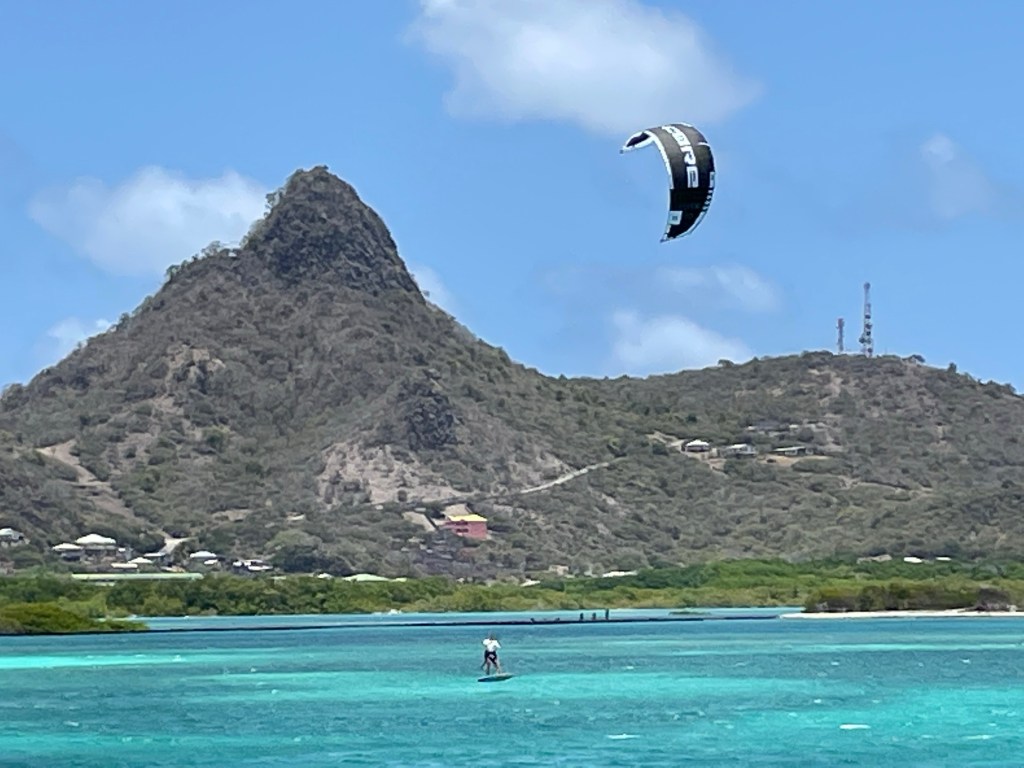
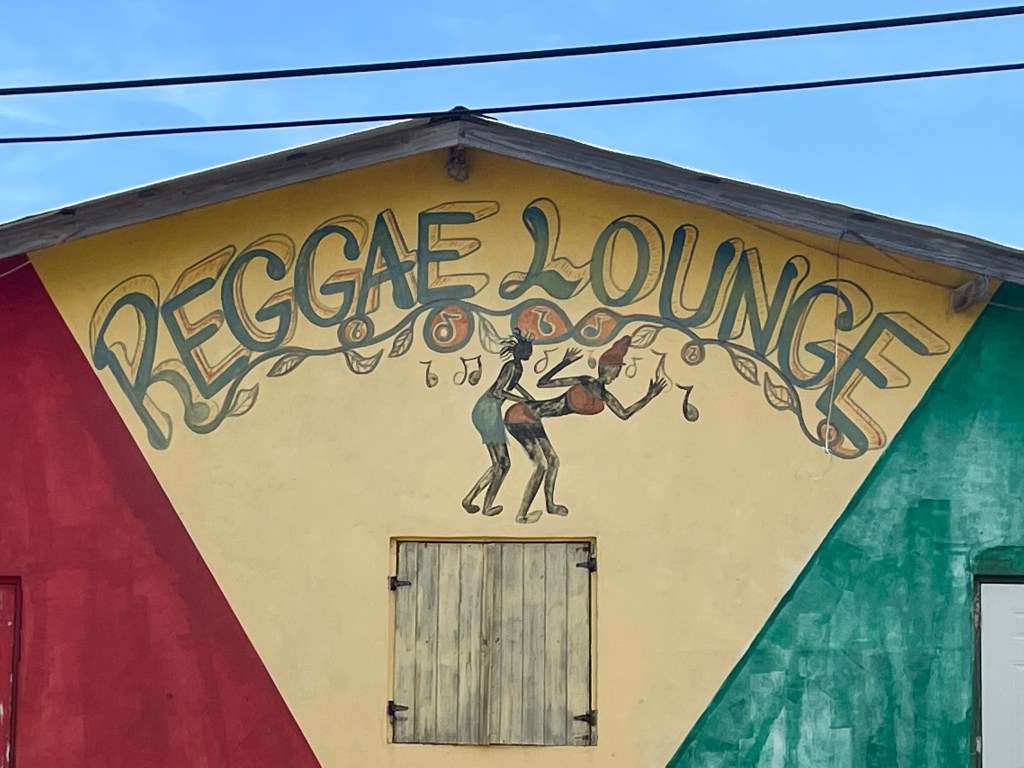
Still discovering local fruits we’ve never before seenHonorary Slow Food members – eating local. Downtown grocery store Always enjoy the artworkGood Vibes One Love!White Gold! Salt pondsSolar farm funded and installed by the United Arab Emirates sovereign wealth fund and related entities Street scene walking across UnionA sure sign the summit has been reached. Destination reached – a swim and then lunch on the beachLunch on the beachIt must be windy all the time if the kite surfing schools are all based here. Look closely to see the foiling kite surfer. Amidst the hardship, struggle, and challenges of upward mobility pervasive throughout the Caribbean, the worlds largest ketch (285 feet, 12 crew, $100 million to build) named Aquijo enters the harbor and drops anchor well off the beach as their draft is 33 feet. Not everyone needs a crew of 12 and $100 mil to have fun.
Leaving the gravel parking lot at the head of the dinghy dock, Sam turned his taxi away from Kingstown and headed up into the lush green hills. Meeting oncoming traffic became a pattern of a gentle swerve toward the edge of the road, a friendly tap on the horn, and for us in the backseat, a quick check to confirm the driver’s outside mirror was still attached to the Toyota minivan.
Quickly the road narrowed, the homes became more basic, the air cooled, and the vegetation became a deep verdant green. After climbing for 20 minutes, we caught our first glimpse of the Mesopotamia Valley, the bread basket of Saint Vincent.
Mesopotamia Valley
Steep hillsides were planted with a variety of root vegetables, many of which were exported to their primary market France. Mechanical farm equipment was nowhere to be seen – this agriculture went from seed to harvest with a long hoe and strong back.
We stopped briefly for road construction; 15 men working hard moving rocks by hand and building a cinder block water catchment gutter. They were aided by a couple of guys driving road leveling equipment.
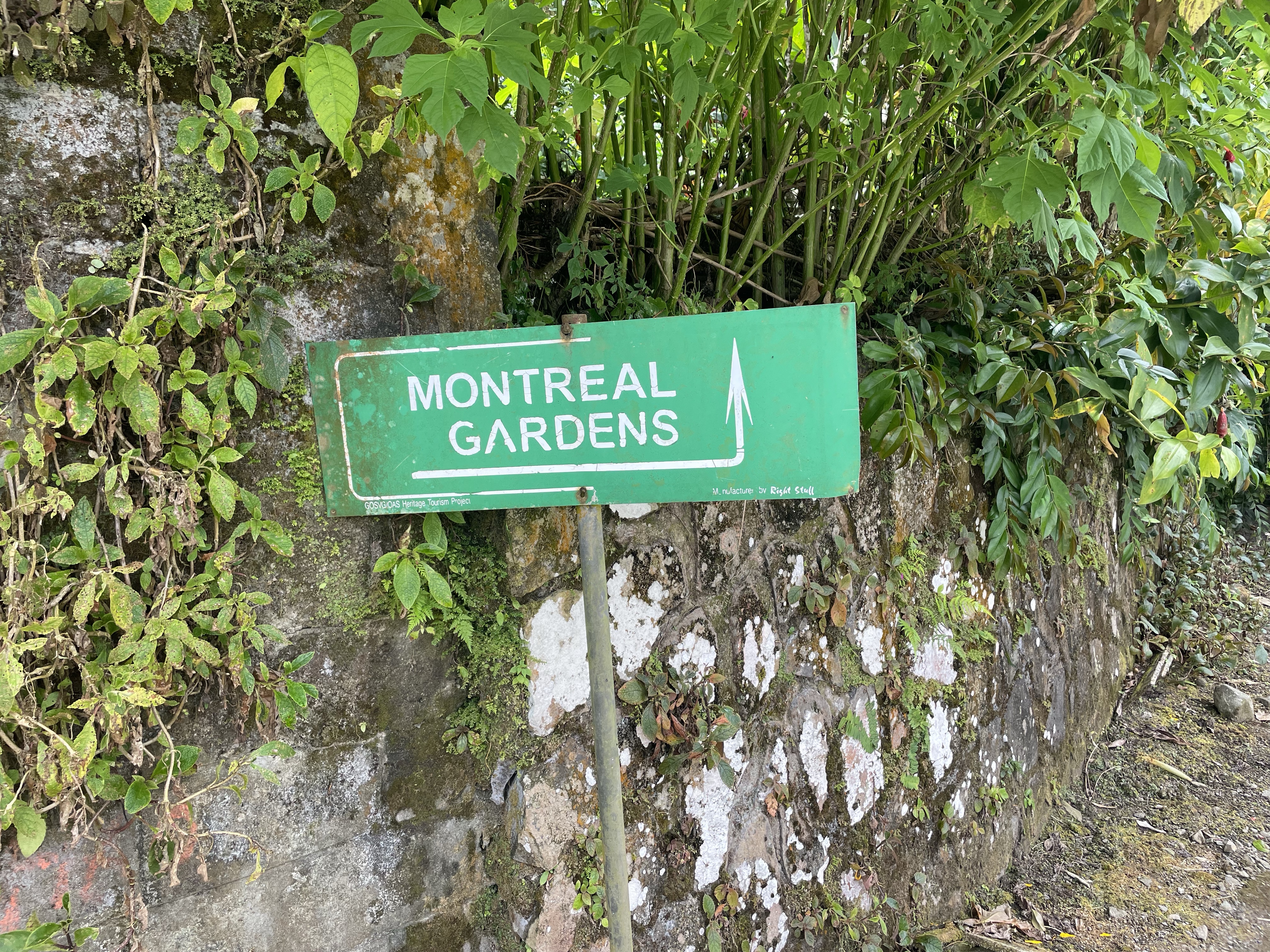
The homes and people thinned the farther we climbed the winding road, until we rounded a corner and saw the sign for Montreal Gardens.
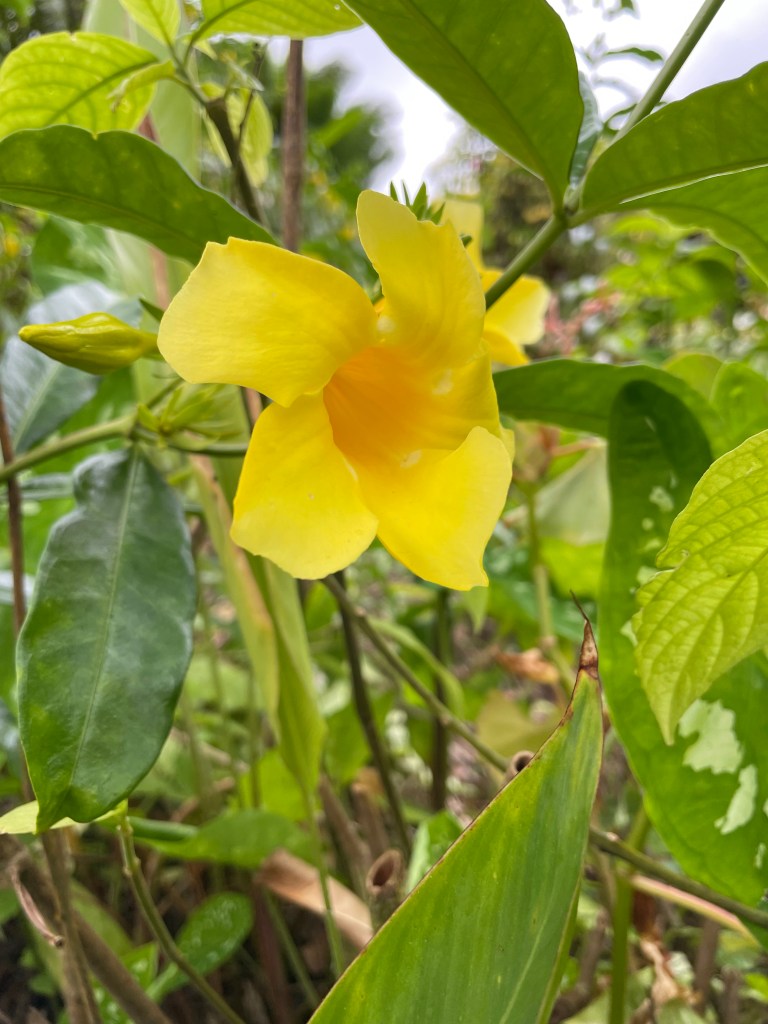
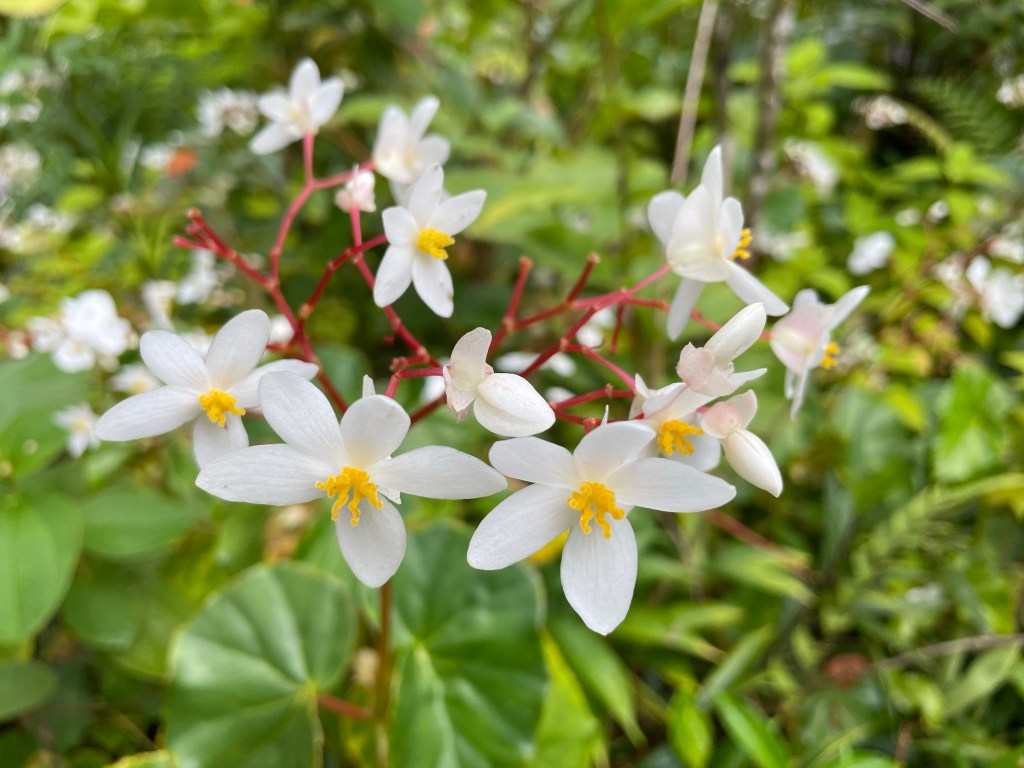
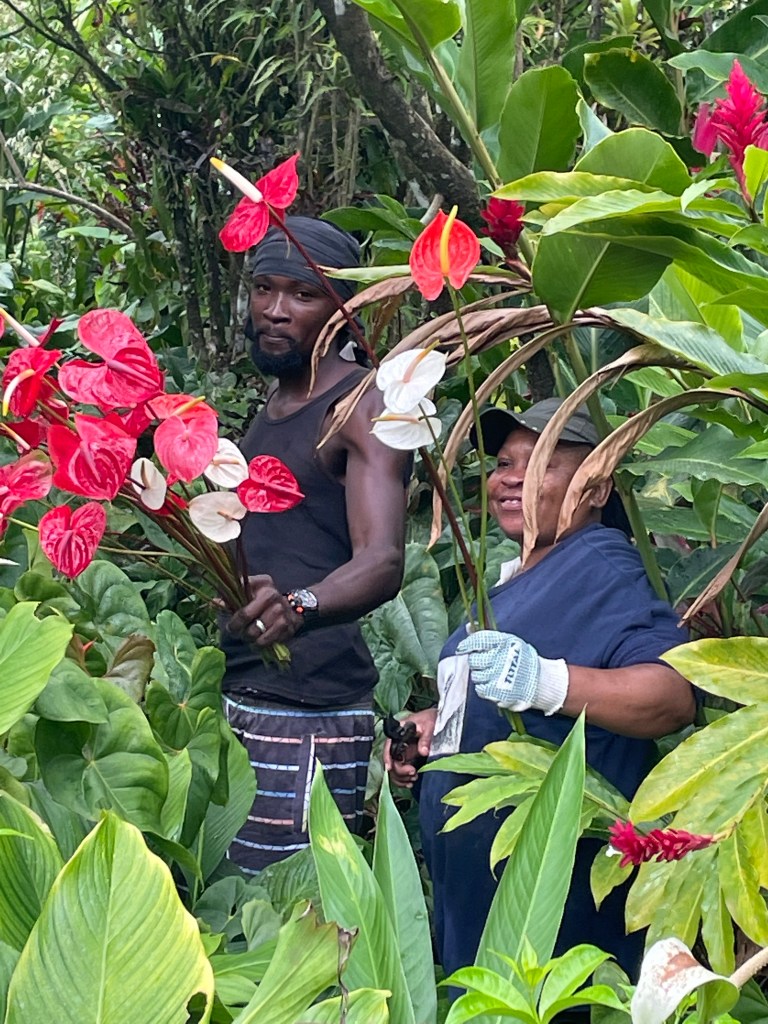
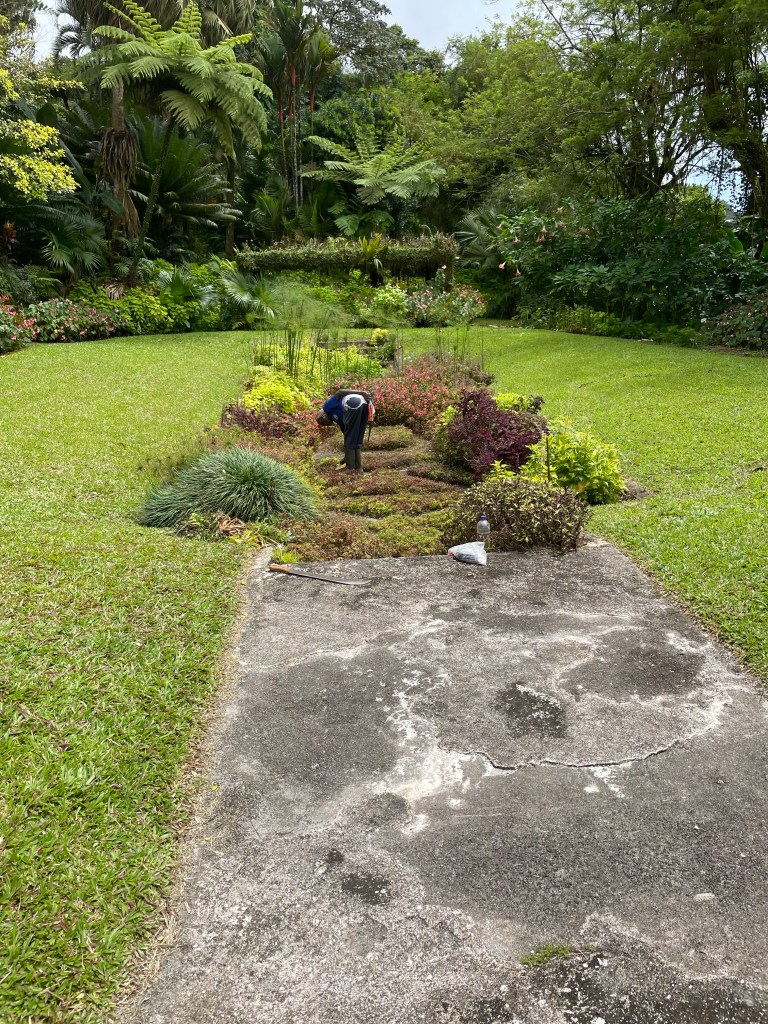
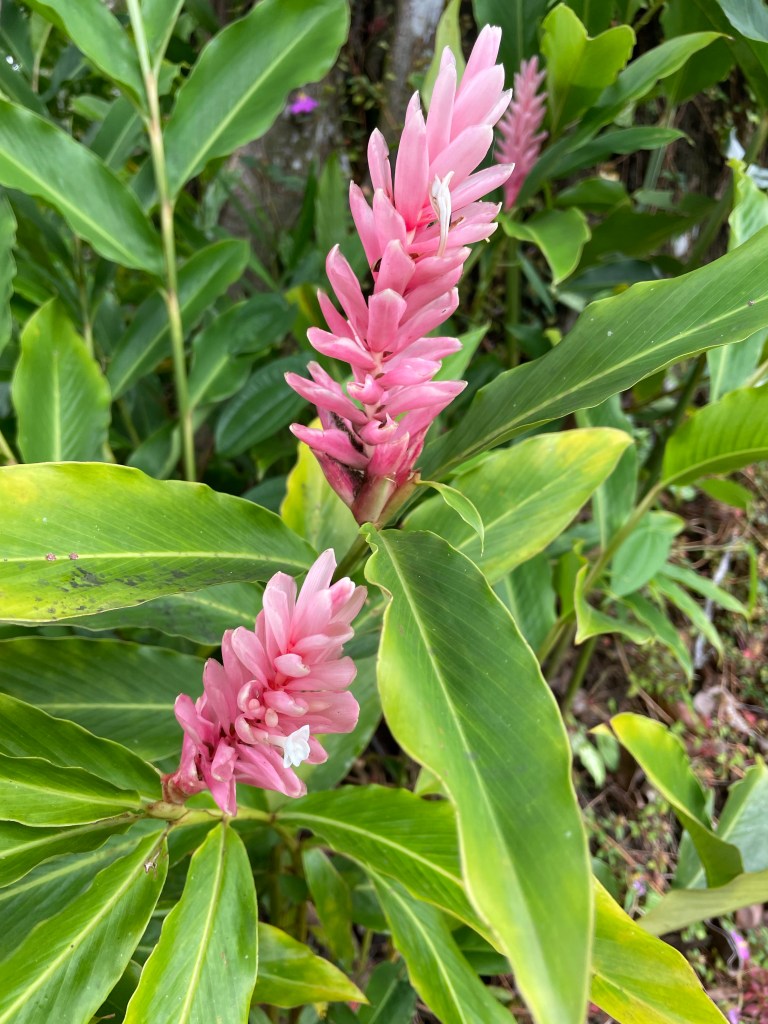
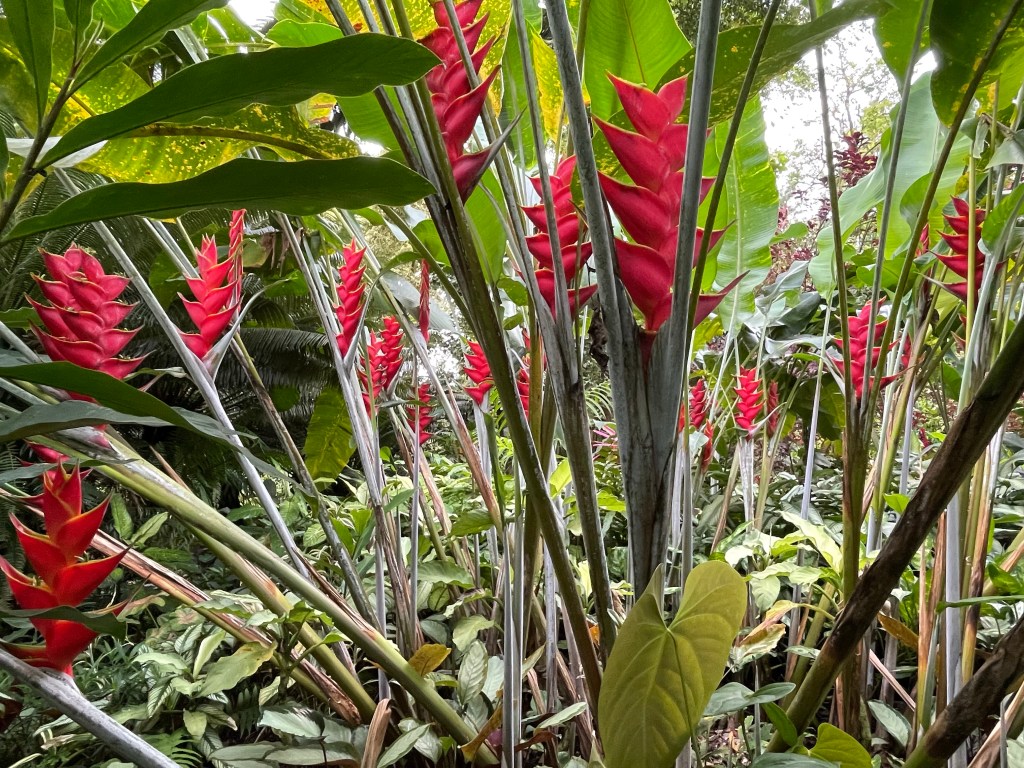
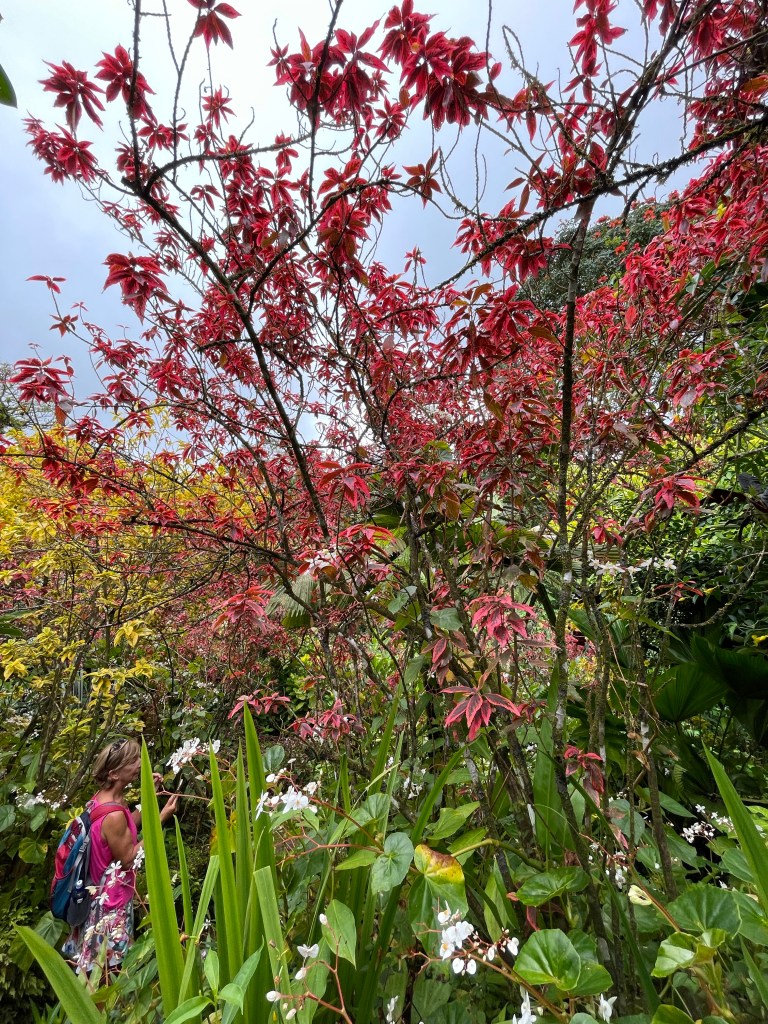
Started in the 1970s by a keen gardener, it came into the hands of its second and current owner in 1995: a highly accomplished horticulturist from France who has made it his life’s work to design, plant and nurture the abundant variety of all flora that grow in this tropical climate of Saint Vincent.
His full time staff of three were hard at work, yet more than happy to take time to share with us the history of the gardens and what was growing where.
Over the course of a couple of hours, we were the only guests and learned that some days there are no human visitors at all.





































































































































 Dragonfly Waypoints