Micro Stories

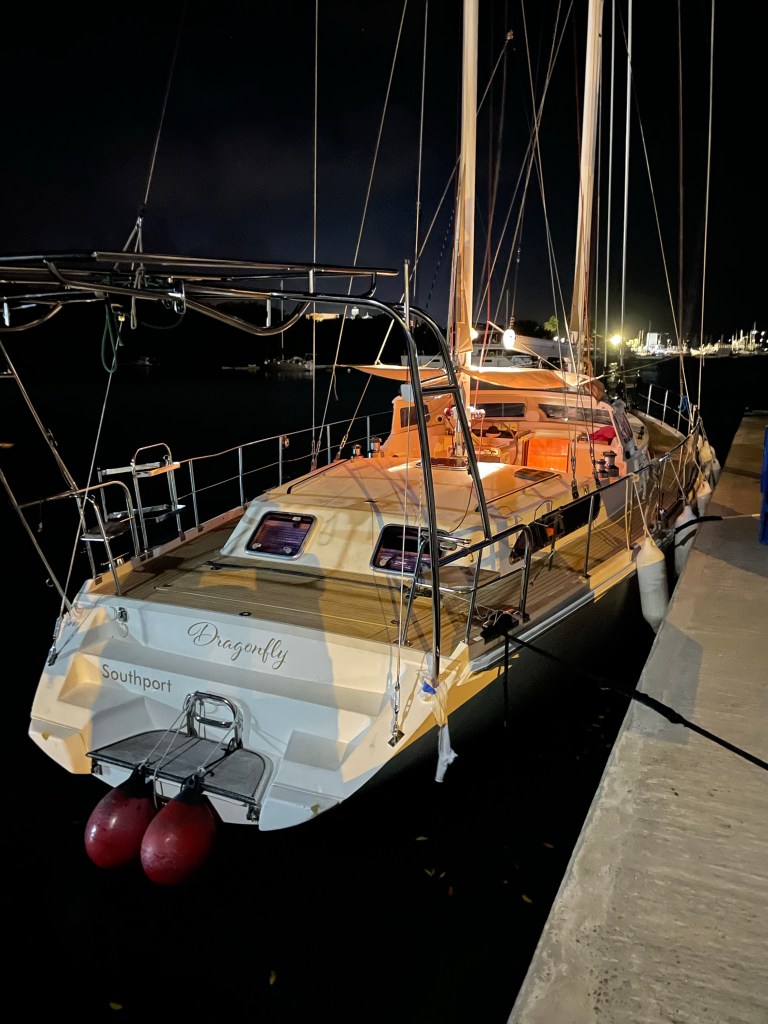
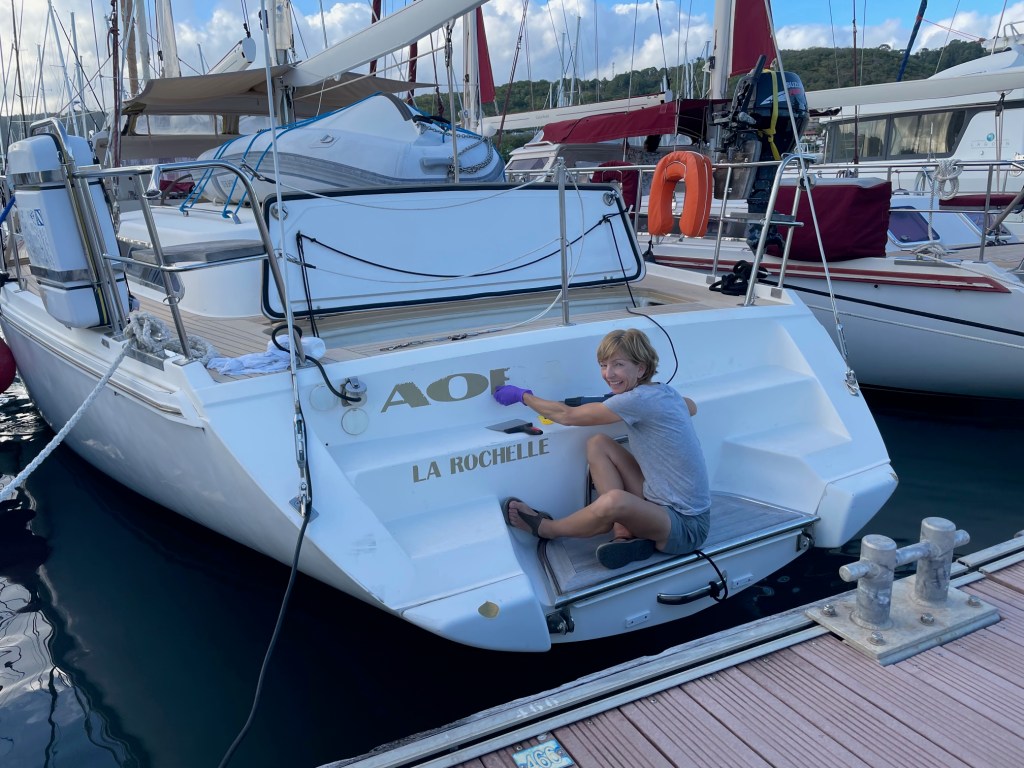
The Saloon A/C wasn’t working when we bought Dragonfly so the seller committed to fixing it.  His local refrigeration guy is named Quentin, and he is beyond impossible to get in contact with.  No email goes responded.  But he finally showed up one day after being relentlessly badgered by the broker. Quentin said he had recently bought a repo’d Open 40 racing sailboat on Guadeloupe and would be gone for about a week to get the boat and start the refitting process.

When I was cleaning out the aft lazarette I came across on old gennaker that had significant UV damage on the leech.  Apparently the prior owner had it on a furler and left it furled for an entire season with no UV protection.  Touching the sailcloth along the leech resulted in tears and more holes.  But the rest of the sail was in good shape, so I offered to give it to Quentin as maybe a cut down gennaker would fit his boat.  He was excited – surely he would be over soon to pick it up.  Well, at least he was consistent: on our fifth planned time for pick up he arrived with a smile.

************************

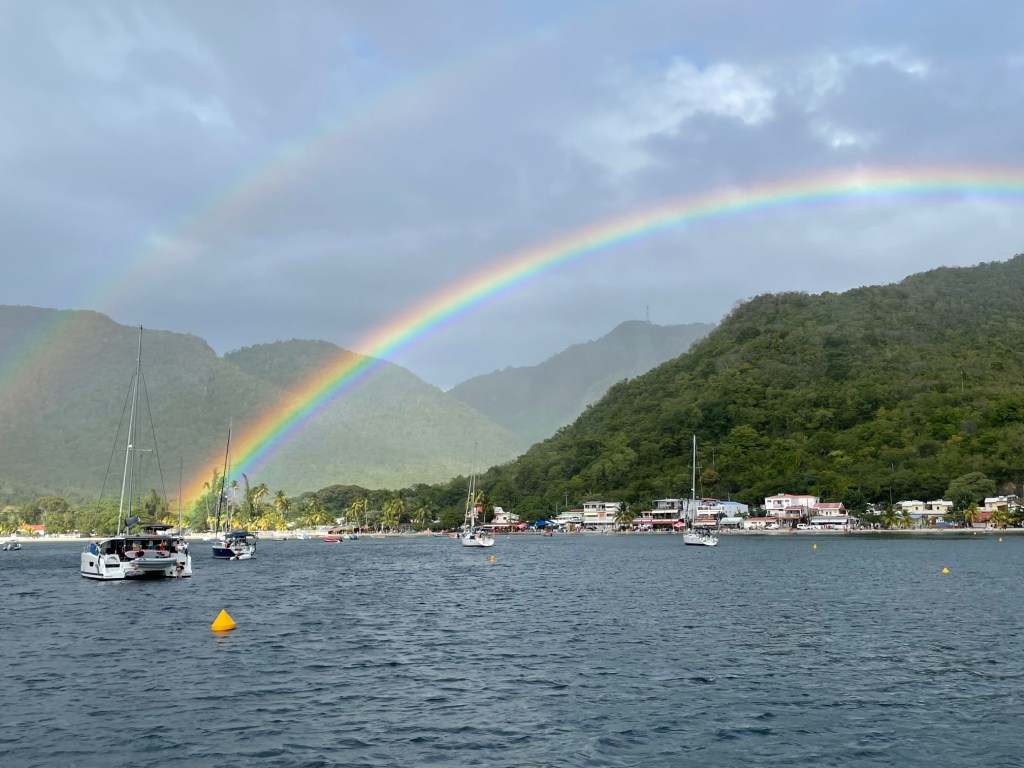
Everybody wants roads but nobody wants road construction. Everybody wants lush green hillsides but nobody wants rain. Well, a rainforest island like Martinique sees rain nearly every day and night. Usually it’s a light to medium rainfall that goes on for about 5-10 minutes then blows through; 15 minutes later it’s dry and sunny. But every now and then the skies literally open – the old Texas saying of it’s raining like a cow peeing on a flat rock comes to mind. Well one night after dinner it was a deluge. After running around and closing all of the hatches I managed to get this picture from the companionway hatch.

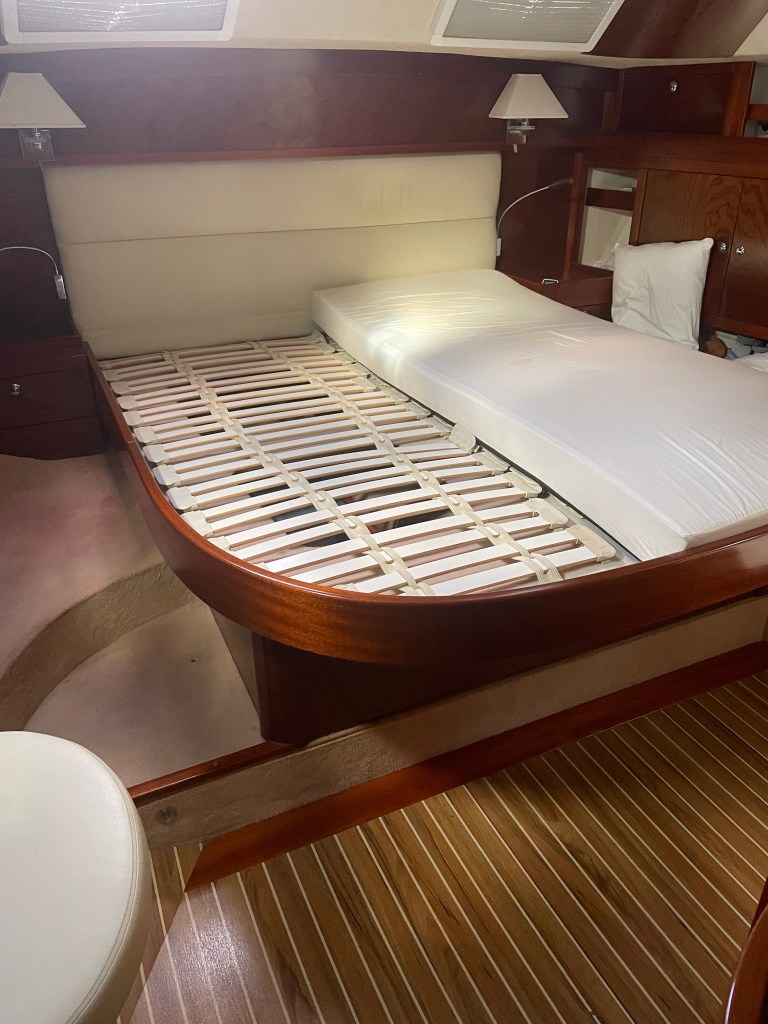
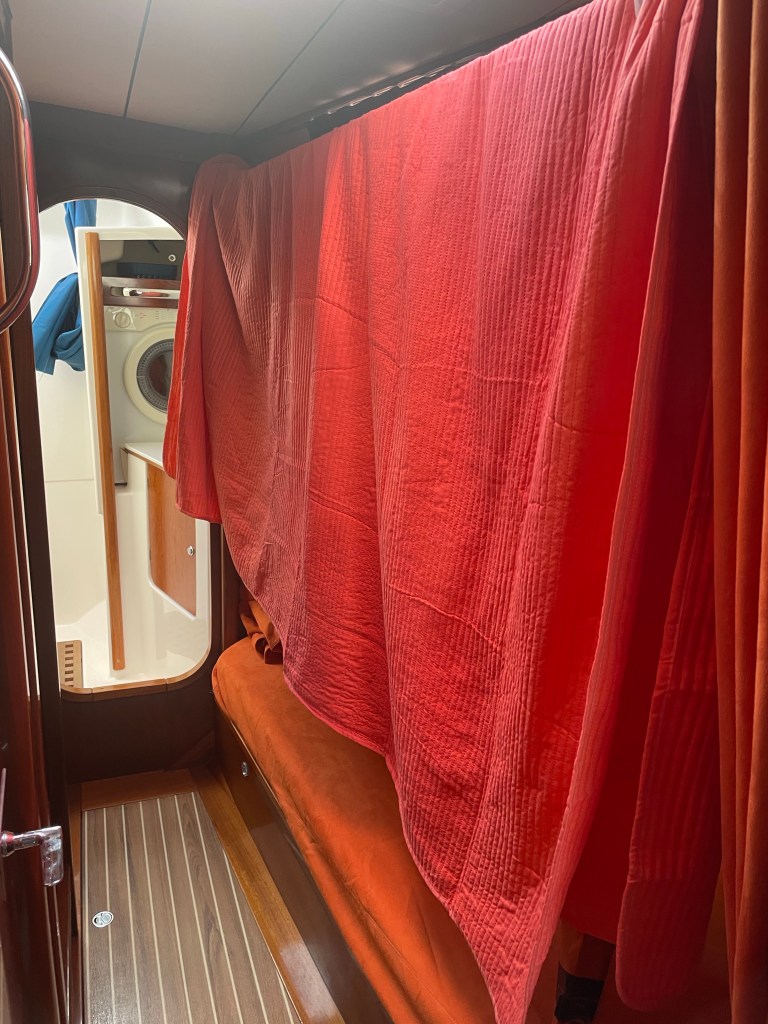
Later that night it was time for bed.  Ought Oh!  I missed a hatch!!  The one directly above my pillow!!!  Guess I won’t be sleeping here tonight.

An unplanned project was added to the list the next morning.  
**************************

An experienced sailor friend once said that no matter how big your boat is, when the weather offshore is lousy you always wished you had a bigger boat. So just when I start wondering if 54 feet is big enough, a bunch of 32 -36 Junneau Sun Fast sailboats start showing up in our marina. Turns out it’s the Transquadra Regatta finishing in Martinique. I learn from a friend that they race every four years, and go from France to the Canary Islands, leave their boats there for a couple of months, then return in early February for the two week race to Martinique. There are classes for single-handers and double-handers. My friend does qualify her explanation by saying participation is limited as it’s for Old Sailors – you know, they have to be over 40.
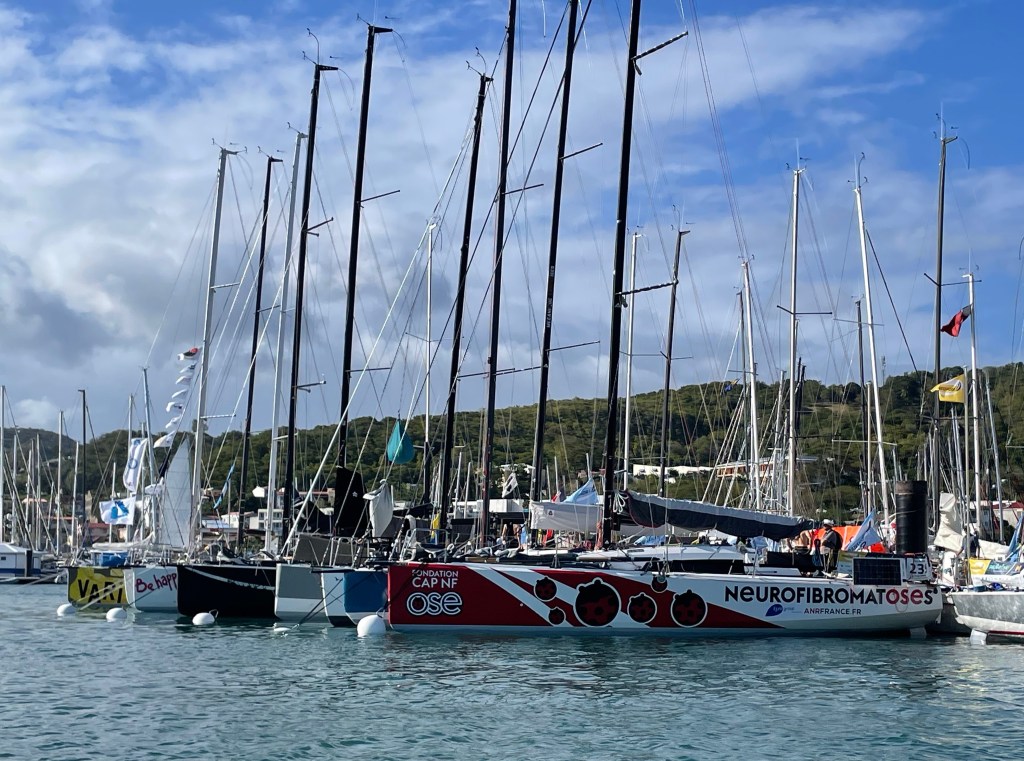
One of the singlehanders led the entire two week race but was passed by a doublehanded boat just miles from the finish line.  Two Italians were approaching the cut south of Martinique, almost there, when they saw a squall behind them.  They figured if they kept the spinnaker up they could make it around the point and protection from the big breeze.  The squall hit before they cleared the point, knocking them down and laying them on their side for seven long minutes.  The finish line is just off the Club Med point, so there is some navigating to do for the last couple of miles due to shallow water and a few shoals.  After racing 24/7 for two weeks, one boat arrived in the middle of the night and continued up the channel only to get stuck on a reef.  Requiring assistance from a motorboat to get off the reef, sadly they were scored as Disqualified.

***************************

Just when you think these boats are small to race across the Pond, you come across a 5.8 meter (19 feet!!!) class single-handed race boat anchored in the harbor. There is a reason the French and Kiwis are the best offshore, blue water sailors and racers – a little bit loco in la cabeza.

*************************

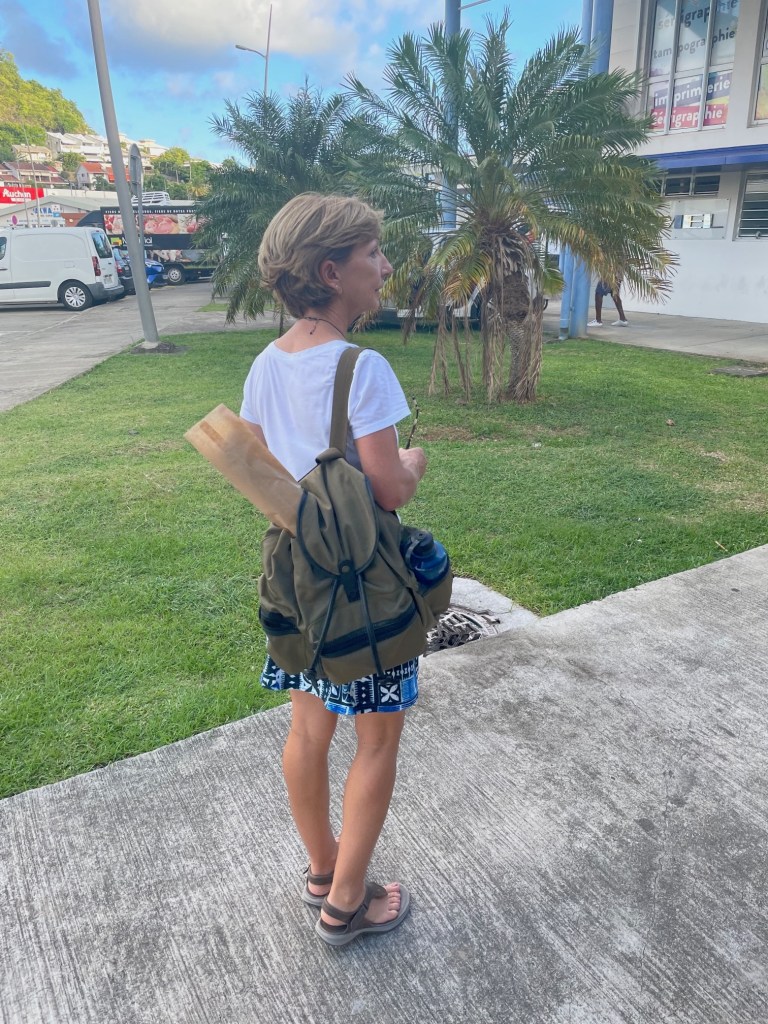
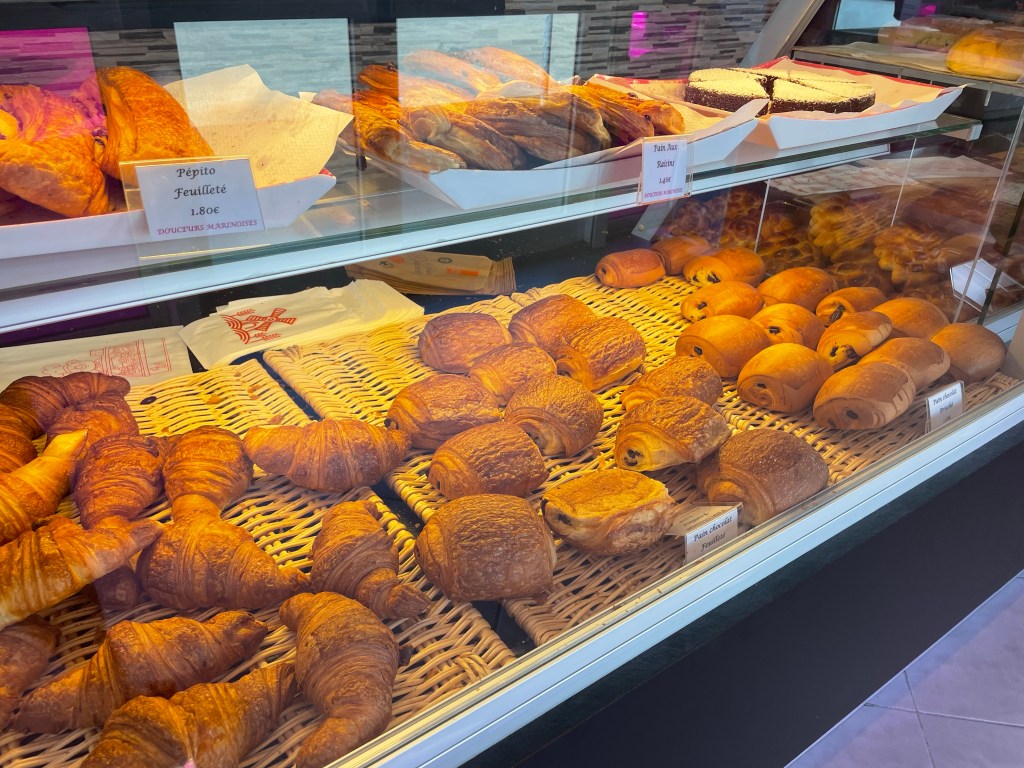
Baked fresh without preservatives and stabilizers means the baguettes, croissants and pain au chocolates are really, really good. But it does require a daily stroll to the patisserie.

************************

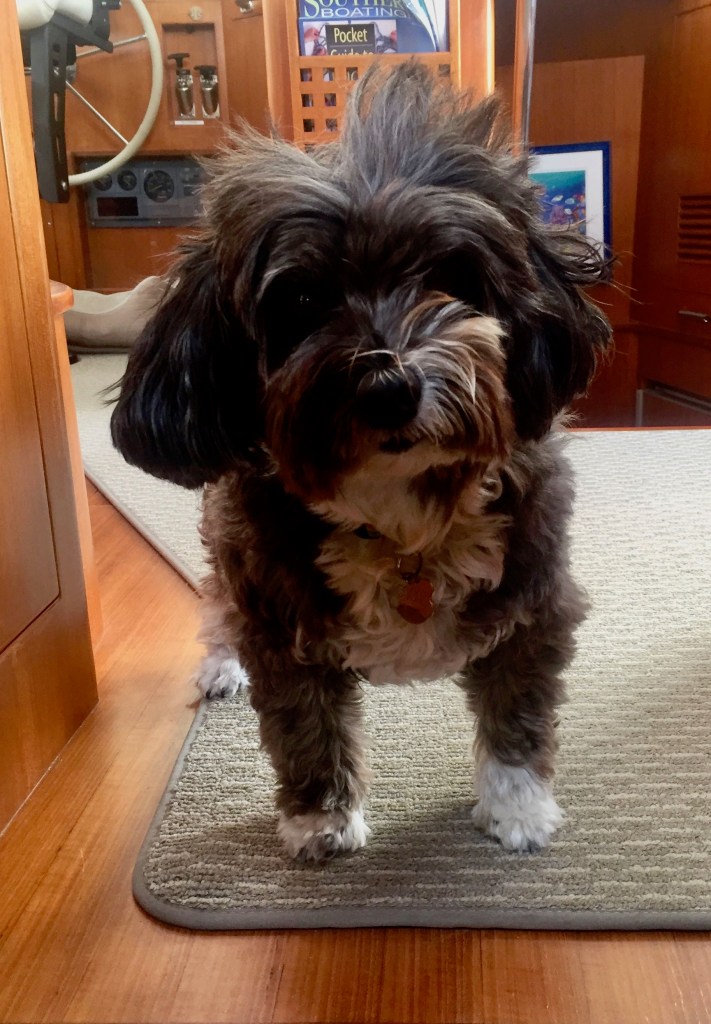
Balsa is a very sweet dog. Huge! But very sweet. Hangs out on the aft deck of Django, the Amel 53 tied up next to us. He loves people but his relationship with the cat on the dock can best be described as peaceful but filled with much tension.

When I returned from the Weekend in the Boatyard, Balsa was not on deck.  Inquiring of his owner, it turns out the two of them had also been in the boatyard helping a friend paint his bateau.  They spilled a gallon of anti-fouling paint on the ground and kind of put off cleaning it up.  In the meantime, Balsa wandered over and lay down in it.  Yikes!  The copper and other biocides inflamed his skin under his arms and legs where there is not much hair, so he was still down below recuperating.

Update – two days later and he’s back on the aft deck keeping a watch out for the cat.

*************************

Leaving the Boatyard and entering the main channel we saw this large catamaran aground on a reef. Notice the difference in color and texture of the water directly in front the cat. Every capitaine knows this could be them so it’s a good reminder that just because you See water does not mean there Is water.

**************************

This is the family mini-van.
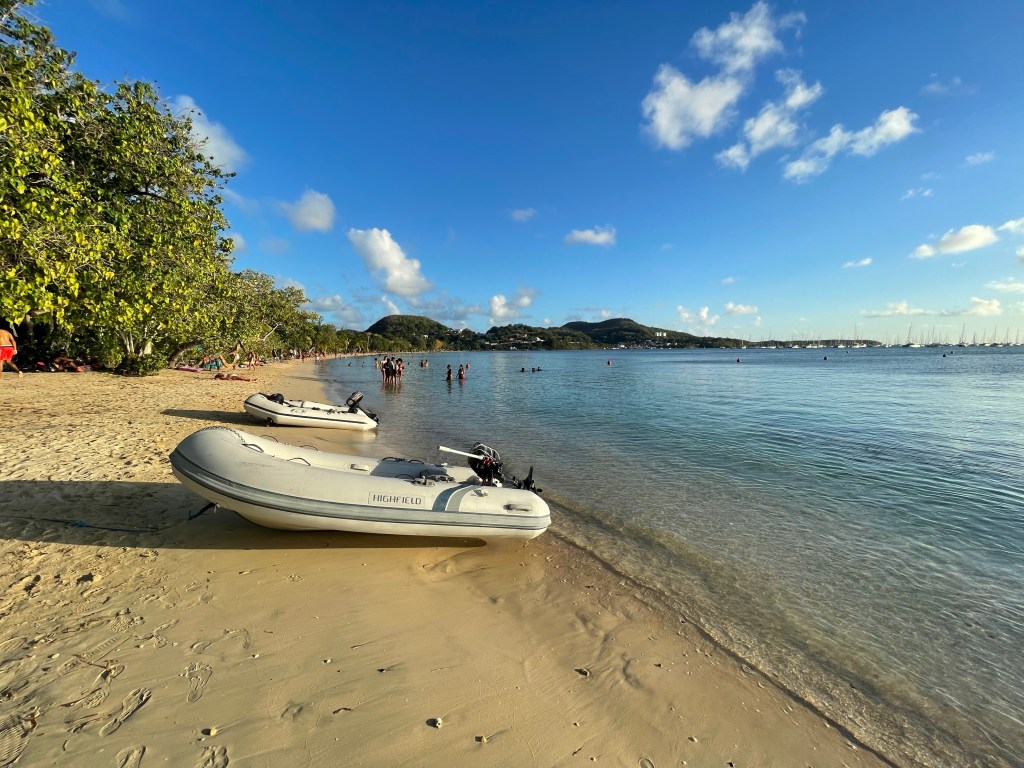
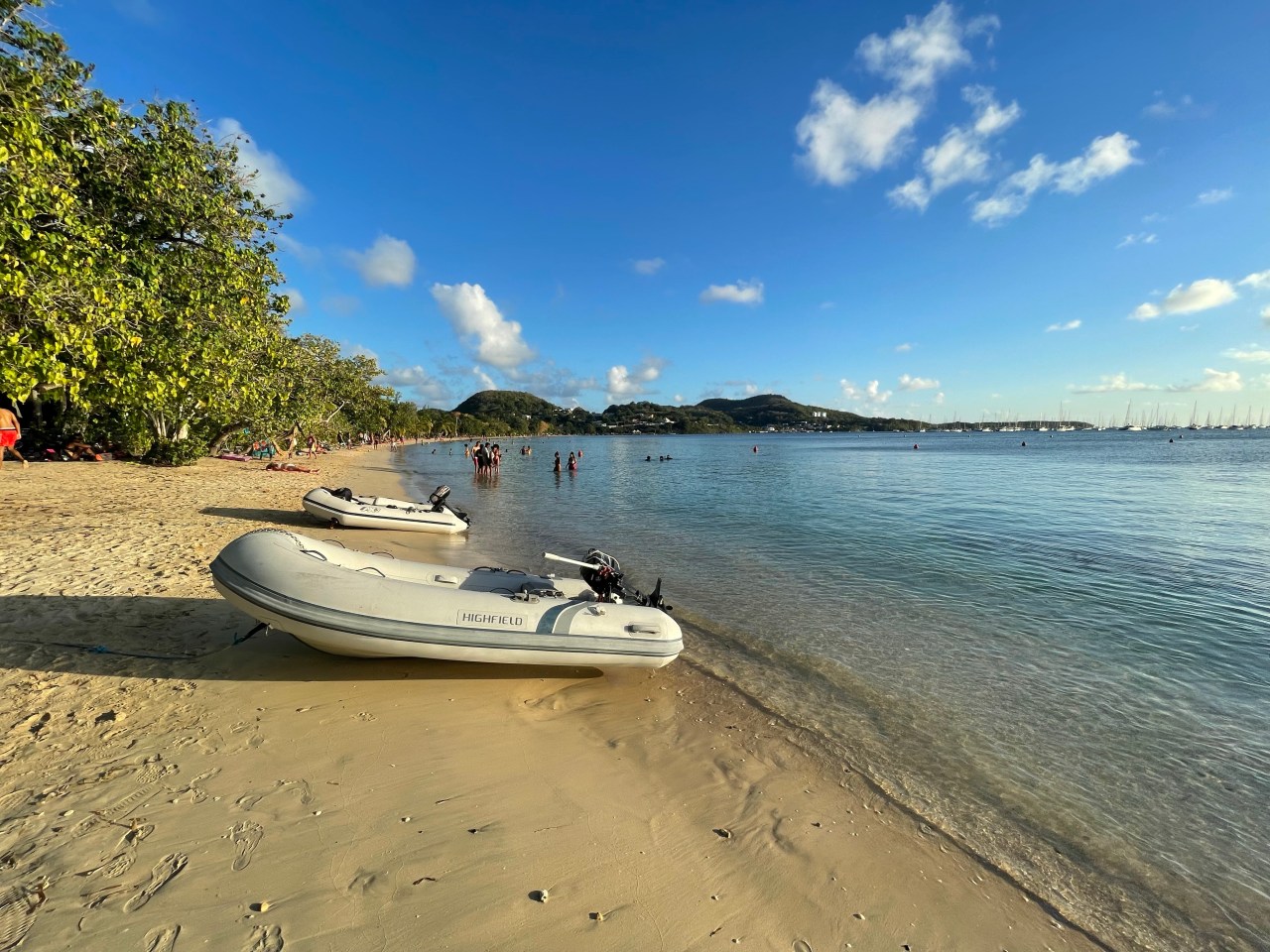
Just like the American suburbs, everyone has one. It’s used for everything – grocery shopping, exploring, beach trips. All of the cruising guides have the same advice: lift it or lock it or lose it. So every day when you go somewhere, rather than tying the boat off to the dock, we use chain and a padlock. And at night, we either lock it to the boat or lift it out of the water.

A Weekend in the Boatyard

Power is really important even on a sailboat. We have 12 very large 100 amp batteries that allow us to run the lights, fridge and freezer, all kinds of pumps and everything else for day to day life. The batteries need to be charged daily and this can be done several ways: plugged in to shore power at the dock, by the main engine alternator when motoring- hopefully not too often, or by the generator when we’re sailing or at anchor.

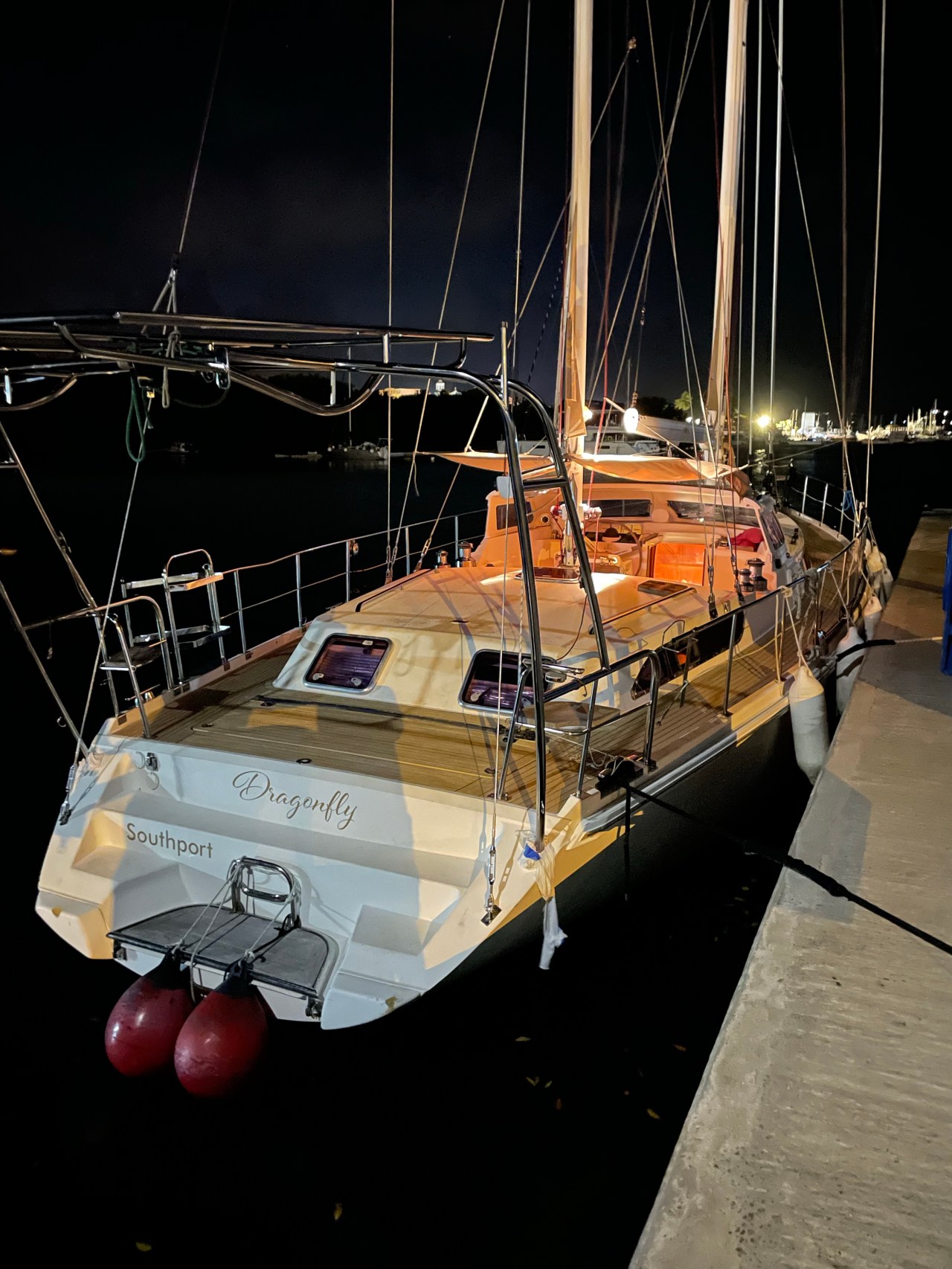
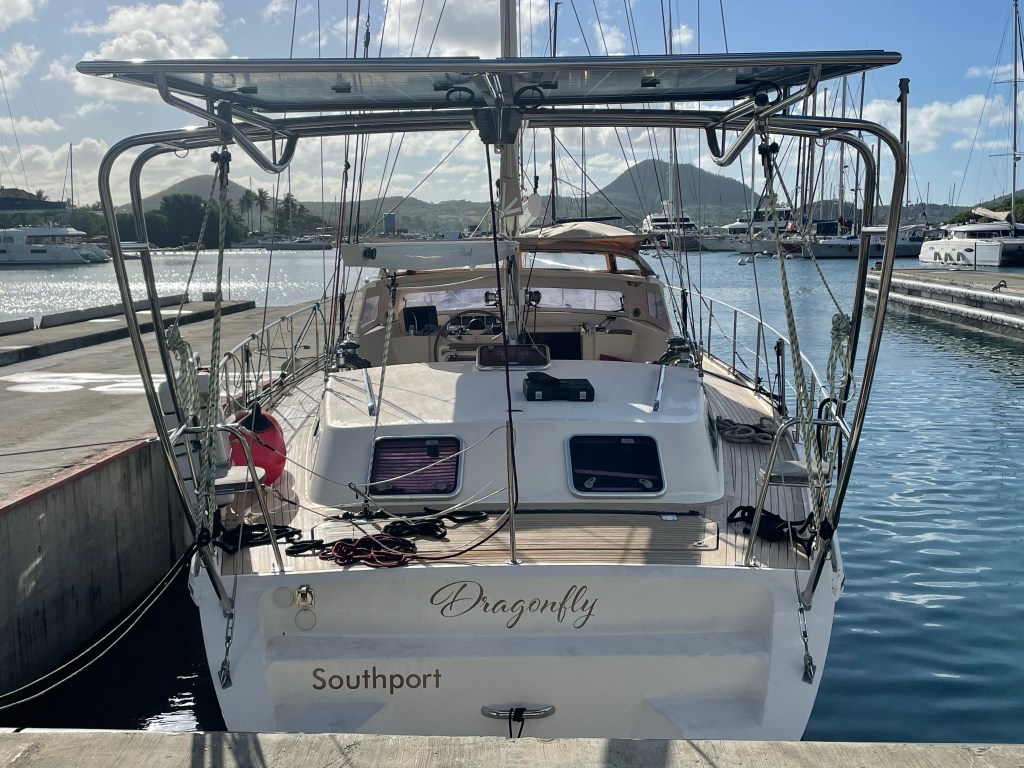
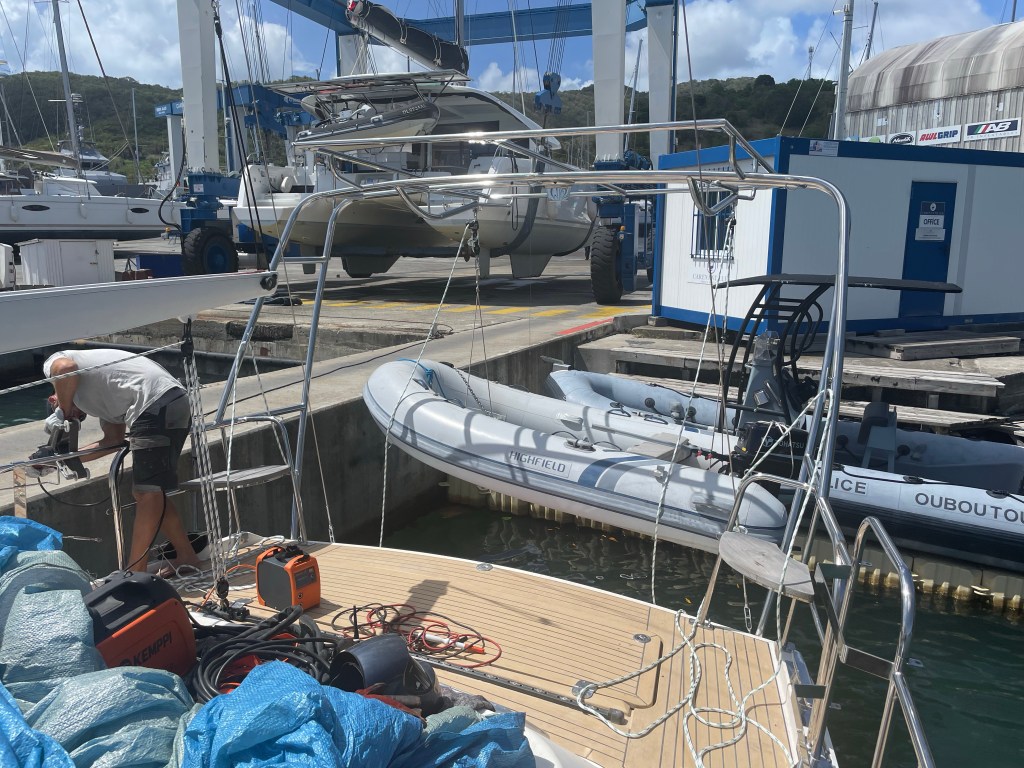
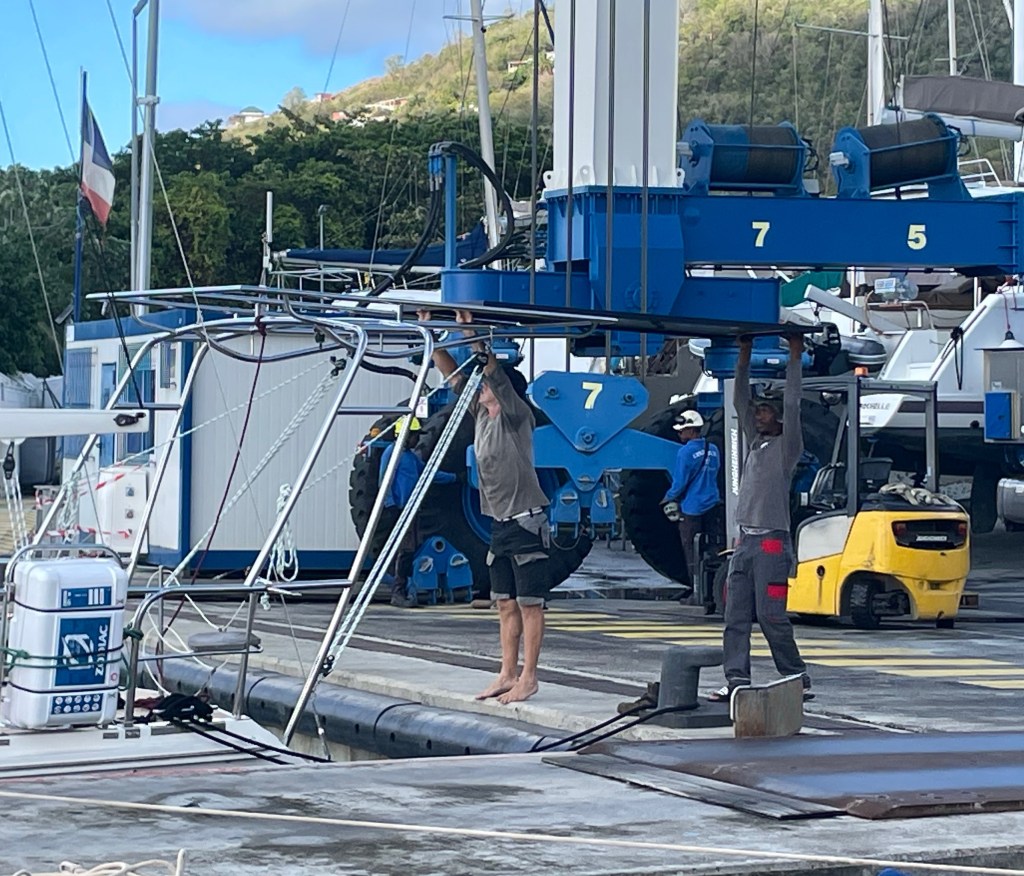
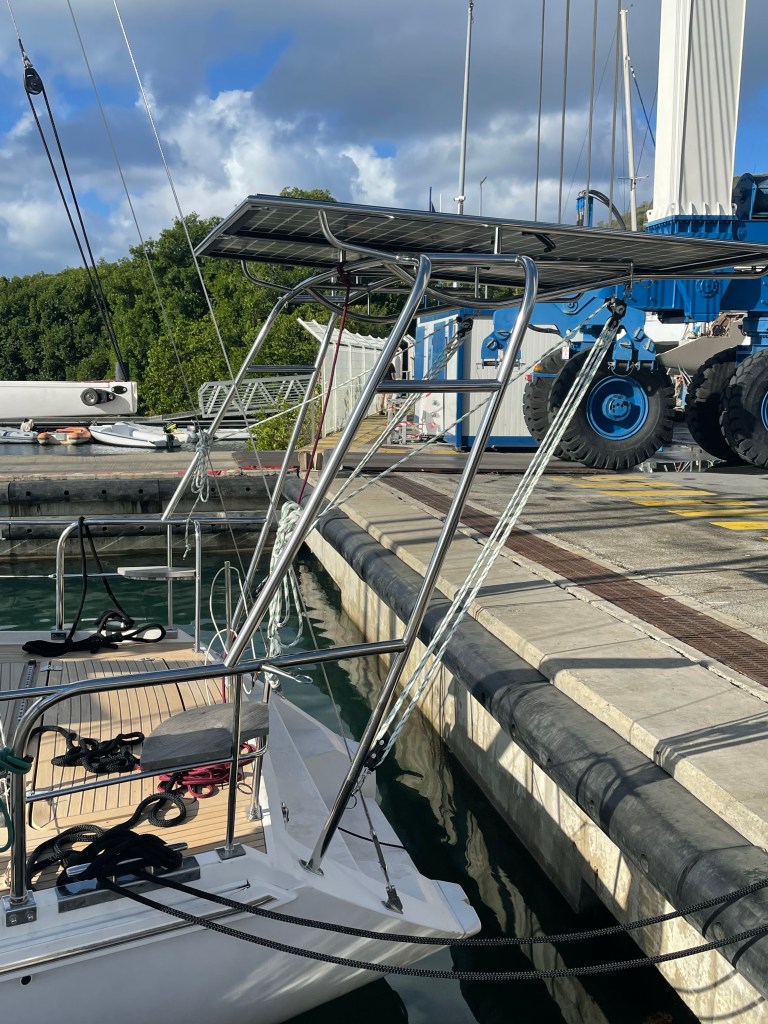
Another solution is to have a stainless steel arch constructed on the back of the boat to hold solar panels.

The added benefit is we can have davits added to the arch to hold the dinghy.

Previously we add to empty the dinghy, lift the outboard motor off, then use a halyard to raise the dinghy onto the aft deck. We’d then flip it upside down, more of a controlled roll and drop, and then lash it to the deck. This takes close to an hour.

Hauling the dinghy out of the water with the davits takes about 3 minutes!

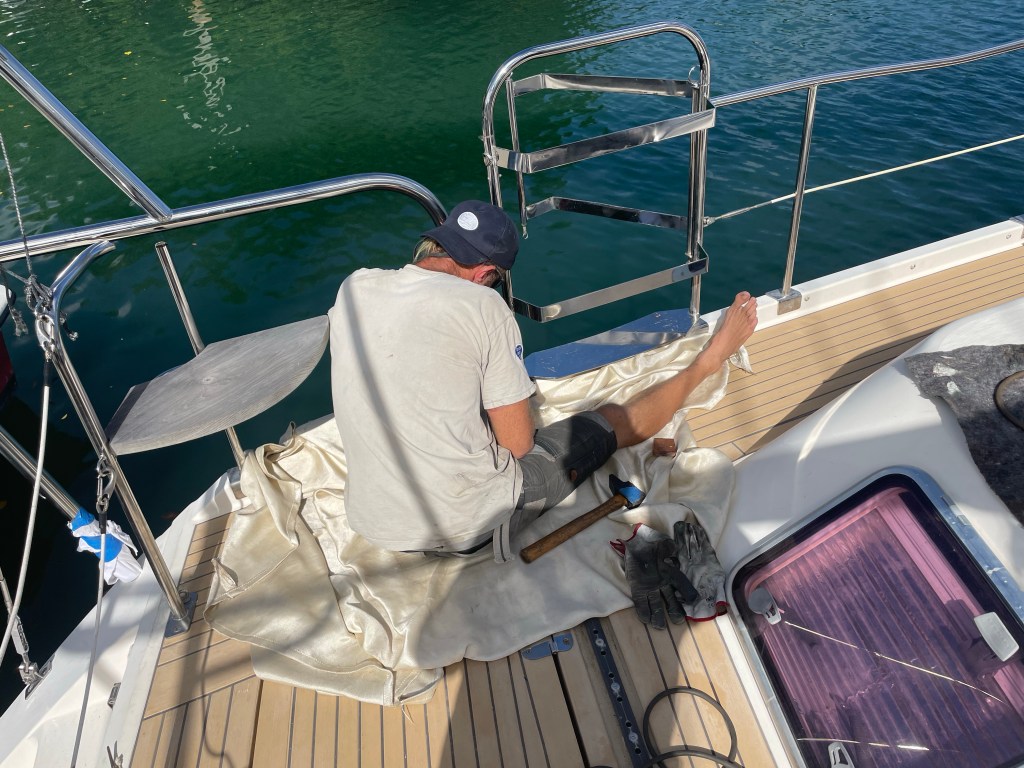
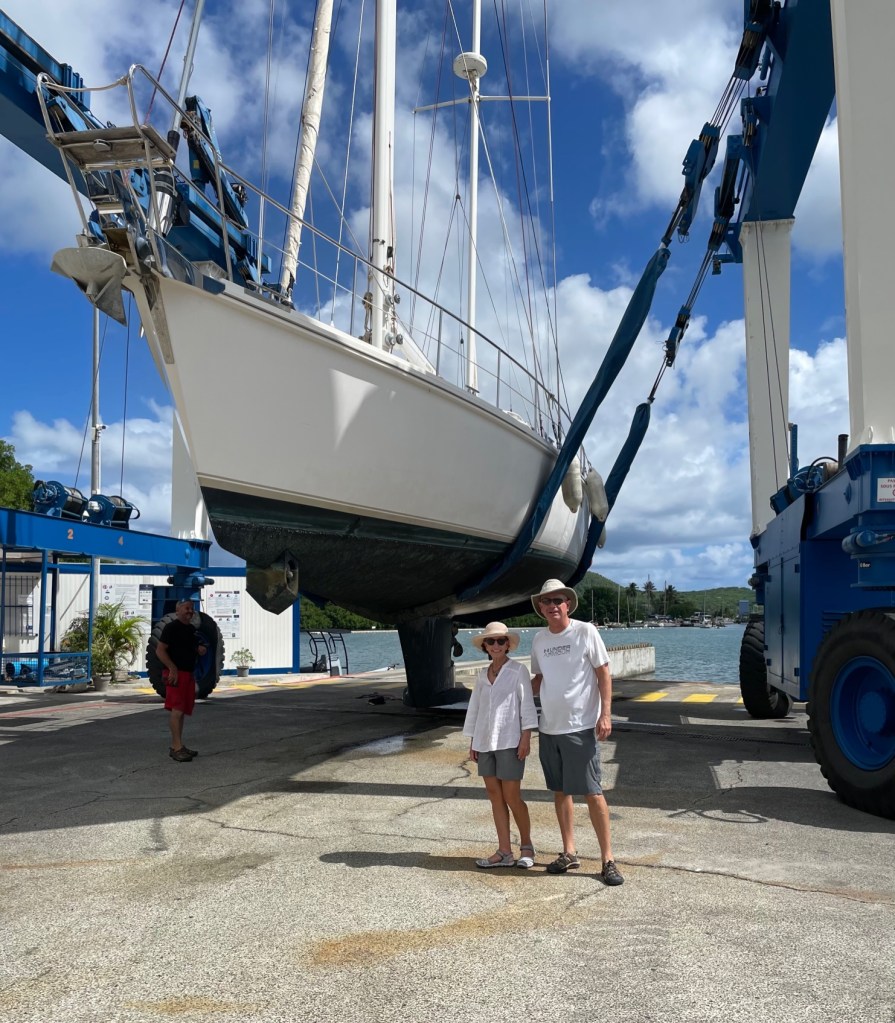
So off Dragonfly went to the boatyard for Caraibe Marine to do their magic.

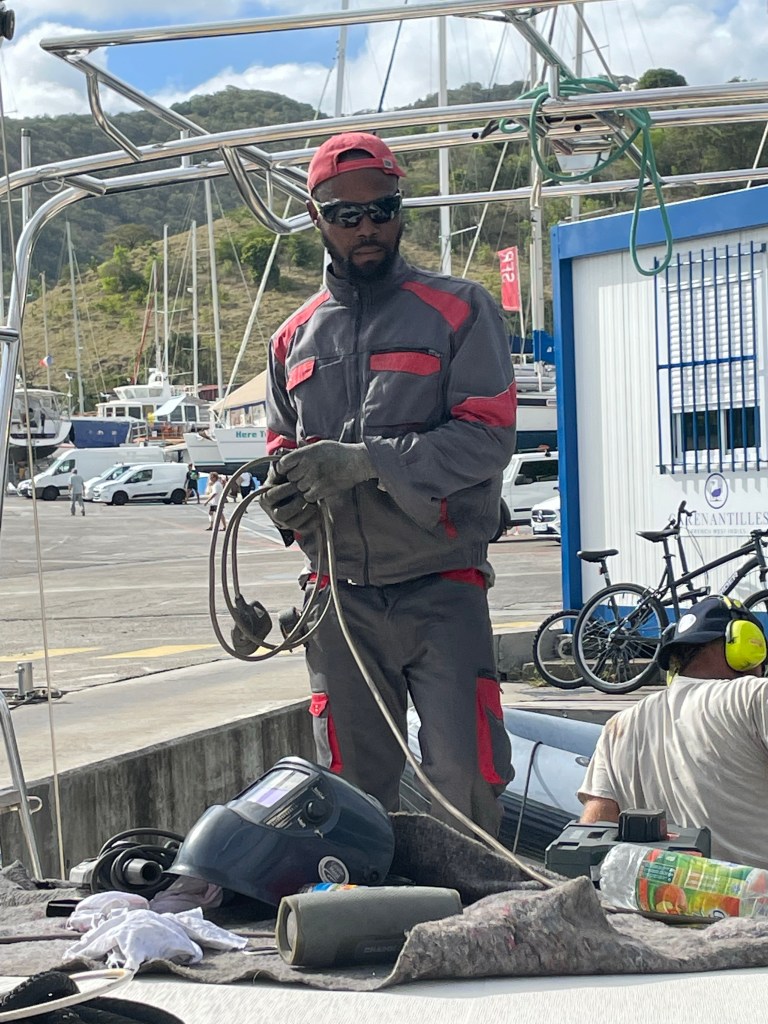
These guys were extremely hard working and did a great job. Thanks!

The work spanned a weekend and it’s always fun to wander through a boatyard to see what’s going on.

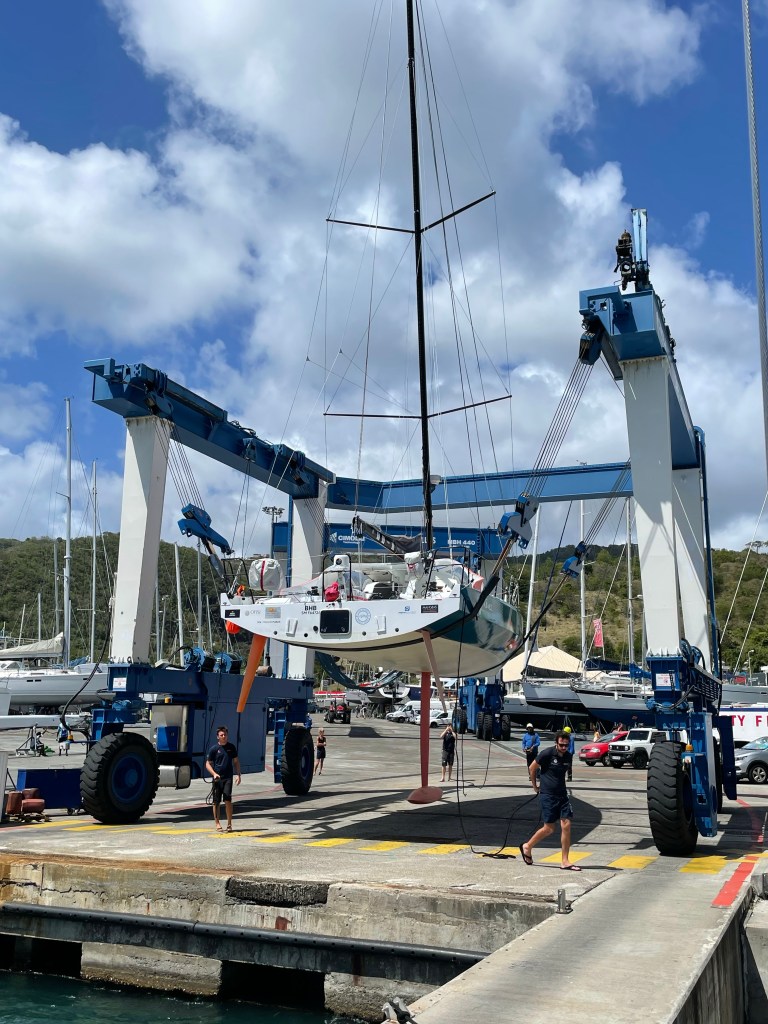
Some boats look fast even in the slings
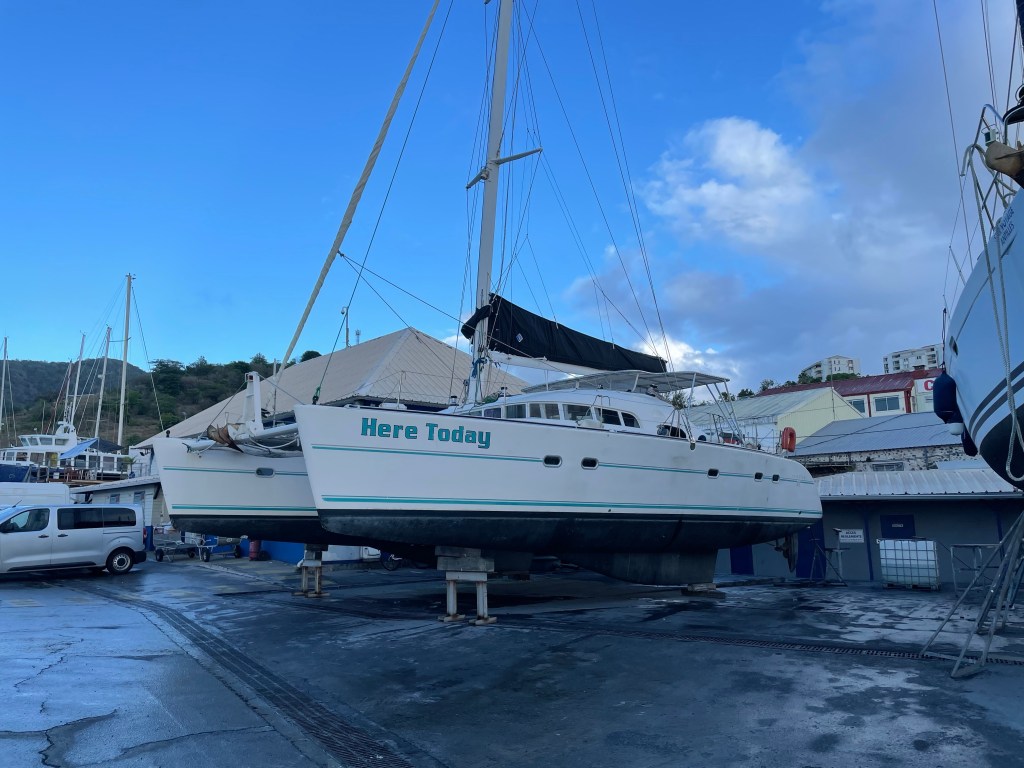
Gone Tomorrow
For those who believe there is karma in a boat name, this seems to be tempting fate
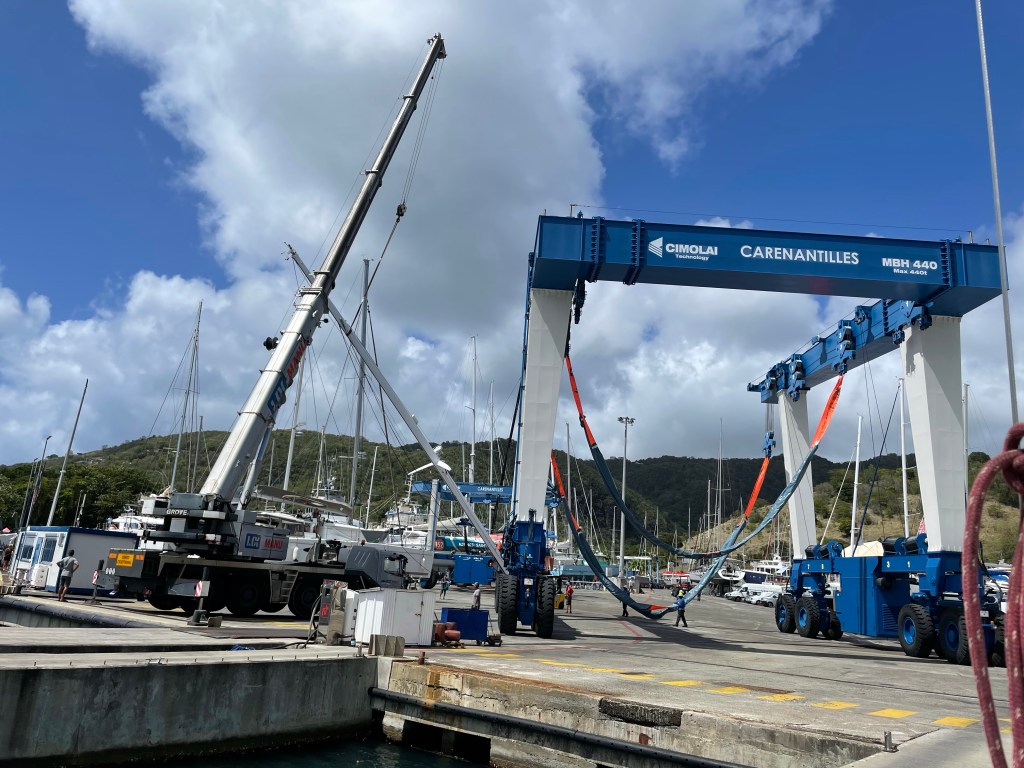
Construction crane required to pull the mast on a big cat
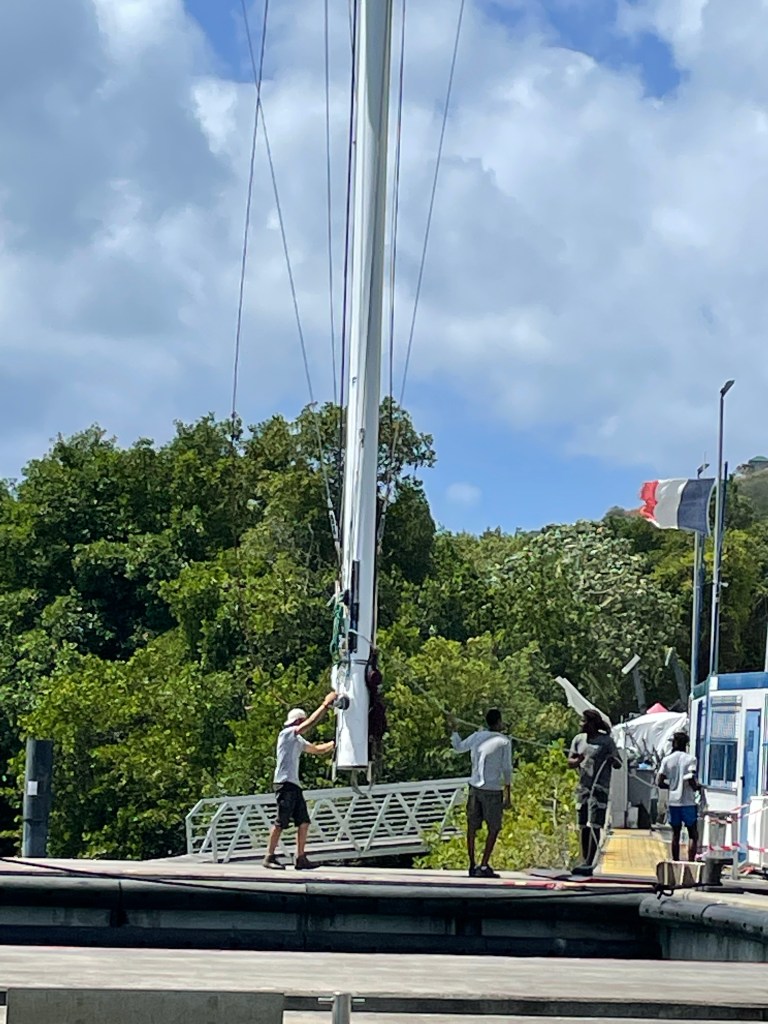
These are the guys who replaced my standing rigging – they’re big guys but how big is this mast!
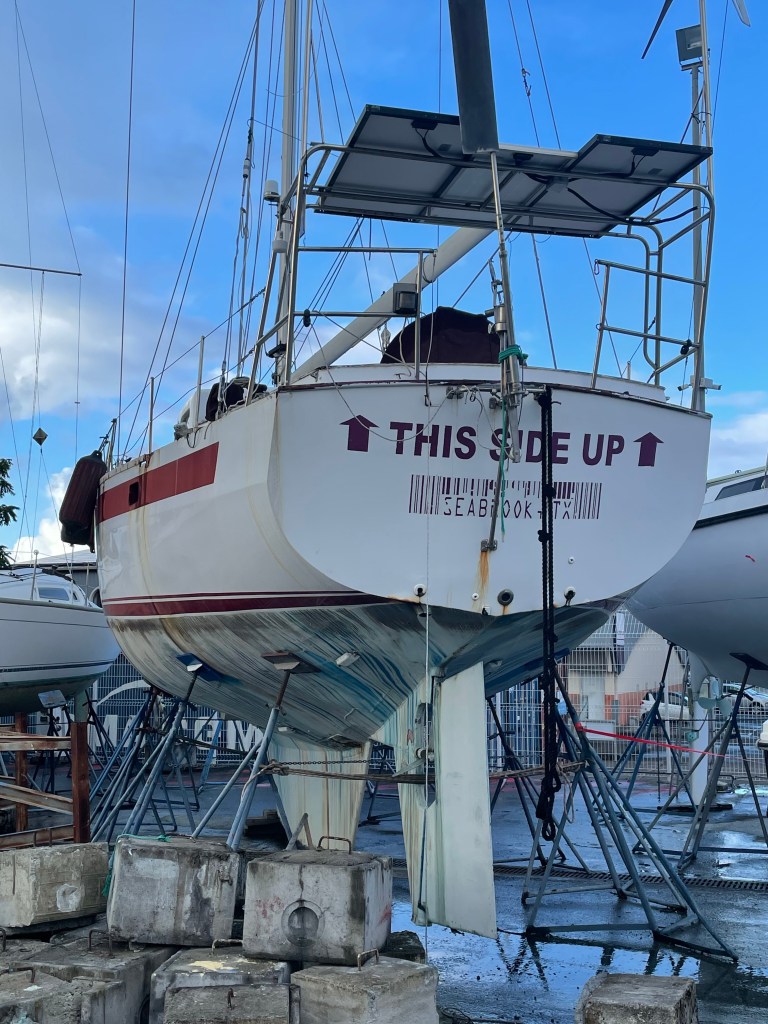
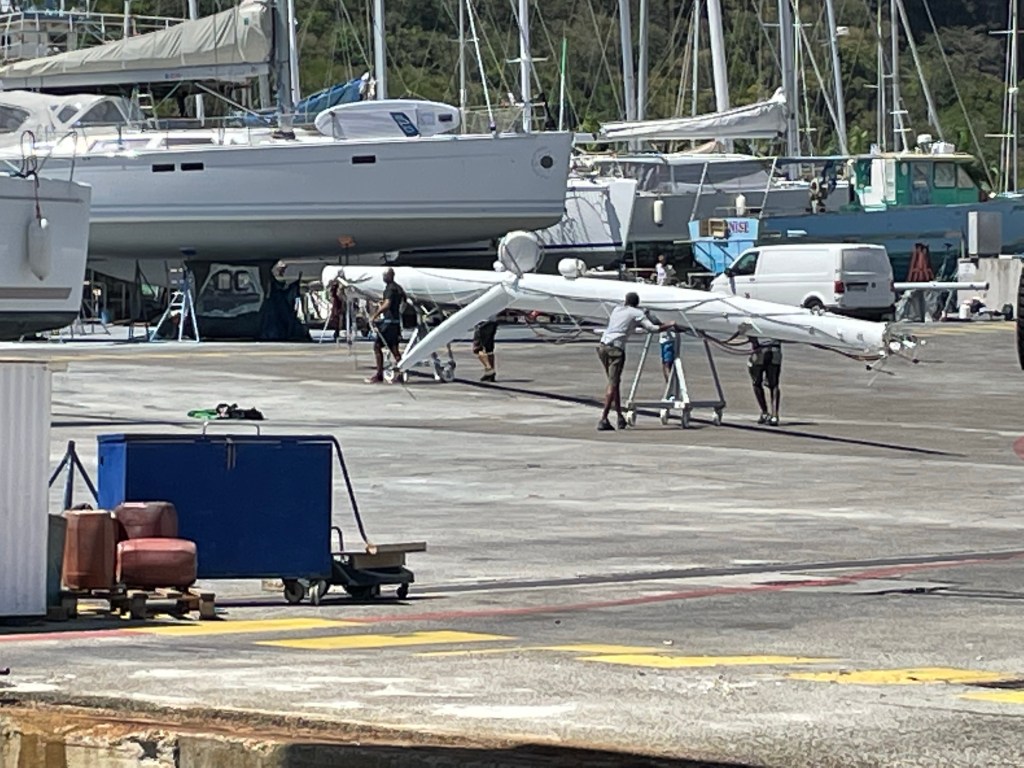
Absolutely no idea what’s going on here. Any suggestions?
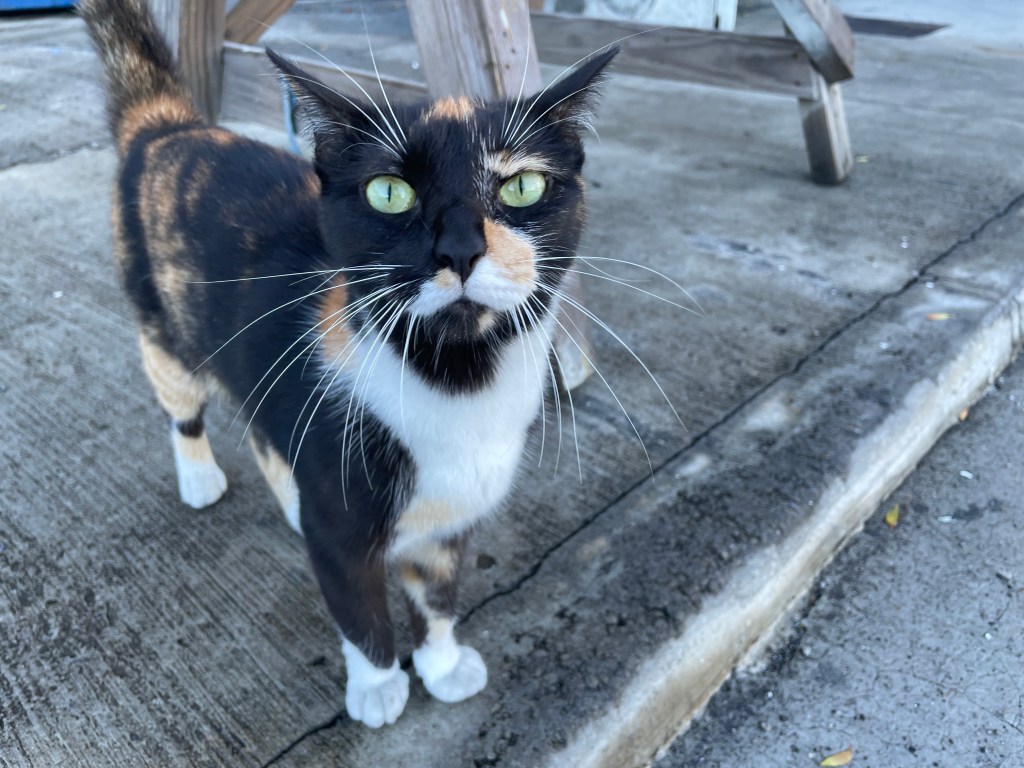
Every boatyard has a kitty cat
Quiet time on the quay

Jammies in the Engine Room

If you listen closely to your boat, she will speak to you.

When a gust comes through, the pitch of the wind whistling through her rigging will change.  When there is too much sail up, she will tell you by changing her motion through the seas.  And when there are mechanical issues, she will let you know by the sounds of the pumps when there should not be sounds from pumps.

Rebuilding the bilge pump

The refrigerator pump uses seawater for heat transfer, and comes on frequently with a very soft, quiet hum.  The freshwater pump is quite the opposite, announcing itself with a noticeable vibration as it primes and delivers.  The bilge pump is different again, a patterned thumping sound as it draws water up from the bilge and overboard.

They say there are only a few things that a Captain must do:

  1. Keep the mast pointed up and not down
  2. Keep the crew on the boat
  3. No fires, ever
  4. Keep the water out

Well, keeping the water out can be a challenge given the environment, and so the Captain relies mightily on the bilge pump to do its job.  There’s this float switch, and when the water in the bilge gets high enough to activate the float switch, the bilge pump cycles on and empties the bilge. 

On Dragonfly, all of our gray water (sinks and showers) drains into the bilge, and the bilge pump empties the water overboard.  Therefore, the bilge pump should ONLY come on when sinks and showers are being used, but certainly not at 4.30 am.

When one awakens during the middle of the night, you listen to what your boat is telling you.  A low hum – the fridge pump.  A noticeable vibration – someone else is awake and going to the bathroom.  A patterned thumping!  Well, she’s telling me something isn’t right so better get up and listen more closely.

After five minutes it’s clear that the bilge pump is still pumping, but there is nothing feeding water into the bilge, so this is what some Captains would call a Problem.  

Time to get the headlamp and kneepads on and head to the engine room at 4.30 am – no more sleep on this night.  

Yikes!  2 inches of standing water and the bilge pump motor is hot, meaning its been working really hard for quite some time.  This is not good.  Susan is up by now and starts checking under the floorboards for water coming in.  Everything dry.  I close the inlet valve that brings seawater into the boat’s plumbing (for things like the fridge, reverse osmosis water maker, A/C system, etc.) and soon an alarm goes off.  Susan reports it is the red Seawater Alarm on the main panel.  Confusion.  Okay, Susan turn off the fridge on the 24V panel.  Alarm silences.  New learning – Dragonfly has an alarm that goes off when the seawater valve is closed and one of the boat’s systems is relying on that seawater to function properly (in this case the fridge).   I reluctantly taste the bilge water – it’s that trade-off of taking 2-3 days off life expectancy offset by the knowledge gained that it’s not salt water.  Okay, it’s bilge water – we’re not taking water in, but we’re not sending the sink and shower water overboard.  Reopen the seawater inlet and turn the fridge back on.
They say the most effective way to get water out of a sinking boat is a scared man and a bucket.  Well, a close second is a captain with lots of adrenaline at 4.45 am and a manual bilge pump handle in his hand.  Two minutes later the bilge is empty.  Watch the level of water in the bilge and it’s not rising.  Diagnosis confirmed.

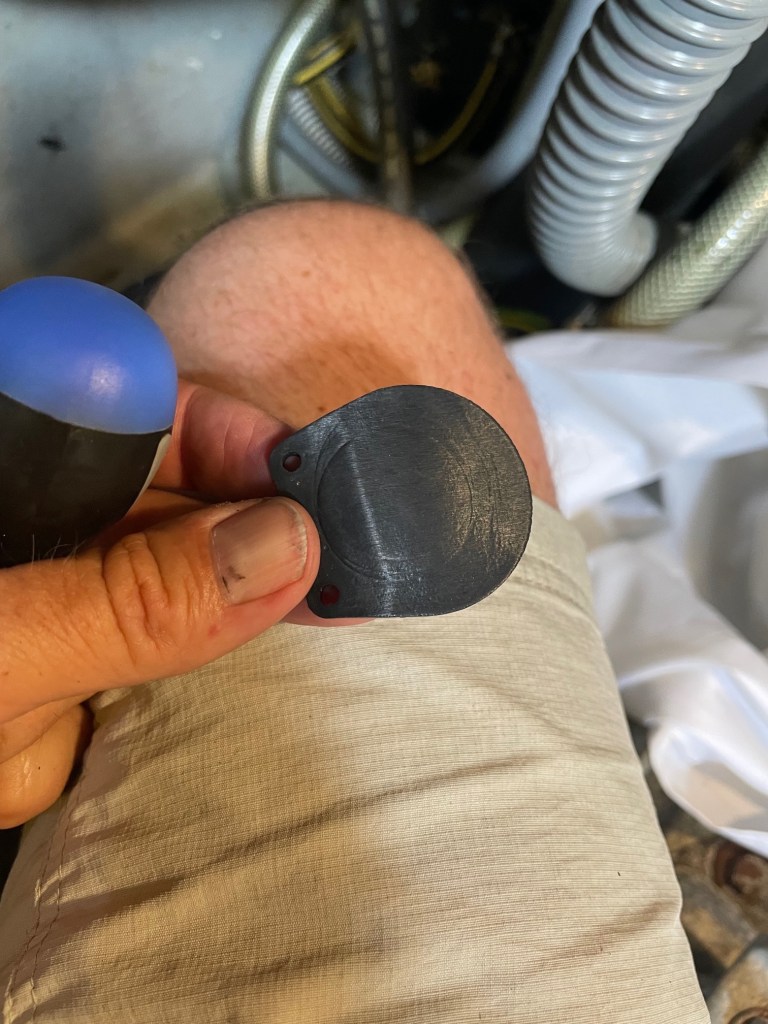
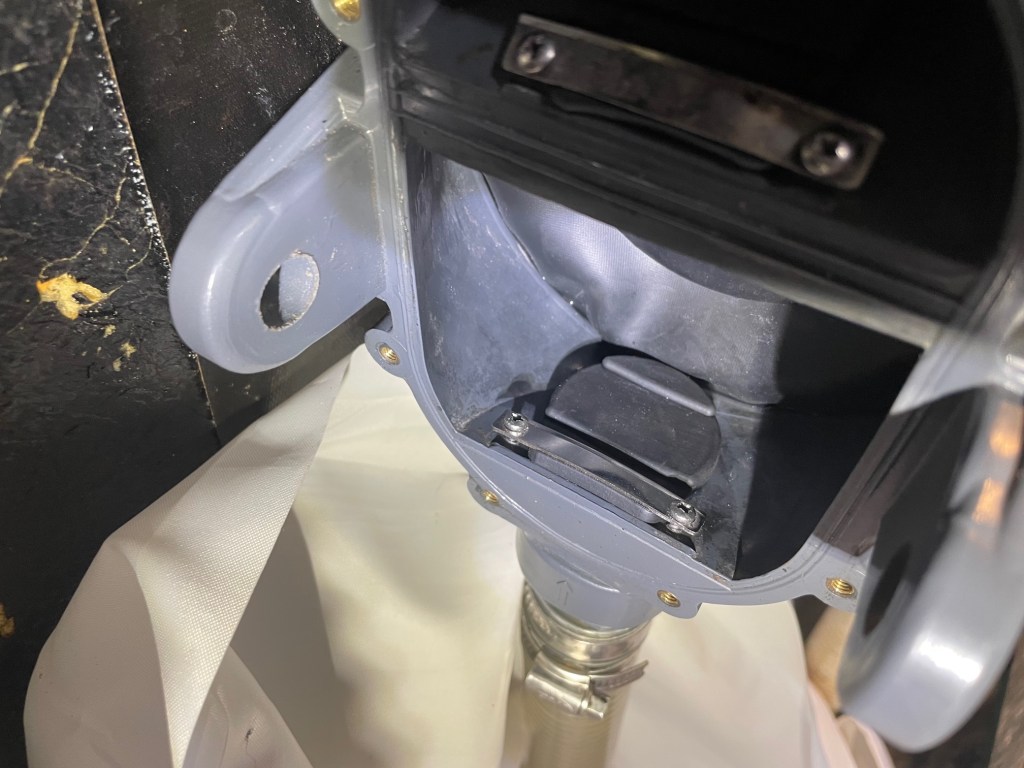
Time to disassemble the bilge pump and see what is going on inside.  Ah, a missing rubber flapper valve on the bottom section of the pump housing.  No flapper valve, no suction.  No suction, no water ejection, regardless of how hard the pump motor is working.

The missing rubber flapper

It’s now mid morning and neighbors on another Amel share spare parts, so we can get the pump operational again.  Time to rebuild the pump.

Everything back in its place

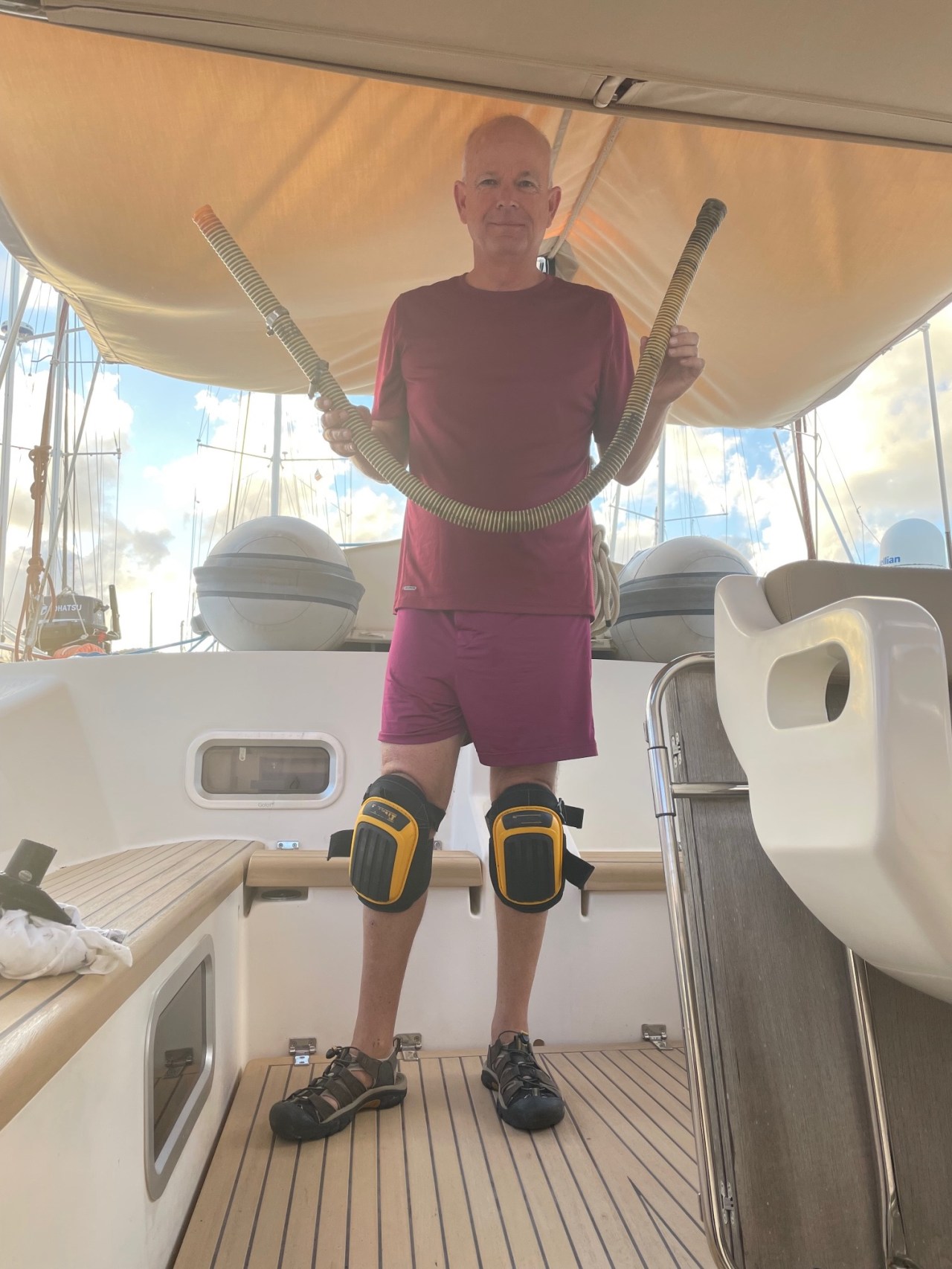
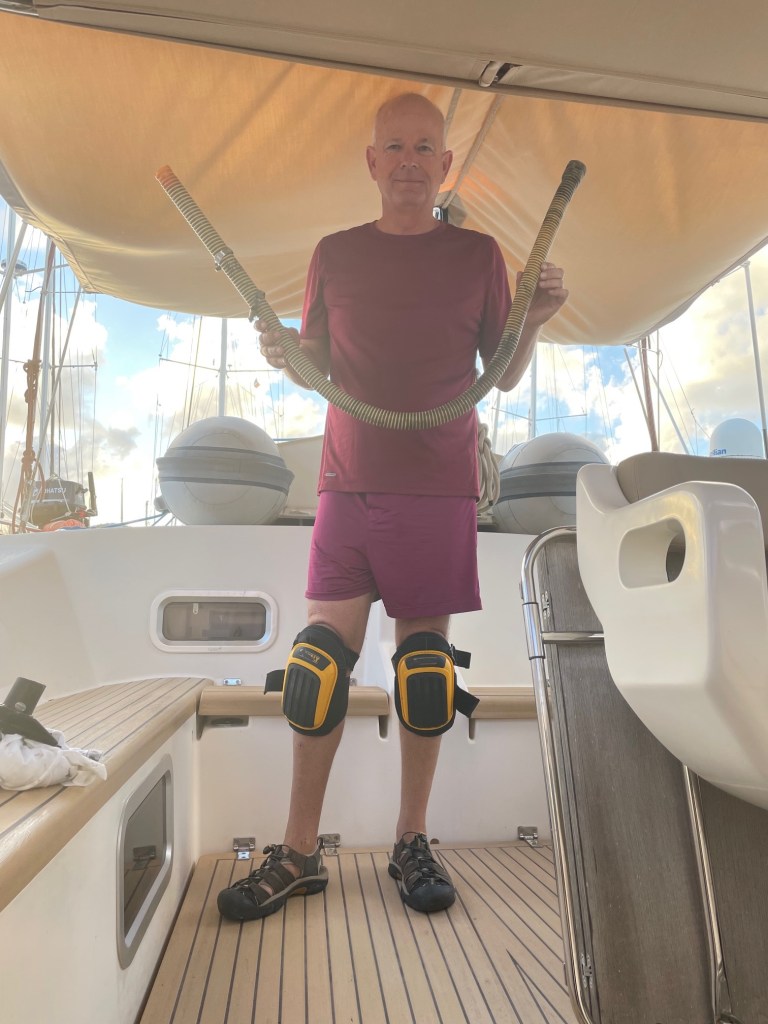
Some say that cruising is simply the art of doing boat repairs in exotic locations.  True, and on occasion it’s done wearing your jammies, knee pads and a headlamp.

Time to go sailing

Buying Dragonfly #2 – Amel 54

Was it John Lennon who said that life is what happens when you’re busy making other plans?

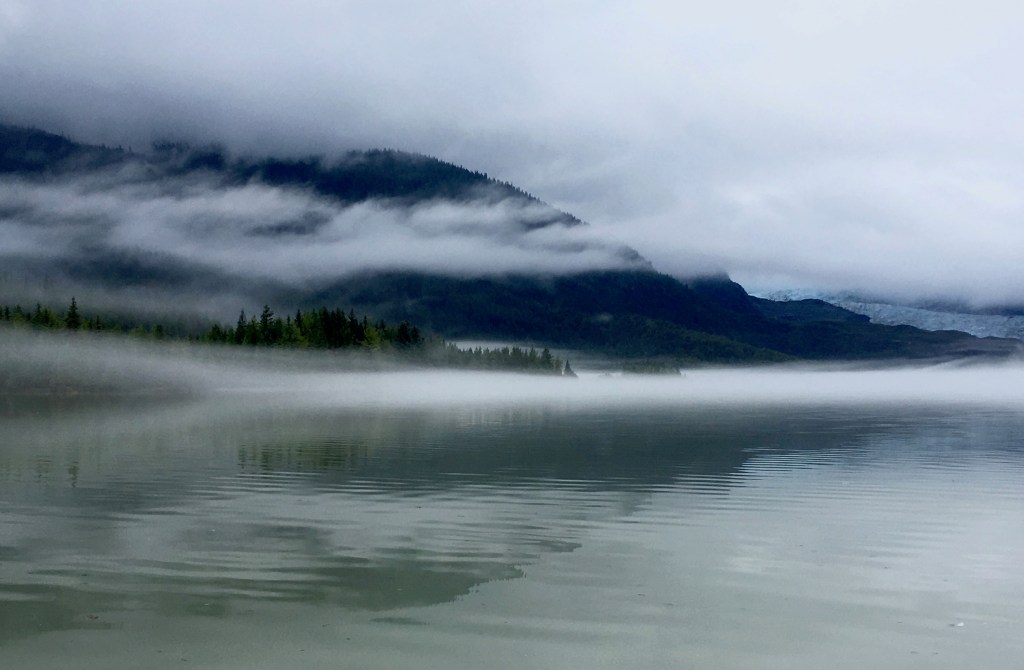
After we sold the Nordhavn in 2017 we moved back to our townhome in Park City and reconnected with our many good friends and the mountains.  A winter skiing was followed by a long planned but hard to implement camping trip to The Last Frontier – Alaska.  Great place, beautiful scenery, amazing wildlife.  Highly recommended!

Inside Passage
Looking for her 3 cubs who wandered into the riverside shrubbery

The only negative with this trip was how cold it was.  Now this is on a relative basis because the locals didn’t think it was remotely cold, but we ran the furnace in the Airstream quite a bit, wore long underwear many days, and even enjoyed the electric blanket on the bed.  As the years have gone by after my sailing mishap that resulted in my arms always being cold, I’m more and more sensitive to cold weather to the extent that when the room temperature is in the 60’s I sleep with a fleece and when it’s in the 50’s (camping) I also wear a stocking cap – just can’t keep warm.  So it became clear that I just could not face a year round future in Park City with six months of snow, ice and cold.  

On the Alaska trip we talked about this a lot and evolved to the road atlas where we studied the map of the US and found that there were 8 states we’d consider moving to.  We spent some months looking closely at a few of these states, and found over time that North Carolina seemed like a really good match given our interest in being closer to the water and living in a community where the temperatures were amenable to year round living.  Our close friends Bill and Rochelle lived near Wilmington and we had found a nice community in Southport when we were on the Nordhavn and had to hide out for a few days while a tropical storm passed by. 

Within a few months we were settled in Southport – March brought green grass, golf, tennis, beach dinners, and nowhere was snow and ice to be found.  We tried a J80 sailboat but the hurricane kind of made the docking situation difficult.

Blood, Sweat and Tears in Southport on a calm day
Blood, Sweat and Tears somewhere in the foreground – it wasn’t meant to be

We went up to Annapolis for the US Sailboat Show and started thinking more about going cruising again, though this time it would not be year round.  The pandemic soon followed and everything shut down, so it made sense to defer the dream for a while.  

Wearing our national park themed masks that niece Emily sewed for us

As the pandemic slowly evolved towards an endemic, we could see the light at the end of the tunnel but this light was dimmed by the awareness that little Coco was suffering from congestive heart failure.  Cruising with a little one on the trawler was do-able, but we knew it was not practical on a sailboat given the layout, the likelihood the boat we would buy would not be in the US, and her overall health issues (none of the three of us slept through the night once during her last 18 months).  

Rough night at sea, nobody felt great that morning

Though Coco was ill we felt another big Airstream camping trip would be a good family adventure, and we had Newfoundland on the list for many years.  Sadly our beloved Coco passed away in Vermont, before we made it to Canada, and so while the trip to Newfoundland was amazing in so many respects (the people there are wonderful), there was always a overlay of sadness with her not being with us.  To this day I miss her so much and am starting to realize it’s always going to be that way.

By the time we made it home we realized if not now, then when?  Things were opening up from the pandemic, we were settled in Southport, and it was now just the two of us.  Probably the hardest part of heading out again was saying So Long, See You in a Few Months to our close friends in Southport.  But the ocean was calling.

We found Dragonfly in Martinique and were soon on an American flight from Miami to Fort de France for surveys and sea trials.  

Interestingly, the flight attendant said they were all excited to be flying to Martinique again.  Why is that?  Because American cancelled all of their flights to Martinique about 18 months ago due to the pandemic, and this once a week flight was the first one.  How did people get to Martinique during the pandemic?  Air France from JFK to Paris to Martinique.  Yikes, no wonder nobody from the states was interested in this Amel 54 – too hard to get there.  

The survey went well thanks to our broker Stephanie (more on her in another post) and this trip felt like a bit of a vacation with time at the beach, lots of Really Good Food, and sunshine every day.  

a fresh baguette everyday
Goodbye Aora, Hello Dragonfly
With our friends Gerald and Birgitte from the Amel 53 Jetlag

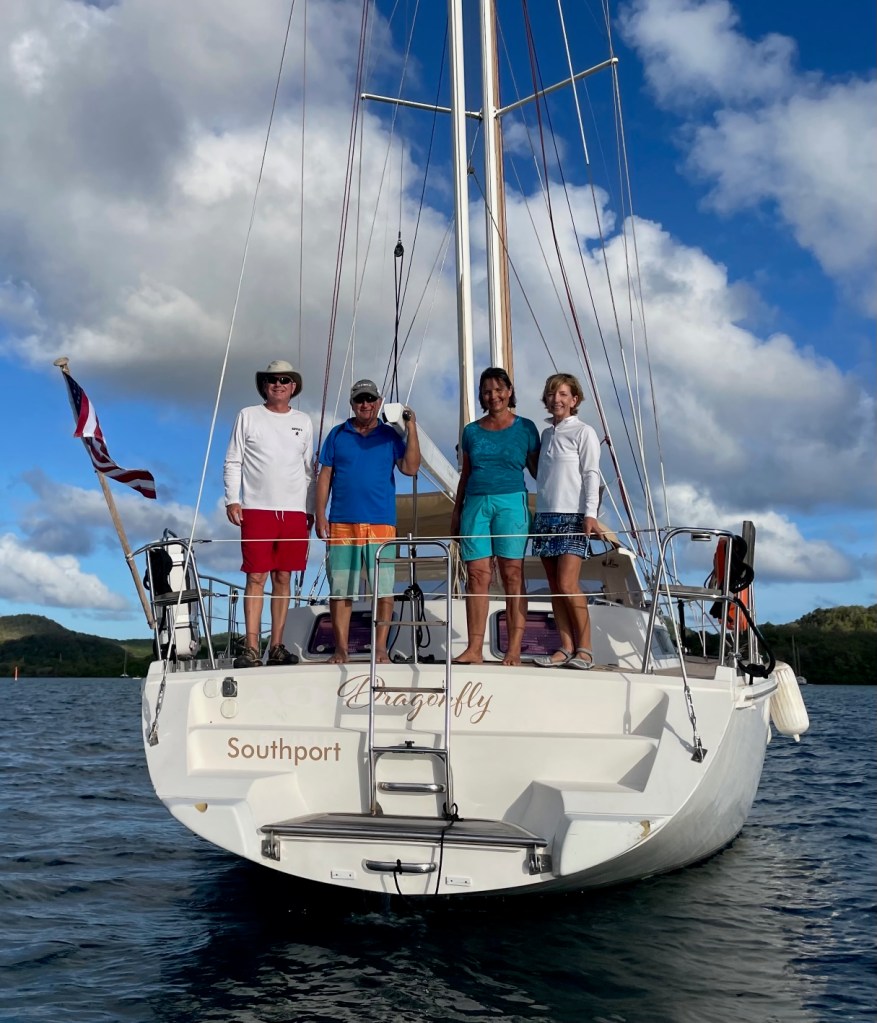
We closed on Dragonfly in early December, and arrived January 8 to move aboard our new home, well let’s call it a part-time home, as we’ll sail around the Windward Islands until May.

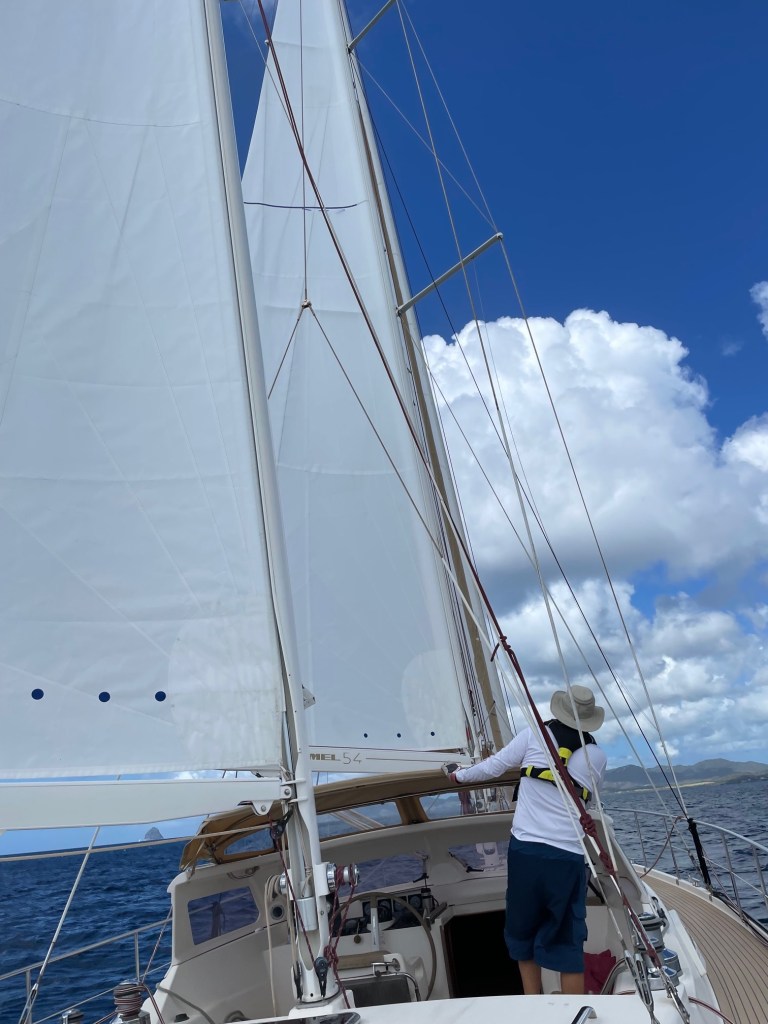
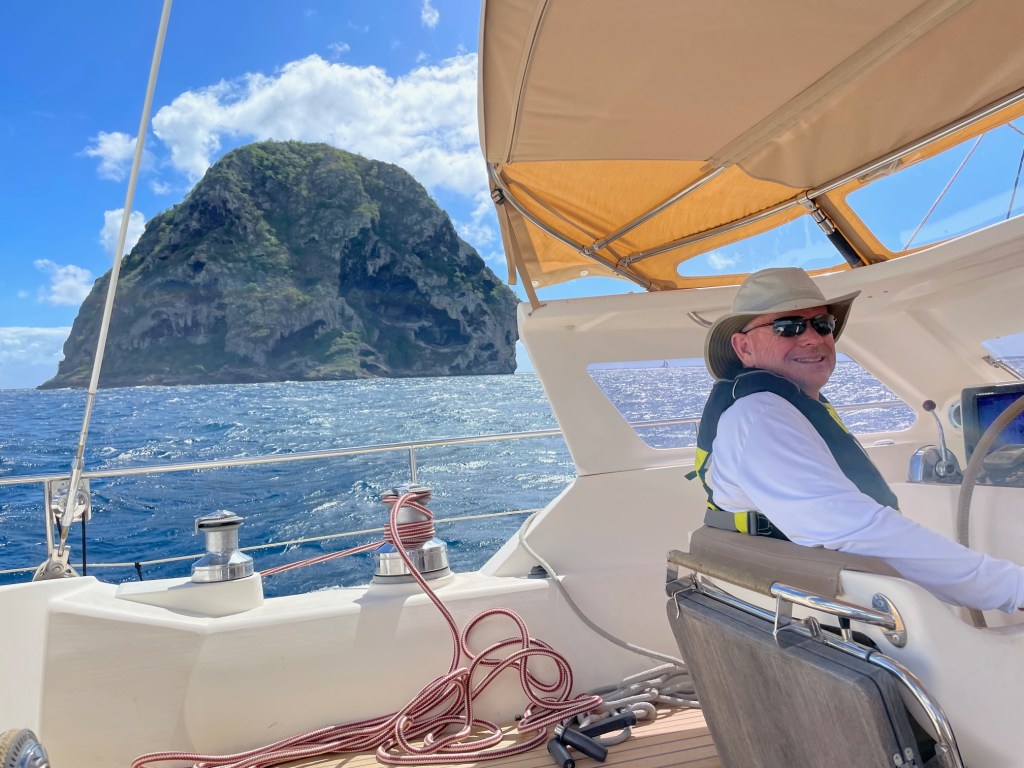
Sailing past Diamond Rock, SW coast of Martinique
Grande Anse d’ Arlet

Hoping We Never Need This

The United States Coast Guard tells us that in a given year 75% of fatal boating accident victims drowned.  Of these drowning victims 86% were not wearing a lifejacket!

When we were racing Snipes on San Francisco Bay many years ago, our fleet collectively decided to require everyone to wear a lifejacket regardless of conditions due to the cold water, currents, and consistently high winds.  Ever since then I’ve worn a lifejacket, and it’s the only reason I’m still around after a really unfortunate sailing accident in a very, very cold Utah mountain lake in 2009.

As boats get bigger it’s not as comfortable to wear a lifejacket all the time, so the manufacturers have done a good job creating inflatable lifejackets that automatically inflate when immersed in water.  They can also be inflated by the wearer who simply pulls a rip cord.  These inflatable lifejackets also incorporate a super strong tether so you can clip in and attach yourself to the boat if the weather gets really nasty and you have to go on deck for some reason.
We inherited four of these inflatable lifejackets when we bought Dragonfly, and remarkably they were all still in their plastic bags from when they were new.  Every few years the activation mechanism must be replaced – since these expired in 2014 it seemed like a good idea to do that now.  We were curious to find out if the activation mechanism still worked eight years after expiry – here’s the answer.
Tres Hombres

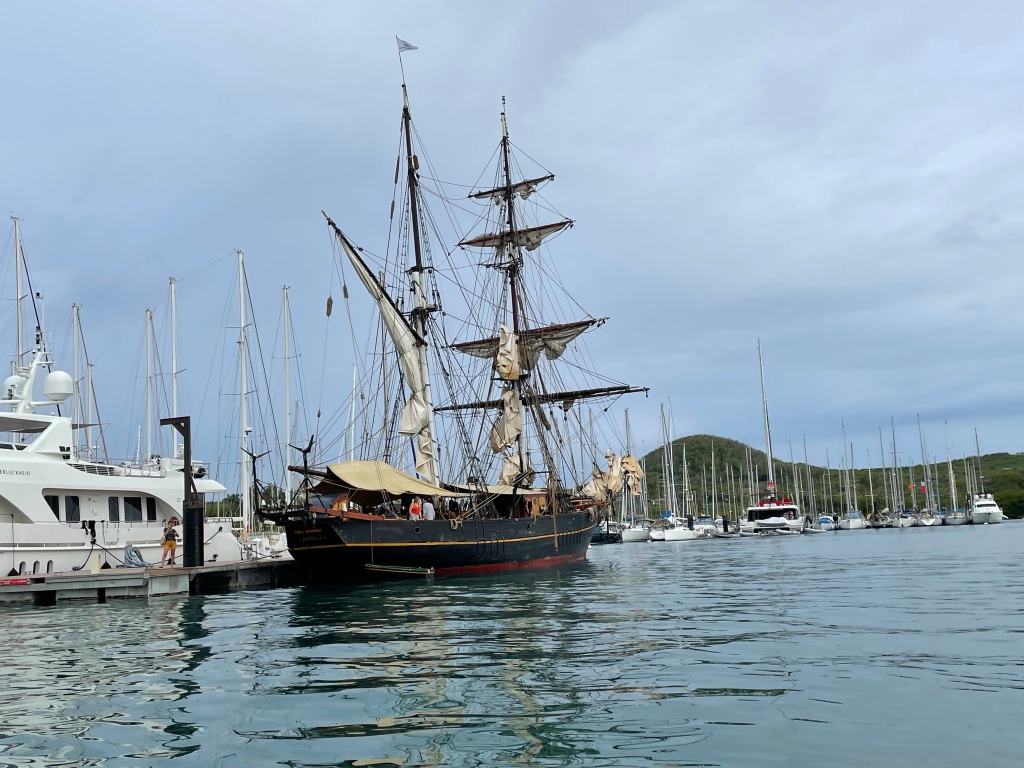
A pirate ship docked at the end of our pontoon here in Le Marin, Martinique.  
Tres Hombres

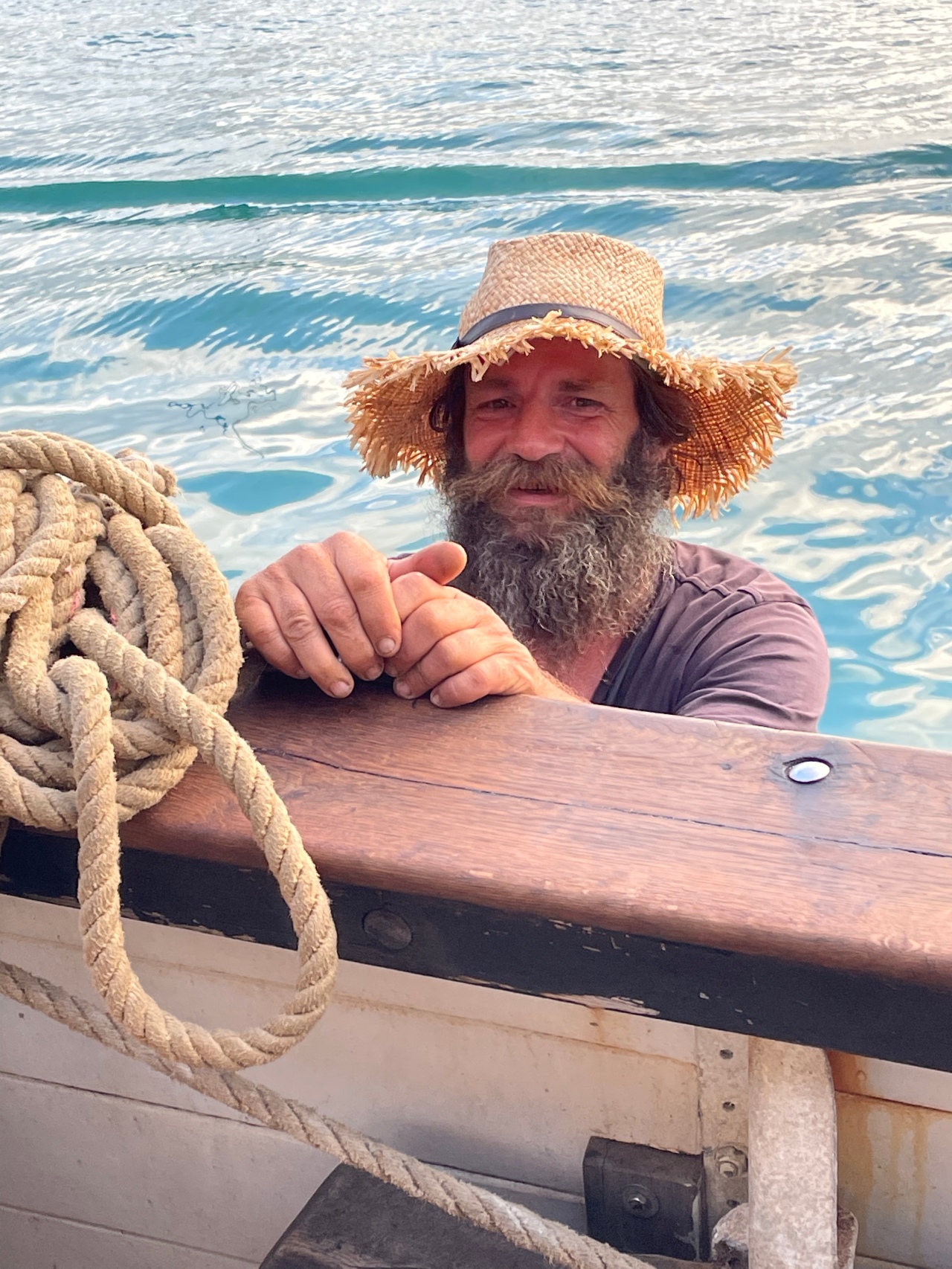
Well, maybe it wasn’t a pirate ship, but it sure looked like one, and all the more so by the crew wandering up to the pub on shore – barefoot, sunburned, dreadlocks, old hemp style ropes used as belts, salty as in the real kind of salty sailors.

Le Capitan

We wandered down the next day to see what the story was, and what a story it is.

Repairing the sails

Tres Hombres was built by the German Navy in 1943 as an all wood powerboat meant to do coastal surveillance. Wood was chosen as it does not readily show up on radar like a steel vessel. After the war, the boat was more or less left abandoned, and three friends from the Netherlands bought it in 2007 as they were starting a clean shipping movement. They spent a couple of years refitting the boat and turning it into a sailing yacht. To make room for cargo, they removed the engine and so this boat literally sails everywhere they go.

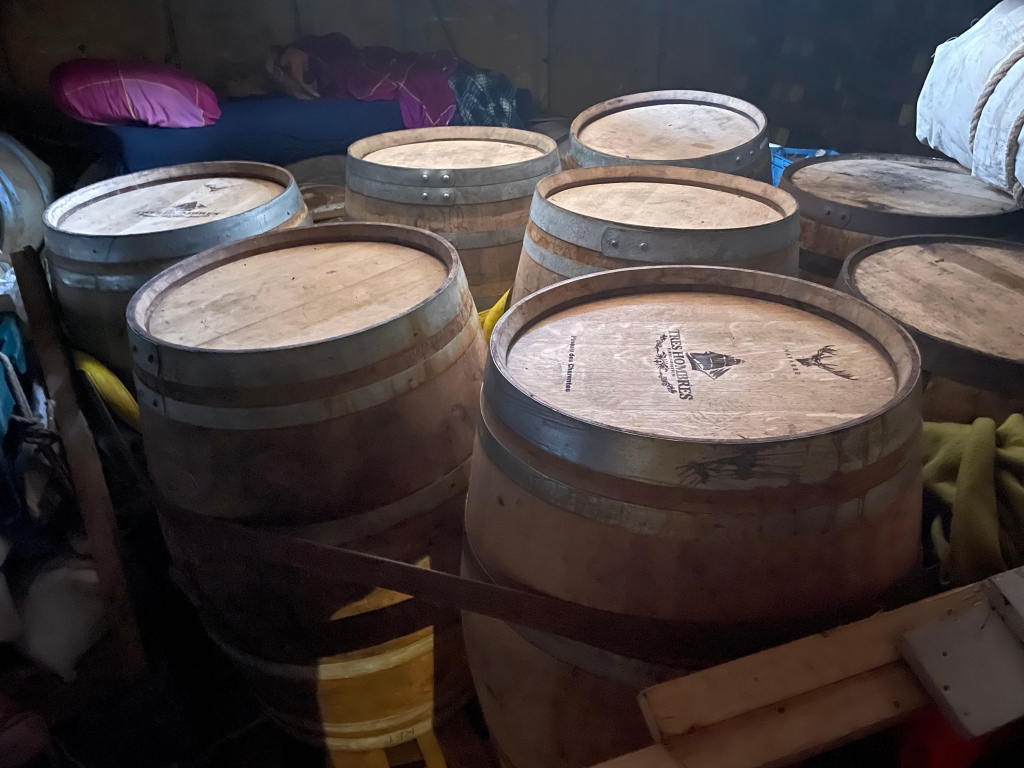
Clean shipping refers to the idea that sail-powered cargo shipping worldwide can be feasible.  Tres Hombres carries 40 tons of organic and traditionally crafted goods like Tres Hombres Rum, cocoa, coffee, honey and canned fish.  They cross the Atlantic from the Netherlands to the Windward Islands, load cargo, then sail up to the Dominican Republic to load more cargo, then back to the Netherlands. 

Rum cargo
A very authentic galley
Notice the compass numbers are backwards. This is because the compass can be viewed from the navigation station which is directly below decks. Therefore looking upward the navigator reads the numbers properly.

The captain and crew were very personable, giving the locals the opportunity to board the ship, have a look around, sample the rum, and chat with the crew.

Wishing you all fair winds and following seas!