

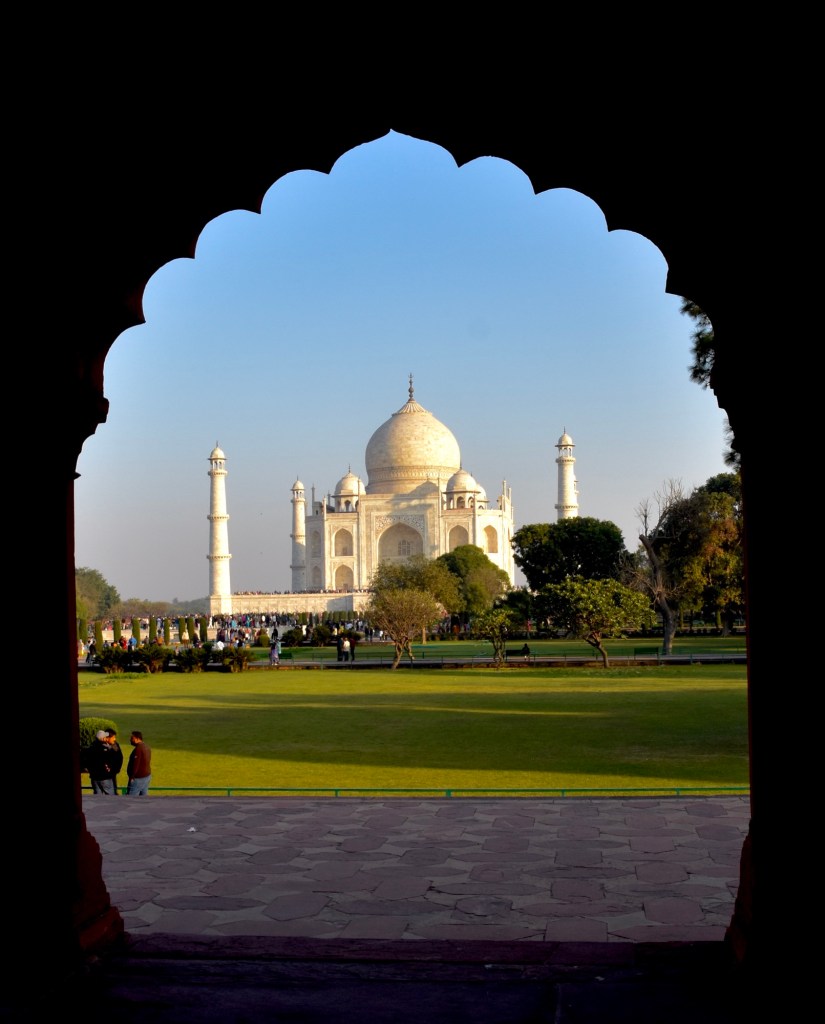
One of the seven wonders of the modern world, Taj Mahal is a white marble mausoleum commissioned by the Mughal emperor Shaw Jahan, in memory of his third wife, Mumtaz Mahal.
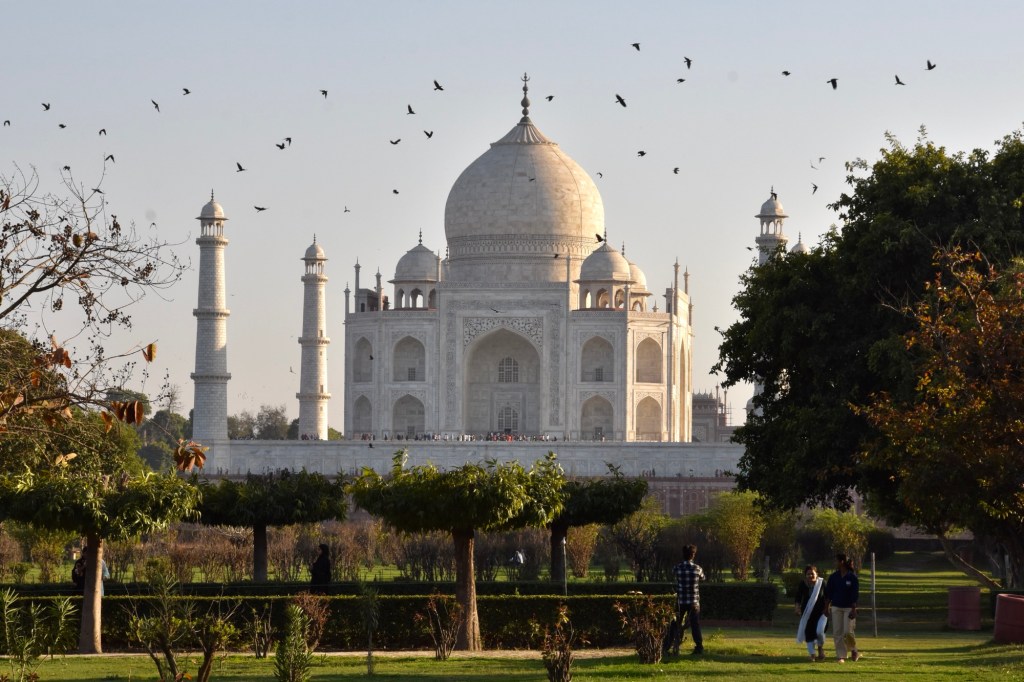
Regarded by many as the finest example of Mogul architecture as it combines elements from Persian, Ottoman Turkish, and Indian architectural styles.
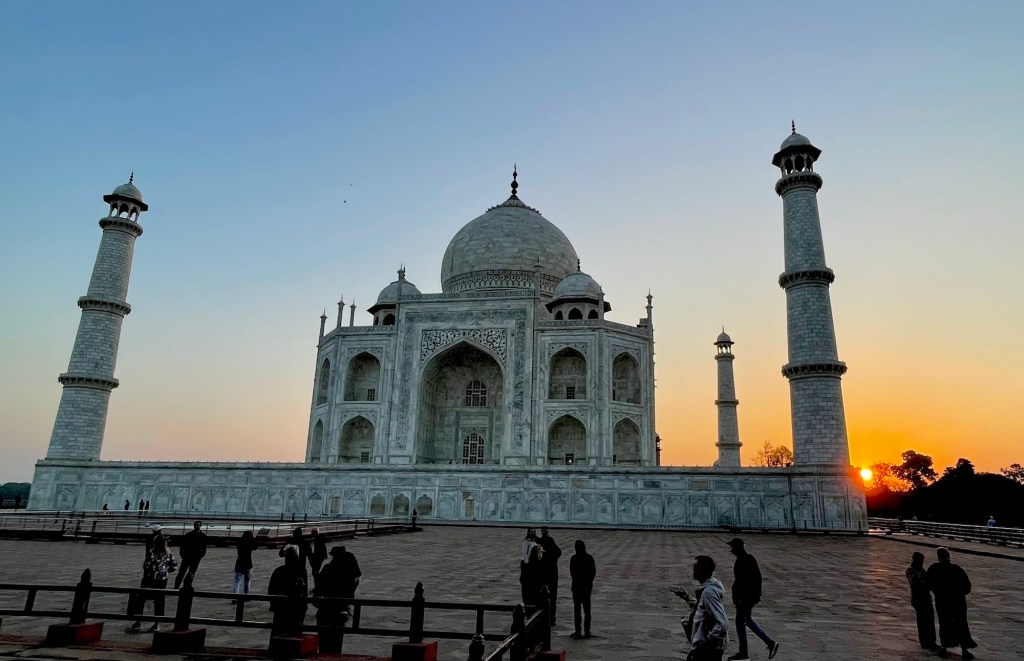
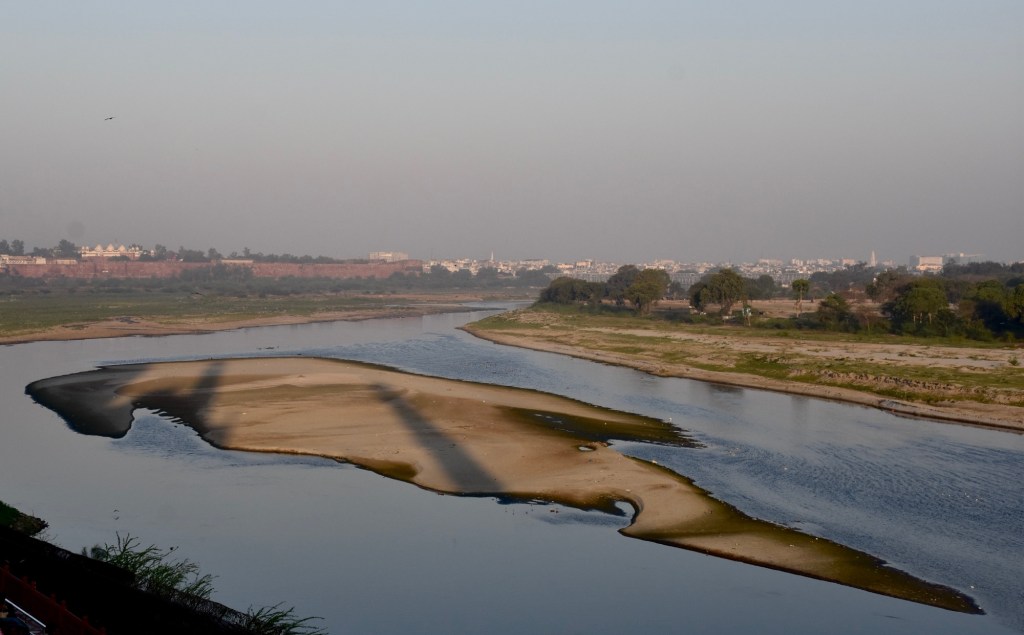
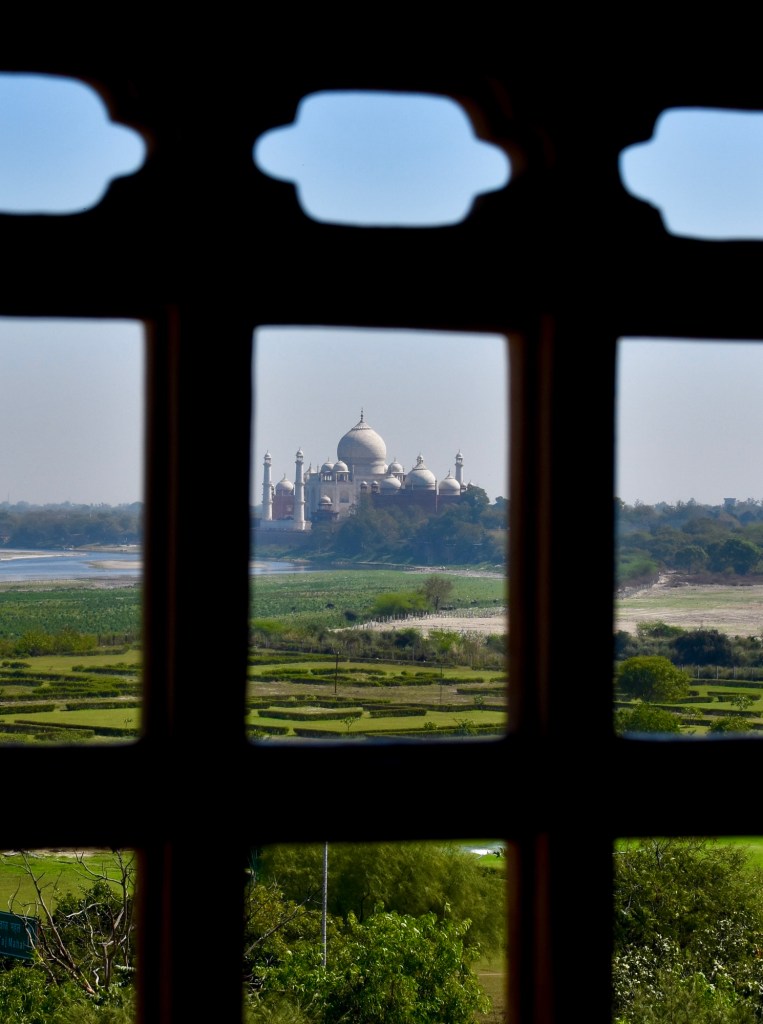
In 1612, Shah Jahan married his wife Mumtaz when she was 21 years old. She proved to be his favorite wife and was given the name the Exalted of the Palace. She bore 14 children, but sadly passed away in childbirth. On her death bed, she begged her husband, the king, to build a monument so beautiful that the world would never forget their love. It took 20,000 laborers over 21 years to create this vast tomb of white marble on the banks of the Yamuna River, visible from Agra Fort.
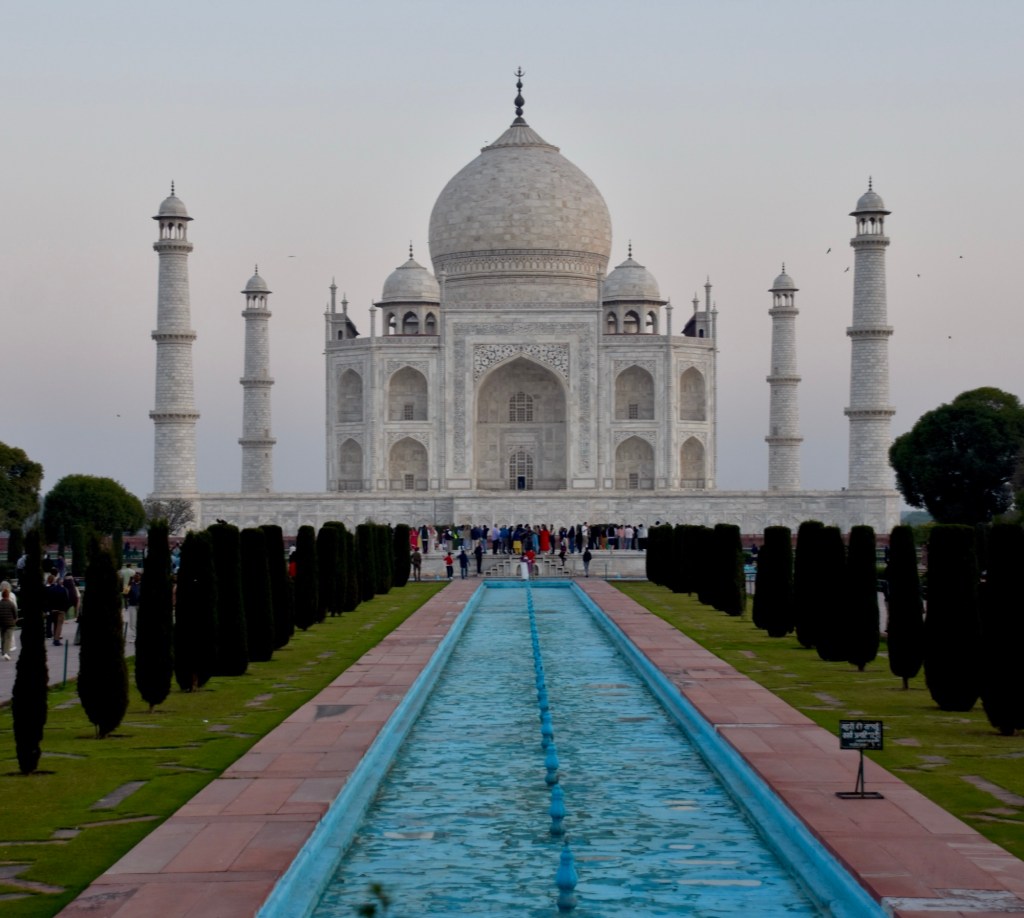
The Taj Mahal is closed to the public on Friday for Muslim prayer services. On all other days, there is a ceremonial opening of the gates performed at sunrise only by direct descendants of those who were guards in the 1600s.
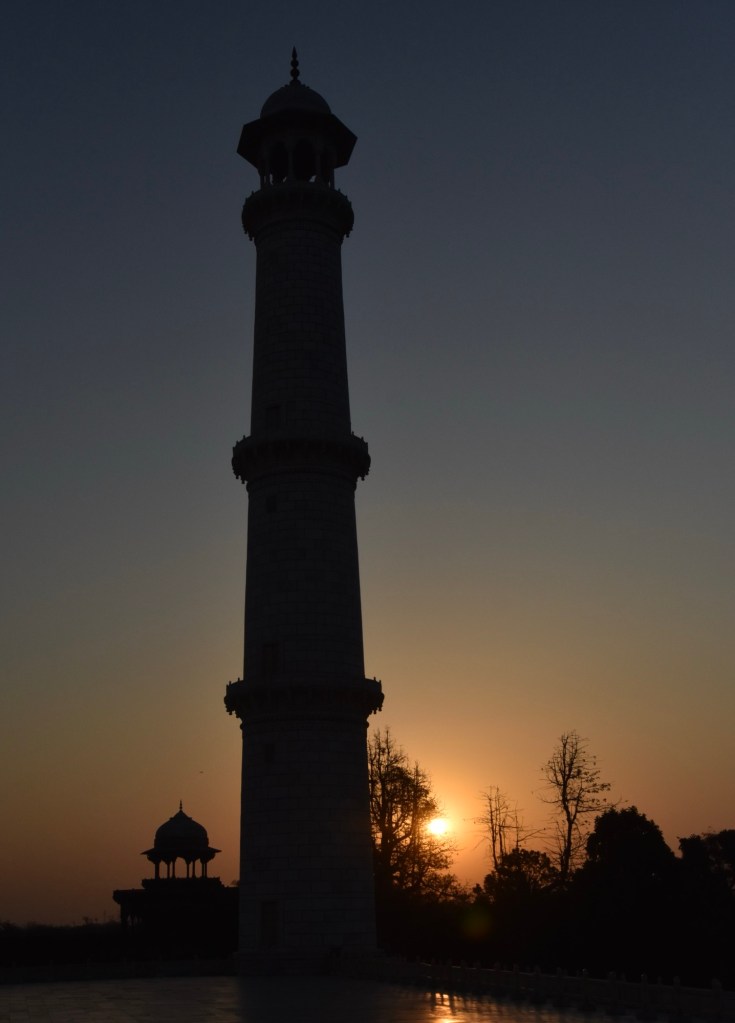
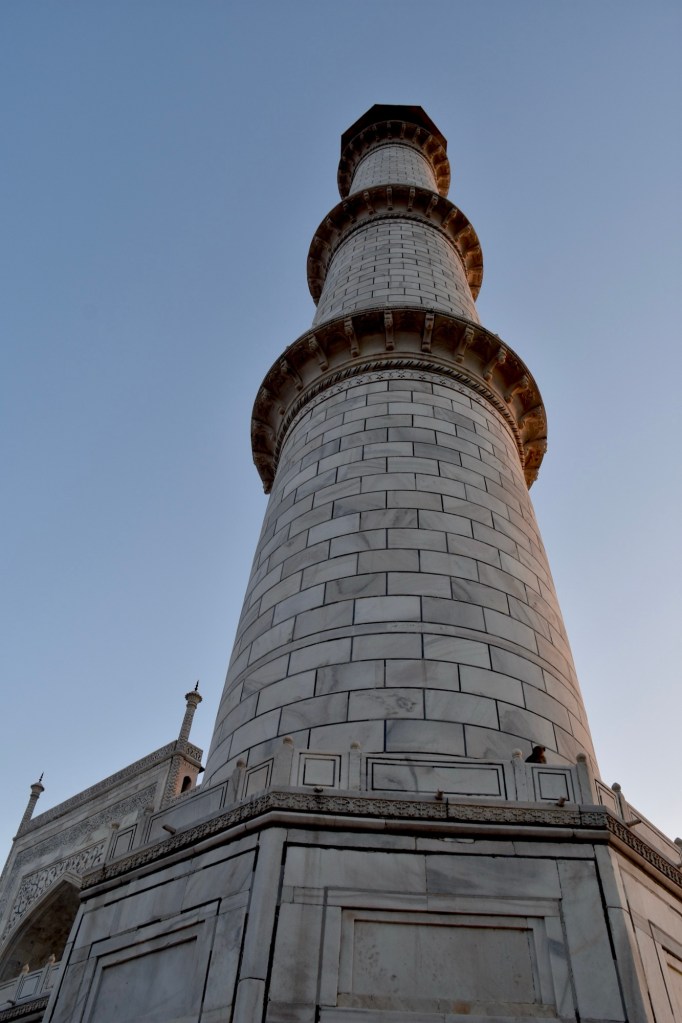
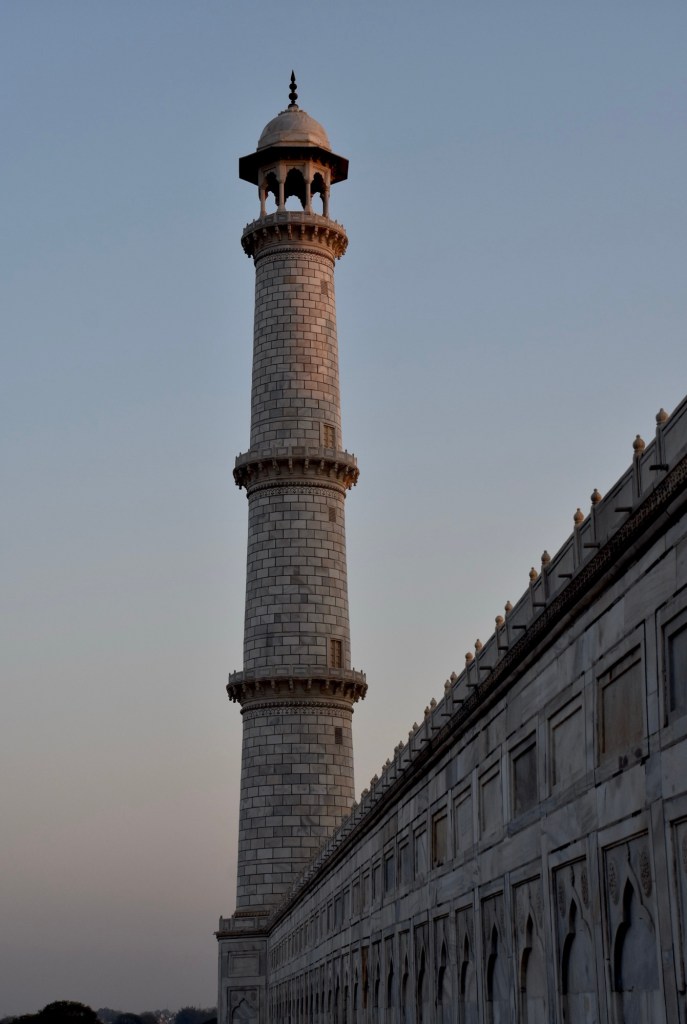
The gate houses are equally impressive – red sandstone with marble tops.

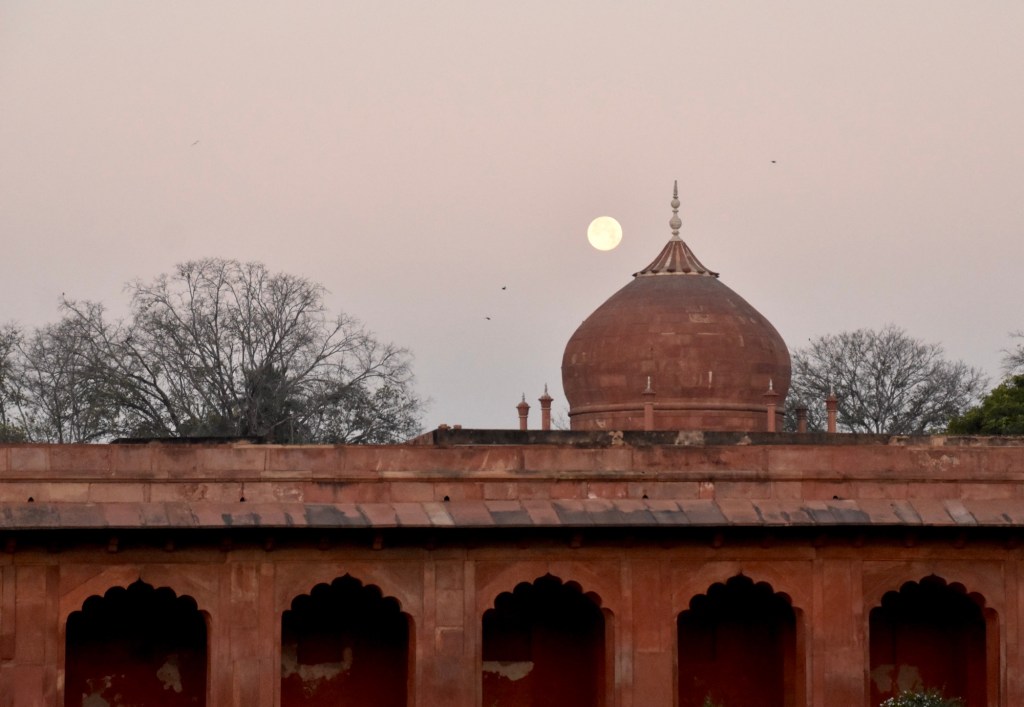


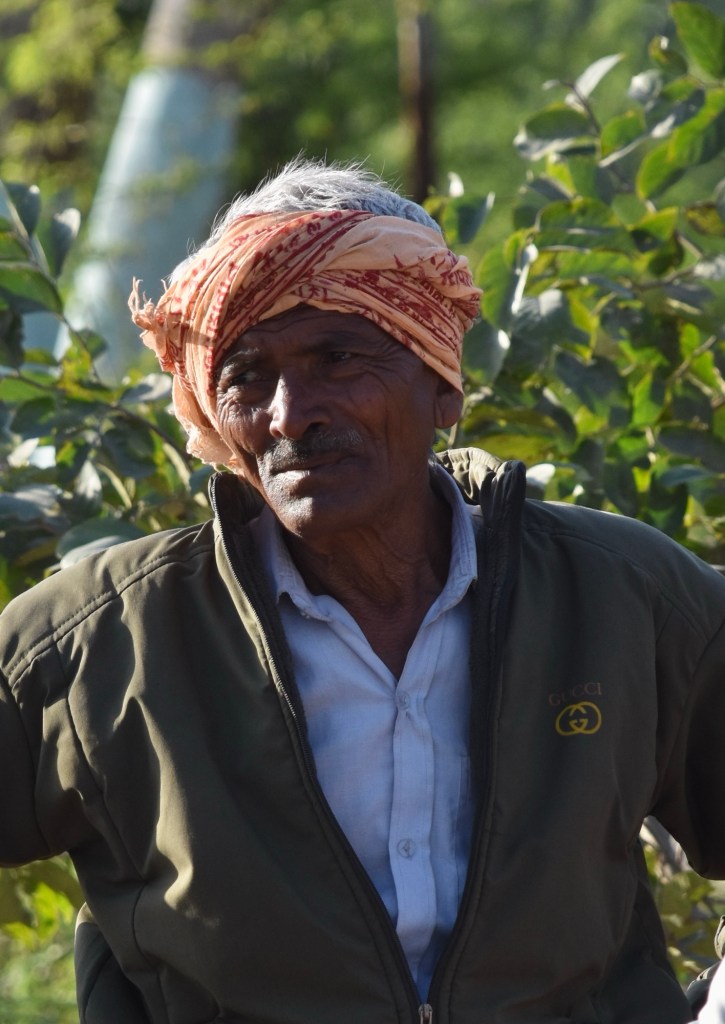
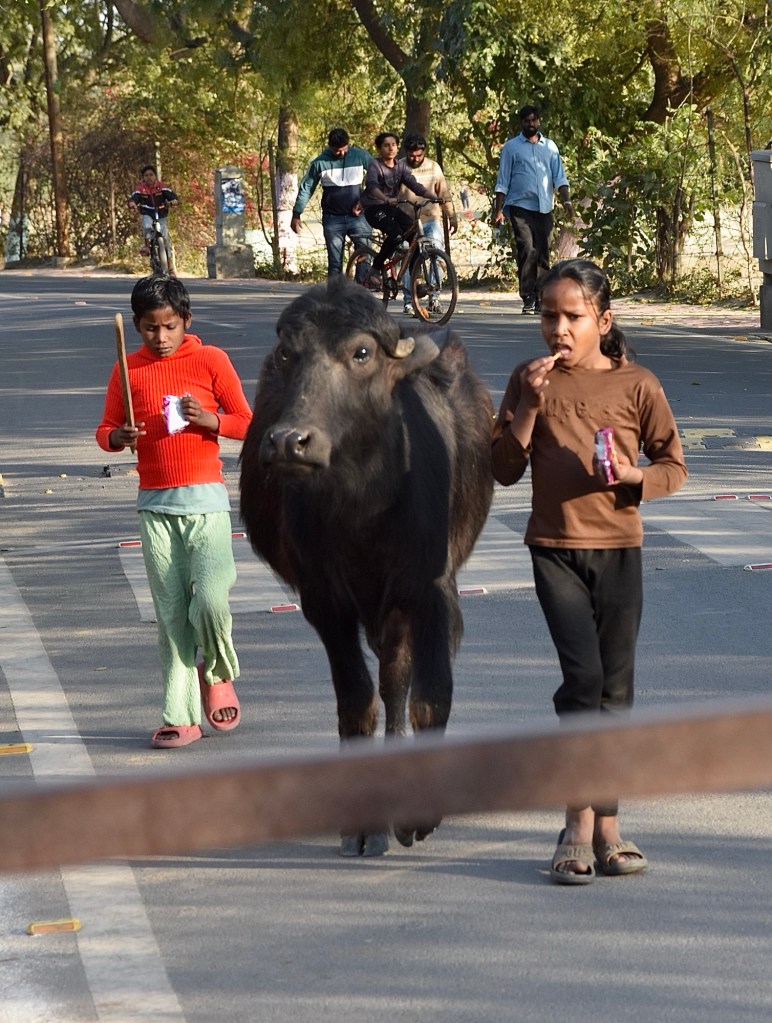
Leaving the Taj Mahal – two kids eating potato chips and walking their cow.
Goats walking across a cricket pitch in the shadow of a Muslim mausoleum, the most iconic architectural masterpiece in an 80% Hindu majority country.

The Yamuna River with Agra Fort in the distance. As with the Taj Mahal, the size and scale of Agra Fort is incredible, bringing thoughts to the complexities of society, engineering, logistics, mining, craftsmanship and culture in the 1600s in India.
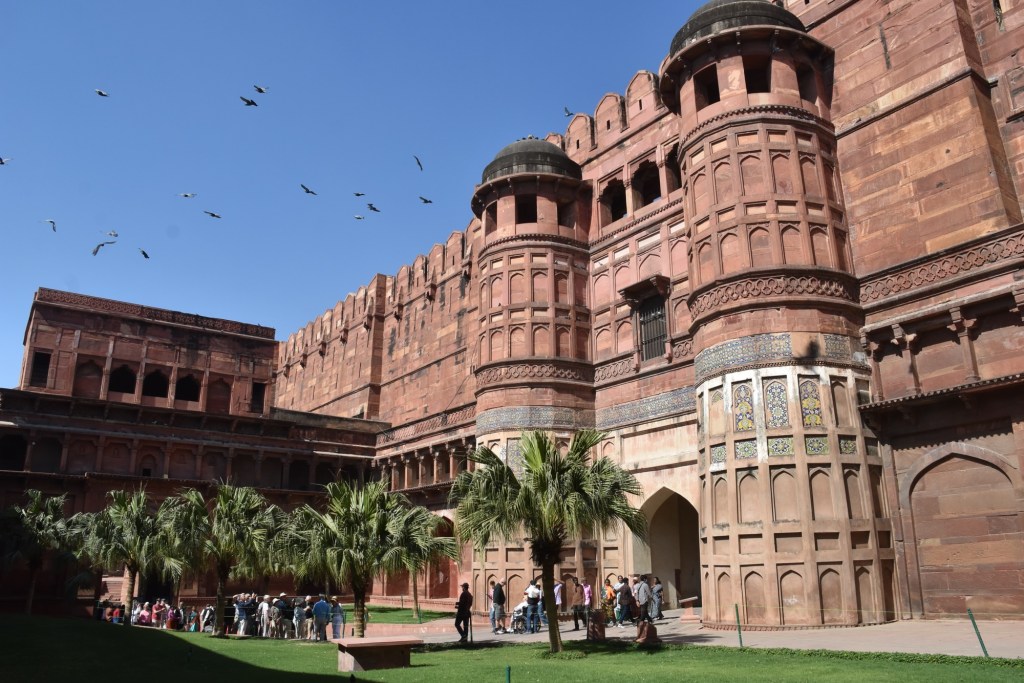

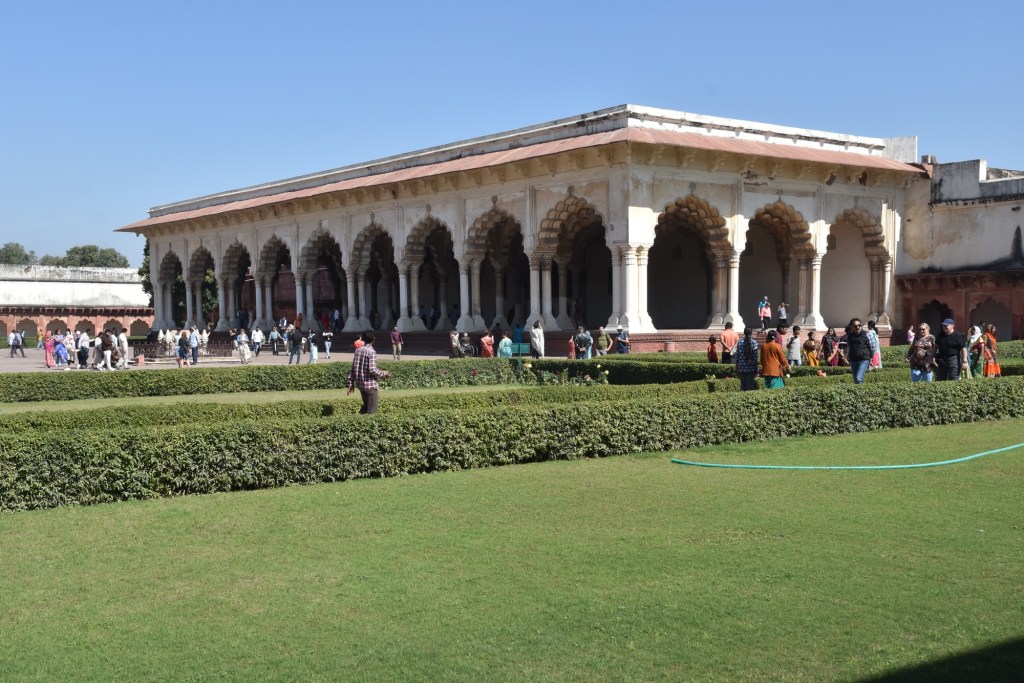

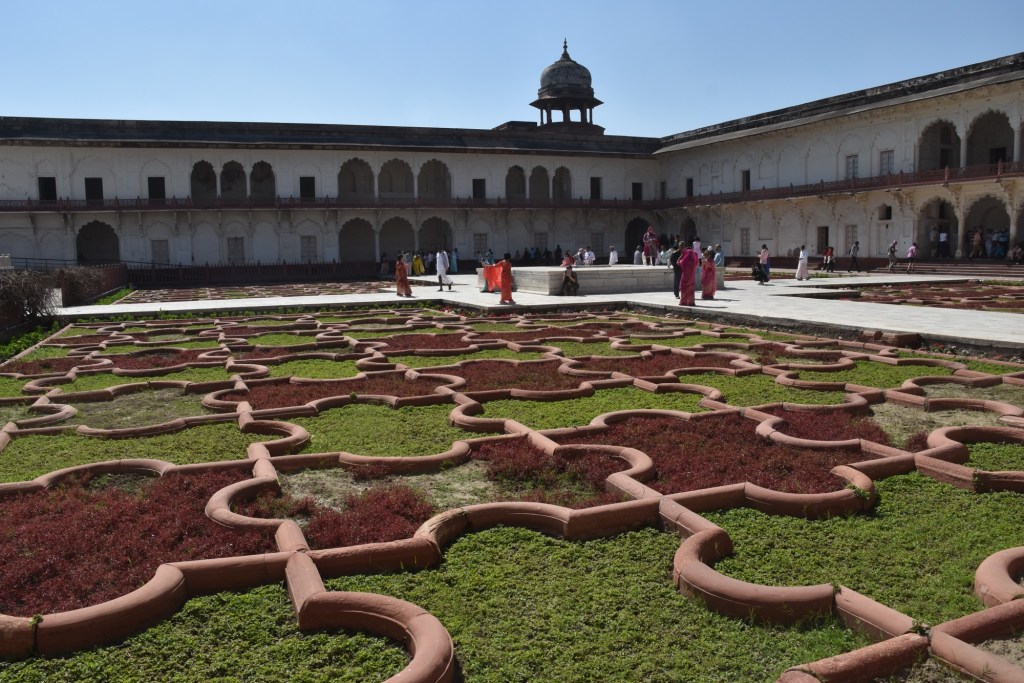
Shah Jahan was ultimately deposed by his son who felt that his father, the king, was spending too much money building architectural gems, and not investing enough in the kingdom. So the son had his father placed under house, arrest, and in a cruel twist of fate, Shah Jahan lived his remaining years in Agra Fort, in a room with this view of the Taj Mahal. 
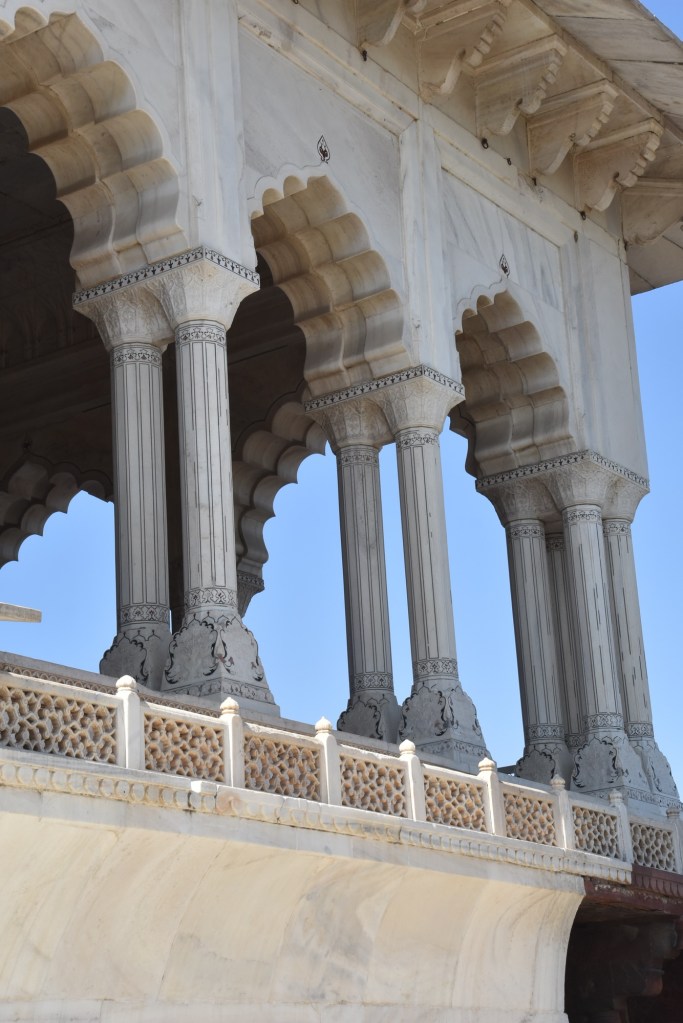
All of the inlay is cut in polished marble, at an extraordinary level of detail. The craftsmen who originally did the inlay work kept secret the recipe to create the glue that holds the inlay pieces together, and they passed down that recipe through generations. Therefore, the craftsmen who do repair work today are direct descendants of the original craftsmen, and they too have never once shared the recipe for the glue.

 Dragonfly Waypoints
I learned so much tonite Thanks L
LikeLike
Wow. Great shots. I haven’t started to work on that image you asked. I think you have some better images here in this portfolio. What do you think? dad
Wes Odell, MPSA “You can teach someone photography, but you can’t teach them to be a photograper.” Ansel Adams https://resources.psa-photo.org/index.php?wes-odell-0122#ad-image-0 https://www.facebook.com/wesodellphotos/ 500px.com/odellphotography https://photojudgesofwc.webs.com (RoundRockImageCreators): https://www.facebook.com/groups/rricclub
LikeLike
Love your pictures especially with running commentary- look forward to a book someday. M
LikeLike